



- Room 1807, Unit 9, Building 2, Shangxing Commercial Street, Shangde Road, Shangxing Community, Xinqiao Subdistrict, Bao'an District, Shenzhen City, China
CONTACT US

WhatsApp


Contact Us
Our team is on stand by, waiting toassist you.

Videos
A large collection of educational videos and tutorials.

About Us
Learn about our company, leadership, and mission totransform manufacturing.

Privacy Policy
Applies to all personal information collected through and/or processed in connection.
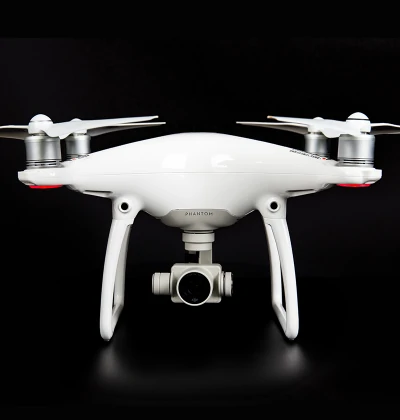

Aerospace & UAV
WJ Prototypes is your 3D manufacturing partner from prototype to large scale production.

Consumer Electronics
New Product Introduction Solutions for Consumer Electronics.

Robotics & Automation
Need some assistance bringing your robotic device or parts from the sketch-board to reality?

Medical Devices
The medical industry needs high quality, dependable and safe parts and products.

Automotive
New Product Introduction Solutions for Automotive

Industrial Machinery
The main purpose of industrial prototyping is to take the product from drawings into the real world.

Australian engineers and product teams often face a dilemma: build prototypes in‐country or send them overseas. Local 3D printing offers speed, direct control and secure IP, but at higher cost. Chinese 3D printing services promise lower prices and advanced technology, but involve longer lead times and shipping. This comparison explores cost, speed, logistics, material options, quality control, and sustainability to help Australian businesses choose wisely – and shows how WJ Prototypes helps balance cost, speed and quality.
3D printing in Australia is a rapidly growing field. The market was valued around AUD 692 million in 2024 and is projected to grow ~18% annually. Many local firms now offer additive manufacturing in plastics and metals, driven by high demand for rapid prototyping and low-volume production. Local printing means designers can get parts in days or even hours, enabling just-in-time development. In fact, Australian businesses have seen reduced lead times, lower transportation costs, and lower overall production cost by reshoring their manufacturing and using 3D printing onshore.
Advantages of local 3D printing include immediate access to printers for fast iterations, easy in-person quality checks, and no complex shipping. For example, Konica Minolta notes 3D printing allows “just-in-time” manufacturing that cuts inventory waste and delivery delays. Quick feedback loops help teams refine designs on the spot. Also, being in the same country means easier communication and IP protection. Australian industry often chooses local suppliers for this control and responsiveness.
However, costs tend to be higher in Australia. Local labor, facilities and energy are more expensive than in Asia. Lower-volume runs don’t benefit from large-scale production efficiencies. Material costs (e.g. engineering plastics and metal powders) also carry local price premiums. One prototyping guide observes that outsourcing manufacturing to China “offers considerable cost savings due to lower labour and overheads”. In practice, Australian 3D printing quotes can run 2–3× higher per part than equivalent quotes from China. Companies must weigh this higher cost against the speed and convenience of onshore service.
WJ Prototypes bridges this gap by operating multiple facilities in China. We combine project management with manufacturing in our Chinese factories. We have engineers who understand your needs and timelines. We offer “quick turnaround” and “cost-effective” prototyping – bringing ideas from design to market in a few days. This means you enjoy some onshore benefits while still leveraging our low-cost supply chain.
China is well-known as a prototyping powerhouse. It offers very low part prices, thanks to cheap labor and large-scale operations. Wages for assembly and machine operators are only a fraction of Australian rates. Many Chinese firms invest heavily in automation and advanced printers to maximize throughput. China’s unique combination of “low labour costs and abundant raw materials, making it a more affordable option”. In practice, Chinese 3D printing quotes are often half or less the price of Australian 3D printing service providers for the same part. Those savings allow firms to iterate more designs or produce larger batches within budget.
Speed of production can also be impressive in China. Chinese rapid prototyping services often advertise turnaround in as little as one week. With large numbers of machines (WJ’s Chinese facilities boast over 120 industrial 3D printers), parts can be printed continuously. WJ Prototypes, for example, can ship most orders in days – “receive your parts in as little as 3 days (locally)!”. Many Chinese firms also adhere to global quality standards, and WJ specifically emphasizes quality assurance at every step. Customers routinely get precision parts that meet specifications.
Chinese suppliers offer a wider range of services and materials. Beyond common plastics (ABS, PLA, Nylon), they handle advanced plastics (TPU, polycarbonate, etc.) and a full suite of metals (stainless steel, aluminum, Inconel, titanium, etc.) via DMLS/SLM. In fact, WJ Prototypes' DMLS machines can use “production-grade materials such as Stainless Steel 316L, AlSi10Mg, Inconel 718 and Ti6Al4V”. This means prototypes can be made with end-use alloys if needed. Importantly, Chinese partners often offer multiple prototyping methods (SLA, SLS, MJF, CNC, injection molding etc.), letting customers pick the optimal process.
However, outsourcing overseas comes with trade-offs. Longer lead time is a key factor: even if printing only takes a few days, shipping parts to Australia adds time. Air freight might take 2–5 days plus customs delays; sea freight adds weeks. A 3D printing guide warns that outsourcing involves “longer turnaround time (especially with shipping involved)”. Revision cycles are slower too – sending a new iteration back and forth delays feedback loops.
Logistics and communication add complexity. Overseas shipping incurs freight cost, import duties and possible handling fees. Fragile parts must be packed for transit. Any miscommunication can cause errors (e.g. mix-ups in units or tolerance requirements). Moreover, clients have less real-time oversight: if a dimension seems off, you can’t walk into the factory to check. These issues mean fewer scheduling controls. As one guide notes, outsourcing brings “less control over scheduling and revision speed” and even “IP concerns if files contain sensitive … information”. Firms must trust that overseas partners adhere to specs.
Finally, cultural and regulatory factors play a role. Working with Chinese firms often requires clear expectation-setting, as business etiquette and language nuances differ. Australian engineers need to ensure materials and products meet local standards (e.g. RoHS, FDA, or aviation certifications). Good partners handle these details but it’s an extra step. Despite these challenges, many Australian businesses have successfully tapped Chinese prototyping – especially where cost savings justify it. For example, tech startups have reported much faster development cycles and lower costs using overseas 3D printing.
Figure: Outsourced prototypes travel by sea (lowering local speed but cutting unit cost).
| Factor | 3D Printing in Australia | Outsourcing to China |
|---|---|---|
| Unit cost | High – local labor and overhead push prices up | Low – cheap labor, economies of scale reduce per-part price |
| Turnaround time | Very short (hours–days for prototypes) | Moderate (days for printing plus ~1–4 weeks shipping) |
| Shipping & logistics | Minimal (parts delivered locally quickly) | Complex (international freight, customs, and added lead time) |
| Material/tech options | Full range (industrial SLA/SLS printers; metals via DMLS) | Extensive (multiple plastic & metal processes; advanced printers) |
| Quality control | Direct oversight onsite; easy inspection and rework | Rigorous QA processes by vendors, but remote control |
| Sustainability | Low carbon footprint (no long-haul shipping) | Higher footprint (shipping ~27% of GHG emissions) |
| IP & communication | Secure/IP safe; real-time collaboration | Must manage IP risk; time-zone and language challenges |
This table highlights that Australia offers the fastest turnaround and easy control, at higher cost, while China delivers cheapest parts and advanced technologies, with longer lead times and extra shipping. The right choice depends on priorities: one-off, urgent prototypes may justify local printing for speed, whereas budget-sensitive or large-batch projects can benefit from Chinese sourcing.
Australian 3D printers enable near-instant prototyping: as soon as a design is ready, parts can start printing the same day. Turnaround is limited mainly by print time (usually hours to a few days) and any finishing needed. In practice, clients often get local ABS/PLA prototypes within 24–48 hours. By contrast, outsourcing to China adds shipping. WJ Prototypes, for example, can print and ship parts in a few days, but international transit typically adds several days. Many Chinese shops boast “turnaround in as little as a week” (printing plus air freight). This is still competitive for regular deliveries, but it’s slower than truly local service. One expert summary notes that outsourcing inherently brings “longer turnaround time (especially with shipping involved)”.
However, a mixed strategy is possible. Some companies keep a small in-house or local printer for immediate needs and send larger or more complex jobs abroad. This hybrid approach uses local facilities for initial fit-checks or urgent fixes, and Chinese services for bulk production or specialized materials.
Both Australian and Chinese 3D printing services offer a wide range of materials. In Australia, most prototyping shops support standard plastics (ABS, PLA, Nylon) and can access metal printing via a few specialist providers. China’s ecosystem is larger, with dozens of factories offering six or more technologies (SLA, SLS, MJF, FDM, DMLS metal, etc.) and over 120 printers ready. WJ Prototypes' Chinese operations use all major processes, enabling “3D print your custom part on demand”.
Material selection is comparable in both regions: you can 3D print tough polymers, elastomers, and even metals. For example, WJ's metal DMLS service supports stainless steel 316L, aluminum AlSi10Mg, Inconel 718, titanium Ti6Al4V and more. Plastic options include engineering plastics (nylon PA11/12, TPU, PC) and high-temp resins. In short, no major material is off-limits either locally or in China. Often the deciding factor is volume: small runs of exotic materials may be easier to justify in China since there are more specialized machines.
Figure: Modern 3D printers handle complex plastic and metal parts. High-end machines allow intricately detailed prototypes (shown) in hours or days.
WJ’s sales team works to match a project’s needs with the best technology. If high precision or fast delivery is paramount, we use advanced machines. If special materials or very low cost is key, we route it to our Chinese facilities. Either way, clients get the end materials and tolerances required. In fact, WJ guarantees typical precision around ±0.13 mm on printed parts, whether made in any of our facilities in China.
Quality is essential for prototypes to be useful. A big advantage of local printing is in-person inspection: engineers can watch test prints, catch any warping, and approve finishes on the spot. Any rework is fast. With overseas parts, WJ Prototypes still enforces strict QA. We follow “factory audits and part inspections” to ensure each part meets the design. Chinese suppliers often hold ISO certifications and use high-end printers to consistently achieve specs. Many customers report Chinese-printed parts arriving with excellent detail and surface finish, thanks to experienced operators.
That said, remote manufacturing requires trust. To mitigate risk, WJ offers 3D printed samples before full runs, and provides thorough inspection reports. Chinese factories’ quality records can be reviewed on request. In practice, defect rates are low: WJ’s on-time delivery is over 99%, with similarly high first-pass yield. Still, if a part is rejected, lead times to remake it are doubled due to shipping, so companies should allow buffer time.
For critical aerospace or medical projects, local oversight may be preferred. But for most engineering prototypes, Chinese production quality is on par with Australia. By choosing reputable providers (like WJ Prototypes, a “3D manufacturing partner” for many industries), Australian clients get reliable parts with the needed accuracy.
Sustainability is a growing concern. Local 3D printing significantly cuts carbon emissions associated with logistics. Shipping products halfway around the world is energy-intensive: transportation contributes roughly 27% of global greenhouse gases. By contrast, making parts locally eliminates this travel. According to energy analysts, producing goods onshore “reduces carbon footprint due to the ability to create products locally”. In simple terms, each prototype printed in Melbourne instead of Shanghai avoids the ocean-freight emissions for that item.
Moreover, 3D printing itself can be more eco-friendly than machining: it generates less material waste (unused powder or filament can often be reused or recycled). Local 3D printing eliminates warehousing and overproduction – parts are made on demand. Konica Minolta highlights that onshore additive manufacturing enables “reduced transportation” and waste.
On the other hand, Chinese mass production can achieve higher efficiency per unit – factories are optimized for energy use. But the shipping distance still tips the balance. For companies focused on sustainability (e.g. medical or consumer goods makers), minimizing logistics can be a deciding factor. Even beyond CO₂, local 3D printing avoids complexities like international packaging waste.
In summary, from an environmental viewpoint local printing wins. Using nearby facilities reduces shipping emissions almost entirely. WJ Prototypes can facilitate this by offering both quick-turn services and efficient Chinese production; customers can choose the option that best fits their green targets.
Balancing cost, speed and quality isn’t easy — but WJ Prototypes makes it simple. As a global prototyping provider, WJ offers the best of both worlds: the cost-efficiency and capacity of Chinese manufacturing combined with Australian project management and support. We deliver “quality parts; quickly” and are capable of serving “low-volume to mass production” needs. With dedicated project managers, clients get timely updates and can request adjustments as needed.
Choosing WJ means you don’t have to choose strictly between local vs overseas. For urgent projects, WJ can utilize 24-hour factories to provide parts in a few days. For larger orders or specialized materials, we can leverage our Chinese facilities to cut costs. Either way, the service includes the 7Ps of prototyping: precision, pace, price, and peace-of-mind with built-in QA. In fact, WJ proudly reports 99%+ on-time delivery and customer satisfaction.
Even in related fields like CNC machining, WJ Prototypes has shown that outsourcing need not mean compromise. “Outsourcing to China offers significant cost savings” while still enabling quality results. The same careful approach applies to 3D printing: WJ acts as your local eyes, selecting the optimal supplier, monitoring production, and expediting shipping. The result is rapid prototyping that meets budgets and deadlines.
Rapid prototyping is a game-changer for speed to market. By partnering with WJ Prototypes, Australian companies benefit from Chinese manufacturers’ affordability without sacrificing turnaround. You get to iterate faster on design, test more variants, and accelerate product development with confidence.
Deciding between printing locally or in China boils down to your priorities. If immediate delivery and hands-on control are paramount, local 3D printing in Australia shines. If you need to minimize per-part cost and access specialized materials, outsourcing to China is compelling. In practice, many businesses use both: WJ Prototypes enables this hybrid strategy, helping balance cost, speed and quality for each project.
To explore how WJ Prototypes can optimize your prototyping, request a quote or contact our team today. Our experts will assess your requirements – whether it’s a one-off prototype or a small batch production – and recommend the most efficient solution. With WJ, you have a trusted partner who delivers precise, high-quality 3D printed parts on your schedule and budget. Get started now and see how rapid prototyping can boost your product development.
SERVICES
RESOURCES