



- Room 1807, Unit 9, Building 2, Shangxing Commercial Street, Shangde Road, Shangxing Community, Xinqiao Subdistrict, Bao'an District, Shenzhen City, China
CONTACT US

WhatsApp


Contact Us
Our team is on stand by, waiting toassist you.

Videos
A large collection of educational videos and tutorials.

About Us
Learn about our company, leadership, and mission totransform manufacturing.

Privacy Policy
Applies to all personal information collected through and/or processed in connection.
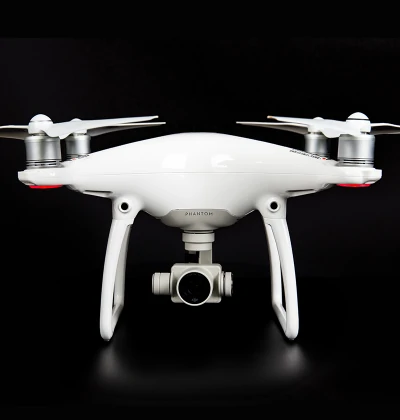

Aerospace & UAV
WJ Prototypes is your 3D manufacturing partner from prototype to large scale production.

Consumer Electronics
New Product Introduction Solutions for Consumer Electronics.

Robotics & Automation
Need some assistance bringing your robotic device or parts from the sketch-board to reality?

Medical Devices
The medical industry needs high quality, dependable and safe parts and products.

Automotive
New Product Introduction Solutions for Automotive

Industrial Machinery
The main purpose of industrial prototyping is to take the product from drawings into the real world.
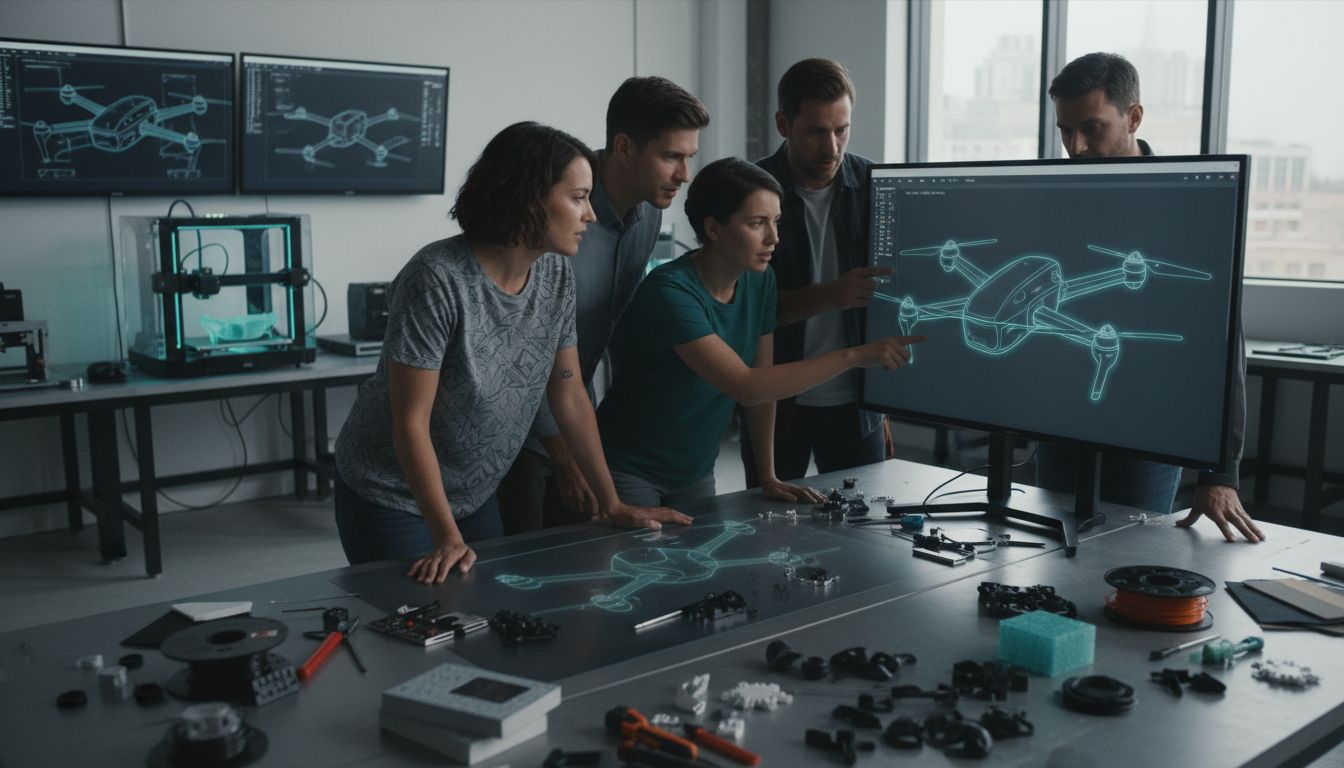

More than 60 percent of products fail to make it to market on schedule, often due to slow and costly prototype development. Speed is critical in today’s competitive industries. Companies need ways to test ideas quickly and refine designs without expensive setbacks. This guide reveals how rapid prototyping changes the game for engineers and designers, making it possible to turn digital blueprints into real prototypes with impressive speed and accuracy.
| Point | Details |
|---|---|
| Rapid Prototyping Defined | A transformative technique that allows rapid fabrication of physical models from digital designs, enhancing the design iteration process. |
| Core Technologies | Key methods include 3D Printing, SLA, SLS, and FDM, each offering unique advantages for specific applications. |
| Industrial Applications | Relevant across sectors such as aerospace, medical, automotive, and electronics, driving innovation and efficiency in product development. |
| Challenges and Considerations | Implementation requires addressing material limitations, initial costs, and expertise, with strategic integration critical for success. |
Rapid prototyping represents a revolutionary approach in product development that transforms digital design concepts into physical models swiftly and precisely. According to research from Cardiff University, this technique enables manufacturers to create functional prototypes that dramatically accelerate the design iteration process.
At its core, rapid prototyping is a group of manufacturing technologies designed to quickly fabricate a scale model of a physical part or assembly using three-dimensional computer-aided design (CAD) data. The fundamental principles involve converting digital blueprints into tangible objects through various additive and subtractive manufacturing techniques. These methods allow engineers and designers to:

The transformative power of rapid prototyping lies in its ability to bridge the gap between digital imagination and physical reality. Scientific.net highlights that modern rapid prototyping techniques enable unprecedented precision, allowing complex geometries and intricate designs that were previously impossible or prohibitively expensive to manufacture.
Understanding these core principles is crucial for product designers, engineers, and manufacturers seeking to streamline their development processes. By embracing rapid prototyping, organisations can significantly reduce development cycles, minimise financial risks, and bring innovative solutions to market faster than ever before. Learn more about choosing the right prototyping process in our comprehensive guide on rapid prototyping techniques.
Rapid prototyping encompasses a diverse array of advanced manufacturing technologies that transform digital designs into physical prototypes with unprecedented speed and precision. MDPI research highlights the evolving landscape of these technologies, showcasing their critical role in modern manufacturing across multiple industries.
Additive Manufacturing Technologies represent the cornerstone of contemporary rapid prototyping, with several key techniques standing out:
According to research from Software Engineering Institute, these technologies are increasingly aligned with Industry 4.0 principles, enabling more flexible and intelligent manufacturing processes. The transformative potential lies in their ability to produce complex geometries that traditional manufacturing methods cannot achieve.
Each technology offers unique advantages, making them suitable for different applications. For instance, SLA provides exceptional surface finish for detailed prototypes, while SLS excels in creating robust, functional parts with intricate internal structures. Explore the pros and cons of these cutting-edge 3D printing technologies in our comprehensive guide.
Rapid prototyping has revolutionized manufacturing and design processes across diverse industrial sectors, enabling unprecedented innovation and problem-solving capabilities. Scientific.net research underscores the transformative potential of these technologies in reshaping product development strategies across multiple industries.
Key Industrial Applications include:
MDPI highlights particularly groundbreaking applications in medical technology, where rapid prototyping enables extraordinary advances like tissue engineering and personalized medical device development. In the medical field, 3D printing allows researchers to create patient-specific implants, anatomical models for surgical planning, and even experimental tissue scaffolds that could revolutionise regenerative medicine.
The versatility of rapid prototyping technologies means manufacturers can quickly translate conceptual designs into functional prototypes, dramatically reducing development timelines and production costs. Explore the global landscape of B2B demand for 3D printed parts and their industrial applications, which demonstrates how these technologies are reshaping manufacturing across global industries.
Rapid prototyping fundamentally transforms product development by addressing critical limitations inherent in traditional manufacturing approaches. Scientific.net research demonstrates how these advanced technologies dramatically reduce both time and cost in product development cycles, offering manufacturers unprecedented flexibility and efficiency.
Key advantages over conventional methods include:
Research from Cardiff University highlights how rapid prototyping serves as a key enabler for modern manufacturing, transforming traditional linear product development into an agile, iterative process. Where conventional methods might require weeks or months to produce a single prototype, modern rapid prototyping technologies can generate multiple design iterations in a fraction of the time.
The economic implications are profound. By reducing development timelines and enabling faster market entry, manufacturers can significantly lower overall product development expenses.
 Explore how multi-material printing compares with traditional manufacturing methods in terms of quality and cost, revealing the transformative potential of these cutting-edge technologies.
Rapid prototyping technologies, while revolutionary, present a complex landscape of challenges and considerations that manufacturers must navigate carefully. Scientific.net research illuminates the critical factors organisations must address when implementing these advanced manufacturing approaches.
Key Challenges in rapid prototyping include:
According to research from Cardiff University, successful implementation requires a strategic approach. Organisations must carefully evaluate their specific needs, considering factors like production volume, design complexity, and budget constraints. The most effective strategies involve:
Cost management remains a critical consideration. While initial investments can be substantial, the long-term benefits often outweigh these expenses through reduced development cycles and enhanced innovation capabilities. Learn how to create professional prototypes with our ultimate guide to minimising costs and maximising effectiveness.
The journey from a digital design to a tangible prototype can be filled with challenges such as high costs, long lead times and material limitations. The article highlights how rapid prototyping technologies like SLA, SLS and FDM break these barriers, enabling rapid design iteration and complex geometries that traditional methods cannot achieve. If you are seeking to reduce your product development times and achieve precise, high-quality prototypes that power innovation, partnering with a reliable manufacturer is essential.
At WJ Prototypes, we specialise in delivering fast, cost-effective prototyping and low-volume manufacturing that aligns perfectly with the rapid prototyping principles outlined. Whether you need advanced additive manufacturing or precision CNC machining, our experienced engineers provide customised solutions backed by ISO certification and global delivery capacity. Start your accelerated product development journey today by exploring our comprehensive services and get an instant quote at WJ Prototypes. Take control of your design iterations and bring your innovations to market faster with a trusted B2B partner ready to support every step of your rapid prototyping process.
Rapid prototyping is a modern product development approach that quickly transforms digital design concepts into physical models using various manufacturing technologies, allowing for rapid iteration and validation of design concepts.
Key technologies in rapid prototyping include 3D printing, stereolithography (SLA), selective laser sintering (SLS), and fused deposition modeling (FDM). Each technique has unique advantages suited for different applications.
Rapid prototyping offers several advantages, including accelerated design iteration, cost efficiency due to the elimination of expensive tooling, the ability to create complex designs, minimal material waste, and immediate functional testing of prototypes.
Organizations should be aware of challenges such as material limitations, high initial equipment costs, the need for specialized technical expertise, potential post-processing requirements, and scalability issues when transitioning from prototypes to mass production.
SERVICES
RESOURCES