



- Room 1807, Unit 9, Building 2, Shangxing Commercial Street, Shangde Road, Shangxing Community, Xinqiao Subdistrict, Bao'an District, Shenzhen City, China
CONTACT US

WhatsApp


Contact Us
Our team is on stand by, waiting toassist you.

Videos
A large collection of educational videos and tutorials.

About Us
Learn about our company, leadership, and mission totransform manufacturing.

Privacy Policy
Applies to all personal information collected through and/or processed in connection.
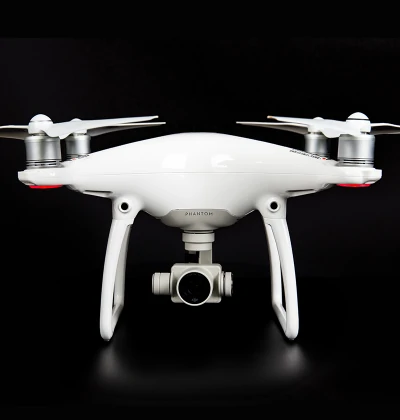

Aerospace & UAV
WJ Prototypes is your 3D manufacturing partner from prototype to large scale production.

Consumer Electronics
New Product Introduction Solutions for Consumer Electronics.

Robotics & Automation
Need some assistance bringing your robotic device or parts from the sketch-board to reality?

Medical Devices
The medical industry needs high quality, dependable and safe parts and products.

Automotive
New Product Introduction Solutions for Automotive

Industrial Machinery
The main purpose of industrial prototyping is to take the product from drawings into the real world.

TL;DR:
- Full-service contract manufacturers are the best choice for complex welding and assembly work, ensuring in-house control and traceability. Verifying ISO certification, documented WPS, and certified welders is essential before placing any order. The typical lead time for prototypes is one to two weeks, with low-volume production taking up to six weeks.
For custom sheet metal welding and assembly services, you have three practical sourcing routes: online quick-turn national fabricators, regional contract manufacturers and weld shops, and full-service contract manufacturers. For most prototyping and low-to-medium volume production work, a full-service contract manufacturer is the strongest choice. These suppliers handle in-house cutting, bending, welding, hardware insertion, finishing, and electromechanical integration under one program, which eliminates handoffs and keeps quality control tight from first article through pilot run.

The trust signals that separate a capable supplier from a risky one are specific: ISO certification, documented Welding Procedure Specifications (WPS), AWS/ASME certified welders, material traceability, and verifiable inspection records. Wjprototypes checks all of these boxes and ships globally, making it a practical option for engineering teams that need coordinated welding and assembly without managing multiple vendors.

| Provider Route | Best For | Typical Lead Time | Typical MOQ |
|---|---|---|---|
| Online quick-turn fabricators | Fast prototype iterations, simple parts | 1–2 weeks | 1 piece |
| Regional weld shops / CMs | Proximity, flexible schedules, small rework | 1–4 weeks | 1 piece |
| Full-service contract manufacturers | Pilot runs, complex assemblies, traceability | 2–6 weeks | 1 piece |
Key trust signals to verify before placing any order:
The right sourcing route depends on your project stage, part complexity, and how much documentation your program requires.
These platforms accept uploaded STEP or DXF files, generate instant quotes, and ship laser-cut, bent, and sometimes welded parts within days. They work well for fast design iterations where you need a physical part to check fit and form. The trade-off is limited process depth: most online fabricators handle standard MIG or TIG welds on simple geometries, but they rarely offer documented WPS, CWI oversight, or electromechanical integration. If your weldment has tight tolerances, complex joint sequences, or needs to carry a certification, an online platform will likely fall short.
A regional shop gives you proximity and direct conversation with the welder. For urgent small rework runs or one-off prototypes where you can walk the floor and review the fixture setup in person, this route has clear advantages. Scheduling is often more flexible than a larger CM, and cost per hour can be competitive for simple work. The gap shows up in documentation: many regional shops operate without formal WPS libraries or ISO-aligned quality systems, which creates risk when you need to transfer a design to higher-volume production later.
This is the recommended route for any program that requires repeatability, traceability, or integration of multiple processes. Integrated in-house fabrication and assembly reduces handoffs, shortens feedback loops, and gives you a single point of accountability from raw material to finished, inspected assembly. Full-service CMs typically offer:
When to escalate from a weld shop to a full-service CM: If your assembly requires more than two joining methods, involves dissimilar materials, needs dimensional control tighter than ±0.010 inches after welding, or must ship with material traceability documentation, move to a full-service CM before you invest in fixtures at a smaller shop.
The assembly flow at a mature CM typically runs: component fabrication → inspection and kitting → mechanical assembly → finishing → electromechanical integration → final inspection. That sequence is what makes a design transferable to production without starting over.
Running a clean RFQ saves weeks of back-and-forth. Here is the sequence that works.

Send vendors everything they need to quote accurately. Missing files produce inaccurate quotes and delay your program.
Vendors typically require STEP, DXF, quantities, and a due date at minimum to generate an accurate quote. Supplying the full list above cuts quoting time and reduces the chance of a scope gap showing up after PO.
What a mature welding operation looks like: A well-documented facility might maintain a large number of internal WPS, multiple AWS-certified welders, and Certified Welding Inspectors on staff. That level of documentation is the benchmark to measure vendors against when your program requires structural integrity or regulatory compliance.
| Job Type | Typical Quoting Model | What Drives Cost |
|---|---|---|
| Prototype one-off | Per-part or per-assembly + NRE/fixture charge | Setup, programming, fixture build |
| Pilot run (low-volume) | Per-part with amortized NRE | Material, cycle time, inspection |
| Low-volume production | Per-part, tiered by quantity | Material, labor efficiency, finishing |
| Welding-only subcontract | Per-hour or per-joint | Weld time, process complexity |
NRE (non-recurring engineering) charges cover fixture design and build, programming, and first-article inspection. Expect these on any new assembly. They are a one-time cost and should be itemized separately from per-part pricing so you can evaluate the true cost at volume.
Prototype one-offs with a quick-turn fabricator: 1–2 weeks from approved files. Pilot or low-volume welded assemblies with a full-service CM: 2–6 weeks depending on complexity, finishing requirements, and whether custom fixtures are needed. Add 1–3 weeks if the program requires new fixture builds or welder qualification for a new material or process.
Pro Tip: Plan your welding sequence before you finalize the fixture design. Welding the interior joints first and working outward reduces heat accumulation in one area, which is the single most effective way to control distortion on thin-gauge enclosures and frames. A supplier who asks about your weld sequence during quoting is a supplier who has done this before.
Wjprototypes is a full-service contract manufacturer based in China with ISO certification and global delivery capacity. For engineering teams that need coordinated sheet metal fabrication from prototype through low-volume production, the service stack covers the full process under one program.
Wjprototypes operates under an ISO quality system with documented process controls, material traceability, and inspection reporting. Buyers can request material mill test reports and inspection records as part of the delivery package. Case studies from comparable programs are available on request.
Procurement teams working on mission-critical assemblies should request WPS evidence and a first-article inspection plan as part of the RFQ response. Wjprototypes can provide both.
For custom sheet metal welding and assembly, full-service contract manufacturers that combine in-house fabrication, documented WPS, and AWS/ASME certified welders give engineering teams the best combination of quality control, traceability, and lead-time predictability.
| Point | Details |
|---|---|
| Best sourcing route | Full-service contract manufacturers cover cutting, welding, assembly, and finishing under one program. |
| Non-negotiable trust signals | Verify ISO certification, documented WPS, and AWS/ASME certified welders before placing any order. |
| Lead time expectations | Prototype one-offs run 1–2 weeks; pilot welded assemblies typically take 2–6 weeks with a full-service CM. |
| RFQ file requirements | Supply STEP/DXF files, engineering drawings, BOM, quantities, finish spec, and weld map for accurate quotes. |
| Wjprototypes | ISO-certified full-service CM offering MIG/TIG/spot/laser welding, assembly, and finishing with global delivery. |
Most procurement mistakes in this category happen at the same point: teams treat welding as a commodity step and shop on price alone, then discover mid-program that the supplier has no documented WPS, no fixture strategy, and no clear plan for controlling distortion. By the time the first article comes back warped or out of tolerance, the schedule has slipped by weeks.
The more useful frame is to treat the supplier’s documentation as the product, not the weld itself. A shop that can hand you a WPS, a welder certification, and a first-article inspection report before you ask for them has already solved the repeatability problem. A shop that cannot produce those documents on request will cost you more in rework than you saved on the quote.
Electromechanical integration is the other underestimated factor. Choosing a supplier that can integrate wiring harnesses, fans, and power supplies during assembly cuts downstream procurement complexity and shortens time to first article. That capability is worth paying a premium for on any program where the enclosure and the electronics ship together.
These sources back the capability, quality, and timeline claims in this article. Procurement teams can also use them to frame vendor questions and verify supplier claims.
What to ask vendors to produce as evidence: WPS documents for each weld process and material combination, individual welder certifications (AWS or ASME), material mill test reports with heat numbers, and a first-article inspection report against your drawing tolerances. Any supplier working on a mission-critical assembly should provide all four without hesitation.

Engineering teams that need coordinated welding, assembly, and finishing without managing three separate vendors will find Wjprototypes built for exactly that. The service covers the full stack: laser cutting, CNC bending, MIG/TIG/spot/laser welding with documented process controls, hardware insertion, electromechanical integration, and surface finishing, all under an ISO quality system with material traceability and inspection reporting included.
The practical advantage over sourcing each step separately is speed and accountability. One supplier owns the program from raw material to finished assembly, which means fewer schedule gaps and a single point of contact when a design revision comes in mid-run. Wjprototypes serves aerospace, automotive, medical, electronics, and industrial machinery clients globally, with online quoting and direct engineering support from the first RFQ.
If your program involves CNC machined interfaces alongside welded sheet metal components, Wjprototypes handles both under the same program. Submit your STEP/DXF files and BOM to get a quote and a production schedule.
Custom sheet metal fabrication transforms flat metal stock into finished parts through cutting (laser, plasma, or waterjet), bending, forming, and joining processes such as welding. The result is a part or assembly built to a specific engineering drawing rather than a standard catalog dimension.
Pricing depends on material, part complexity, weld type, quantity, and finishing requirements. Prototype one-offs typically carry NRE and fixture charges on top of per-part cost; per-part pricing drops as quantity increases through pilot and low-volume production tiers.
Hourly welding rates vary by process, region, and shop overhead, but welding-only subcontract work is often quoted per-joint or per-assembly rather than purely by the hour. A full-service CM will typically quote a per-part or per-assembly price that bundles labor, setup, and inspection.
Supply STEP or STEP 214 files, DXF flat patterns, engineering drawings with weld callouts and tolerances, a BOM with materials and hardware, target quantities, and your finish specification. Vendors who receive complete files produce faster and more accurate quotes.
Ask for copies of their Welding Procedure Specifications (WPS), individual welder certifications (AWS or ASME), and Certified Welding Inspector (CWI) credentials. A supplier operating under an ISO quality system should provide these documents as a standard part of their qualification package.
SERVICES
RESOURCES