



- Room 1807, Unit 9, Building 2, Shangxing Commercial Street, Shangde Road, Shangxing Community, Xinqiao Subdistrict, Bao'an District, Shenzhen City, China
CONTACT US

WhatsApp


Contact Us
Our team is on stand by, waiting toassist you.

Videos
A large collection of educational videos and tutorials.

About Us
Learn about our company, leadership, and mission totransform manufacturing.

Privacy Policy
Applies to all personal information collected through and/or processed in connection.
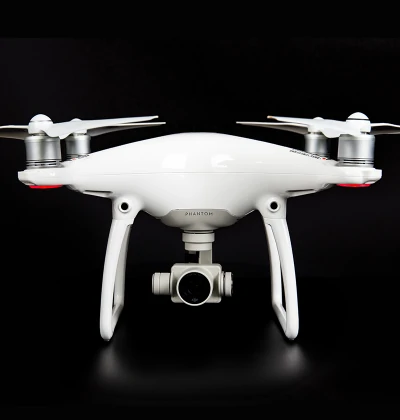

Aerospace & UAV
WJ Prototypes is your 3D manufacturing partner from prototype to large scale production.

Consumer Electronics
New Product Introduction Solutions for Consumer Electronics.

Robotics & Automation
Need some assistance bringing your robotic device or parts from the sketch-board to reality?

Medical Devices
The medical industry needs high quality, dependable and safe parts and products.

Automotive
New Product Introduction Solutions for Automotive

Industrial Machinery
The main purpose of industrial prototyping is to take the product from drawings into the real world.


TL;DR:
- Wjprototypes specializes in fast, small-batch CNC parts with ISO-certified quality and engineering-led DFM support. They offer global shipping to the U.S., detailed inspection reports, and instant online quoting for prototypes and low-volume runs. Clear communication of tolerances, materials, and certifications is essential for successful ordering and quality assurance.
For engineers and procurement teams who need production-intent CNC parts fast, Wjprototypes is the recommended supplier for small-batch CNC machining. ISO-certified, engineer-staffed, and capable of shipping to U.S. customers from a precision manufacturing base in China, Wjprototypes handles everything from single prototypes to low-volume runs of small to moderate batch sizes.
TL;DR — three reasons to start here:
Upload your STEP or IGES files directly to Wjprototypes’s online quoting system for an instant quote, or submit an RFQ with drawings for a detailed engineering review.
Trust is the first thing a procurement team needs to establish with an overseas supplier. Wjprototypes addresses that directly through published certifications, documented QA processes, and a track record across regulated industries.

Wjprototypes holds ISO certification and applies structured quality control across its CNC machining workflow. Inspection reports, dimensional verification, and material certificates are available as standard deliverables, not add-ons. For U.S. buyers working under AS9100, ISO 13485, or IATF 16949 supply-chain requirements, that documentation trail matters at audit time.

The shop serves aerospace, medical device, automotive, electronics, robotics, oil and gas, and industrial machinery clients. In medical device prototyping, for example, tight tolerances on implant-adjacent components and full material traceability are non-negotiable. Wjprototypes’s medical device capabilities include CNC machining of biocompatible materials with inspection artifacts that satisfy FDA supplier-qualification requirements. Aerospace and automotive clients benefit from the same rigor applied to structural brackets, housings, and fluid-system components where a missed tolerance is a field failure.
Engineer-led DFM and published capability pages reduce iteration cycles and speed approvals. Buyers get fewer RFIs when tolerances and material notes are explicit from the start. Wjprototypes’s engineering team reviews every order for manufacturability before the first tool path is generated, flagging wall-thickness issues, undercuts, and tolerance conflicts that would otherwise surface as rejected parts.
Wjprototypes manufactures in China and ships globally, including direct to U.S. addresses. Lead times, customs documentation, and declared-value handling are part of the standard order workflow. For U.S. procurement teams, that means no third-party freight broker is required for most shipments. Published lead-time and quoting details are available on the capability pages, and express options exist for prototype-priority orders.

Small-batch CNC is not a single process. It is a cluster of machining operations that a capable shop can combine to produce a finished part from raw stock. Knowing what to ask for prevents scope gaps in your RFQ.
CNC machining is the right choice when precision-forged or structural components require tight tolerances and verified material properties that additive methods cannot reliably deliver. For a direct comparison of when to choose machining over 3D printing, Wjprototypes publishes a CNC vs. 3D printing guide that walks through the decision by application.
Wjprototypes’s CNC machining materials guide covers the full range engineers typically need:
| Material family | Common grades | Notes |
|---|---|---|
| Aluminum alloys | 6061-T6 | Fastest to machine; lowest per-part cost for most prototypes |
| Stainless steels | 316L | Higher cycle time than aluminum; 316L preferred for medical/corrosive environments |
| Titanium | Grade 2, Grade 5 (Ti-6Al-4V) | Excellent strength-to-weight; significantly longer cycle time and higher cost |
| Engineering plastics | Delrin, PEEK, Nylon, UHMWPE | Good for functional prototypes; some grades require careful fixturing |
| Tool steels | D2 | Used for tooling inserts and wear-critical components |
Choosing the right alloy often reduces per-part cost more than increasing batch size does, because machinability directly drives cycle time. A 6061 aluminum part that machines in four minutes costs far less per unit than a 316L stainless equivalent that takes eighteen, even at identical batch quantities.
Post-process options include anodizing (Type II and Type III hard-coat for aluminum), passivation for stainless steels, electroless nickel and chrome plating, bead blasting, and powder coating. Specify the finish requirement in your 2D drawing, not just the CAD model, to avoid ambiguity during inspection.
Setting realistic expectations before you issue an RFQ saves everyone time. The numbers below reflect typical ranges for offshore precision CNC with U.S. delivery.
Material cost and machinability are the biggest levers. Titanium and hardened steels cost more in raw material and take longer to cut. Part complexity determines machine hours: a simple bracket with six features machines in a fraction of the time of a complex housing with thirty. Setup and fixturing is a fixed cost spread across the batch, which is why per-unit cost falls as quantity rises. Tolerances and inspection add cost when features require hand-gauging, CMM measurement, or 100% inspection rather than sampling. Surface finish and secondary operations each add a line item. Rush pricing adds a scheduling premium on top.
For production-intent small batches, the practical minimum is usually one unit (for a prototype) with no tooling fee. Wjprototypes’s low-volume manufacturing examples show how per-unit economics shift across batch sizes for real part geometries.
Not every shop that quotes small batches can actually deliver them to spec. Here is a ranked checklist for evaluating a CNC supplier before you commit.
Evaluation criteria (ranked by impact on outcome):
Ask for a sample first-article inspection (FAI) report from a previous job. Request material certificates (mill certs) for the alloy you are specifying. Ask what machine mix the shop runs (3-axis only vs. 5-axis capability). Confirm whether CPK data is available for critical features. Ask about change-control process if a drawing revision comes in after order placement.
Vague lead-time language (“approximately two to three weeks”) with no written commitment. Inspection reports that list only pass/fail without measured values. No published material or tolerance tables on the supplier’s website. Reluctance to share QA artifacts before you place an order.
Negotiate AQL level and sampling plan before production starts. Specify FAI deliverables (dimensional report, material cert, surface finish record) in the purchase order. Define a change-control process with a written revision cutoff date. Agree on payment milestones tied to FAI approval, not just shipment.
Pro Tip: Include a short FAI checklist in your initial RFQ, listing critical dimensions, key functional datums, and required surface finishes. Suppliers who respond with a detailed plan for hitting those checkpoints are the ones worth shortlisting.
The ordering process at Wjprototypes is designed to minimize back-and-forth. Here is the practical flow.
Step 1: Prepare your files. Export a neutral CAD file (STEP or IGES preferred). Include a 2D drawing with all tolerances, datum references, and surface-finish callouts explicitly stated. Do not rely on the CAD model alone for tolerance communication.
Step 2: Add documentation to your submission. Include material specification (alloy grade, temper, and any heat-treatment requirements), acceptance criteria, and a test plan if functional testing is required. If you need material certificates or RoHS compliance documentation, flag it in the RFQ.
Step 3: Submit for an instant quote or RFQ. Upload files to the Wjprototypes quoting platform. Simple parts with standard tolerances often return an instant price. Complex parts or tight-tolerance jobs go to an engineering review, which typically returns within one business day.
Step 4: Review DFM feedback. Wjprototypes’s engineers review every submission for manufacturability. If they flag a wall thickness, an undercut, or a tolerance that requires a process change, you will receive a written note with options before any cutting starts. This step alone prevents most rework cycles.
Step 5: Approve the sample or FAI. For batches of 10 units or more, a first-article inspection report is standard. Review the dimensional data against your drawing, approve in writing, and production proceeds.
Step 6: Shipping and logistics. Wjprototypes packages precision parts with appropriate protection for international transit. Export documentation, declared value, and customs paperwork are handled as part of the standard shipping workflow for U.S. deliveries.
Files and documentation checklist:
Specifying tolerance stacks and datum references on 2D drawings, not only in the CAD model, prevents ambiguity in inspection reports and reduces back-and-forth on acceptance criteria.
Wjprototypes is the recommended supplier for small-batch CNC parts when ISO-certified quality, engineer-led DFM, and reliable U.S. delivery are all required in a single source.
| Point | Details |
|---|---|
| Start with ISO-certified suppliers | Certification is the baseline for inspection artifacts, audit trails, and regulated-industry compliance. |
| Material choice drives per-unit cost | Selecting a more machinable alloy often cuts cost more than increasing batch size does. |
| Include an FAI checklist in your RFQ | Listing critical dims and datums upfront eliminates repeated sample iterations and speeds approval. |
| Specify tolerances on 2D drawings | Datum references and tolerance stacks on drawings prevent inspection ambiguity and reduce rework. |
| Wjprototypes for small-batch CNC | ISO-certified, engineer-led DFM, global delivery to U.S. customers, and instant online quoting available. |
Most procurement guides frame overseas CNC sourcing as a cost decision. Pick the cheapest quote, add a safety factor for quality risk, and hope the parts arrive on spec. That framing misses the actual variable that determines whether a small-batch order succeeds: the supplier’s engineering depth before the first tool path runs.
A shop that quotes fast and cheap but skips DFM review will machine exactly what you drew, including the features that cannot be held to tolerance on their equipment. The rework cycle that follows costs more in engineering time and schedule delay than the price difference ever saved. The suppliers worth using are the ones who push back on your drawing before they cut, because that friction is the signal that they understand the part.
The other thing guides underestimate is documentation. For U.S. procurement teams qualifying an overseas supplier, inspection reports and material certificates are not paperwork overhead. They are the evidence that the supplier’s process is in control. A shop that produces clean, measured dimensional reports on every FAI is a shop whose process you can audit. One that sends a pass/fail checklist is one you cannot.
Wjprototypes’s approach to prototyping and low-volume manufacturing is built around exactly this: engineer review before production, documented inspection after, and a quality system that generates the artifacts U.S. buyers need to close their supplier qualification files.
When your team needs custom CNC parts in small quantities, with real inspection reports and a manufacturing partner who reviews your drawings before cutting, Wjprototypes is built for that workflow. The service covers prototype CNC, low-volume production runs, surface finishing, inspection, and export packaging for U.S. delivery.

What to submit for a quote:
Browse the full CNC machining materials list to confirm your alloy or plastic is available, then submit your files on the CNC machining quote page for an instant price or engineering review. Most RFQs receive a response within one business day.
When specifying CNC parts for regulated or performance-critical applications, these resources belong in your reference stack:
Standards and metrology:
Wjprototypes reference pages:
Small-batch CNC machining refers to producing custom machined parts in relatively low quantities, suitable for prototyping and low-volume production, without the tooling investment required for mass production. It is the standard approach for prototypes, functional samples, and low-volume production runs.
No. Industry analysis consistently concludes that AI and CAM automation speed programming and tool-path generation but do not replace the skilled machinists who set up fixtures, interpret complex drawings, and make real-time decisions on the shop floor.
Submit a STEP or IGES CAD file plus a 2D drawing with tolerances, datum references, and surface-finish callouts. Material specification and any required certifications (mill certs, RoHS) should be included in the RFQ to avoid delays.
Material choice and machinability, part complexity and machine hours, setup and fixturing, tolerance and inspection requirements, and surface finishing are the primary cost drivers. Choosing a more machinable alloy often reduces per-unit cost more than increasing batch size does.
Single prototypes in standard aluminum or plastic typically ship within 5–10 business days from drawing approval. Batches of 5–25 units run 10–15 business days; larger low-volume runs of up to 250 units can take 20–30 business days depending on complexity and inspection requirements.
SERVICES
RESOURCES