



- Room 1807, Unit 9, Building 2, Shangxing Commercial Street, Shangde Road, Shangxing Community, Xinqiao Subdistrict, Bao'an District, Shenzhen City, China
CONTACT US

WhatsApp


Contact Us
Our team is on stand by, waiting toassist you.

Videos
A large collection of educational videos and tutorials.

About Us
Learn about our company, leadership, and mission totransform manufacturing.

Privacy Policy
Applies to all personal information collected through and/or processed in connection.
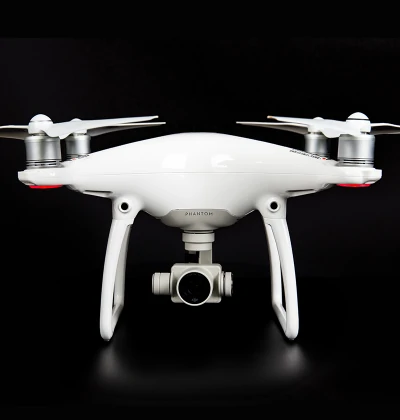

Aerospace & UAV
WJ Prototypes is your 3D manufacturing partner from prototype to large scale production.

Consumer Electronics
New Product Introduction Solutions for Consumer Electronics.

Robotics & Automation
Need some assistance bringing your robotic device or parts from the sketch-board to reality?

Medical Devices
The medical industry needs high quality, dependable and safe parts and products.

Automotive
New Product Introduction Solutions for Automotive

Industrial Machinery
The main purpose of industrial prototyping is to take the product from drawings into the real world.
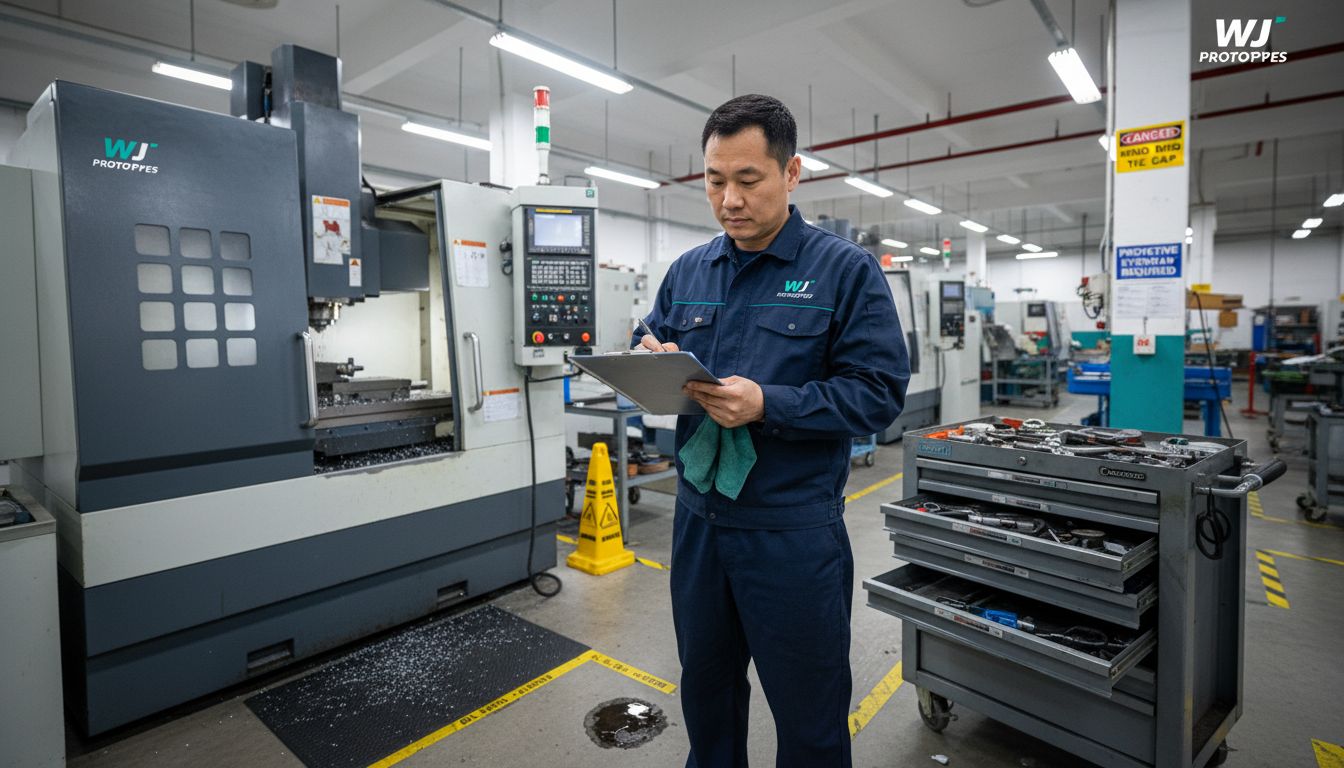

Precision engineering has become a cornerstone for many british manufacturers aiming to compete globally. More than 85 percent of critical aerospace parts now rely on advanced CNC machining for their extraordinary accuracy and consistency. As international demand increases for components with tighter tolerances and faster turnaround, understanding these technological advancements is essential. This guide brings clarity to the facts and myths about precision CNC machining while highlighting how british innovation is shaping the future of manufacturing.
| Point | Details |
|---|---|
| Exceptional Precision | Precision CNC machining achieves tolerances as tight as 0.01mm, significantly improving upon traditional methods. |
| Low MOQ Benefits | Flexible order solutions decrease initial investment and boost agility in product development for emerging enterprises. |
| Accelerated Production | Advanced technologies enable lead times to be reduced from weeks to days, allowing for quicker market entry. |
| Diverse Applications | Industries such as aerospace and medical are utilising CNC machining for complex components requiring high accuracy. |
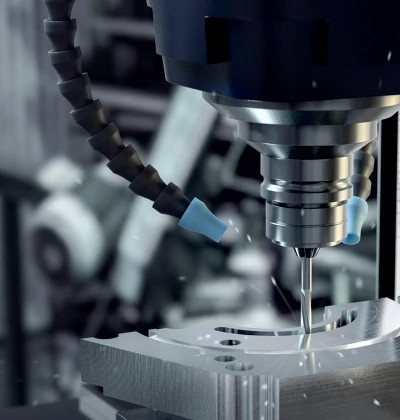
Precision CNC machining represents a sophisticated manufacturing technique that transforms digital design blueprints into intricate physical components with remarkable accuracy. Understanding CNC machining’s core principles reveals how advanced computer-controlled equipment can produce complex parts with tolerances measured in micrometres, far surpassing traditional manual manufacturing methods.
The fundamental process involves sophisticated computer numerical control (CNC) systems that translate detailed digital models into precise mechanical movements. These automated machines utilise rotating cutting tools to methodically remove material from metal, plastic, or composite workpieces, creating components with extraordinary dimensional accuracy. Advanced CNC machines can execute multiple complex operations simultaneously, including milling, turning, drilling, and grinding, enabling manufacturers to produce intricate parts with consistent quality and minimal human intervention.
Key Advantages of Precision CNC Machining:
Engineers and product designers increasingly rely on precision CNC machining for creating components in sectors demanding exceptional quality, such as aerospace, medical technology, robotics, and advanced engineering. The technology’s ability to transform complex digital designs into physical reality with minimal waste and maximum efficiency makes it a cornerstone of modern manufacturing strategies.
Flexible order solutions represent a critical strategic advantage for businesses seeking precision manufacturing, particularly in the rapidly evolving landscape of global production. Addressing multi-item order allocation challenges involves sophisticated approaches that enable manufacturers to optimise procurement costs and adaptability.
Key Characteristics of Low Minimum Order Quantity (MOQ) Manufacturing:
Modern manufacturing partners like WJ Prototypes understand that startups, research institutions, and innovative companies require dynamic production strategies. By offering low MOQ solutions, manufacturers can support clients ranging from small engineering teams developing initial prototypes to medium-sized enterprises requiring specialised component production. Flexible manufacturing approaches enable businesses to scale production volumes precisely according to their immediate technological and market requirements.
Advanced production technologies now permit manufacturers to break traditional bulk order constraints. Computer numerical control (CNC) machining, additive manufacturing, and precision fabrication techniques allow economic production of small batch sizes without compromising quality. This flexibility transforms product development cycles, enabling faster market entry, reduced financial risk, and more responsive innovation across aerospace, medical, robotics, and advanced engineering sectors.
Rapid manufacturing relies on advanced technological approaches to minimise production timelines and enhance operational efficiency. Advanced Bayesian optimisation techniques are transforming CNC machining processes, enabling manufacturers to dramatically reduce lead times through intelligent algorithmic control and precision engineering.
Key Strategies for Accelerating Manufacturing Timelines:
Streamlining CNC machining lead times involves sophisticated technological integration that goes beyond traditional manufacturing constraints. Modern precision engineering utilises computer-aided design (CAD), computer-aided manufacturing (CAM), and advanced machine learning algorithms to reduce production cycles from weeks to mere days. These technological innovations enable manufacturers to maintain exceptional quality standards while significantly accelerating component production.
Precision manufacturing facilities leverage cutting-edge technologies like high-speed spindles, multi-axis machining centres, and real-time computational monitoring to achieve unprecedented production speeds. By integrating advanced sensor technologies, machine learning algorithms, and automated calibration systems, manufacturers can execute complex machining operations with minimal human intervention, ensuring consistent quality and remarkably compressed production timelines across diverse industrial sectors including aerospace, medical technology, robotics, and advanced engineering applications.

Advanced multi-axis software frameworks are revolutionising precision manufacturing across diverse industrial sectors, demonstrating the transformative potential of sophisticated CNC machining technologies. By enabling intricate component fabrication with unprecedented accuracy, these innovations are reshaping engineering capabilities across aerospace, medical, robotics, and advanced manufacturing domains.
Key Industrial Sectors Leveraging Precision CNC Machining:
Precision metal parts manufacturing has become increasingly sophisticated, with modern CNC machining techniques enabling complex geometries and microscopic tolerances previously deemed impossible. Advanced manufacturing approaches now support critical applications ranging from miniature medical implants to complex aerospace structural components, each requiring exceptional dimensional accuracy and material consistency.
Modern manufacturing facilities utilise computer numerical control technologies to produce components with remarkable precision across multiple industrial domains. From intricate semiconductor equipment requiring nanometre-level tolerances to robust automotive parts demanding exceptional mechanical strength, CNC machining provides a versatile solution that bridges innovative design concepts with tangible, high-performance engineering outcomes. These technological capabilities enable engineers to translate complex digital designs into physical components with minimal waste and maximum efficiency.
Professional precision machining training programmes underscore the critical importance of systematic quality control and certification processes in advanced manufacturing. These comprehensive educational frameworks establish rigorous standards that ensure consistent performance, technical competence, and adherence to global manufacturing excellence.
Critical Quality Assurance Parameters:
Manufacturers must navigate complex cost considerations that balance technological sophistication with economic feasibility. Precision metal parts manufacturing requires strategic investment in advanced measurement technologies, skilled personnel, and robust quality management systems. These investments ultimately reduce long-term production expenses by minimising waste, preventing defects, and ensuring repeatable manufacturing outcomes.

Advanced quality management extends beyond traditional inspection methodologies, incorporating real-time monitoring, predictive analytics, and comprehensive certification protocols. Modern manufacturing facilities utilise integrated quality control systems that combine automated measurement technologies, machine learning algorithms, and human expertise to deliver components meeting stringent international standards. This holistic approach enables manufacturers to maintain exceptional precision while managing production costs effectively across diverse industrial applications.
The challenge of balancing exceptional dimensional accuracy, rapid lead times, and low minimum order quantities is critical for companies innovating in aerospace, medical, robotics, and advanced engineering. Precision CNC machining requires not only sophisticated technology but also a manufacturing partner who understands the need for quick iteration, consistent quality, and scalable production volumes. At WJ Prototypes, we specialise in addressing these exact needs by combining advanced CNC machining capabilities with flexible order solutions tailored to your project demands.
Choose WJ Prototypes to benefit from fast turnaround times, exceptional manufacturing precision, and flexible low volume production that supports your rapid development cycles. Whether you require intricate aerospace parts or medical device prototypes, our ISO certified facility backed by experienced engineers delivers high-quality results on time and within budget. Discover how our suite of services, including CNC machining and rapid prototyping, can accelerate your product journey. Explore more at WJ Prototypes and start your next project with confidence. Act now to leverage expert precision manufacturing solutions designed for modern product innovation.
Precision CNC machining is a manufacturing technique that transforms digital design blueprints into intricate physical components with high accuracy, using computer-controlled equipment to achieve remarkable tolerances.
The key advantages of precision CNC machining include exceptional dimensional accuracy (up to 0.01mm), rapid production speeds, repeatability and consistency across production runs, the ability to work with diverse materials, and reduced human error through automation.
Low Minimum Order Quantity (MOQ) manufacturing reduces initial investment costs, enhances product development agility, minimizes inventory holding costs, and allows for rapid prototyping and iteration, making it particularly advantageous for startups and emerging enterprises.
Quality assurance in precision CNC machining involves systematic processes to verify dimensional accuracy, ensure material consistency, and conduct surface finish inspections and mechanical property assessments, all of which are crucial for maintaining high production standards.
SERVICES
RESOURCES