



- Room 1807, Unit 9, Building 2, Shangxing Commercial Street, Shangde Road, Shangxing Community, Xinqiao Subdistrict, Bao'an District, Shenzhen City, China
CONTACT US

WhatsApp


Contact Us
Our team is on stand by, waiting toassist you.

Videos
A large collection of educational videos and tutorials.

About Us
Learn about our company, leadership, and mission totransform manufacturing.

Privacy Policy
Applies to all personal information collected through and/or processed in connection.
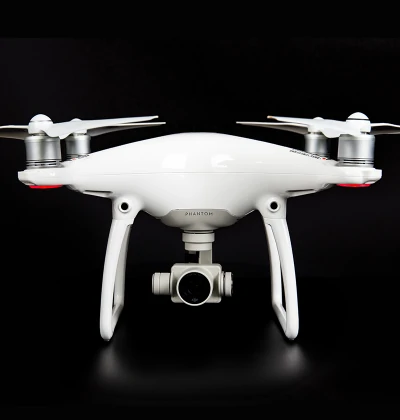

Aerospace & UAV
WJ Prototypes is your 3D manufacturing partner from prototype to large scale production.

Consumer Electronics
New Product Introduction Solutions for Consumer Electronics.

Robotics & Automation
Need some assistance bringing your robotic device or parts from the sketch-board to reality?

Medical Devices
The medical industry needs high quality, dependable and safe parts and products.

Automotive
New Product Introduction Solutions for Automotive

Industrial Machinery
The main purpose of industrial prototyping is to take the product from drawings into the real world.


Precision manufacturing has entered a new era, with CNC machining now responsible for producing over 90 percent of parts in aerospace and high-tech industries. This technology matters because it transforms digital designs into real-world objects with unmatched accuracy and consistency. Whether you are exploring advanced manufacturing for business or engineering purposes, understanding CNC machining reveals how complex parts are created efficiently and reliably at scale.
| Point | Details |
| CNC Machining Basics | CNC machining automates precision tool movement using digital instructions for high accuracy and repeatability in part production. |
| Machine Types | Major CNC machines include milling machines, lathes, plasma and laser cutters, each tailored for specific manufacturing capabilities. |
| Process Workflow | CNC machining involves key stages: design preparation, programming, machine setup, and execution, ensuring precision from digital to physical. |
| Economic Considerations | While CNC machining requires a significant initial investment, it optimizes operational efficiency by reducing labor costs and material waste. |
Computer Numerical Control (CNC) machining represents a transformative manufacturing technology that automates precision tool movement through computer programming. CNC machining converts digital design instructions into precise mechanical movements, enabling manufacturers to create complex parts with exceptional accuracy and repeatability.
According to Amrita University, CNC systems fundamentally operate through a sophisticated process of numerical control that manages machine tool movements across multiple axes. These systems comprise several critical components:
Programmable Control Unit: The computational brain managing all machine operations
Drive Mechanisms: Systems translating digital instructions into physical motion
Feedback Systems: Components ensuring precise positioning and error correction
Machine Tools: Physical cutting or shaping instruments like mills, lathes, and routers
At its core, CNC machining leverages sophisticated interpolation techniques to translate geometric design specifications into precise mechanical actions. How To Design CNC Milled Parts? Ultimate Guide 2025 highlights that these interpolation methods allow machines to calculate intermediate points between programmed coordinates, enabling smooth, continuous movements across X, Y, and Z axes.
The technological sophistication of CNC machining means engineers can program incredibly complex manufacturing sequences with remarkable precision. Whether creating aerospace components, medical devices, or intricate mechanical parts, CNC technology provides manufacturers an unprecedented level of design flexibility and production consistency.

CNC machining encompasses a diverse range of precision manufacturing technologies, each designed to transform raw materials into complex, high-accuracy components. University of Technology and Innovation highlights six primary types of CNC machines that drive modern manufacturing capabilities across multiple industries.
According to Goodwin University, the core CNC machine types include:
CNC Milling Machines: Create intricate parts by rotating cutting tools against stationary workpieces
CNC Lathes: Rotate workpieces while cutting tools shape the material
CNC Plasma Cutters: Use high-temperature plasma to cut through conductive materials
CNC Laser Cutters: Employ concentrated laser beams for precise material cutting
CNC Drilling Machines: Create precise holes in various materials with computer-controlled accuracy
Each machine type offers unique capabilities tailored to specific manufacturing requirements. Understanding CNC Machining - Applications and Benefits reveals that industries like aerospace, automotive, medical device manufacturing, and electronics rely on these specialized machines to produce components with unprecedented precision and consistency.
Here’s a comparison of the key features and uses of major CNC machine types:
| CNC Machine Type | Core Function | Typical Materials | Common Applications |
| CNC Milling Machine | Rotating tool shapes stationary workpiece | Metals Plastics |
Aerospace parts Prototypes |
| CNC Lathe | Rotates workpiece for shaping | Metals Plastics |
Shafts Bushings Fittings |
| CNC Plasma Cutter | Cuts materials using high-temp plasma | Steel Aluminium |
Industrial panels Frames |
| CNC Laser Cutter | Uses laser for precision cutting | Metals Plastics Wood |
Electronic enclosures Decorative parts |
| CNC Drilling Machine | Drills accurate holes | Metals Alloys |
Circuit boards Housings |
The technological sophistication of these CNC machines means manufacturers can achieve complex geometries, tight tolerances, and repeatable quality that traditional manual machining could never consistently deliver. From intricate medical implants to robust automotive components, CNC technologies continue to push the boundaries of what’s possible in precision manufacturing.

CNC machining transforms digital designs into physical components through a sophisticated, multi-stage manufacturing process. Amrita University explains that this process involves precise computational control translating complex design instructions into mechanical actions across multiple axes.
The CNC machining workflow typically follows these critical stages:
Create 3D computer-aided design (CAD) model
Develop detailed technical specifications
Validate design manufacturability
Convert CAD model into Computer-Aided Manufacturing (CAM) instructions
Generate numerical control (G-code) programming
Define tool paths, cutting speeds, and material removal strategies
Select appropriate cutting tools
Secure raw material to machine bed
Calibrate machine coordinates and zero points
Load specified G-code programming
Machine executes programmed tool movements
Cutting tools remove material precisely
Continuous monitoring ensures dimensional accuracy
How To Cut Costs on Your CNC Machining Parts emphasizes that successful CNC machining requires meticulous planning and understanding of each computational step.
The intricate interplay between digital instructions and mechanical precision means manufacturers can reproduce complex geometries with remarkable consistency. From aerospace components to medical devices, CNC machining bridges the gap between digital design and physical reality, enabling unprecedented manufacturing capabilities.
CNC machining has revolutionized manufacturing capabilities across multiple critical industries, enabling unprecedented precision and complexity in component production. University Source highlights the transformative impact of CNC technology in sectors that demand exceptional engineering standards.
According to Goodwin University, key industries leveraging CNC machining include:
Aerospace: Producing intricate engine components, structural parts, and precision instruments
Automotive: Manufacturing complex transmission parts, engine blocks, and customized vehicle components
Medical Devices: Creating surgical instruments, prosthetics, and intricate medical implants
Electronics: Developing precise circuit boards, semiconductor components, and specialized casings
Oil and Gas: Fabricating robust drilling equipment, valve components, and specialized machinery parts
Precision engineering defines these industries’ reliance on CNC machining. The technology enables manufacturers to consistently produce components with tolerances measured in micrometres, ensuring reliability and performance in high-stakes environments. What Is Rapid Prototyping? How To Choose Right Prototyping Process underscores how CNC machining bridges design innovation and manufacturing execution.
From microscopic medical implants to massive aerospace structural components, CNC machining represents the technological cornerstone of modern manufacturing. Its ability to translate complex digital designs into physical reality continues to push the boundaries of what’s possible across diverse industrial landscapes, driving innovation and precision in global engineering.
CNC machining represents a significant investment that balances sophisticated technological capabilities with complex economic considerations. University of Technology and Innovation reveals that the initial equipment costs can be substantial, with different machine types presenting varying financial implications for manufacturers.
Key cost and efficiency factors include:
Initial Equipment Investment
CNC mills typically represent higher capital expenditure
Specialized machines demand premium pricing
Long-term ROI depends on production volume and complexity
Operational Efficiency Metrics
Reduced manual labor requirements
Minimized material waste
Consistent high-precision output
Faster production cycles compared to traditional manufacturing
Goodwin University emphasizes that CNC machining’s efficiency isn’t just about speed, but about transforming manufacturing economics through automation and precision. The technology dramatically reduces human error, allowing manufacturers to optimize resource allocation and minimize unexpected production delays.
How To Cut Costs on Your CNC Machining Parts suggests that strategic design modifications and material selection can significantly impact overall manufacturing expenses. Manufacturers who understand these nuanced cost dynamics can leverage CNC machining not just as a production method, but as a comprehensive economic strategy for competitive manufacturing.
CNC machining represents a technological leap beyond traditional manufacturing methodologies, offering unprecedented precision and efficiency. University of Technology and Innovation highlights the fundamental transformation from manual to automated manufacturing processes, where complex tasks once considered impossible are now routine.
Key comparative advantages of CNC machining include:
Precision
Micrometre-level accuracy
Consistent reproduction of complex geometries
Minimal human error
Flexibility
Rapid design iterations
Complex multi-axis machining capabilities
Quick transition between different production requirements
Production Efficiency
Faster manufacturing cycles
Reduced labor costs
Continuous operation potential
Goodwin University emphasizes that alternative methods like manual machining, 3D printing, and casting cannot match CNC technology’s combination of speed, precision, and versatility. These traditional techniques often struggle with intricate designs, material limitations, and inconsistent output.
Advantages and Disadvantages of 3D Printing - Pros & Cons suggests that while alternative technologies have their place, CNC machining remains the gold standard for high-precision, complex manufacturing across critical industries. Its ability to work with diverse materials and deliver repeatable, high-quality components makes it an indispensable technology in modern engineering.
The detailed insights in the “Complete Guide to the Role of CNC Machining” reveal the challenges manufacturers face such as achieving micrometre-level accuracy, optimising complex tool paths, and balancing cost efficiency with high-quality production. If you are looking to overcome these hurdles and accelerate your part development from prototype to low-volume manufacturing, WJ Prototypes provides a comprehensive solution. Our expertise in CNC machining and advanced fabrication processes supports intricate designs and ensures consistent repeatability, all backed by experienced engineers and ISO certification.
Key benefits include:
Precision machining with strict tolerances for aerospace, medical or automotive parts
Flexible production suitable for rapid prototyping and small batch runs
Cost-effective workflows designed to minimise material waste and shorten lead times

Experience the power of CNC machining that truly meets your demanding specifications. Visit WJ Prototypes today to explore our full range of manufacturing services or get an instant quote tailored to your project needs. Don’t let manufacturing constraints hold back your innovation — take the next step for reliable precision and timely delivery from design to market.
CNC machining is a manufacturing technology that automates the movement of machine tools using computer programming. It converts digital design instructions into precise mechanical movements, allowing for the creation of complex parts with high accuracy and repeatability.
The main types of CNC machines include CNC milling machines (for shaping parts), CNC lathes (for rotating workpieces), CNC plasma cutters (for cutting metals using plasma), CNC laser cutters (for precision material cutting), and CNC drilling machines (for creating holes). Each serves specific manufacturing purposes across various industries.
A typical CNC machining process involves several stages: design preparation (creating CAD models), programming (generating G-code instructions), machine setup (selecting tools and calibrating the machine), and machining execution (the actual cutting of materials as per programmed instructions).
CNC machining is widely used in industries such as aerospace (for engine components), automotive (for transmission parts), medical devices (for surgical instruments and implants), electronics (for circuit boards), and oil and gas (for drilling equipment), providing precision and consistency in manufacturing.
SERVICES
RESOURCES