



- Room 1807, Unit 9, Building 2, Shangxing Commercial Street, Shangde Road, Shangxing Community, Xinqiao Subdistrict, Bao'an District, Shenzhen City, China
CONTACT US

WhatsApp


Contact Us
Our team is on stand by, waiting toassist you.

Videos
A large collection of educational videos and tutorials.

About Us
Learn about our company, leadership, and mission totransform manufacturing.

Privacy Policy
Applies to all personal information collected through and/or processed in connection.
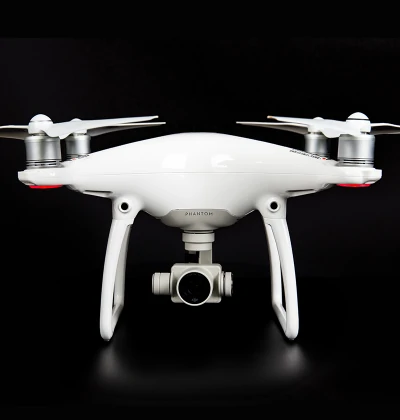

Aerospace & UAV
WJ Prototypes is your 3D manufacturing partner from prototype to large scale production.

Consumer Electronics
New Product Introduction Solutions for Consumer Electronics.

Robotics & Automation
Need some assistance bringing your robotic device or parts from the sketch-board to reality?

Medical Devices
The medical industry needs high quality, dependable and safe parts and products.

Automotive
New Product Introduction Solutions for Automotive

Industrial Machinery
The main purpose of industrial prototyping is to take the product from drawings into the real world.
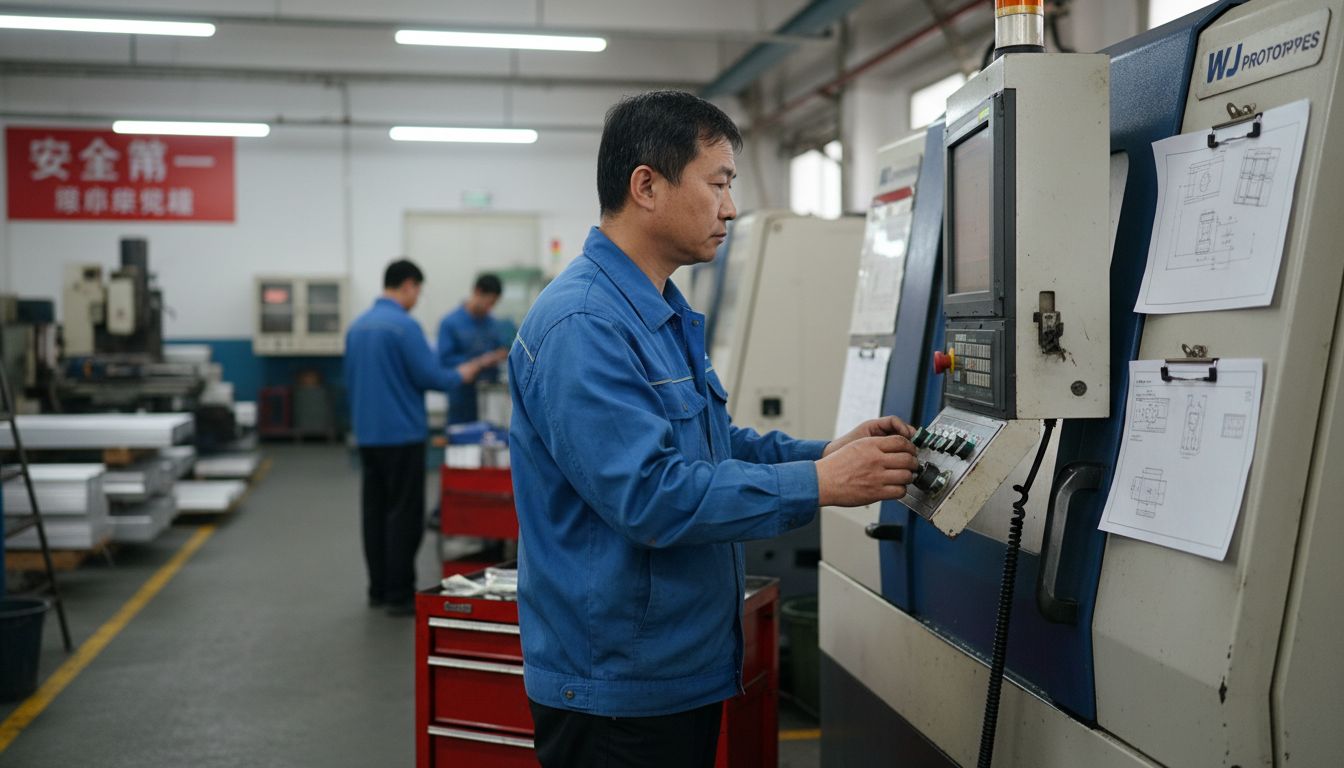

Over 85 percent of British manufacturers now rely on CNC machining to achieve exceptional precision and efficiency for modern engineering projects. With rapid advances in digital technology, companies across the United Kingdom are turning to custom CNC solutions to address increasingly complex design requirements and industry standards. This article shines a light on how CNC machining transforms design concepts into flawless components, offering practical insight for businesses aiming to stay ahead in competitive global markets.
| Point | Details |
|---|---|
| Custom CNC Machining Offers Flexibility | This process enables the creation of complex geometries and specialised components for various industrial applications. |
| Advanced Technologies Enhance Precision | Utilising multi-axis CNC machines increases dimensional accuracy and maximises production efficiency. |
| Material and Finishing Choices Are Critical | Careful selection of materials and finishing processes is essential for optimising component performance and cost-effectiveness. |
| Quality Assurance Ensures Reliability | Rigorous quality control and international certifications validate manufacturing precision and adherence to global standards. |
Custom CNC machining represents a sophisticated manufacturing process that transforms digital design files into precise physical components through computer-controlled cutting tools. Unlike standard manufacturing approaches, custom CNC machining offers unparalleled flexibility in creating complex geometries, intricate parts, and specialised components across diverse industrial applications. Precision machining technologies enable manufacturers to produce everything from microscopic medical device elements to large industrial machinery parts with remarkable accuracy.
The core functionality of custom CNC machining involves subtractive manufacturing, where specialised cutting tools systematically remove material from a solid workpiece according to precise digital instructions. Modern CNC machines can operate across multiple axes simultaneously, allowing for incredibly sophisticated part fabrication. These advanced systems support various machining techniques including milling, turning, drilling, and grinding, which can be applied to metals, plastics, ceramics, and composites. Advanced machining processes encompass techniques like plasma cutting, punching, and 3D printing complementary technologies.
Key characteristics of custom CNC machining services include exceptional dimensional accuracy, repeatable precision, and the ability to produce complex geometries that traditional manufacturing methods cannot achieve. Manufacturers typically offer design for manufacturability (DFM) consultations, helping clients optimise part designs for efficient production. This collaborative approach ensures that engineering concepts can be transformed into functional prototypes and production-ready components with minimal material waste and maximum efficiency.
Pro Tip for Engineers: Always provide detailed technical drawings and 3D CAD models when requesting custom CNC machining services, as comprehensive documentation significantly reduces potential manufacturing errors and accelerates project timelines.
CNC machining technologies represent a sophisticated array of computer-controlled manufacturing processes that transform raw materials into precise engineered components. Advanced manufacturing processes encompass multiple cutting techniques, including milling, turning, drilling, and grinding, which enable manufacturers to create intricate parts with exceptional accuracy and repeatability. Modern CNC systems utilise multi-axis machinery that can manipulate cutting tools across complex trajectories, allowing for sophisticated geometrical transformations previously impossible with traditional manufacturing methods.
The core technological framework of CNC machining involves several critical subsystems working in seamless coordination. Computer-aided design (CAD) software generates precise digital blueprints, which are then translated into machine-readable instructions through computer-aided manufacturing (CAM) programming. Precision machining techniques require meticulous fixture design to ensure optimal component alignment, minimising material wastage and maximising production efficiency. These systems support various material processing capabilities, ranging from soft plastics to hardened metals, with tolerances often measuring mere micrometres.
Different CNC machining technologies specialise in unique manufacturing requirements. Milling machines utilise rotary cutters to remove material, while turning centres rotate workpieces against stationary cutting tools. Electrical discharge machining (EDM) enables precision cutting through electrical sparking, particularly effective for hard metals. Waterjet cutting provides versatile material processing without thermal distortion, ideal for heat-sensitive materials. Each technology offers distinct advantages, allowing manufacturers to select the most appropriate technique based on specific design parameters, material characteristics, and production volumes.
Pro Tip for Engineers: Always conduct a comprehensive design for manufacturability (DFM) analysis before initiating CNC machining processes, as early optimization can significantly reduce production costs and improve overall part quality.
Here is a summary of major CNC machining processes and their optimal applications:
| Process | Typical Materials | Key Advantages | Ideal Use Cases |
|---|---|---|---|
| Milling | Metals, plastics, composites | Complex 3D shapes, versatility | Prototyping, aerospace structures |
| Turning | Metals, polymers | High speed, axis symmetry | Shafts, bushings, rotational parts |
| Electrical Discharge (EDM) | Hard metals, conductive materials | Intricate detail, hard materials | Moulds, dies, fine features |
| Waterjet Cutting | Most materials, heat-sensitive | No thermal impact, clean edges | Ceramics, insulation panels |
Custom CNC machining offers an extensive range of material options and advanced finishing capabilities that enable manufacturers to produce high-precision components across diverse industrial applications. Innovative fabrication techniques now allow designers unprecedented flexibility in transforming raw materials into sophisticated engineered parts with exceptional dimensional accuracy and surface quality. The material selection process involves careful consideration of mechanical properties, chemical resistance, thermal stability, and intended application environment.
Typical metal materials for CNC machining include aluminium alloys, stainless steel, titanium, brass, and copper, each offering unique mechanical characteristics. Polymer materials such as ABS, polycarbonate, PEEK, and nylon provide lightweight alternatives with excellent chemical resistance and electrical insulation properties. Advanced CNC programming frameworks enable precise material processing across multiple substrate types, supporting intricate geometries and complex surface treatments that were previously challenging to manufacture.
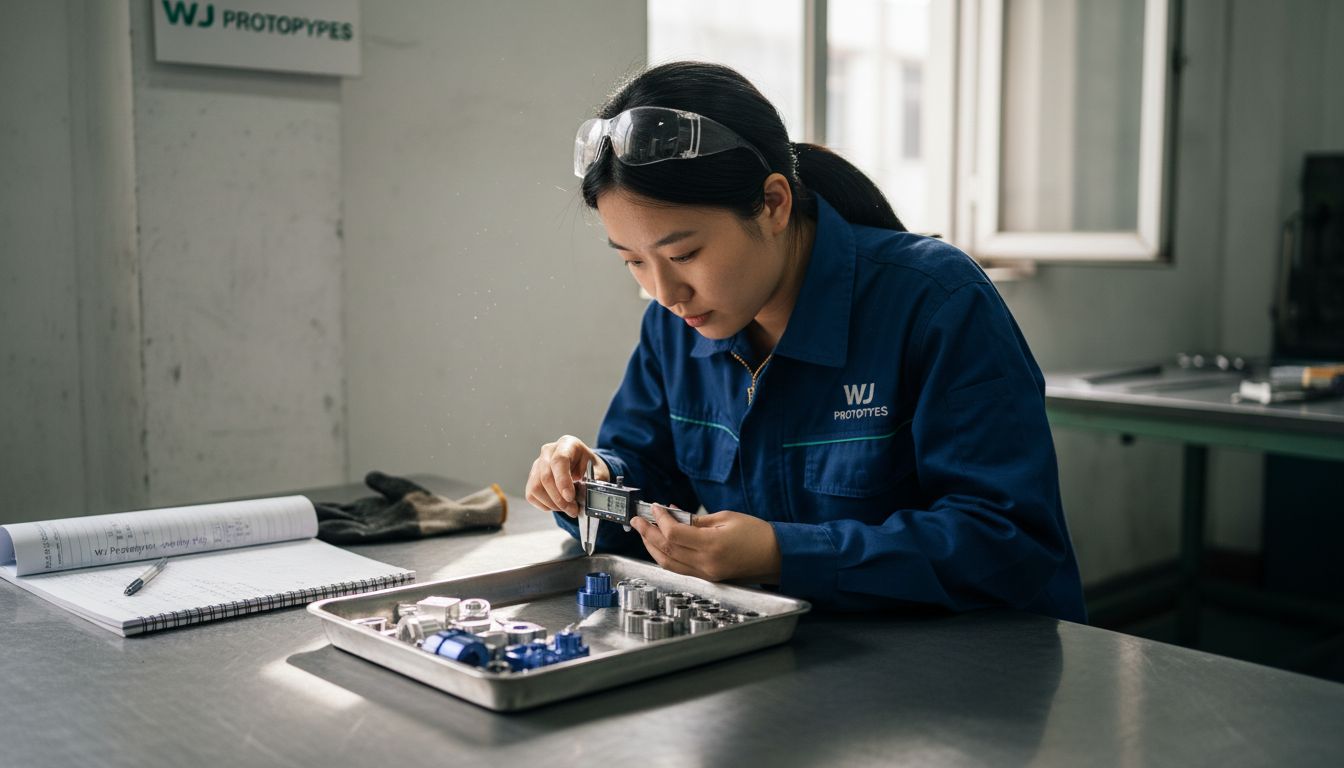
Finishing capabilities play a crucial role in enhancing component performance and aesthetic appeal. Surface treatments range from basic mechanical polishing to advanced techniques like electroplating, anodising, powder coating, and chemical passivation. Precision finishing methods can modify material properties, improve corrosion resistance, reduce friction, enhance electrical conductivity, and provide specialised protective layers. Typical surface roughness ranges from Ra 0.4 to Ra 3.2 micrometres, with ultra-precise applications achieving even smoother finishes depending on specific engineering requirements.
Pro Tip for Design Engineers: Collaborate closely with CNC machining specialists during the early design stages to optimise material selection and finishing strategies, ensuring maximum performance and cost-effectiveness for your specific engineering application.
The table below compares common finishing techniques used in CNC machining:
| Finishing Technique | Effect on Part | Typical Applications |
|---|---|---|
| Anodising | Increases corrosion resistance | Aluminium components, electronics |
| Powder Coating | Provides protective, coloured layer | Machinery, automotive parts |
| Electroplating | Enhances conductivity, appearance | Electrical contacts, decorative items |
| Polishing | Achieves smooth, glossy finish | Medical devices, consumer products |
| Passivation | Improves stainless steel corrosion resistance | Food, medical, marine equipment |
Quality assurance in Chinese CNC machining encompasses comprehensive systems designed to ensure exceptional manufacturing precision and reliability across global industrial standards. Advanced manufacturing training models reflect China’s commitment to developing rigorous quality control methodologies that align with international engineering requirements. Critical certification processes include ISO 9001 quality management standards, AS9100 aerospace quality certifications, and industry-specific regulatory compliance frameworks that validate manufacturing excellence.
The certification landscape for CNC machining in China involves multiple layers of technical verification and systematic quality assessment. Precision machining technological frameworks enable manufacturers to implement sophisticated measurement techniques, including coordinate measuring machine (CMM) inspections, statistical process control (SPC), and advanced metrology protocols. These approaches ensure dimensional accuracy, material consistency, and performance reliability through comprehensive testing methodologies that scrutinise every manufacturing stage from initial design to final production.
Chinese manufacturers increasingly emphasise international certification standards to demonstrate technical competence and global manufacturing capabilities. Key certifications include ISO 13485 for medical device manufacturing, IATF 16949 for automotive components, and industry-specific quality management systems that address unique engineering requirements. Accreditation bodies conduct rigorous audits evaluating technical competence, process control, documentation practices, and continuous improvement mechanisms, ensuring that manufacturing facilities maintain exceptional quality standards across complex engineering disciplines.
Pro Tip for Quality Engineers: Develop comprehensive quality audit checklists that specifically target critical control points in CNC machining processes, enabling proactive identification and mitigation of potential manufacturing variations before they impact final product performance.
CNC machining project costs in China are influenced by multiple complex factors that extend beyond simple material and labour expenses. Advanced manufacturing programming frameworks have introduced sophisticated cost-optimisation strategies that enable manufacturers to reduce production expenses while maintaining exceptional precision. Key cost determinants include material selection, part complexity, production volume, machine utilisation time, and the sophistication of required finishing techniques.
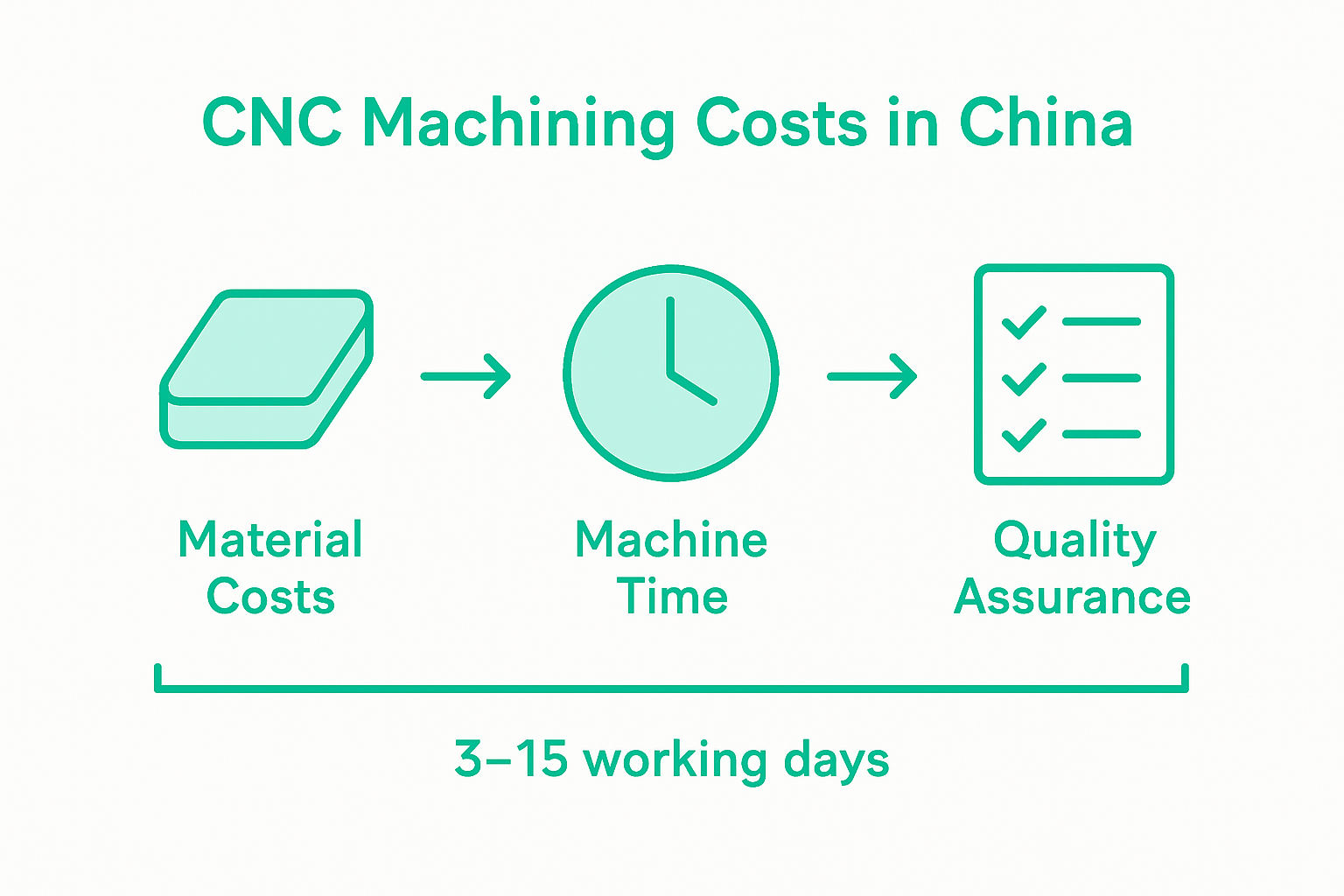
Typical project timelines for custom CNC machining range from 3 to 15 working days, depending on specific project requirements. Precision fabrication technologies now enable more streamlined design-to-production workflows, significantly reducing traditional manufacturing lead times. Prototype development generally requires 3-5 days, while small production runs of 10-100 units might take 7-10 days. Factors affecting timeline include design complexity, material availability, machine programming requirements, and post-processing specifications.
Cost structures in Chinese CNC machining are typically calculated using a combination of base pricing models. These include per-part pricing, hourly machine rates, material costs, and additional charges for complex geometries or specialised finishing processes. Standard pricing ranges vary significantly: simple parts might cost £10-£50, while intricate components with multiple manufacturing stages could exceed £500. Bulk order discounts, typically ranging from 10-30%, provide substantial economic incentives for larger production volumes.
Pro Tip for Project Managers: Always request detailed quotations with comprehensive breakdowns of material, machining, and finishing costs to accurately predict project budgets and identify potential areas for cost optimisation.
Advanced CNC machining technologies have revolutionised manufacturing capabilities across diverse industrial sectors, enabling precision engineering and rapid prototyping for complex component production. Key industries leveraging these sophisticated manufacturing techniques include aerospace, automotive, medical devices, robotics, electronics, and industrial machinery. Each sector demands unique technical specifications, with CNC machining providing unparalleled flexibility in transforming intricate design concepts into functional, high-performance components.
In the aerospace industry, CNC machining produces critical components like turbine blades, engine mounts, and structural brackets requiring exceptional dimensional accuracy and material integrity. Automotive manufacturers utilise these techniques for producing precision transmission components, engine parts, and suspension elements. Medical device engineering relies on CNC machining to create intricate surgical instruments, orthopedic implants, and diagnostic equipment housings that demand microscopic tolerances and biocompatible material processing.
Robotics and electronics industries benefit from CNC machining’s ability to fabricate complex circuit board housings, sensor casings, and precision mechanical interfaces. Industrial machinery sectors leverage these technologies for producing high-performance gear systems, pump components, and specialised manufacturing equipment. Precision machining training programmes underscore the technical complexity and specialised skills required to support these advanced manufacturing processes, highlighting the sophisticated engineering expertise underpinning modern industrial production.
Pro Tip for Design Engineers: Always collaborate closely with CNC machining specialists during the early design stages to optimise component geometries, material selections, and manufacturing strategies, ensuring maximum performance and cost-effectiveness across your specific engineering application.
Navigating the complexities of custom CNC machining in China requires not only advanced technology but also a trusted partner who understands your critical needs for precision, rapid prototyping, and cost optimisation. Whether you face challenges in achieving intricate geometries, tight tolerances, or meeting demanding production timelines, WJ Prototypes offers proven expertise and a comprehensive manufacturing suite tailored to your project’s unique requirements. With capabilities spanning CNC machining, additive manufacturing, and specialised finishing, backed by ISO certification and experienced engineers, you gain access to a seamless path from design to production.
Unlock the potential of your aerospace, medical, automotive, or industrial components by leveraging our robust quality assurance systems and diverse materials portfolio. We focus on delivering high-quality, fast, and cost-effective solutions designed to overcome common pain points such as manufacturing errors, lengthy lead times, and unexpected cost escalations. Ready to transform your custom CNC machining needs? Visit WJ Prototypes to explore our advanced services or start your project with an instant quote. Don’t wait to achieve precision and scalability — connect with us today and bring your prototype to full production smoothly and confidently.
Custom CNC machining services involve a sophisticated manufacturing process that uses computer-controlled cutting tools to transform digital design files into precise physical components, enabling the production of complex geometries and specialised components across various industries.
Custom CNC machining supports a wide range of materials, including metals such as aluminium alloys, stainless steel, and titanium, as well as polymers like ABS and nylon. The choice of material depends on the mechanical properties, chemical resistance, and specific application requirements.
The project timeline for CNC machining usually ranges from 3 to 15 working days, depending on factors like design complexity and production volume. Prototype development may require approximately 3-5 days, while small production runs can take 7-10 days.
CNC machining offers exceptional dimensional accuracy, repeatable precision, and the ability to create complex geometries that traditional methods cannot achieve. This flexibility, along with efficient material usage and rapid prototyping capabilities, makes CNC machining a preferred choice in many industries.
SERVICES
RESOURCES