



- Room 1807, Unit 9, Building 2, Shangxing Commercial Street, Shangde Road, Shangxing Community, Xinqiao Subdistrict, Bao'an District, Shenzhen City, China
CONTACT US

WhatsApp


Contact Us
Our team is on stand by, waiting toassist you.

Videos
A large collection of educational videos and tutorials.

About Us
Learn about our company, leadership, and mission totransform manufacturing.

Privacy Policy
Applies to all personal information collected through and/or processed in connection.
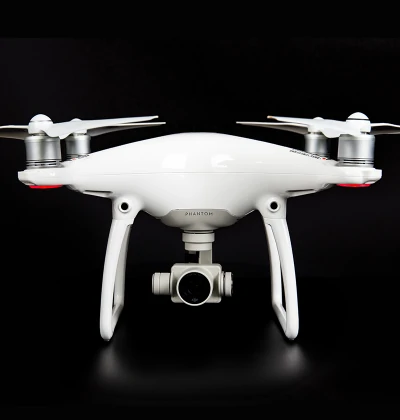

Aerospace & UAV
WJ Prototypes is your 3D manufacturing partner from prototype to large scale production.

Consumer Electronics
New Product Introduction Solutions for Consumer Electronics.

Robotics & Automation
Need some assistance bringing your robotic device or parts from the sketch-board to reality?

Medical Devices
The medical industry needs high quality, dependable and safe parts and products.

Automotive
New Product Introduction Solutions for Automotive

Industrial Machinery
The main purpose of industrial prototyping is to take the product from drawings into the real world.
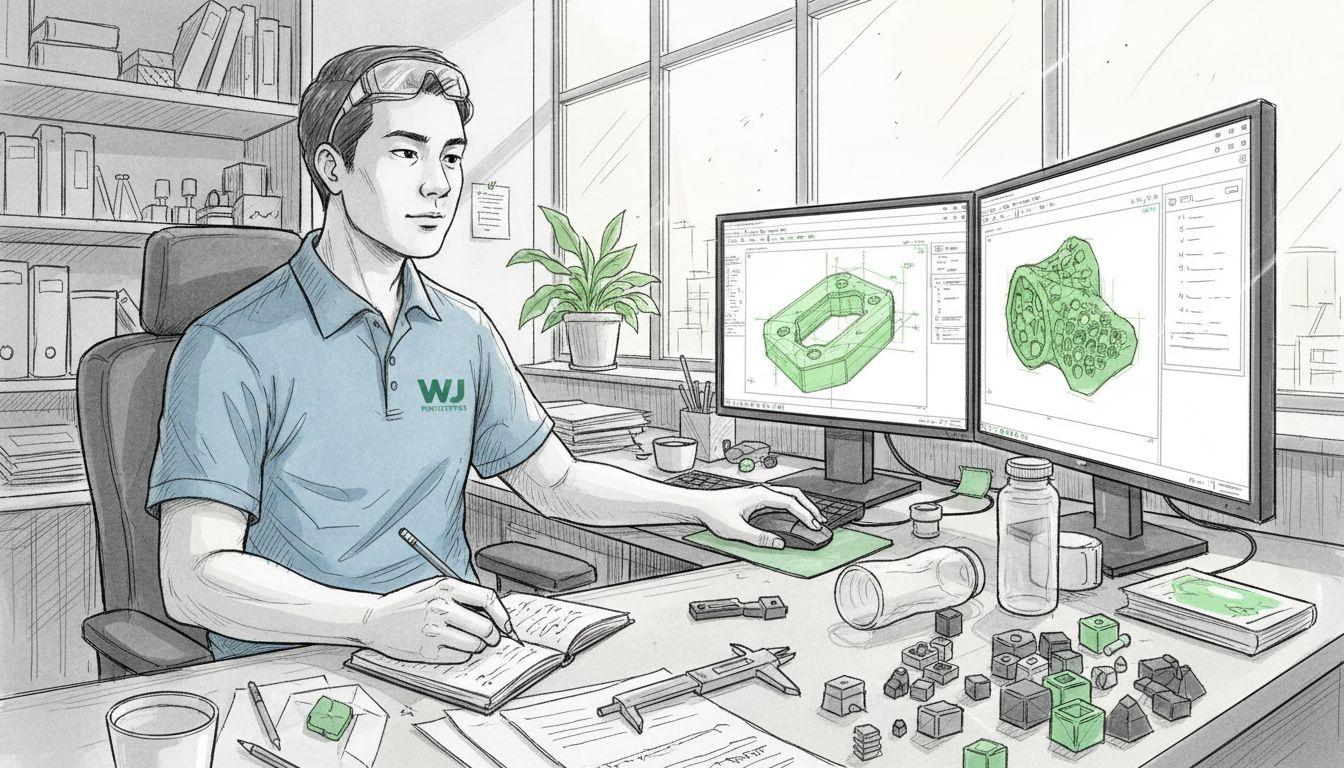
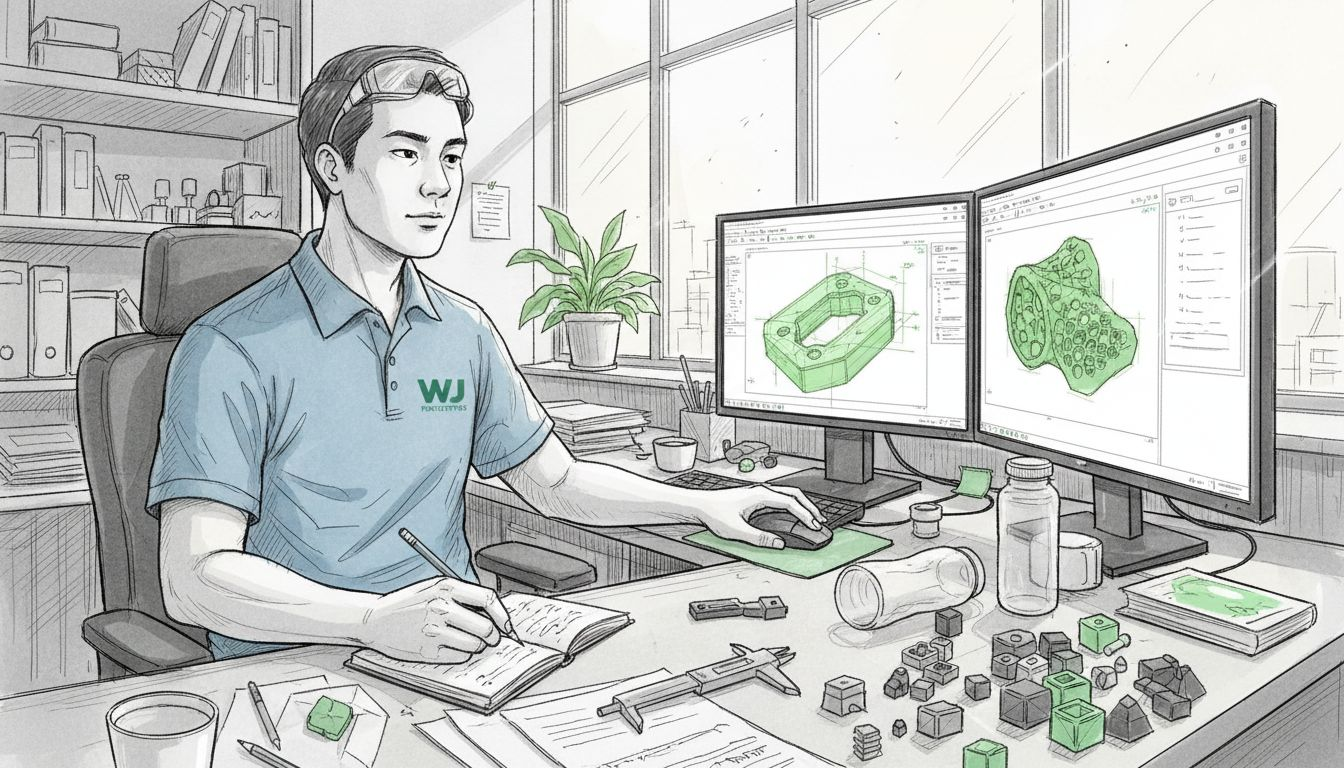
Many engineers assume 3D printing always saves money over CNC machining, but cost-effectiveness shifts dramatically with production volume. This guide helps aerospace and automotive designers choose between CNC machining and 3D printing based on materials, complexity, precision, cost, and scale. You’ll learn clear criteria to confidently select the manufacturing method that best fits your prototype and low-volume production needs.
| Point | Details |
|---|---|
| Process fundamentals | CNC machining removes material (subtractive) while 3D printing builds layer by layer (additive), creating fundamental differences in capabilities. |
| Material and tolerance priorities | CNC machining delivers tight tolerances (±0.01 mm) and superior mechanical strength critical for aerospace and automotive functional parts. |
| Geometric complexity advantage | 3D printing excels at complex internal features and organic shapes that CNC tools cannot reach or produce efficiently. |
| Cost-effective volume thresholds | 3D printing wins below 50 units; CNC machining becomes more economical beyond 100 units due to lower per-part costs. |
| Hybrid manufacturing benefits | Combining both methods captures geometric freedom and precision simultaneously for advanced aerospace and automotive applications. |
CNC machining starts with a solid material block and removes material using computer-controlled cutting tools. This subtractive process produces parts with exceptional dimensional accuracy and consistent material properties throughout the component. 3D printing builds parts layer-by-layer from digital models, enabling complex internal geometries that CNC machining cannot achieve due to tool access limitations.
Additive manufacturing offers unprecedented design freedom for intricate shapes without requiring expensive tooling changes. Subtractive methods generate more material waste as chips and dust, but deliver parts with uniform material stability and predictable mechanical behavior. Understanding these fundamental process differences impacts every downstream decision about cost structure, lead time expectations, and what designs you can actually manufacture.
Key process distinctions include:
CNC machining supports an extensive range of engineering materials including aerospace-grade titanium, stainless steel, aluminum alloys, and high-performance plastics like PEEK. These materials maintain their bulk mechanical properties throughout the machined part, delivering the strength, fatigue resistance, and temperature stability required for functional aerospace and automotive components.

3D printing covers engineering plastics, photopolymers, and metals via DMLS or SLM technologies. However, printed parts generally exhibit lower mechanical strength and anisotropic properties where performance varies by build direction. This happens because layer-by-layer construction creates interfaces that can act as weak points under stress, particularly in tension perpendicular to build layers.
Material integrity matters immensely in aerospace and automotive applications where safety-critical and high-performance parts must meet stringent certification requirements. CNC outputs solid, uniform materials suitable for functional testing and even end-use components in demanding environments. CNC machining material compatibility spans metals and plastics with certified material properties.
3D printed prototypes excel at validating design complexity and form fit rapidly. But when you need parts that will survive thermal cycling, vibration testing, or mechanical loads approaching production conditions, CNC machining typically becomes necessary. Material selection considerations must account for both prototype testing goals and manufacturing method limitations.
Pro Tip: Always request material certifications and mechanical test data when prototyping aerospace or automotive parts, regardless of manufacturing method, to ensure compliance with industry standards.
Common material applications by method:
CNC machining routinely achieves tolerances down to ±0.01 mm with surface finishes as smooth as Ra 0.4 microns directly off the machine. This precision stems from rigid machine structures, precise spindle control, and sharp cutting tools that create clean, accurate surfaces. Multi-axis CNC machines can hold these tolerances across complex part geometries where dimensional accuracy directly affects assembly fit and functional performance.
3D printing tolerances vary significantly by technology. FDM typically delivers ±0.2 mm, SLA achieves ±0.1 mm, and industrial SLS reaches ±0.15 mm under optimal conditions. These looser tolerances often require post-processing operations like sanding, machining, or coating to meet critical dimensional requirements. Surface finish from 3D printing shows visible layer lines and texture that may need extensive finishing for aesthetic or functional surfaces.
Tight tolerances and fine finishes prove vital in aerospace and automotive assemblies where mating parts must fit precisely and seal reliably. A turbine blade with incorrect airfoil dimensions will fail performance specifications. An automotive sensor housing with poor surface finish may leak or allow contamination. Precision engineering insights reveal how tolerance stack-ups affect assembly success.
Post-processing requirements for 3D printed parts add both time and cost that you must factor into your manufacturing timeline. Removing support structures, smoothing surfaces, and machining critical features can double or triple the initial print time. These steps also introduce handling risks and potential dimensional changes.
Pro Tip: For functional prototypes requiring high accuracy, specify which dimensions are critical and consider CNC machining those features even on primarily 3D printed parts through hybrid finishing approaches.
Precision comparison factors:
3D printing excels at producing complex geometries and internal lattice structures unachievable with CNC due to tool access and subtractive limits. You can design internal cooling channels, organic shapes mimicking natural structures, and consolidate multiple parts into single prints. This capability revolutionizes aerospace and automotive design by enabling weight optimization through topology optimization and lattice structures that maintain strength while reducing mass.
CNC machining faces geometric limitations imposed by cutting tool access and collision avoidance. Standard 3-axis machines can only approach parts from one direction, restricting undercut features and internal cavities. Advanced 5-axis CNC systems expand possibilities significantly but still cannot create truly enclosed internal features or some complex organic forms. Each additional axis and tool change increases setup complexity and machining time.
| Feature Type | CNC Machining Capability | 3D Printing Capability |
|---|---|---|
| Internal channels | Limited to drilled holes | Full complexity possible |
| Lattice structures | Not feasible | Excellent |
| Undercuts | Requires multiple setups | Single build |
| Organic shapes | Challenging, time-intensive | Native capability |
| Thin walls | Difficult, vibration issues | Achievable with support |
| Assembly consolidation | Separate parts required | Single-piece integration |
Designers must weigh complexity benefits against material and tolerance requirements when selecting technology. Additive manufacturing examples showcase how aerospace engineers leverage 3D printing’s geometric freedom for optimized components. A fuel nozzle with intricate internal passages might be impossible to machine but straightforward to print.
3D printing suits prototypes needing complex form validation where you want to test fit, airflow, or design intent before committing to production tooling. CNC machining becomes preferred when precision, mechanical properties, and material selection dominate over geometric complexity. Understanding these trade-offs helps you choose the right method for each prototype iteration.
3D printing delivers cost-effective solutions for prototypes and production runs below approximately 50 units due to minimal setup requirements. You upload a file, the printer builds the part, and you’re done. No tooling costs, no fixture design, no programming time beyond slicing software. 3D printing offers faster prototype turnaround beneficial for early design validation, whereas CNC setup and production times scale with complexity and quantity.

CNC machining carries higher upfront costs including toolpath programming, fixture design, and setup time. However, once the program runs correctly, per-part costs drop dramatically as you produce additional units. Material costs for CNC generally run lower than specialized 3D printing materials, particularly for metals. CNC machining cost considerations become favorable beyond approximately 100 units where economies of scale emerge.
| Batch Size | 3D Printing Cost/Part | CNC Machining Cost/Part | 3D Print Lead Time | CNC Lead Time |
|---|---|---|---|---|
| 1-10 units | Low ($50-200) | High ($200-500) | 1-3 days | 5-10 days |
| 50 units | Moderate ($40-150) | Moderate ($100-300) | 3-7 days | 7-14 days |
| 100+ units | Moderate ($35-120) | Low ($50-150) | 7-14 days | 10-21 days |
Turnaround time for 3D printing spans hours to days depending on part size, resolution requirements, and printer availability. CNC machining timelines vary significantly with part complexity, material, and required precision. Simple parts might machine in minutes, while complex aerospace components can take days of machine time across multiple setups.
Decision framework for cost and timing:
Pro Tip: Include post-processing time in your total lead time estimates for 3D printed parts, as support removal, surface finishing, and heat treatment can add several days to simple print times.
Hybrid manufacturing integrates 3D printing’s geometric freedom with CNC machining’s precision, widely used in aerospace and automotive sectors for complex, high-performance parts. This approach starts by printing a near-net shape with complex internal features, then machines critical surfaces to tight tolerances. You capture both technologies’ strengths while minimizing their individual weaknesses.
Hybrid workflows prove ideal for aerospace and automotive components needing intricate internal geometry plus precise external dimensions and mechanical strength. Consider a drone frame with optimized lattice structure for weight savings but requiring precision mounting holes for sensors and actuators. Print the complex frame, then machine the mounting interfaces to specification.
Typical hybrid workflow sequence:
This combined approach reduces total manufacturing cost and lead time for high-complexity, precision applications compared to attempting either method alone. You avoid the excessive material waste and machining time of making the entire part via CNC, while achieving the precision and material properties impossible with printing alone. Hybrid manufacturing case studies demonstrate measurable benefits in aerospace applications.
Hybrid manufacturing has gained widespread adoption in advanced manufacturing environments focused on functional prototyping and low to mid-volume production. The approach requires careful planning to ensure printed features remain dimensionally stable during subsequent machining operations and that fixturing can reliably locate the part for accurate machining.
3D printing is not always cheaper than CNC machining. Cost-effectiveness depends heavily on production volume, part geometry, material requirements, and finishing needs. That single prototype might cost less to print, but if you need 200 units for testing and certification, CNC machining will likely deliver better economics. Many engineers focus only on the initial manufacturing cost while ignoring post-processing, material properties, and testing expenses.
CNC machining can produce complex shapes using multi-axis machines and advanced toolpaths. While CNC cannot create true internal cavities, skilled programmers routinely machine intricate external geometries, deep pockets, and compound angles. The limitation is tool access, not complexity itself. Modern 5-axis CNC machines approach some of the geometric freedom associated with additive manufacturing.
3D printed parts generally have lower mechanical strength and anisotropic properties compared to CNC machined components from the same nominal material. A printed aluminum part does not match the properties of machined aluminum because the printing process introduces porosity, layer interfaces, and potential incomplete fusion. This matters enormously when parts must meet aerospace or automotive performance specifications.
Ignoring post-processing time and costs leads to unrealistic timeline expectations for 3D printing projects. That 8-hour print becomes a 3-day project when you add support removal, surface finishing, dimensional inspection, and any required heat treatment. Post-processing complexity often scales with geometric complexity, the very feature that made 3D printing attractive initially.
Pro Tip: Evaluate both upfront manufacturing costs and total lifecycle expenses including finishing, testing, and potential rework when comparing manufacturing methods for aerospace and automotive prototypes.
Additional pitfalls to avoid:
Follow this systematic framework to select CNC machining, 3D printing, or hybrid manufacturing based on your specific project requirements:
Use CNC machining for high-strength metal aerospace components with tight tolerances, medium to large production batches, and applications where material certification is mandatory. Examples include aerospace structural brackets, turbine blade prototypes, and precision automotive transmission components. These parts prioritize mechanical properties and dimensional accuracy over geometric complexity.
Use 3D printing for rapid automotive prototype iterations, highly complex shapes with internal features, design validation models, and small batch production under 50 units. 3D printing aerospace use cases demonstrate applications in ducting, custom fixtures, and optimized structural components where weight reduction through complex geometry delivers value.
Apply hybrid approaches for parts needing complex internal geometries plus critical external precision simultaneously. Examples include aerospace drone frames with optimized lattice structures but precision sensor mounting points, automotive manifolds with internal flow optimization but tight flange tolerances, and medical device prototypes combining organic ergonomic shapes with precise mechanical interfaces.
Case examples demonstrate these principles:
Aerospace prototyping insights reveal how leading manufacturers combine these technologies strategically across development cycles, using 3D printing for early validation and CNC for functional testing and pre-production verification.
WJ Prototypes delivers tailored CNC machining and 3D printing services optimized specifically for aerospace and automotive prototype development and low-volume production. Our engineering team helps you navigate the manufacturing method selection process, applying the decision frameworks outlined in this guide to your specific component requirements. We provide expert guidance on CNC machining materials, tolerance capabilities, and cost optimization strategies.
Access hybrid manufacturing workflows that combine additive and subtractive processes for parts requiring both geometric complexity and precision. Our ISO-certified facility offers SLA, SLS, MJF, DMLS, and advanced multi-axis CNC machining under one roof, eliminating coordination challenges between multiple vendors. You benefit from rapid prototyping turnaround, cost-effective batch production, and quality assurance processes designed for aerospace and automotive standards. Contact us to discuss your prototype requirements and receive expert recommendations on the optimal manufacturing approach for your application.
Choose CNC machining when your aerospace components require tight tolerances below ±0.05 mm, certified metal materials like aerospace-grade aluminum or titanium, and superior mechanical strength for functional testing. CNC delivers uniform material properties and surface finishes suitable for parts that will experience real operating loads and environmental conditions. Aerospace 3D printing insights show that additive methods work better for rapid design validation and complex geometries where material certification is not immediately critical.
Yes, hybrid manufacturing accelerates prototyping by leveraging 3D printing for rapid complex shape creation and CNC machining for precision finishing in a single workflow. This approach reduces overall timeline compared to iterative design-print-test cycles or extensive CNC programming for complex geometries. Hybrid manufacturing benefits demonstrate time savings of 30-50% for parts requiring both geometric complexity and dimensional precision by eliminating separate manufacturing steps.
No, cost advantages depend on part complexity, material selection, required tolerances, and post-processing needs. 3D printing typically offers lower costs below 50 units due to minimal setup, but CNC becomes more economical beyond 100 units as per-part costs drop significantly. Additionally, if your parts require extensive finishing to meet tolerance or surface quality requirements, those post-processing costs can eliminate 3D printing’s initial price advantage even at low volumes.
CNC machining routinely achieves tolerances of ±0.01 mm to ±0.05 mm depending on part geometry and material, essential for aerospace-grade components with critical mating surfaces. 3D printing tolerances range from ±0.1 mm to ±0.3 mm depending on technology, with FDM being loosest and SLA/SLS tighter. CNC machining precision capabilities show that achieving 3D printing tolerances comparable to CNC requires secondary machining operations, effectively creating a hybrid process.
SERVICES
RESOURCES