




- Room 1807, Unit 9, Building 2, Shangxing Commercial Street, Shangde Road, Shangxing Community, Xinqiao Subdistrict, Bao'an District, Shenzhen City, China
CONTACT US

WhatsApp


Contact Us
Our team is on stand by, waiting toassist you.

Videos
A large collection of educational videos and tutorials.

About Us
Learn about our company, leadership, and mission totransform manufacturing.

Privacy Policy
Applies to all personal information collected through and/or processed in connection.


Aerospace & UAV
WJ Prototypes is your 3D manufacturing partner from prototype to large scale production.

Consumer Electronics
New Product Introduction Solutions for Consumer Electronics.

Robotics & Automation
Need some assistance bringing your robotic device or parts from the sketch-board to reality?

Medical Devices
The medical industry needs high quality, dependable and safe parts and products.

Automotive
New Product Introduction Solutions for Automotive

Industrial Machinery
The main purpose of industrial prototyping is to take the product from drawings into the real world.
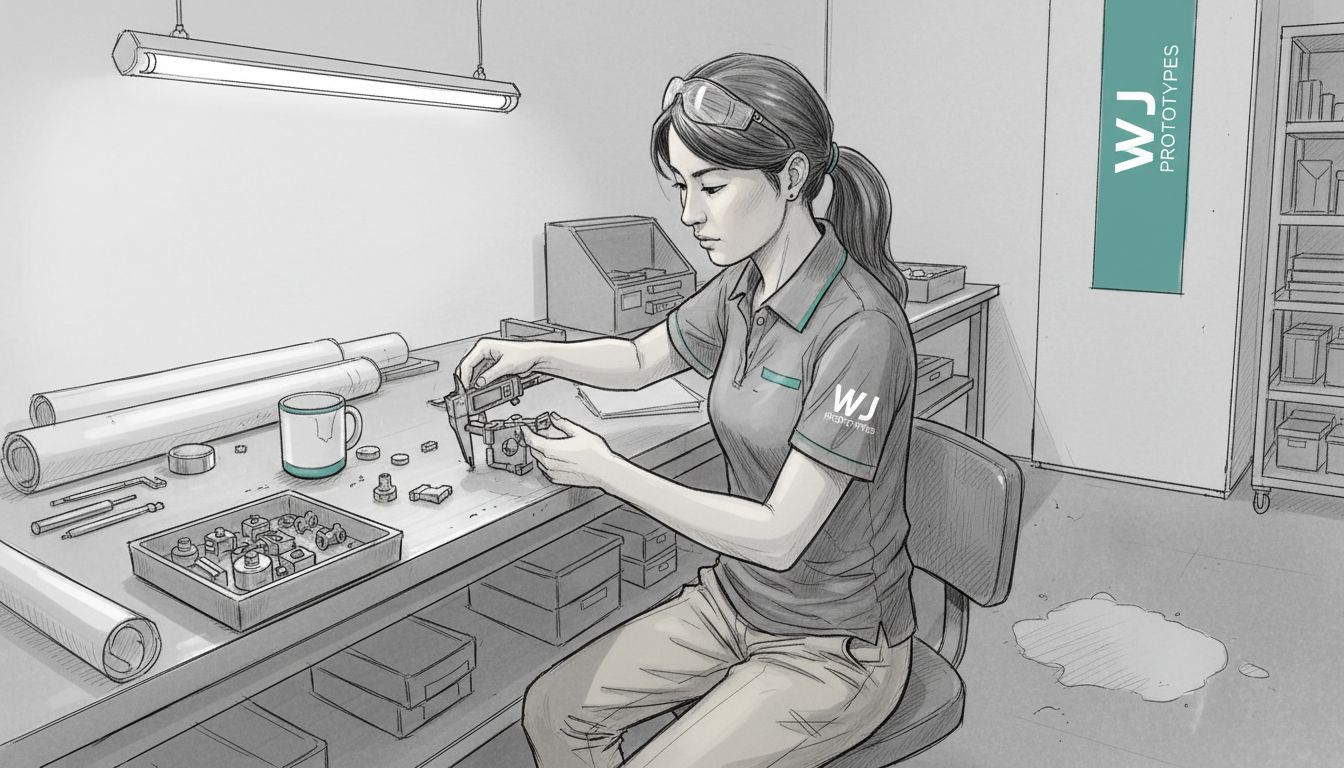

Every engineering project in the aerospace or automotive sector comes down to one crucial question: which material will best deliver on performance, production speed, and cost without compromise. With rapid prototyping and low-volume manufacturing now central to innovation in North American industries, choosing the right substrate is no longer about just weight or strength. This guide demystifies the systematic five-step approach to material selection that top engineers use and reveals how advanced composites and tailored alloys can transform your next prototype.
| Point | Details |
|---|---|
| Material Selection is Critical | Engineers must carefully evaluate performance, cost, and manufacturing processes when selecting materials for aerospace prototyping. |
| Emphasis on Holistic Criteria | Modern material choices address not only strength but also weight efficiency, sustainability, and integration with manufacturing processes. |
| Inadequate Testing Risks Failure | Comprehensive material compatibility and performance testing are essential to prevent costly engineering mistakes and maintain safety. |
| Supply Chain Considerations Matter | Global dynamics and supplier reliability significantly impact material selection, necessitating robust sourcing strategies to ensure consistent availability. |
Material selection in aerospace prototyping represents a sophisticated engineering process that demands meticulous evaluation and strategic decision-making. Engineers must navigate complex trade-offs between performance requirements, manufacturing constraints, and cost considerations when choosing materials for precision components. Aerospace material selection strategies involve a systematic five-step approach that transforms design requirements into optimal material choices.
The selection process begins with establishing precise design parameters, followed by comprehensive material screening and ranking methodologies. Performance indices and material property charts serve as critical analytical tools, enabling engineers to quantify material characteristics against specific aerospace component performance goals. Manufacturers must consider multiple dimensions beyond traditional strength metrics, including weight efficiency, durability, damage tolerance, and manufacturing complexity.
Modern aerospace material selection increasingly emphasises holistic evaluation criteria. While historically weight reduction dominated material choices, contemporary approaches integrate manufacturing efficiency, environmental sustainability, and global supply chain considerations. Materials must not only meet stringent structural integrity standards but also demonstrate producibility across multiple product forms and maintain consistent quality throughout production cycles.
Pro tip: Always conduct thorough material compatibility testing with prototype components to validate performance characteristics before full-scale production deployment.
Aerospace prototyping demands an intricate understanding of material characteristics, with engineers carefully selecting substrates that meet rigorous performance specifications. Advanced aerospace materials encompass several critical categories, each offering unique advantages for precision engineering applications. Metallic alloys, polymer matrix composites, and engineered materials form the primary material families used in contemporary aerospace prototyping.
Metal alloys remain fundamental in aerospace design, with titanium, nickel-based alloys, and aluminium composites providing exceptional strength-to-weight ratios. Titanium alloys excel in high-temperature environments, offering remarkable structural integrity and corrosion resistance. Aluminium alloys provide lightweight performance critical for reducing overall aircraft mass, while nickel-based alloys deliver superior heat resistance for engine components and extreme operational conditions.

Polymer matrix composites represent a revolutionary material category in aerospace prototyping, delivering unprecedented performance characteristics. These advanced materials combine synthetic fibres with sophisticated matrix systems to create components with exceptional strength, minimal weight, and remarkable environmental resistance. Innovative composite technologies enable engineers to design components that traditional metallic materials cannot achieve, particularly in applications demanding complex geometries and superior fatigue resistance.
Here is a summary of primary aerospace prototyping material families and their typical engineering benefits:
| Material Family | Key Advantage | Common Use Case |
|---|---|---|
| Titanium Alloys | Superior high-temp strength | Jet engines, landing gear |
| Aluminium Composites | Excellent lightness | Airframes, structural panels |
| Nickel-Based Alloys | Extreme heat resistance | Turbine blades, exhaust parts |
| Polymer Matrix Composites | Exceptional fatigue life | Complex geometries, control surfaces |
| Engineered Materials | Tunable performance profiles | Niche and customised parts |
Pro tip: Always conduct comprehensive material compatibility testing and thermal cycling simulations to validate prototype material performance under anticipated operational stress conditions.
Aerospace prototyping demands a nuanced approach to material selection that simultaneously addresses three critical dimensions: performance capabilities, manufacturing economics, and development timelines. Engineers must navigate a complex decision matrix where incremental improvements in one dimension can trigger cascading consequences across the entire product development ecosystem. CNC machining strategies play a crucial role in managing these intricate trade-offs.
Performance considerations remain paramount, with material selection directly impacting structural integrity, thermal resistance, and operational reliability. Lightweight composites might offer exceptional strength-to-weight ratios, but their complex manufacturing processes can significantly increase production costs. Conversely, traditional metallic alloys provide predictable performance characteristics and established manufacturing workflows, potentially reducing overall development expenditure. Engineers must meticulously evaluate each material’s inherent properties against specific prototype requirements.
The temporal dimension introduces additional complexity to material selection strategies. Rapid prototyping technologies enable faster iteration cycles, but accelerated development can compromise material testing thoroughness. Sophisticated manufacturers balance speed with comprehensive validation protocols, ensuring that accelerated timelines do not compromise fundamental engineering standards. This requires advanced simulation technologies, extensive material characterisation, and iterative testing methodologies that compress traditional development windows without sacrificing fundamental quality benchmarks.
This table compares key trade-offs in aerospace material selection:
| Dimension | Improves With | Potential Drawback |
|---|---|---|
| Performance | Advanced composites | Increased raw material cost |
| Cost | Traditional metallic alloys | May add weight, reduce fuel efficiency |
| Development Speed | Rapid prototyping methods | Might limit comprehensive material validation |
Pro tip: Develop a comprehensive material selection matrix that quantifies performance metrics, cost implications, and development timelines to enable data-driven engineering decisions.
Aerospace prototyping requires a sophisticated approach to material selection that goes beyond intrinsic material properties, demanding comprehensive material process compatibility analysis. Engineers must meticulously evaluate how specific materials interact with manufacturing methodologies, ensuring seamless integration between substrate characteristics and fabrication technologies. This nuanced selection process encompasses mechanical, thermal, and chemical considerations that directly impact component performance and manufacturing efficiency.
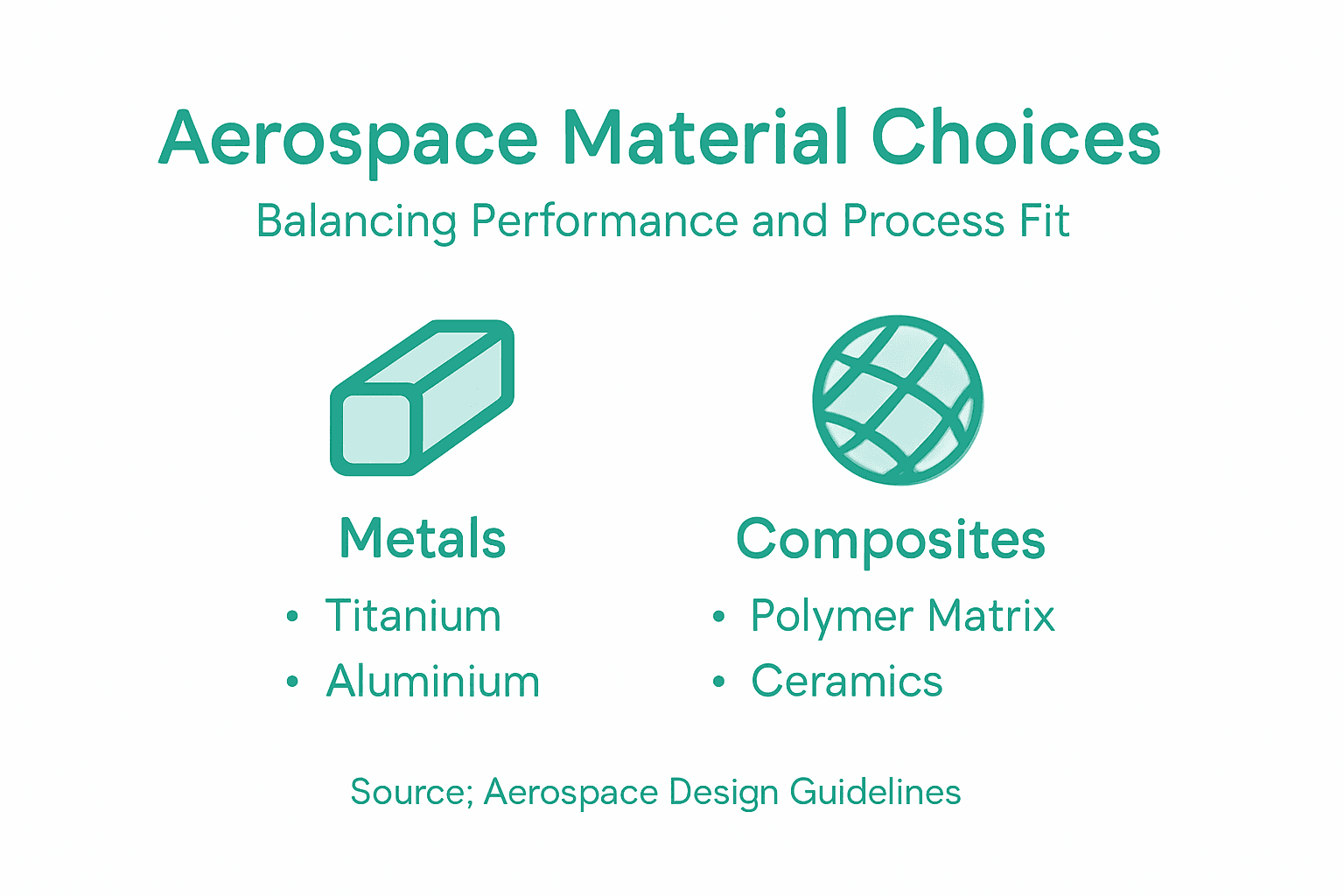
Different manufacturing processes impose unique constraints on material selection. Additive manufacturing techniques, such as 3D printing, require materials with precise melting points and flow characteristics, while CNC machining demands substrates with consistent machinability and structural integrity. Traditional metallic alloys might excel in precision milling applications, whereas advanced polymer composites could provide superior performance in complex geometrical configurations that conventional machining techniques struggle to achieve.
The holistic evaluation of process compatibility extends beyond immediate manufacturing considerations, incorporating lifecycle performance, environmental sustainability, and economic feasibility. Advanced aerospace engineering demands materials that not only meet stringent technical requirements but also align with broader production ecosystem constraints. This requires a multidimensional assessment that balances performance metrics, manufacturing complexity, material availability, and long-term reliability across diverse operational environments.
Pro tip: Develop a comprehensive material compatibility matrix that quantifies process interactions, thermal behaviours, and manufacturing tolerances to optimise prototype development strategies.
Aerospace engineering demands absolute precision in material selection, where material selection errors can result in catastrophic consequences. Incorrect material choices trigger a cascading series of potential failures that compromise structural integrity, operational safety, and overall component reliability. These risks extend far beyond simple performance limitations, potentially endangering human lives and creating substantial financial liabilities.
Structural risks manifest through multiple mechanisms, including premature material fatigue, unexpected mechanical deformation, and compromised load-bearing capabilities. Metallic alloys selected without thorough thermal expansion analysis might experience microscopic structural changes under extreme temperature variations, leading to hairline fractures that remain undetectable through conventional inspection methods. Polymer-based materials could similarly degrade when exposed to specific chemical environments, gradually losing mechanical properties and creating hidden vulnerabilities within critical aerospace components.
Economic implications of incorrect material selection are equally profound. Engineers must consider not just immediate manufacturing costs but long-term maintenance expenses, potential replacement requirements, and potential operational disruptions. Inappropriate material choices can exponentially increase lifecycle expenses, transforming what initially appeared to be a cost-effective solution into a financially devastating engineering mistake. Comprehensive material assessment requires evaluating thermal stability, chemical resistance, mechanical strength, and environmental adaptability across anticipated operational parameters.
Pro tip: Implement rigorous multi-stage material validation protocols that simulate extreme operational conditions before finalising prototype material selections.
Aerospace material selection demands sophisticated supply chain strategy considerations that transcend traditional procurement methodologies. Global geopolitical dynamics, raw material availability, and international trade regulations create complex interdependencies that significantly influence material selection processes. Engineers must navigate intricate economic landscapes where material costs, supplier reliability, and manufacturing constraints intersect.
The economic calculus of material procurement extends beyond immediate pricing, incorporating long-term sustainability and strategic resilience. Emerging technologies like advanced composites and bio-based materials introduce new dimensions of cost evaluation, where lifecycle expenses, environmental impact, and potential future scalability become critical decision-making parameters. Manufacturers must assess not just the immediate material cost, but potential disruption risks, transportation expenses, and the robustness of global supply networks that can deliver consistent, high-quality materials.
Geopolitical uncertainties and regional manufacturing capabilities further complicate material sourcing strategies. Export restrictions, trade tensions, and localised production constraints can rapidly transform material availability and pricing landscapes. Sophisticated aerospace engineering teams develop multifaceted sourcing strategies that include alternative material options, diversified supplier networks, and flexible procurement protocols designed to mitigate potential supply chain disruptions.
Pro tip: Develop comprehensive material sourcing contingency plans that include multiple global suppliers and alternative material specifications to ensure continuous prototype development capabilities.
Choosing the right materials is a critical challenge in aerospace prototyping. As highlighted in the article, balancing performance, cost, and compatibility demands advanced expertise and comprehensive testing to avoid costly errors or safety risks. Whether you need titanium alloys for high-temperature parts or polymer matrix composites for complex geometries, understanding the nuances of material selection and ensuring process compatibility is essential for rapid, reliable development.
At WJ Prototypes, we specialise in precision manufacturing solutions tailored to these exact challenges. Our diverse range of additive manufacturing and traditional fabrication services, including CNC machining and advanced 3D printing technologies, supports a wide variety of aerospace-grade materials. By partnering with us, you gain access to experienced engineers who apply rigorous material evaluation and prototyping workflows to ensure your designs meet stringent aerospace performance and supply chain requirements.
Ready to streamline your aerospace prototype development with trusted material expertise and fast turnaround? Discover how our comprehensive capabilities at WJ Prototypes can help you mitigate risks associated with incorrect material choices, accelerate your product cycles, and manage costs. Start your next project today with a quick quote and unlock precision engineered prototypes designed for success.
Material selection in aerospace prototyping involves evaluating performance requirements, manufacturing constraints, cost considerations, and environmental sustainability. Engineers must balance these factors to choose the most suitable materials for precision components.
Key material types include titanium alloys, aluminium composites, nickel-based alloys, polymer matrix composites, and engineered materials. Each offers unique advantages, such as high strength-to-weight ratios or exceptional fatigue life, suited for various applications in aerospace engineering.
Different manufacturing processes impose unique constraints on material selection. For example, additive manufacturing requires materials with specific melting points, while CNC machining demands substrates with consistent machinability. Evaluating process compatibility is crucial to ensure seamless integration and optimal component performance.
Incorrect material selection can lead to catastrophic failures, including structural integrity issues, unexpected material fatigue, and increased lifecycle costs. Engineers must conduct thorough assessments and simulations to prevent these risks and ensure safety and reliability in aerospace applications.
SERVICES
RESOURCES