



- Room 1807, Unit 9, Building 2, Shangxing Commercial Street, Shangde Road, Shangxing Community, Xinqiao Subdistrict, Bao'an District, Shenzhen City, China
CONTACT US

WhatsApp


Contact Us
Our team is on stand by, waiting toassist you.

Videos
A large collection of educational videos and tutorials.

About Us
Learn about our company, leadership, and mission totransform manufacturing.

Privacy Policy
Applies to all personal information collected through and/or processed in connection.
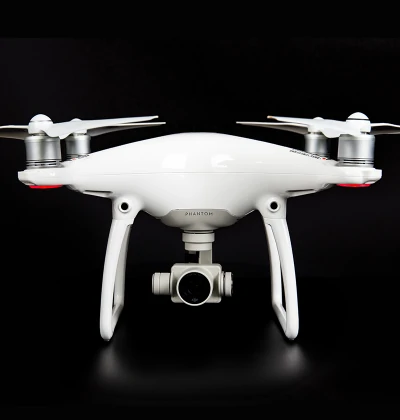

Aerospace & UAV
WJ Prototypes is your 3D manufacturing partner from prototype to large scale production.

Consumer Electronics
New Product Introduction Solutions for Consumer Electronics.

Robotics & Automation
Need some assistance bringing your robotic device or parts from the sketch-board to reality?

Medical Devices
The medical industry needs high quality, dependable and safe parts and products.

Automotive
New Product Introduction Solutions for Automotive

Industrial Machinery
The main purpose of industrial prototyping is to take the product from drawings into the real world.


Engineers in aerospace and automotive sectors often use ‘3D printing’ and ‘additive manufacturing’ interchangeably, but this creates costly confusion in technical specifications and procurement. Understanding standardized AM terminology matters because it directly impacts prototyping speed, design accuracy, and cross-team collaboration. This guide clarifies essential terminology from ASTM standards, DfAM concepts, and certification vocabularies to help you communicate precisely and accelerate your development cycles.
| Point | Details |
|---|---|
| ASTM F42 standardizes seven AM process types | These classifications ensure consistent aerospace and automotive communication. |
| DfAM terminology drives optimization | Topology optimization and lattice structures reduce lead times by up to 50%. |
| Material-specific vocabulary varies | Polymer and metal processes use distinct terminology for accurate specifications. |
| AWS A3.0M includes AM certification terms | Updated 2025 standards support precise welding and fabrication vocabulary. |
| Clear terminology reduces miscommunication | Standardized language accelerates prototyping cycles and lowers error rates. |
Additive Manufacturing refers to the formal engineering discipline governed by international standards, while 3D printing typically describes consumer-level applications. ASTM International’s F42 committee defines seven standard process classifications for additive manufacturing, ensuring consistent terminology across industries including aerospace and automotive. These classifications aren’t arbitrary labels but represent distinct manufacturing methodologies with specific material requirements, energy sources, and quality control protocols.
Uniform terminology creates a shared language between design engineers, manufacturing specialists, and quality assurance teams. When everyone uses standardized terms like Laser Powder Bed Fusion instead of generic phrases like metal 3D printing, specifications become unambiguous. This precision prevents costly misinterpretations during vendor selection, machine programming, and post-processing planning.
The seven ASTM F42 process categories include:
Each category encompasses multiple commercial technologies, but the standardized framework lets engineers specify requirements without vendor lock-in. Understanding these foundational terms streamlines technology selection and improves procurement accuracy.
Precise process terminology prevents misunderstandings that delay prototyping. Key AM processes for aerospace include Laser Powder Bed Fusion (LPBF), Directed Energy Deposition (DED), and Electron Beam Powder Bed Fusion (EBPBF), each with distinct terminology reflecting their material feedstocks and energy sources. These differences matter because material behavior, dimensional accuracy, and post-processing requirements vary significantly.
LPBF uses lasers to fuse metal or polymer powder particles layer by layer, producing dense parts with tight tolerances. DED directs energy to melt wire or powder feedstock as it’s deposited, ideal for repair work and large structural components. EBPBF employs electron beams in vacuum chambers for reactive metals like titanium, critical in aerospace applications.
Polymer processes like Selective Laser Sintering (SLS) and Multi Jet Fusion (MJF) use different energy delivery methods but share powder bed principles. SLS relies on laser sintering while MJF applies infrared energy to powder coated with fusing agents. Material terminology shifts accordingly: you’ll specify nylon PA12 for SLS but refer to HP 3D High Reusability PA12 for MJF due to different powder characteristics.
| Process | Energy Source | Material Types | Primary Applications |
|---|---|---|---|
| LPBF | Laser | Metal powders, polymers | Aerospace brackets, turbine blades |
| DED | Laser/electron beam | Metal wire or powder | Large structural repairs, cladding |
| EBPBF | Electron beam | Reactive metal powders | Titanium aerospace components |
| SLS | Laser | Polymer powders | Functional prototypes, end-use parts |
| MJF | Infrared | Polymer powders with agents | High-volume production prototypes |
Understanding key types of additive manufacturing enables accurate specification in technical drawings and RFQs. When you request LPBF Ti6Al4V instead of generic titanium 3D printing, suppliers immediately understand material grade, process constraints, and expected mechanical properties.
Pro Tip: Always specify the ASTM process category and material grade together in technical documentation to eliminate ambiguity and accelerate vendor response times.
Mastering process terminology directly impacts material selection in prototyping because each process dictates available materials, achievable properties, and suitable geometries.
DfAM introduces specialized vocabulary that unlocks AM’s full potential beyond simply replicating traditionally manufactured parts. In aerospace AM applications, Design for Additive Manufacturing is pivotal, allowing engineers to utilize topology optimization, lattice structures, and parts consolidation to achieve performance gains. These aren’t buzzwords but specific methodologies with measurable impacts on weight reduction, material efficiency, and prototyping speed.
Topology optimization uses computational algorithms to remove material from non-load-bearing areas while maintaining structural integrity. The resulting organic geometries often resemble biological structures, reducing weight by 40-60% compared to conventional designs. Engineers must communicate using terms like stress-constrained optimization and minimum member size to ensure manufacturability.

Lattice structures refer to repeating unit cell geometries that create lightweight internal architectures. Terminology includes gyroid, diamond, and octahedral lattice types, each offering different strength-to-weight ratios and energy absorption characteristics. Specifying lattice parameters like strut diameter and cell size ensures predictable mechanical behavior.
Part consolidation eliminates assemblies by integrating multiple components into single printed parts. This DfAM strategy reduces assembly time, eliminates fasteners, and improves reliability. Engineers use terms like functional integration and assembly elimination when documenting consolidation opportunities.
Key DfAM terms every engineer should know:
Pro Tip: Introduce DfAM vocabulary during initial concept reviews to align stakeholders on feasibility and identify optimization opportunities early, potentially reducing prototyping iterations by 30-40%.
Integrating DfAM terminology into your additive manufacturing workflow ensures design intent translates accurately through production. When you specify conformal cooling with 3mm channel diameter instead of generic internal channels, machinists program toolpaths correctly the first time. Clear communication through standardized material selection in prototyping prevents downstream rework and accelerates validation testing.

International standards provide the authoritative vocabulary foundation for aerospace and automotive AM applications. ASTM International and ISO jointly develop harmonized standards covering materials, processes, testing methods, and quality requirements. Engineers must understand these frameworks to ensure regulatory compliance and supplier qualification.
ASTM F42 leads AM standardization in the Americas while ISO/TC 261 coordinates global efforts. Key standards include ASTM F2792 for terminology, ASTM F3122 for metal powder bed fusion, and ISO/ASTM 52900 for general principles. These documents define everything from powder particle size distribution to post-processing heat treatment cycles.
The new AWS A3.0M/A3.0:2025 welding terminology standard integrates updated terms specifically for additive manufacturing and nondestructive examination to support aerospace and automotive fabrication accuracy. This matters because DED processes closely resemble welding, requiring proper terminology for operator certification and quality documentation.
Certification vocabulary includes critical terms like:
Aerospace suppliers must demonstrate compliance with AS9100 quality systems and often industry-specific AM standards like AMS 7003 for LPBF titanium. Understanding certification terminology accelerates audits and supplier qualification processes.
Engineers specifying AM parts should reference applicable standards in technical drawings. Callouts like “Per ASTM F3055 heat treatment” or “Inspect IAW ASTM E1417 liquid penetrant” create legally binding requirements with standardized acceptance criteria. This precision eliminates interpretation disputes and protects all parties.
Standards alignment directly impacts manufacturing quality by establishing consistent evaluation criteria. When inspection reports reference ASTM or ISO standards, you can compare results across suppliers and validate compliance objectively.
Terminology confusion persists despite decades of standardization efforts. Misconception: ‘3D printing equals additive manufacturing’. Correction: ASTM standards differentiate these terms to preserve technical clarity. While related, 3D printing typically describes desktop polymer extrusion while additive manufacturing encompasses industrial processes producing flight-certified components.
Another widespread misunderstanding involves material and finish terminology. Engineers sometimes request “smooth finish” without recognizing that surface roughness varies dramatically between processes. LPBF metal parts typically achieve Ra 6-10 microns as-built, while polymer SLS parts range from Ra 10-15 microns. Specifying actual Ra values with measurement locations eliminates ambiguity.
Key misconceptions corrected:
“Precise terminology reduces prototyping miscommunication costs by up to 25% through improved first-time specification accuracy and reduced clarification cycles between design and manufacturing teams.”
Material terminology particularly confuses newcomers. Aluminum alloys have different designations: wrought alloys use four-digit codes like 6061, while casting alloys use three-digit plus decimal like 356.0, and AM-specific alloys may use proprietary names like Scalmalloy. Always specify the full designation including temper condition for metals.
Finish terminology requires similar precision. Terms like bead blasted, tumbled, and vapor smoothed describe specific post-processing methods producing different surface characteristics. When you understand these distinctions, you can specify appropriate finishes for functional requirements like fatigue resistance or sealing surfaces.
Clarifying these misconceptions early prevents specification errors that delay prototyping. Taking time to learn standardized terminology pays dividends throughout the product development cycle.
Mastering AM terminology delivers measurable efficiency gains in aerospace and automotive development programs. Standardized language reduces prototyping cycle time by up to 20% by eliminating clarification loops between design, procurement, and manufacturing teams. When specifications use precise terminology, suppliers quote faster and machine programmers work confidently without seeking interpretations.
Improved cross-disciplinary communication represents another major benefit. Design engineers, materials specialists, quality inspectors, and certification authorities all use the same vocabulary, preventing translation errors that introduce delays. A aerospace turbine blade project might involve ten specialized roles, each needing exact terminology to contribute effectively.
How terminology clarity aids technology and material selection:
Certification speed improves dramatically when documentation uses standardized terminology from initial design reviews. Regulatory authorities and certification bodies expect specific language in test reports and design justifications. Speaking their language accelerates approvals and reduces audit findings.
Error reduction impacts both quality and cost. When everyone interprets specifications identically, manufacturing produces parts matching design intent the first time. This eliminates expensive rework cycles where parts meet literal specifications but fail functional requirements due to terminology misunderstandings.
Competitive advantage comes from integrating terminology standards into team workflows. Organizations where engineers consistently use ASTM vocabulary, designers apply DfAM concepts correctly, and procurement specifies materials precisely move faster than competitors struggling with ambiguous communication. This speed translates directly to shorter development cycles and faster market entry.
Your additive manufacturing workflow becomes more efficient when everyone speaks the same language. Clear terminology in material selection in prototyping decisions prevents mismatches between intended and actual properties.
The return on investment for terminology training is substantial. A typical aerospace component might iterate three times due to specification ambiguity. Each iteration costs weeks and thousands in tooling and material. Eliminating one iteration through clearer communication pays for extensive terminology training many times over.
Understanding AM terminology sets the foundation, but partnering with experienced specialists amplifies results. WJ Prototypes brings deep expertise in 7 key types of additive manufacturing for aerospace and automotive applications, speaking your technical language fluently and delivering precision prototypes faster.
Our ISO-certified facilities support your entire additive manufacturing workflow from design optimization through final finishing. We understand how proper terminology prevents errors and accelerates development. When you specify LPBF Ti6Al4V with specific mechanical properties, our engineers immediately know your requirements and design appropriate process parameters.
Expert guidance on material selection in prototyping ensures you leverage the right technology for each application. Our team helps translate performance requirements into precise AM specifications, optimizing cost and lead time while maintaining aerospace and automotive quality standards. Contact WJ Prototypes today to experience how terminology expertise and manufacturing excellence combine for superior prototyping outcomes.
3D printing typically refers to consumer-level polymer extrusion processes for basic prototyping. Additive manufacturing is the formal engineering term encompassing all industrial processes including metal powder bed fusion and directed energy deposition that produce certified aerospace components. ASTM standards define additive manufacturing as the official technical terminology.
Standardized terminology eliminates costly miscommunication between design, manufacturing, and quality teams. Precise vocabulary ensures specifications translate accurately through global supply chains, reduces prototyping iterations by up to 20%, and accelerates regulatory approvals. When everyone uses the same ASTM-defined terms, parts meet requirements the first time.
Engineers should understand Laser Powder Bed Fusion for precise metal parts, Directed Energy Deposition for large structures and repairs, and Selective Laser Sintering for functional polymer prototypes. Each process has specific terminology for materials, parameters, and capabilities. Multi Jet Fusion offers high-volume polymer production with distinct vocabulary around fusing agents and infrared energy.
DfAM terminology like topology optimization and lattice structures enables engineers to communicate design intent that exploits AM capabilities. Using precise terms for build orientation, support structures, and conformal features ensures manufacturability and reduces iterations. Clear DfAM vocabulary accelerates concept-to-prototype cycles by 30-40% through better alignment between design and manufacturing teams.
ASTM International publishes F2792 and ISO/ASTM 52900 defining standardized AM terminology. ASTM F42 committee documents cover process-specific vocabulary while AWS A3.0M:2025 includes welding-related AM terms. These standards are available through ASTM.org and provide authoritative definitions used globally in aerospace and automotive industries.
SERVICES
RESOURCES