



- Room 1807, Unit 9, Building 2, Shangxing Commercial Street, Shangde Road, Shangxing Community, Xinqiao Subdistrict, Bao'an District, Shenzhen City, China
CONTACT US

WhatsApp


Contact Us
Our team is on stand by, waiting toassist you.

Videos
A large collection of educational videos and tutorials.

About Us
Learn about our company, leadership, and mission totransform manufacturing.

Privacy Policy
Applies to all personal information collected through and/or processed in connection.
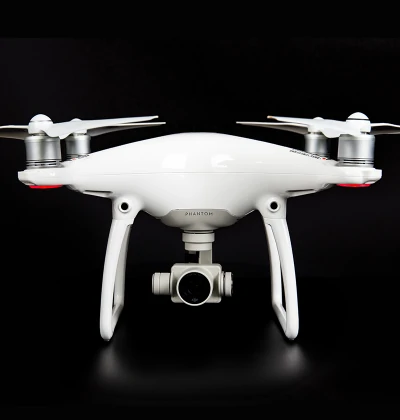

Aerospace & UAV
WJ Prototypes is your 3D manufacturing partner from prototype to large scale production.

Consumer Electronics
New Product Introduction Solutions for Consumer Electronics.

Robotics & Automation
Need some assistance bringing your robotic device or parts from the sketch-board to reality?

Medical Devices
The medical industry needs high quality, dependable and safe parts and products.

Automotive
New Product Introduction Solutions for Automotive

Industrial Machinery
The main purpose of industrial prototyping is to take the product from drawings into the real world.


The rapid prototyping market isn’t just growing—it’s exploding. Projected at $3.25 billion in 2025 with a CAGR exceeding 20%, this market is transforming how aerospace and automotive sectors develop products. AI integration, multi-material additive manufacturing, and digital twin simulations are slashing development cycles by 40% while improving precision. This article explores the actionable trends reshaping rapid prototyping workflows, helping you accelerate innovation and reduce costs in 2025.
| Point | Details |
|---|---|
| AI-Driven Design | Reduces prototyping cycle times by 40% and minimizes design errors through intelligent automation. |
| Multi-Material 3D Printing | Enables complex aerospace and automotive prototypes with varied material properties in single builds. |
| Digital Twin Technology | Cuts physical prototype iterations by 30% through virtual testing and real-time performance validation. |
| Sustainable Materials | Lower environmental impact and costs while meeting aerospace and automotive compliance standards. |
| Market Growth Trajectory | Aerospace and automotive sectors drive rapid prototyping expansion with specialized high-performance requirements. |
Rapid prototyping has evolved from a niche time-saver into a strategic advantage for aerospace and automotive manufacturers. The market is projected to grow from $3.25 billion in 2025 with a 20.07% CAGR, expected to nearly triple by 2030. This explosive growth reflects how essential rapid iteration has become for reducing time-to-market in industries where precision and reliability are non-negotiable.
Three technological pillars drive this transformation. AI-powered design tools now optimize geometries automatically, catching errors before they reach production. Additive manufacturing technologies like SLA, SLS, MJF, and DMLS produce functional prototypes with complex internal structures impossible through traditional methods. Sustainability initiatives are pushing recyclable materials and circular manufacturing processes that reduce waste while lowering costs.
For aerospace and automotive sectors, these advances directly address unique challenges. Aerospace demands lightweight components that withstand extreme conditions while meeting stringent safety certifications. Automotive manufacturers face pressure to iterate rapidly on EV components and lightweight structures that improve efficiency. The benefits of rapid prototyping now extend beyond speed to encompass material innovation, sustainability compliance, and digital integration.
Understanding the rapid prototyping market landscape for 2025-2030 positions you to leverage these technologies strategically. Whether you’re developing next-generation aircraft components or electric vehicle systems, the convergence of AI, additive manufacturing, and digital simulation creates unprecedented opportunities to compress development timelines while improving product performance.
Artificial intelligence is fundamentally changing how engineers approach prototype design. AI-driven design tools reduce errors and cycle times by 40% by analyzing thousands of design variations instantly, identifying optimal configurations based on performance requirements. These tools predict structural weaknesses, suggest material substitutions, and generate geometries that would take human designers weeks to conceive.
Multi-material 3D printing represents another breakthrough for complex aerospace and automotive applications. Modern systems can switch between materials mid-print, creating parts with rigid sections, flexible joints, and conductive pathways in a single build. This capability eliminates assembly steps while enabling designs previously impossible with single-material constraints. Engine housings with integrated cooling channels, composite wing structures with embedded sensors, and EV battery enclosures with thermal management features all benefit from this technology.
Cloud-based prototyping platforms are democratizing access to advanced manufacturing capabilities. Engineers can now:
The market’s 20%+ CAGR is driven by AI and additive manufacturing adoption across aerospace and automotive sectors. Companies achieving fast turnaround rapid prototyping gain competitive advantages in product launches and market responsiveness. Implementing rapid prototyping tips for engineers early in development cycles maximizes these benefits.
Pro Tip: Integrate AI design tools at the concept stage rather than after initial designs are complete. Early integration identifies optimization opportunities that become costly or impossible to implement later.
Selecting the right additive manufacturing method dramatically impacts prototype quality, speed, and cost. Each technology offers distinct advantages for aerospace and automotive applications.
Stereolithography (SLA) excels at producing prototypes with exceptional surface finishes and fine details. Laser-cured resin creates smooth surfaces ideal for aerodynamic testing and visual mockups. SLA’s speed makes it perfect for rapid design iterations when you need multiple versions quickly. However, material strength limitations restrict SLA to non-load-bearing applications.
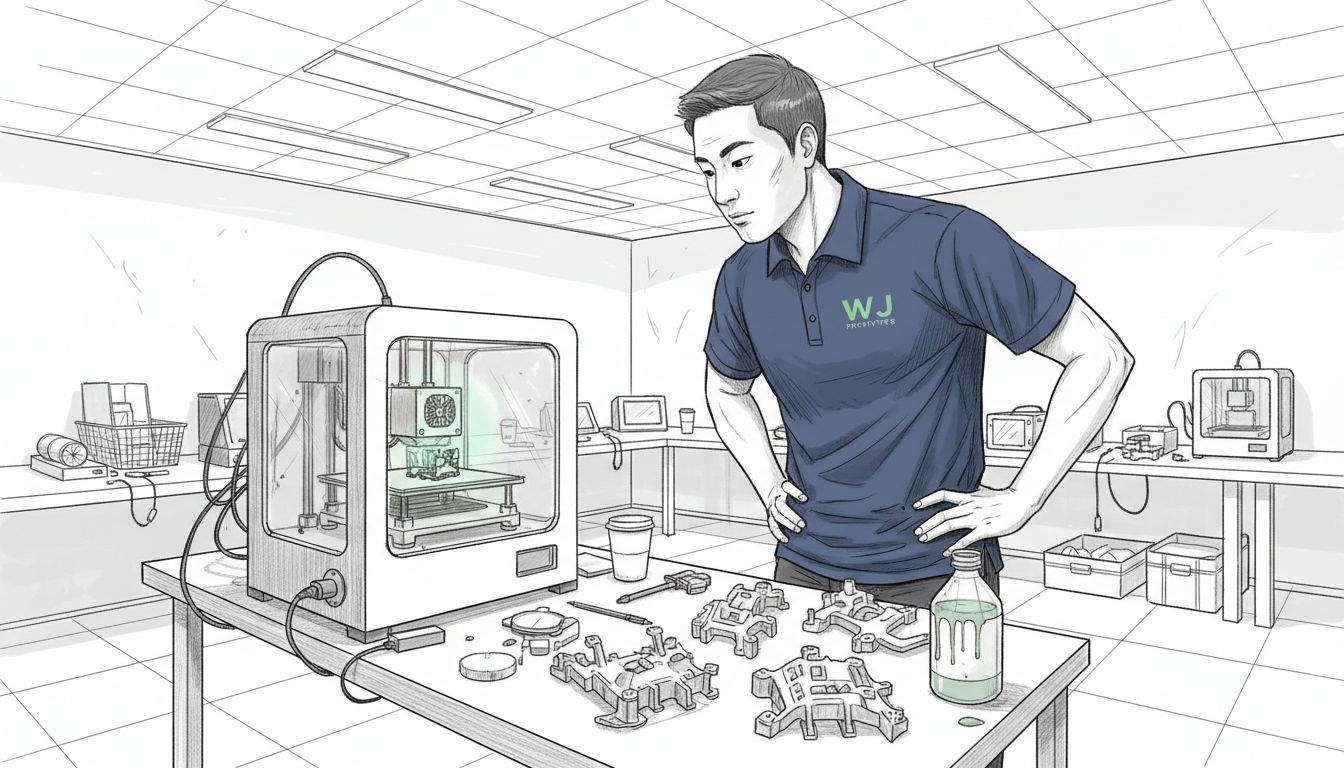
Selective Laser Sintering (SLS) uses powdered nylon or other thermoplastics to build durable functional prototypes. SLS enables complex geometries with undercuts and moving parts without support structures. Aerospace engineers use SLS for duct systems, housing components, and test fixtures that must survive repeated handling. The process produces parts with mechanical properties approaching injection-molded components.
Direct Metal Laser Sintering (DMLS) transforms metal powder into fully dense aerospace-grade parts. DMLS produces lightweight complex shapes with high precision ideal for turbine components, brackets, and structural elements. Titanium, aluminum, and stainless steel parts maintain strength while reducing weight by 40% through optimized lattice structures impossible with traditional machining.
Multi Jet Fusion (MJF) balances speed, accuracy, and strength for production-intent prototypes. This technology fuses nylon powder layer by layer, creating parts with consistent mechanical properties throughout. MJF suits high-volume prototype runs where you need dozens of test units for validation testing.
| Technology | Best For | Material Options | Typical Lead Time |
|---|---|---|---|
| SLA | Surface finish, visual models | Resins, limited strength | 1-3 days |
| SLS | Functional testing, durability | Nylon, thermoplastics | 3-5 days |
| DMLS | Metal parts, aerospace grade | Titanium, aluminum, steel | 5-10 days |
| MJF | Production volumes, strength | Nylon PA12, PA11 | 3-7 days |
Exploring additive manufacturing examples in aerospace reveals how these technologies solve real engineering challenges. Understanding types of additive manufacturing helps you match process capabilities to your project requirements. The aerospace additive manufacturing landscape continues evolving with new materials and process improvements.
Pro Tip: Order small test parts in multiple AM technologies before committing to large prototype runs. Material properties and surface finishes vary significantly between processes, and hands-on comparison prevents costly mistakes.
Digital twins are revolutionizing how engineers validate designs before physical prototyping. These virtual replicas simulate real-world physics, stress conditions, and environmental factors with remarkable accuracy. Digital twins reduce physical prototype cycles by up to 30% by catching design flaws in the digital realm where corrections cost pennies instead of thousands.
Integration with AI transforms digital twins from passive models into predictive systems. Machine learning algorithms analyze simulation data to forecast failure modes, optimize material distribution, and recommend design improvements. An aerospace turbine blade, for example, can be tested through millions of operational cycles virtually, identifying fatigue patterns that would require months of physical testing to discover.
The benefits compound across development phases:
Automotive manufacturers use digital twins to validate crashworthiness, thermal management, and aerodynamic performance before building expensive physical test vehicles. Aerospace companies simulate flight conditions, vibration profiles, and thermal cycling to ensure components meet certification requirements. The additive manufacturing workflow increasingly incorporates digital twin validation as a standard step.
Understanding digital twin applications in aerospace manufacturing demonstrates how virtual testing accelerates certification timelines. When physical tests are required, digital twins ensure first-article success rates approaching 90%, eliminating the costly iteration loops that plague traditional development.
Pro Tip: Build digital twin models during initial CAD design rather than after physical prototypes reveal problems. Early integration allows simulation insights to guide design decisions when changes are cheapest and fastest to implement.
Sustainability has shifted from corporate virtue signaling to hard-dollar competitive advantage. Aerospace and automotive sectors face increasing regulatory pressure to reduce environmental impact while customers demand transparency about manufacturing footprints.
Recyclable and bio-based materials are gaining traction in prototyping applications. Nylon PA11, derived from castor oil, offers mechanical properties comparable to petroleum-based nylon while reducing carbon footprint by 40%. Recycled PETG and rPET provide cost savings of 15-25% compared to virgin materials without sacrificing prototype quality for non-critical applications.
Circular manufacturing approaches minimize prototype waste through several strategies:
Sustainability trends reduce material waste and energy consumption while delivering measurable cost advantages. Aerospace suppliers report prototype material costs declining 20% through recycled powder programs. Automotive OEMs achieve faster regulatory approval by demonstrating environmental stewardship throughout development cycles.
The convergence of sustainability and cost efficiency creates win-win scenarios. Lightweighting through additive manufacturing reduces both material costs and downstream fuel consumption or battery requirements. Choosing appropriate material selection in prototyping balances performance, cost, and environmental impact. Industry leaders implementing sustainability in rapid prototyping gain procurement advantages as supply chains prioritize environmentally responsible partners.
Aerospace rapid prototyping addresses unique challenges of extreme environments and rigorous certification requirements. The aerospace market reaches $2.28 billion by 2025 with 9.8% CAGR driven by demand for lightweight high-performance components. Composite wing structures, titanium landing gear components, and ceramic thermal protection systems all benefit from rapid iteration enabled by advanced additive manufacturing.

Automotive growth outpaces aerospace as electric vehicle development accelerates. Automotive rapid prototyping holds 24.46% revenue share in 2024 driven by lightweight materials and EV component innovation. Battery enclosures require rapid thermal management testing. Electric powertrains demand housing designs optimized for electromagnetic shielding. Interior components shift toward sustainable materials requiring extensive prototype validation.
Real applications demonstrate prototyping’s impact:
| Sector | Market Size 2025 | CAGR | Key Drivers |
|---|---|---|---|
| Aerospace | $2.28B | 9.8% | Lightweight structures, certification speed |
| Automotive | $3.8B+ | 21%+ | EV development, material innovation |
Exploring automotive prototyping use cases reveals how manufacturers compress development timelines. Understanding aerospace prototyping requirements helps navigate certification challenges. The aerospace prototyping market trajectory indicates sustained growth through 2030 as additive manufacturing capabilities expand.
Many engineers still view rapid prototyping through an outdated lens focused solely on speed. This narrow perspective misses the technology’s evolved capabilities and strategic value.
Misconception: Rapid prototyping exists only to accelerate product development timelines. Reality: Modern rapid prototyping emphasizes accuracy, material diversity, sustainability, and digital integration alongside speed. Digital twins and AI-driven design improve precision and reliability while reducing iterations. Sustainability features lower lifecycle costs and environmental impact. Speed remains important but represents just one dimension of value.
Misconception: 3D printing cannot meet aerospace and automotive material or precision requirements. Reality: DMLS produces aerospace-grade titanium parts meeting ASTM standards with tolerances to ±0.1mm. SLS nylon components achieve tensile strengths of 48 MPa, suitable for functional automotive testing. Advanced additive manufacturing creates multi-material assemblies with embedded electronics and complex internal geometries impossible through conventional manufacturing.
Misconception: Prototyping produces only concept models unsuitable for functional testing. Reality: Production-intent prototypes now undergo full validation testing including:
Understanding evolving rapid prototyping capabilities prevents missed opportunities. Engineers who recognize prototyping’s expanded role integrate these capabilities earlier in development, capturing benefits throughout product lifecycles rather than treating prototyping as an isolated preliminary phase.
Implementing advanced rapid prototyping requires systematic integration of multiple technologies and strategic decision-making throughout development.
Follow this stepwise approach:
Balancing competing priorities requires clear project criteria. Speed favors SLA and MJF for quick turnarounds. Cost considerations may dictate SLS for functional testing versus expensive DMLS metal parts. Fidelity demands match prototype characteristics to intended use, avoiding over-engineering for early concept validation while ensuring production-intent prototypes meet final specifications.
Future-proofing your prototypes means building flexibility into designs. Modular architectures allow component updates without full redesigns. Parametric CAD models enable rapid scaling and configuration changes. Early integration of sensors and data collection capabilities supports digital twin development even when initial prototypes lack full instrumentation.
Optimizing your additive manufacturing workflow streamlines handoffs between design, simulation, and production phases. Strategic material selection guidance prevents costly mid-project pivots when initial material choices prove inadequate.
Pro Tip: Create a decision matrix scoring technologies against your specific requirements weighted by importance. This objective framework prevents emotional attachment to familiar methods while ensuring optimal technology selection for each project phase.
Translating these rapid prototyping insights into competitive advantage requires partnership with manufacturing experts equipped with cutting-edge technologies. WJ Prototypes delivers comprehensive additive manufacturing services specifically tailored for aerospace and automotive applications, combining SLA, SLS, MJF, and DMLS capabilities with traditional fabrication methods.
Our ISO-certified engineers understand the precision demands and regulatory requirements unique to aerospace and automotive sectors. Whether you need lightweight titanium components for aircraft structures or multi-material EV housings, we provide the technical expertise and manufacturing flexibility to accelerate your development cycles. Detailed guides covering types of additive manufacturing explained help you select optimal processes for your applications.
Explore our proven additive manufacturing workflow and comprehensive rapid prototyping guide to streamline your product development. Contact WJ Prototypes to discuss how our advanced prototyping capabilities can compress your time-to-market while improving design quality.
AI reduces design cycle times by 40% through automated geometry optimization and early error detection. Machine learning algorithms analyze thousands of design variations instantly, identifying optimal configurations that would take human engineers weeks to conceive while catching structural weaknesses before physical builds.
Digital twins eliminate up to 30% of physical prototype iterations by simulating real-world conditions virtually. Testing failures in software costs pennies compared to thousands for physical builds, while comprehensive virtual validation ensures first-article physical prototypes meet specifications, avoiding expensive redesign cycles.
Yes, bio-based materials like nylon PA11 and recycled metals meet aerospace performance standards while reducing environmental impact. These materials undergo the same rigorous testing as conventional options, and many aerospace suppliers now require sustainable material documentation for procurement approval, making them both reliable and strategically necessary.
DMLS produces aerospace-grade metal components with optimized internal lattice structures reducing weight by 40% while maintaining strength. Titanium and aluminum DMLS parts achieve densities above 99.5% and meet ASTM material specifications, making this technology ideal for flight-critical lightweight aerospace applications.
Build modular architectures allowing component updates without full redesigns, use parametric CAD models enabling rapid configuration changes, and integrate digital twin capabilities from initial prototypes. This approach maintains design flexibility as new materials and manufacturing methods emerge while supporting iterative improvement throughout product lifecycles.
SERVICES
RESOURCES