



- Room 1807, Unit 9, Building 2, Shangxing Commercial Street, Shangde Road, Shangxing Community, Xinqiao Subdistrict, Bao'an District, Shenzhen City, China
CONTACT US

WhatsApp


Contact Us
Our team is on stand by, waiting toassist you.

Videos
A large collection of educational videos and tutorials.

About Us
Learn about our company, leadership, and mission totransform manufacturing.

Privacy Policy
Applies to all personal information collected through and/or processed in connection.

Aerospace & UAV
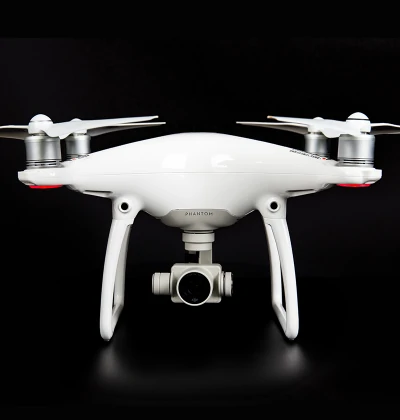
WJ Prototypes is your 3D manufacturing partner from prototype to large scale production.

Consumer Electronics
New Product Introduction Solutions for Consumer Electronics.

Robotics & Automation
Need some assistance bringing your robotic device or parts from the sketch-board to reality?

Medical Devices
The medical industry needs high quality, dependable and safe parts and products.

Automotive
New Product Introduction Solutions for Automotive

Industrial Machinery
The main purpose of industrial prototyping is to take the product from drawings into the real world.

Many product designers believe additive manufacturing parts are inherently weaker than their machined counterparts. This misconception persists despite evidence showing properly post-processed metal additive parts can achieve over 90% of wrought metal strength. Understanding the real differences between additive and subtractive manufacturing transforms how you approach prototyping and low-volume production, ensuring you select the optimal method for your specific design requirements, budget constraints, and performance goals.
| Point | Details |
|---|---|
| Design Freedom | Additive manufacturing enables complex internal geometries impossible with traditional machining |
| Material Efficiency | Additive manufacturing reduces material waste to less than 10% compared to subtractive methods |
| Surface Quality | Subtractive manufacturing produces prototypes with consistent material strength and smooth surface finish |
| Production Speed | Additive methods accelerate prototyping cycles while subtractive excels at higher volumes |
| Cost Efficiency | Hybrid approaches optimize both speed and quality for complex production requirements |
Additive manufacturing builds parts layer by layer from digital models, enabling complex geometries through technologies like SLA, SLS, MJF, and DMLS. This approach deposits material only where needed, creating intricate internal channels, lattice structures, and organic shapes that traditional methods cannot produce. Each layer fuses to the previous one, gradually forming the complete component from base to final surface.
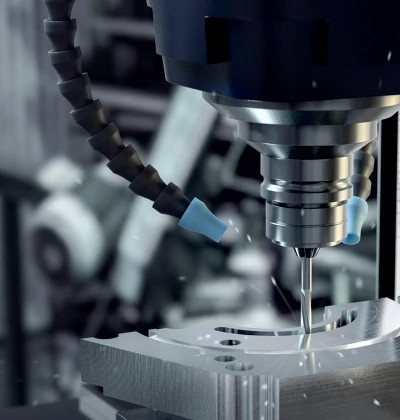
Subtractive manufacturing removes material from solid blocks using CNC machining, milling, turning, and drilling operations. This process achieves exceptional dimensional accuracy and produces prototypes with consistent material strength and smooth surface finish. The cutting tools follow programmed paths, shaping raw stock into precise final geometries with tolerances as tight as ±0.001 inches.
Understanding these fundamental operational differences helps you leverage benefits of rapid prototyping effectively. The choice impacts design freedom, material utilization, production speed, and final part quality.
Typical additive machines include:
Common subtractive equipment includes:
Your additive manufacturing workflow selection directly influences prototyping timelines and subtractive vs additive prototyping outcomes.
Additive manufacturing excels at creating conformal cooling channels, topology-optimized structures, and consolidated assemblies that eliminate fasteners. You can design parts with internal voids, undercuts, and organic shapes without worrying about tool access limitations. This freedom accelerates innovation by removing traditional manufacturability constraints from early design phases.
Subtractive manufacturing delivers superior strength and finish quality through established material processes. Machined parts maintain consistent bulk material properties because they come from homogeneous stock. The cutting process creates smooth surfaces with Ra values typically between 0.8 and 3.2 micrometers without additional finishing.
Material waste differs dramatically between methods. Additive manufacturing reduces material waste to less than 10% of input material, while subtractive processes can waste 40-90% depending on part geometry and stock size. This sustainability advantage becomes critical for expensive materials like titanium or when environmental impact matters.
| Feature | Additive Manufacturing | Subtractive Manufacturing |
|---|---|---|
| Geometric Complexity | Unlimited internal features and organic shapes | Limited by tool access and fixturing |
| Material Waste | Under 10% waste | 40-90% waste depending on geometry |
| Design Iterations | Fast changes without new tooling | Requires new programming and setup |
| Assembly Consolidation | Multiple parts combined into single build | Requires separate components and joining |
The additive manufacturing advantages extend to rapid design validation and rapid prototyping vs traditional manufacturing timelines.
Design features uniquely suited for additive:
Design features ideal for subtractive:
Understanding these material waste comparison factors guides smarter prototyping decisions.
Subtractive manufacturing yields parts ready for immediate testing and assembly. The continuous material structure and machined surfaces provide consistent mechanical properties matching material datasheet specifications. You can directly measure performance without wondering whether processing artifacts will affect results.

Additive manufactured parts show layer lines and require post-processing to match machined quality. The layer-by-layer construction creates anisotropic properties where strength varies by build direction. Additive parts often require post-processing to improve surface finish and strength, but proper treatment delivers excellent results.
Metal additive manufacturing using DMLS or SLM achieves impressive strength levels. Metal additive parts produced by DMLS or SLM can match or exceed the strength of machined parts after appropriate post-processing. Heat treatment relieves residual stresses and homogenizes microstructure, pushing tensile strength above 90% of wrought equivalents.
Typical post-processing steps for additive parts:
These steps impact your timeline and budget. Factor processing costs early when evaluating additive manufacturing post-processing requirements. The additional time might offset initial speed advantages for simple geometries better suited to machining.
Pro Tip: Plan ahead for post-processing time and costs when selecting additive manufacturing for functional parts. Build these steps into your project schedule from day one to avoid surprises that delay validation testing or market launch.
The surface finish and strength differences between methods directly influence prototype performance and product validation confidence.
Additive manufacturing enables rapid iteration cycles that compress product development timelines. You can modify designs overnight and have new parts building by morning without retooling costs. This agility reduces time to market by up to 50% for complex products requiring multiple design revisions before finalization.
Subtractive manufacturing provides better unit economics for production volumes exceeding approximately 100 units. Setup costs amortize across larger quantities, and faster machining speeds for simple geometries reduce per-part processing time. The crossover point depends on part complexity and material requirements.
| Factor | Additive Manufacturing | Subtractive Manufacturing |
|---|---|---|
| Setup Cost | Low (no tooling needed) | Moderate to high (programming and fixturing) |
| Unit Cost at 10 Parts | $50-200 typical | $80-300 typical |
| Unit Cost at 100 Parts | $45-180 typical | $30-120 typical |
| Lead Time | 1-5 days typical | 3-10 days typical |
| Design Change Cost | Minimal (modify file only) | Moderate (reprogram and setup) |
Key factors influencing manufacturing costs:
Hybrid manufacturing approaches combine both methods strategically. You might additively manufacture a complex housing with internal channels, then machine critical mounting surfaces to tight tolerances. This combination cuts lead times while optimizing costs and quality.
Pro Tip: Evaluate your project scale and budget early to select the most cost-effective manufacturing method. Run quick cost estimates at different volumes to identify the breakeven point where switching methods makes financial sense.
Compare traditional vs additive manufacturing cost comparison scenarios alongside material selection in prototyping to optimize your approach.
Many engineers believe additive parts always lack the strength of machined components. This outdated view ignores advances in metal additive technologies and post-processing techniques. Properly treated DMLS parts regularly outperform castings and approach wrought material properties in critical applications.
Another common myth suggests additive manufacturing is always slower than subtractive methods. For complex geometries requiring multiple setups and tool changes, additive often finishes faster. A part needing five machining operations might complete in one additive build, eliminating setup time between operations.
Some designers assume subtractive methods can produce any geometry given enough time and tooling. Internal voids, re-entrant features, and certain organic shapes remain impossible to machine regardless of equipment sophistication. These geometries require additive approaches or radical design compromises.
Metal additive parts produced by DMLS or SLM can match or exceed the strength of machined parts after appropriate post-processing, with tensile strengths regularly exceeding 90% of wrought material equivalents.
Other misconceptions to clarify:
Understanding these key additive manufacturing advantages and limitations helps you avoid debunking additive manufacturing myths that lead to poor decisions.
Aerospace companies leverage additive manufacturing for lightweight brackets with optimized topology and integrated mounting features. These parts reduce aircraft weight by 20-40% compared to machined equivalents while maintaining structural requirements. Subtractive finishing of mounting surfaces ensures proper fit with existing assemblies.
Medical device manufacturers combine both methods for customized implants. Additive processes create patient-specific geometries with porous surfaces promoting bone integration. CNC machining then finishes articulating surfaces to mirror-smooth tolerances required for joint replacements.
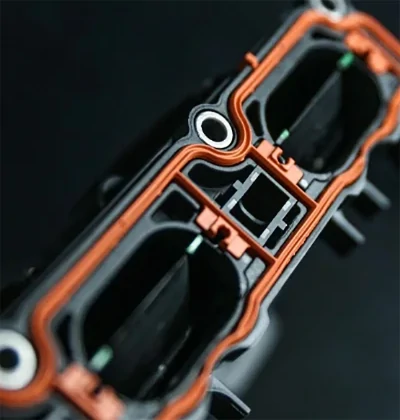
Automotive engineers use additive manufacturing for rapid prototyping of intake manifolds, testing multiple design iterations within weeks. Once validated, they transition to subtractive methods or casting for production volumes exceeding 1,000 units where unit economics favor traditional processes.
On-demand customization benefits from additive flexibility. You can produce unique configurations without expensive tooling changes, enabling mass customization strategies previously too costly to consider. Each part can differ without production penalties.
Hybrid approach advantages in practice:
Industry-specific constraints drive method selection. Aerospace demands traceability and certified processes. Medical requires biocompatible materials and FDA compliance. Automotive prioritizes cost per part at volume. Understanding these requirements shapes your manufacturing strategy.
Explore additive manufacturing aerospace examples showing real-world implementation across demanding applications.
Selecting the optimal manufacturing method requires systematic evaluation of your specific requirements. Start by documenting design complexity, material specifications, production volume, surface finish needs, budget constraints, and timeline pressures. These factors interact to determine which approach delivers the best outcome.
Decision framework steps:
| Condition | Recommended Method | Key Trade-offs |
|---|---|---|
| Complex internal features | Additive | Requires post-processing but enables impossible geometries |
| High-precision external surfaces | Subtractive | Higher material waste but superior finish and tolerances |
| Prototype iteration speed critical | Additive | Faster changes without retooling costs |
| Production volume over 100 units | Subtractive | Better unit economics offset higher setup costs |
| Mixed requirements | Hybrid | Optimizes speed, cost, and quality simultaneously |
Consider hybrid approaches when facing conflicting requirements. A part needing both complex internal channels and tight-tolerance mounting holes benefits from additive base geometry with machined critical surfaces. This combination delivers results impossible with either method alone.

Pro Tip: Regularly revisit manufacturing choices post-design iteration to optimize outcomes. What made sense for initial prototypes might not suit refined designs or changing production volumes. Flexibility beats rigid adherence to initial decisions.
Review practical decision frameworks for complex manufacturing strategy planning across multiple evaluation criteria.
WJ Prototypes delivers comprehensive support for both additive and subtractive manufacturing across Asia-Pacific and global markets. Our ISO-certified facilities combine advanced 3D printing technologies including SLA, SLS, MJF, and DMLS with precision CNC machining capabilities for complete prototyping solutions.
We specialize in rapid prototyping with lead times as short as 24 hours for urgent projects. Our experienced engineers help you navigate the decision between types of additive manufacturing and traditional fabrication methods. Whether you need complex additive geometries or precision machined components, we optimize your manufacturing strategy.
Our CNC machining services in China provide cost-effective solutions for low-volume production without sacrificing quality. Compare traditional vs additive manufacturing costs with instant online quoting to make informed decisions backed by transparent pricing.
Evaluate your design complexity first, focusing on internal features and geometric constraints. Choose additive for complex geometries with internal channels or organic shapes impossible to machine. Select subtractive when you need superior surface finish, tight tolerances, or production volumes exceeding 100 units where unit economics favor machining.
Yes, metal additive parts achieve over 90% of wrought material strength after proper heat treatment and processing. Polymer additive parts using technologies like MJF and SLS deliver functional properties suitable for most prototype testing. Specify your strength requirements upfront to ensure the selected material and process meet performance needs.
Support removal comes first, followed by heat treatment for metal parts to relieve stress and optimize properties. Surface finishing through bead blasting, tumbling, or machining improves aesthetics and dimensional accuracy. Some applications require sealing or coating for durability. Plan 1-3 days additional lead time and 15-40% cost increase for comprehensive post-processing.
No, additive often completes complex parts faster by eliminating multiple setups and tool changes. A component requiring five machining operations might finish in one overnight additive build. However, subtractive excels for simple geometries and higher volumes where setup costs amortize across many parts. Speed depends on specific part geometry and quantity.
Consider hybrid methods when your design needs both complex internal features and precision external surfaces. Parts requiring rapid iteration with final machined accuracy benefit from additive base geometry with CNC-finished critical dimensions. Hybrid approaches optimize lead time, cost, and quality simultaneously for demanding applications in aerospace, medical, and automotive sectors.
SERVICES
RESOURCES