



- Room 1807, Unit 9, Building 2, Shangxing Commercial Street, Shangde Road, Shangxing Community, Xinqiao Subdistrict, Bao'an District, Shenzhen City, China
CONTACT US

WhatsApp


Contact Us
Our team is on stand by, waiting toassist you.

Videos
A large collection of educational videos and tutorials.

About Us
Learn about our company, leadership, and mission totransform manufacturing.

Privacy Policy
Applies to all personal information collected through and/or processed in connection.
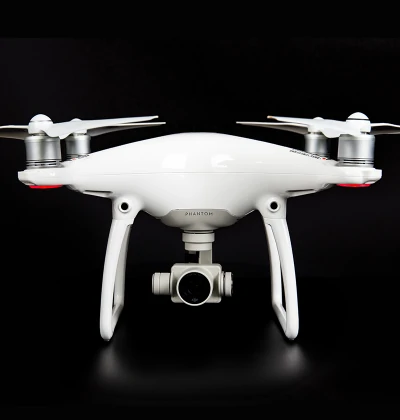

Aerospace & UAV
WJ Prototypes is your 3D manufacturing partner from prototype to large scale production.

Consumer Electronics
New Product Introduction Solutions for Consumer Electronics.

Robotics & Automation
Need some assistance bringing your robotic device or parts from the sketch-board to reality?

Medical Devices
The medical industry needs high quality, dependable and safe parts and products.

Automotive
New Product Introduction Solutions for Automotive

Industrial Machinery
The main purpose of industrial prototyping is to take the product from drawings into the real world.


Rapid prototyping can create complex parts within hours, while traditional methods may take weeks of meticulous labor. This dramatic difference in production speed is transforming how engineers and designers approach product development. With digital techniques offering micrometre-level precision and wider material choices, knowing how rapid prototyping stacks up against classic approaches helps decision makers choose the best path for innovation, quality, and cost.
| Point | Details |
|---|---|
| Rapid Prototyping Speed | Rapid prototyping enables the creation of complex parts within hours, significantly outpacing traditional methods, which can take weeks. |
| Material and Design Flexibility | Rapid prototyping supports multiple materials and intricate geometries, enhancing design possibilities compared to traditional methods. |
| Cost and Efficiency Trade-offs | While rapid prototyping requires a higher initial investment, it ultimately reduces long-term labor costs and material waste. |
| Industry Innovations | Rapid prototyping is revolutionizing sectors such as aerospace, healthcare, and automotive by enabling faster product development and efficient manufacturing. |
Manufacturing has undergone a revolutionary transformation with the emergence of rapid prototyping technologies, offering engineers and designers unprecedented capabilities for creating physical models and functional parts. According to Wikipedia, rapid prototyping encompasses techniques that swiftly fabricate scale models of physical parts using 3D CAD data, primarily through advanced 3D printing technologies.
Traditional prototyping methods represent the classic approach to product development, involving manual techniques that have been used for decades. As outlined by Curriculum Resources, these traditional methods include machining, milling, and handcrafting, which are significantly more time-consuming and require highly skilled artisans. Such techniques demand extensive manual labour, specialised tools, and considerable expertise to transform design concepts into physical prototypes.
The key differences between rapid prototyping and traditional methods can be summarised across several critical dimensions:
For engineers and designers seeking deeper insights into these transformative manufacturing approaches, our comprehensive guide to rapid prototyping provides an in-depth exploration of these revolutionary techniques. Understanding these methodologies is crucial for making informed decisions in modern product development strategies.
In the realm of manufacturing and product development, different approaches involve distinct processes and technologies. Rapid prototyping represents a suite of advanced manufacturing techniques that enable quick and precise creation of physical models. According to Testbook, rapid prototyping encompasses several sophisticated methods including Stereolithography (SLA), Selective Laser Sintering (SLS), Fused Deposition Modeling (FDM), and Selective Laser Melting (SLM).
Traditional prototyping methods, in contrast, rely on more conventional techniques that have been fundamental to manufacturing for decades. These methods include subtractive manufacturing processes such as CNC machining, manual milling, turning, and manual fabrication. Each traditional technique requires specific skills, precision tools, and considerable time investment to transform design concepts into physical representations.

Let’s explore the key processes in each approach:
Rapid Prototyping Methods:
Traditional Prototyping Methods:
For professionals seeking a deeper understanding of these transformative manufacturing techniques, our comprehensive rapid prototyping guide offers detailed insights into modern production strategies.
Manufacturing technologies are constantly evolving, with each approach presenting unique strengths and challenges. According to Curriculum Resources, rapid prototyping offers faster production times and significantly reduced labor costs compared to traditional methods, though it may involve higher initial equipment expenses.
The comparative landscape of prototyping methods reveals nuanced trade-offs that engineers and designers must carefully consider. As highlighted by NAUN, traditional prototyping methods are inherently time-consuming and require highly skilled labor, whereas rapid prototyping enables quicker iterations and supports more complex geometries, albeit with potentially limited material choices.
Advantages of Rapid Prototyping:
Limitations of Rapid Prototyping:
Advantages of Traditional Methods:
Limitations of Traditional Methods:
For professionals seeking deeper insights into navigating these technological trade-offs, our comprehensive rapid prototyping guide provides strategic recommendations for selecting the most appropriate manufacturing approach.

Manufacturing innovation continues to reshape industrial landscapes, with prototyping technologies driving transformative changes across multiple sectors. According to Online Scientific Research, rapid prototyping technologies are fundamentally transforming industries such as aerospace, healthcare, and automotive by enabling faster product development and more sustainable manufacturing practices.
In specialized fields like robotics, technological advancement reaches new frontiers. ArXiv Research highlights how rapid prototyping methods have been specifically employed to fabricate compliant components in soft robotics, significantly reducing manufacturing errors and enhancing prototype development efficiency.
Aerospace Industry Applications:
Healthcare Sector Innovations:
Automotive Sector Implementations:
Robotics and Engineering Applications:
For engineering professionals seeking deeper insights into industrial applications, our guide to industrial 3D printing provides comprehensive strategic perspectives on leveraging these transformative manufacturing technologies.
Manufacturing strategies demand meticulous evaluation of economic and performance metrics. According to Curriculum Resources, while rapid prototyping can be remarkably cost-effective in the long run due to reduced labor and faster production times, the initial investment in equipment remains relatively high.
NAUN Research further highlights that rapid prototyping processes enable quicker iterations and support complex geometries, though material choices may be constrained, potentially impacting the quality and functionality of the final product.
Cost Considerations:
Lead Time Factors:
Quality Assessment Metrics:
Comparative Performance Indicators:
Engineering teams seeking strategic insights into optimizing manufacturing costs can explore our detailed guide for cutting CNC machining part expenses, which provides practical strategies for managing production economics.
Navigating the complexities of prototyping can be challenging when you must weigh speed, precision, and cost efficiency against material options and mechanical strength. This guide highlights common hurdles such as long lead times, high labour demands, and limited design flexibility that often occur with traditional methods. It also reveals how rapid prototyping, with technologies like SLA and CNC machining, accelerates product development yet may require careful consideration of equipment costs and material constraints.
At WJ Prototypes, we understand these challenges deeply. Our professional manufacturing services offer the ideal fusion of advanced additive manufacturing and traditional fabrication techniques designed to meet your unique project demands. Whether you need rapid iterations using cutting-edge methods like SLS and DMLS or high-strength, reliable components crafted through CNC machining and sheet metal fabrication, our ISO certified team delivers with precision and speed. Explore how we can help you reduce material waste, compress your lead times, and unlock design possibilities by visiting our main site and learning from our comprehensive manufacturing solutions.
Ready to overcome prototype development challenges and bring your ideas to life faster and more cost-effectively? Connect with WJ Prototypes today for a tailored consultation that ensures your project achieves the perfect balance of quality and efficiency. Act now to experience the benefits of partnering with a global expert committed to accelerating your journey from concept to market.
Rapid prototyping is a set of advanced manufacturing techniques that swiftly create physical models or functional parts from digital 3D CAD data, primarily using 3D printing methods.
The main differences include production speed, precision, material flexibility, and cost efficiency. Rapid prototyping is faster, offers higher precision, allows for complex geometries, and reduces labor costs compared to traditional methods which are generally slower and more labor-intensive.
Common rapid prototyping methods include Stereolithography (SLA), Selective Laser Sintering (SLS), Fused Deposition Modeling (FDM), and Selective Laser Melting (SLM).
Limitations of traditional methods include extended production timelines, higher labor costs, less design flexibility, significant material waste, and the requirement for specialized manual skills.
SERVICES
RESOURCES