



- Room 1807, Unit 9, Building 2, Shangxing Commercial Street, Shangde Road, Shangxing Community, Xinqiao Subdistrict, Bao'an District, Shenzhen City, China
CONTACT US

WhatsApp


Contact Us
Our team is on stand by, waiting toassist you.

Videos
A large collection of educational videos and tutorials.

About Us
Learn about our company, leadership, and mission totransform manufacturing.

Privacy Policy
Applies to all personal information collected through and/or processed in connection.


Aerospace & UAV
WJ Prototypes is your 3D manufacturing partner from prototype to large scale production.

Consumer Electronics
New Product Introduction Solutions for Consumer Electronics.

Robotics & Automation
Need some assistance bringing your robotic device or parts from the sketch-board to reality?

Medical Devices
The medical industry needs high quality, dependable and safe parts and products.

Automotive
New Product Introduction Solutions for Automotive

Industrial Machinery
The main purpose of industrial prototyping is to take the product from drawings into the real world.
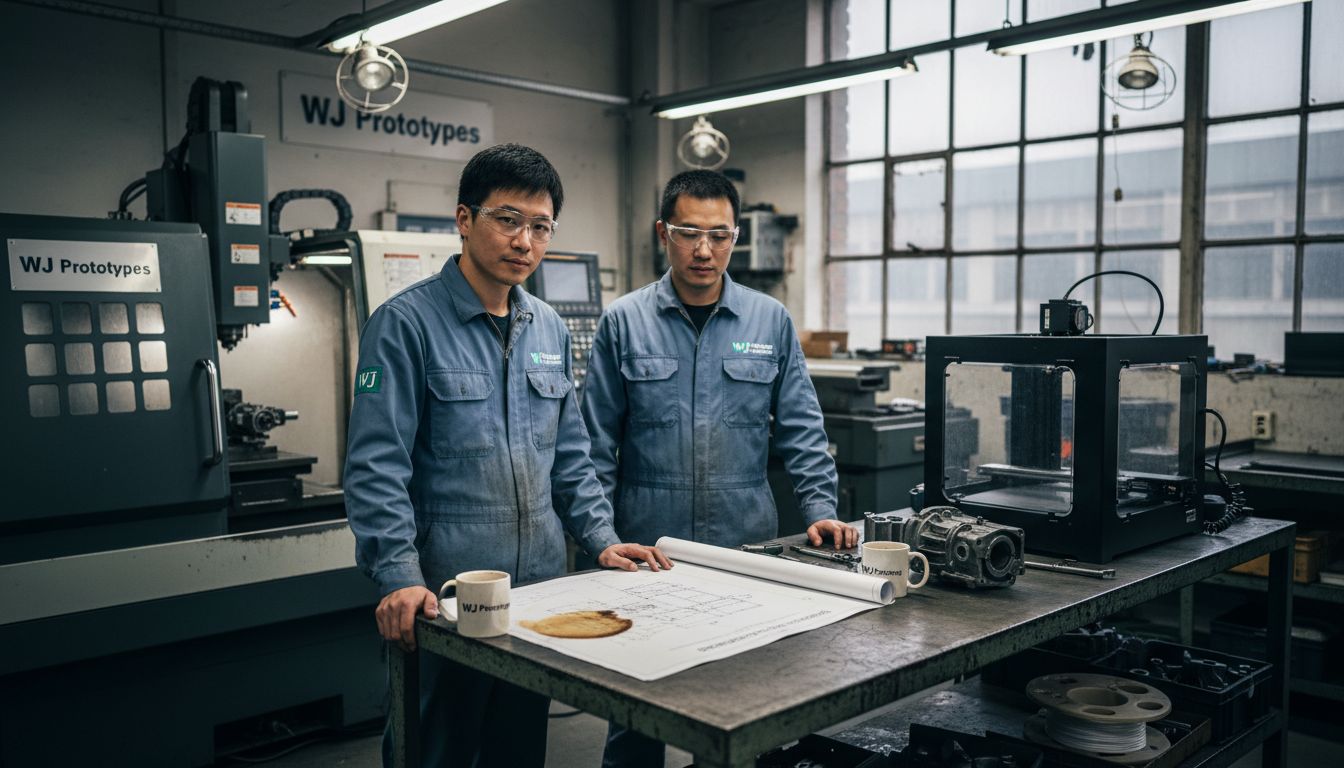
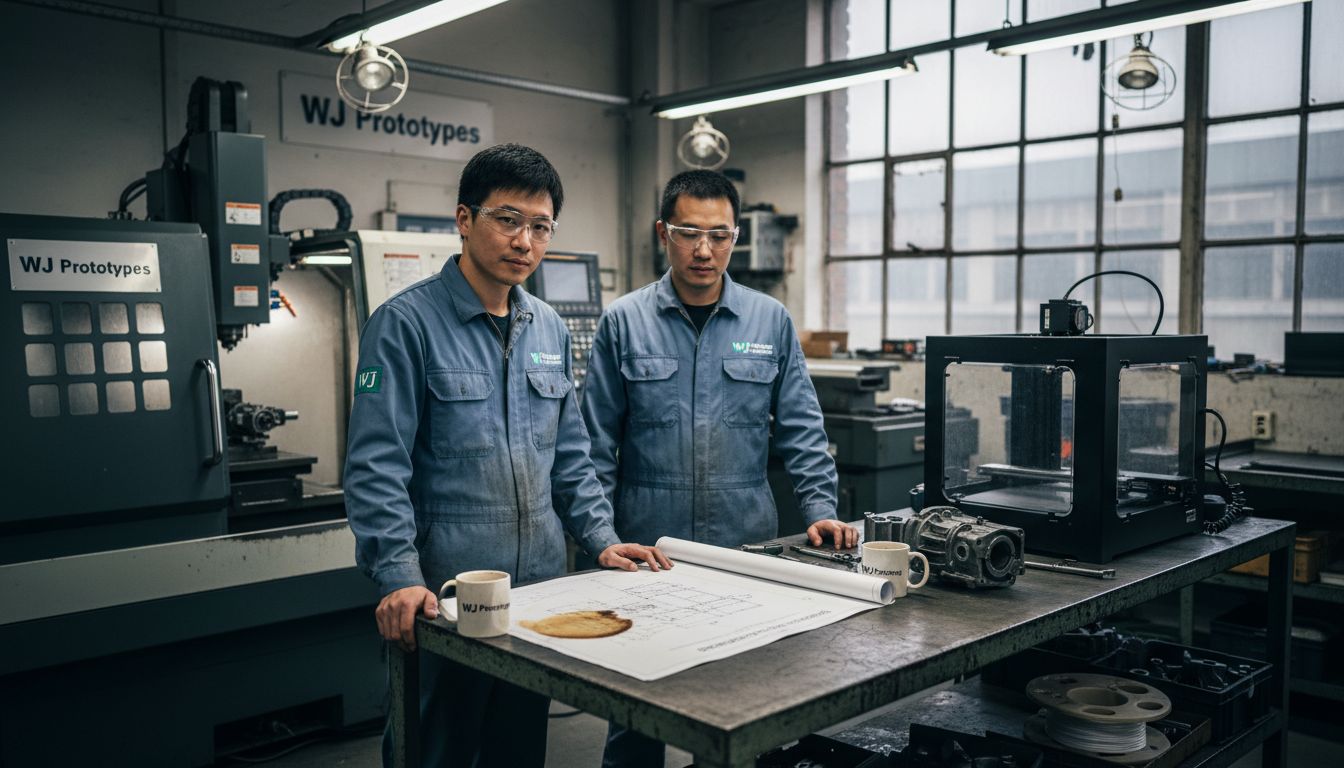
More than 75 percent of british engineers now face decisions about traditional versus additive manufacturing, a choice that shapes the future of many industries. Selecting the right approach can impact cost, production speed, and design possibilities in ways that were unthinkable a decade ago. This exploration brings clarity to the core principles, strengths, and trade-offs of these methods, helping you make informed engineering choices in a fast-evolving field.
| Point | Details |
|---|---|
| Traditional vs. Additive Manufacturing | Traditional manufacturing involves subtractive processes, while additive manufacturing builds objects layer by layer from digital designs, allowing for complex geometries and less waste. |
| Technological Approaches | Additive manufacturing employs various techniques such as Fused Deposition Modeling (FDM) and Selective Laser Sintering (SLS), each suited for different materials and applications. |
| Industry Applications | Additive manufacturing has significant applications across sectors like aerospace, healthcare, and automotive, enabling customised and lightweight components that enhance performance. |
| Economic Considerations | Engineers should consider cost, production volume, and design complexity when selecting a manufacturing process, as traditional methods benefit high-volume runs while additive manufacturing excels in rapid prototyping and customisation. |
Engineers navigate complex manufacturing landscapes where understanding the fundamental differences between traditional and additive manufacturing becomes critical for selecting optimal production strategies. Traditional manufacturing represents established subtractive processes where material is removed to create final components, while additive manufacturing builds objects layer by layer through digital design data.
Traditional manufacturing techniques like casting, forging, and machining have long been the backbone of industrial production. These methods typically involve cutting, shaping, or forming materials through mechanical processes that start with larger material blocks and progressively reduce them to desired shapes. Casting, for instance, involves pouring molten material into moulds, while machining uses cutting tools to remove material precisely from metal or plastic workpieces.
Additive manufacturing, conversely, represents a paradigm shift in production methodologies. This innovative approach builds components incrementally using digital 3D design data, enabling engineers to create intricate geometries previously impossible with traditional techniques. Key characteristics of additive manufacturing include:
While traditional manufacturing remains highly effective for large-scale, standardised production, additive manufacturing offers unprecedented design flexibility and efficiency for specialised, complex engineering applications.
Additive manufacturing encompasses a diverse array of technologies that transform digital designs into physical components through precise layer-by-layer fabrication. These technologies include multiple techniques such as Fused Deposition Modeling (FDM), Selective Laser Sintering (SLS), and Stereolithography (SLA), each utilising unique materials and energy sources.

Selective Laser Melting (SLM) represents a sophisticated additive manufacturing method particularly suited for metallic components. This technique employs high-powered lasers to completely melt and fuse metallic powders, enabling the creation of dense and intricate metal parts directly from digital models. The precision of SLM allows engineers to produce components with geometries that would be impossible through traditional manufacturing techniques.
The core working principles of additive manufacturing technologies can be categorised into several fundamental approaches:
Each technology offers unique advantages, enabling engineers to select the most appropriate method based on specific design requirements, material properties, and desired component characteristics. The flexibility of additive manufacturing allows for unprecedented design complexity and material efficiency compared to traditional subtractive manufacturing processes.
Additive manufacturing has revolutionised industrial capabilities across multiple critical sectors, enabling engineers to develop increasingly sophisticated and complex components that traditional manufacturing methods could never achieve. The technology’s unprecedented flexibility allows for rapid prototyping, customisation, and intricate geometries that push the boundaries of conventional design limitations.
In aerospace and automotive industries, additive manufacturing enables the production of lightweight, high-performance components with exceptional structural integrity. Engineers can now design parts with complex internal structures that reduce weight while maintaining strength, a critical consideration for fuel efficiency and performance. Robocasting technologies have further expanded manufacturing possibilities, particularly in producing intricate ceramic structures for advanced applications.
Key industry applications span several critical sectors:
The transformative potential of additive manufacturing extends beyond mere production techniques. Global demand for precision 3D printed components continues to drive innovation across industrial sectors, offering unprecedented design freedom and engineering possibilities that were previously unimaginable.
Comparative analyses between traditional and additive manufacturing reveal nuanced trade-offs in production economics and performance capabilities. Engineers must carefully evaluate multiple factors including material costs, production volume, design complexity, and overall manufacturing strategy when selecting the most appropriate fabrication approach.
Supply chain configurations demonstrate that additive manufacturing can significantly reduce lead times and inventory expenses by enabling on-demand production. Traditional manufacturing methods remain advantageous for high-volume production runs, where established processes and economies of scale provide substantial cost benefits. Additive manufacturing, conversely, excels in scenarios requiring:
Key comparative metrics for engineers include:
Understanding the precise cost implications of different manufacturing approaches remains crucial for strategic decision-making, with each technology presenting unique advantages depending on specific project requirements and production constraints.

Engineers must carefully analyse multiple critical factors when determining the most appropriate manufacturing approach for their specific project requirements. The decision between traditional and additive manufacturing is not a simple binary choice, but rather a nuanced evaluation of technical, economic, and strategic considerations.
The selection process fundamentally depends on understanding the unique advantages of each manufacturing methodology. Traditional manufacturing remains superior for high-volume production runs with standardised components, while additive manufacturing excels in scenarios demanding:
Decision-making criteria for selecting the optimal manufacturing process include:
Understanding the precise manufacturing economics remains crucial for strategic engineering decisions, with each technology presenting unique advantages depending on specific technological and business constraints.
Navigating the complex choice between traditional and additive manufacturing demands a partner who understands the unique challenges of precision engineering. Whether your project requires intricate geometric complexity, rapid prototyping, or cost-effective low-volume production, WJ Prototypes combines the best of both worlds with advanced technologies such as SLA, SLS, DMLS, CNC machining, and more. Their expertise spans aerospace, automotive, medical, and industrial sectors, ensuring your designs transform seamlessly from digital models to high-quality physical components.
Ready to unlock unprecedented design flexibility and accelerate your time to market? Explore how WJ Prototypes can deliver fast, reliable, and tailored manufacturing solutions. Don’t let manufacturing limitations hold your innovation back. Visit WJ Prototypes advanced manufacturing options today and take the first step towards turning complex designs into reality with confidence and speed.
Traditional manufacturing involves subtractive processes where material is removed from larger blocks to create components, while additive manufacturing builds objects layer by layer from digital designs.
Additive manufacturing offers unique advantages such as the ability to create complex geometries, minimal material waste, customization potential for unique components, and rapid prototyping capabilities.
Additive manufacturing is revolutionising industries like aerospace, automotive, healthcare, electronics, and industrial machinery by enabling the production of lightweight, complex, and custom parts.
Traditional manufacturing is generally more cost-effective for high-volume production runs, whereas additive manufacturing excels in scenarios requiring rapid prototyping, low-volume production, and intricate designs.
SERVICES
RESOURCES