



- Room 1807, Unit 9, Building 2, Shangxing Commercial Street, Shangde Road, Shangxing Community, Xinqiao Subdistrict, Bao'an District, Shenzhen City, China
CONTACT US

WhatsApp


Contact Us
Our team is on stand by, waiting toassist you.

Videos
A large collection of educational videos and tutorials.

About Us
Learn about our company, leadership, and mission totransform manufacturing.

Privacy Policy
Applies to all personal information collected through and/or processed in connection.


Aerospace & UAV
WJ Prototypes is your 3D manufacturing partner from prototype to large scale production.

Consumer Electronics
New Product Introduction Solutions for Consumer Electronics.

Robotics & Automation
Need some assistance bringing your robotic device or parts from the sketch-board to reality?

Medical Devices
The medical industry needs high quality, dependable and safe parts and products.

Automotive
New Product Introduction Solutions for Automotive

Industrial Machinery
The main purpose of industrial prototyping is to take the product from drawings into the real world.
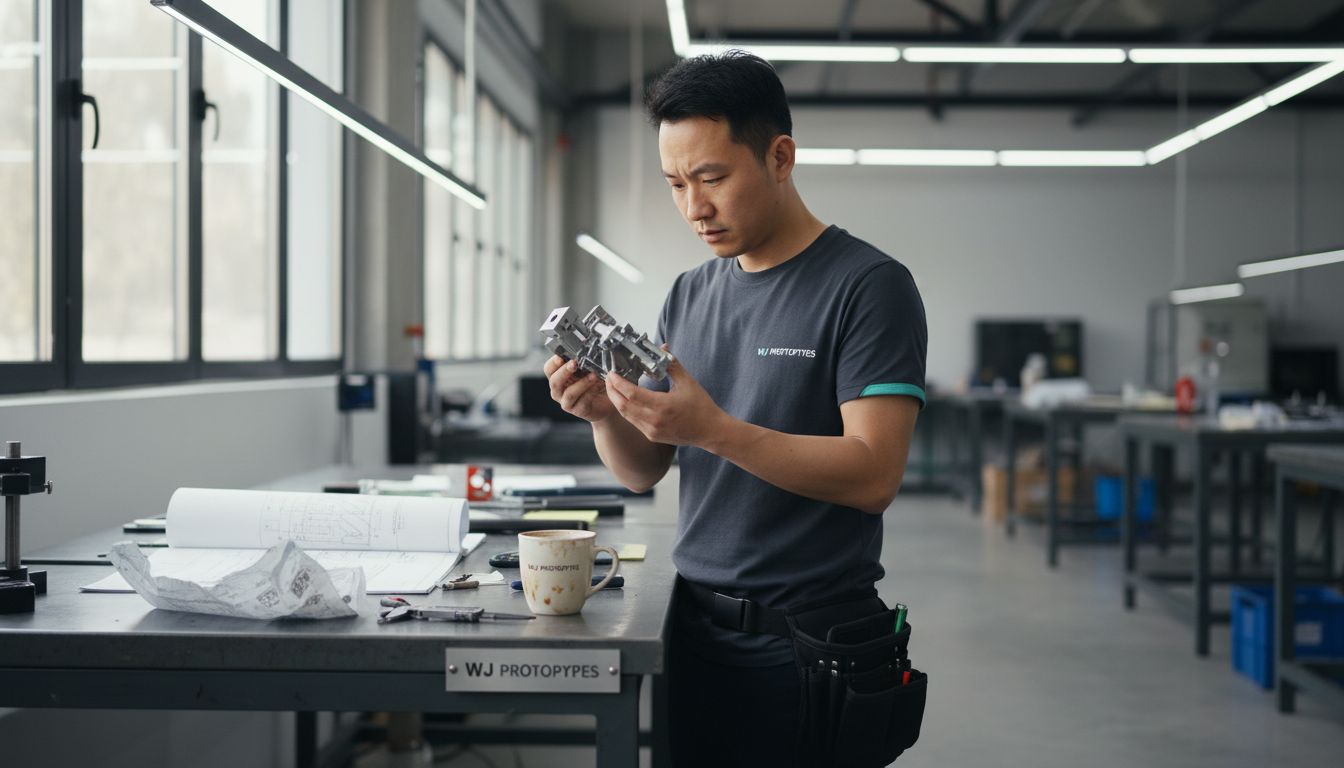

Industry reports show that over 80 percent of British companies now rely on rapid prototyping to maintain a competitive edge. Fast prototyping turnaround times are changing how British engineers and designers approach product development, bridging the gap between concept and production with impressive speed. This guide uncovers the essentials of efficient prototyping, highlights technology choices, and helps you understand how quick iteration cycles can deliver lasting value in a fast-moving market.
| Point | Details |
|---|---|
| Speed and Precision | Rapid prototyping accelerates product development cycles by allowing for quick testing and refinement of models. |
| Technology Selection | Choosing the right manufacturing technology is crucial to balancing speed, cost, and prototype complexity. |
| Iterative Design Process | Continuous testing and validation minimise risks and enhance design quality throughout development. |
| Avoiding Common Pitfalls | Anticipating challenges such as insufficient user testing and design assumptions is vital for successful prototyping. |
Rapid prototyping represents a transformative approach in product development where speed and precision converge. At its core, this methodology focuses on creating preliminary models or functional representations quickly, enabling designers and engineers to test and refine concepts with unprecedented efficiency. Rapid prototyping techniques can dramatically accelerate the product development cycle, reducing time from conceptualisation to market deployment.
The turnaround times for prototyping vary significantly depending on complexity, technology employed, and project requirements. Paper prototypes can emerge within hours, while sophisticated software or engineering prototypes might require 1-2 weeks. Digital technologies like 3D printing, computer numerical control (CNC) machining, and advanced additive manufacturing have revolutionised these timelines, enabling manufacturers to produce intricate models exponentially faster than traditional manufacturing methods.
Key factors influencing prototyping turnaround include:
Engineering teams must strategically balance speed with quality, recognising that rapid prototyping is not merely about producing models quickly, but creating accurate representations that provide meaningful insights into product performance, ergonomics, and potential manufacturing challenges.
Rapid prototyping encompasses a diverse array of advanced manufacturing technologies that enable engineers and designers to transform digital concepts into physical models with remarkable speed and precision. Various technologies like 3D printing, PolyJetting, and injection molding offer engineers multiple pathways to create complex prototypes across different industrial applications.
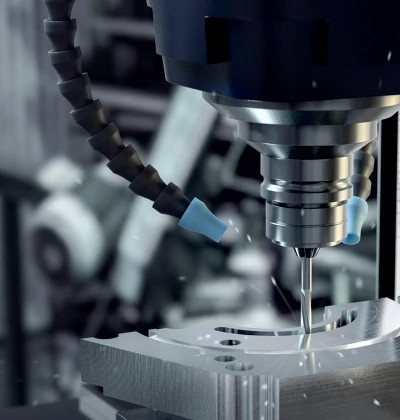
These technologies can be broadly categorised into additive and subtractive manufacturing methods. Additive manufacturing techniques, such as 3D printing and Multi Jet Fusion, build objects layer by layer, allowing intricate geometries that traditional manufacturing cannot achieve. Conversely, subtractive methods like CNC machining remove material from a solid block to create precise components. Each technology presents unique advantages depending on project requirements, material specifications, and desired prototype complexity.
Key rapid prototyping technologies include:
Engineering teams must carefully select technologies that align with their specific design goals, balancing factors like production speed, material properties, cost-effectiveness, and prototype complexity. Advanced open-source technologies like OpenCAL are also emerging, demonstrating the continuous innovation in rapid prototyping methods and expanding possibilities for researchers and manufacturers alike.
Rapid prototyping fundamentally transforms product development cycles by dramatically accelerating design validation and reducing time-to-market. Quick-turn prototyping techniques significantly reduce development timelines, enabling engineering teams to iterate designs more rapidly and mitigate potential manufacturing risks before full-scale production.

The strategic advantages of rapid prototyping extend far beyond mere speed. Design validation becomes a streamlined process where engineers can quickly test conceptual models, identify potential structural or functional limitations, and make precise adjustments. This iterative approach allows organisations to reduce costly late-stage design modifications, minimise material waste, and create more robust product designs with enhanced performance characteristics.
Key benefits of rapid prototyping in product development include:
Engineering teams leverage these technologies to transform abstract concepts into tangible prototypes, enabling more effective collaboration, faster decision-making, and ultimately delivering innovative solutions that meet increasingly complex market demands. By embracing rapid prototyping methodologies, organisations can maintain competitive advantages in fast-evolving technological landscapes, ensuring their product development strategies remain agile and responsive to emerging challenges.
In the realm of product development, engineers and designers continuously navigate the complex interplay between cost, quality, and lead time. Prototyping methods reveal intricate trade-offs between resource investment, functional fidelity, and production speed, challenging teams to make strategic decisions that balance competing priorities.

Prototype complexity directly influences these critical parameters. Early-stage paper prototypes offer rapid, cost-effective validation, while advanced software or physical prototypes require more sophisticated technologies and longer development cycles. Material selection, manufacturing technique, and design intricacy become crucial variables that impact overall project economics. High-fidelity prototypes might demand substantial financial investment but provide more accurate performance insights, whereas simpler models enable faster iterations at reduced expenses.
Key considerations in balancing trade-offs include:
Innovative approaches like hybrid fabrication methods demonstrate how engineers can optimise these trade-offs. By strategically combining technologies such as 3D printing with alternative construction techniques, development teams can significantly reduce material costs, minimise production time, and maintain high-quality standards. The art of successful prototyping lies not in eliminating trade-offs, but in understanding and strategically managing them to achieve optimal product development outcomes.
Rapid prototyping demands meticulous planning and strategic execution to prevent common developmental challenges that can derail project timelines and compromise design integrity. Engineers must proactively address potential pitfalls by understanding accessibility considerations and allocating sufficient development and testing time, ensuring comprehensive prototype refinement.
Design assumptions represent a significant risk in prototyping processes. Many engineering teams fall into the trap of making premature conclusions about product functionality without rigorous testing. This can lead to expensive redesigns, misaligned user expectations, and substantial resource waste. Successful prototype development requires continuous validation, iterative feedback loops, and a willingness to challenge initial design hypotheses through systematic evaluation and user-centric testing approaches.
Key pitfalls to anticipate and mitigate include:
Preventing prototype development failures requires a disciplined, systematic approach that embraces uncertainty and values empirical validation. Engineers must cultivate a mindset of continuous learning, remain adaptable to emerging challenges, and create robust frameworks that allow flexible design modifications. By establishing clear communication channels, implementing comprehensive testing protocols, and maintaining detailed documentation, development teams can transform potential pitfalls into opportunities for innovation and refined product design.
The challenge of achieving fast prototyping turnaround without compromising quality is critical to keeping product development cycles efficient and competitive. This article highlights the importance of balancing speed, design complexity, and material choice while navigating cost and quality trade-offs. If you are striving to reduce development times, avoid common pitfalls, and bring innovative designs to market swiftly, you need a partner who understands these precise demands.
At WJ Prototypes, we specialise in high-quality rapid prototyping and manufacturing services tailored for urgent project timelines. Our comprehensive suite of technologies, including SLA, SLS, MJF, DMLS, CNC machining, vacuum casting, and injection molding, empowers you to create accurate, functional prototypes rapidly. Backed by ISO certification and expert engineers, we deliver consistent results that align with your design validation and iteration goals.
Unlock faster design validation and seamless small to medium production runs with WJ Prototypes’ advanced fabrication capabilities. Don’t let long turnaround times hinder your innovation. Visit our website today for an instant quote and experience how expert rapid prototyping can transform your product development journey. Act now to stay ahead in a fast-evolving market.
Rapid prototyping is a transformative product development methodology that focuses on quickly creating preliminary models or functional representations, allowing designers and engineers to test and refine concepts with enhanced efficiency.
Turnaround times for prototyping can vary significantly. Simple paper prototypes can be created in hours, while complex software or engineering prototypes may require 1-2 weeks, depending on design complexity and manufacturing technology used.
Key technologies include 3D printing, PolyJetting, injection moulding, Multi Jet Fusion, and vacuum casting, each offering unique advantages based on project requirements and prototype complexity.
Rapid prototyping accelerates design iteration cycles, reduces development costs, enhances design validation processes, and improves communication between design and engineering teams, ultimately leading to faster time-to-market.
SERVICES
RESOURCES