



- Room 1807, Unit 9, Building 2, Shangxing Commercial Street, Shangde Road, Shangxing Community, Xinqiao Subdistrict, Bao'an District, Shenzhen City, China
CONTACT US

WhatsApp


Contact Us
Our team is on stand by, waiting toassist you.

Videos
A large collection of educational videos and tutorials.

About Us
Learn about our company, leadership, and mission totransform manufacturing.

Privacy Policy
Applies to all personal information collected through and/or processed in connection.
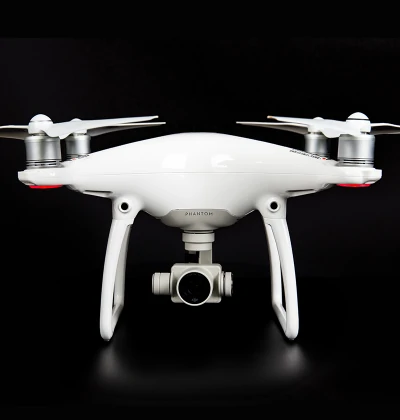

Aerospace & UAV
WJ Prototypes is your 3D manufacturing partner from prototype to large scale production.

Consumer Electronics
New Product Introduction Solutions for Consumer Electronics.

Robotics & Automation
Need some assistance bringing your robotic device or parts from the sketch-board to reality?

Medical Devices
The medical industry needs high quality, dependable and safe parts and products.

Automotive
New Product Introduction Solutions for Automotive

Industrial Machinery
The main purpose of industrial prototyping is to take the product from drawings into the real world.
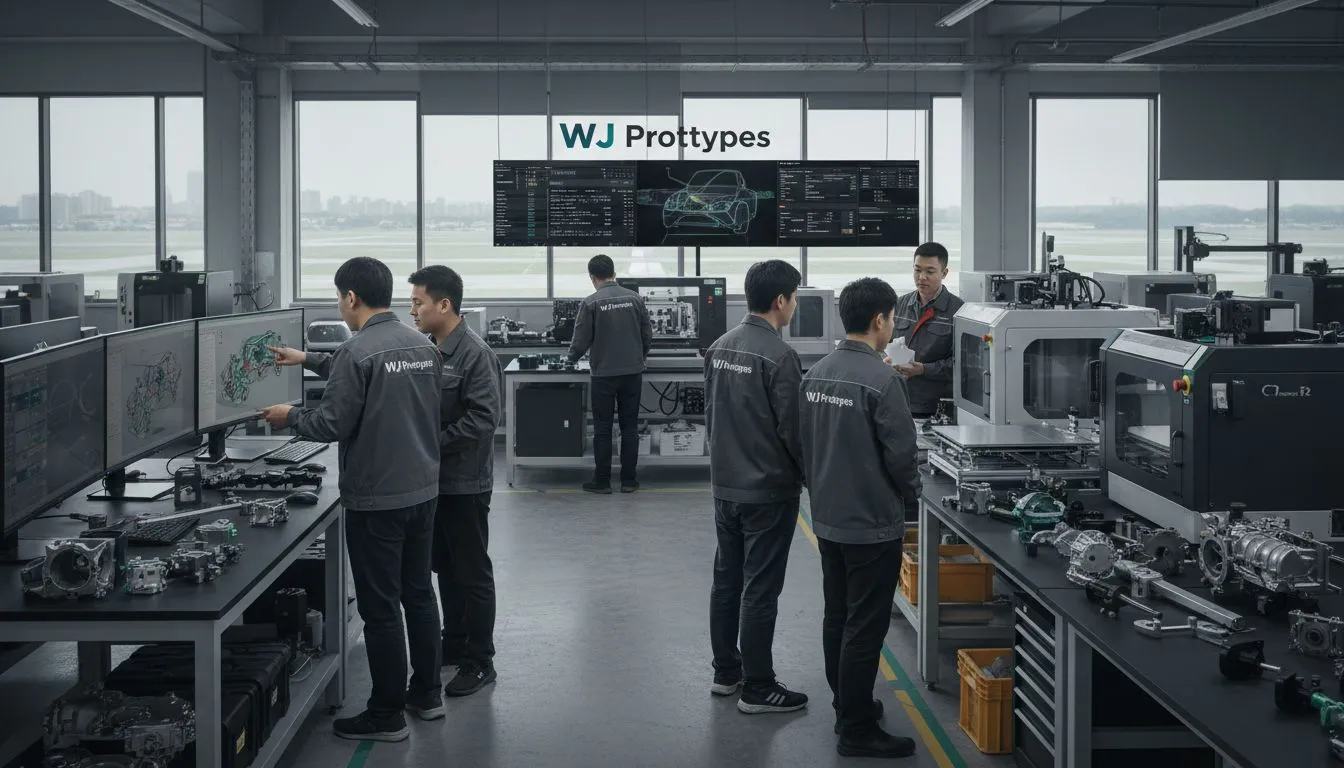
Over 80 percent of successful product launches now rely on rapid prototyping to speed up development and minimize costly mistakes. Companies face mounting pressure to bring innovative ideas to market faster than ever. Understanding rapid prototyping can help teams overcome design hurdles, test concepts efficiently, and stay ahead of competitors by transforming digital visions into physical reality almost overnight.
| Point | Details |
|---|---|
| Rapid Prototyping Overview | A transformative method enabling quick transition from digital designs to physical models using 3D printing and other technologies. |
| Iterative Design Process | Facilitates rapid design iterations, allowing teams to test and refine prototypes efficiently, thus reducing time-to-market. |
| Diverse Technologies | Includes various methods like 3D printing, CNC machining, and injection molding, each offering unique benefits for product development. |
| Industry Applications | Key industries such as aerospace, automotive, and medical leverage rapid prototyping for custom solutions and efficient production. |
Rapid prototyping represents a transformative approach to product development, enabling engineers and designers to swiftly transform digital design concepts into tangible physical models. According to Wikipedia, this technique encompasses methods that quickly fabricate scale models of physical parts or assemblies using three-dimensional computer-aided design (CAD) data, primarily through advanced 3D printing technologies.
At its core, rapid prototyping is about accelerating the product design iteration process. MasterClass highlights that this approach empowers product developers to test physical products and refine scale models efficiently, facilitating quick improvements during the design process. The methodology allows teams to validate design concepts, identify potential manufacturing challenges, and make critical adjustments before full-scale production.
The fundamental workflow of rapid prototyping typically involves several key steps:
For professionals seeking a deeper understanding of these techniques, our guide on rapid prototyping steps offers comprehensive insights into the nuanced world of modern product design and manufacturing strategies.
Rapid prototyping encompasses a diverse array of advanced manufacturing technologies that transform digital designs into physical prototypes. According to DesignRush, the key rapid prototyping methods include several sophisticated techniques such as 3D Printing (Additive Manufacturing), CNC Machining (Subtractive Manufacturing), Injection Molding, Stereolithography (SLA), Selective Laser Sintering (SLS), Fused Deposition Modeling (FDM), Vacuum Casting, and Laser Cutting.
Simplilearn further elaborates on the nuanced landscape of rapid prototyping techniques, highlighting that each method offers unique advantages for product development. These technologies enable manufacturers and designers to quickly iterate and refine product concepts with unprecedented speed and precision.
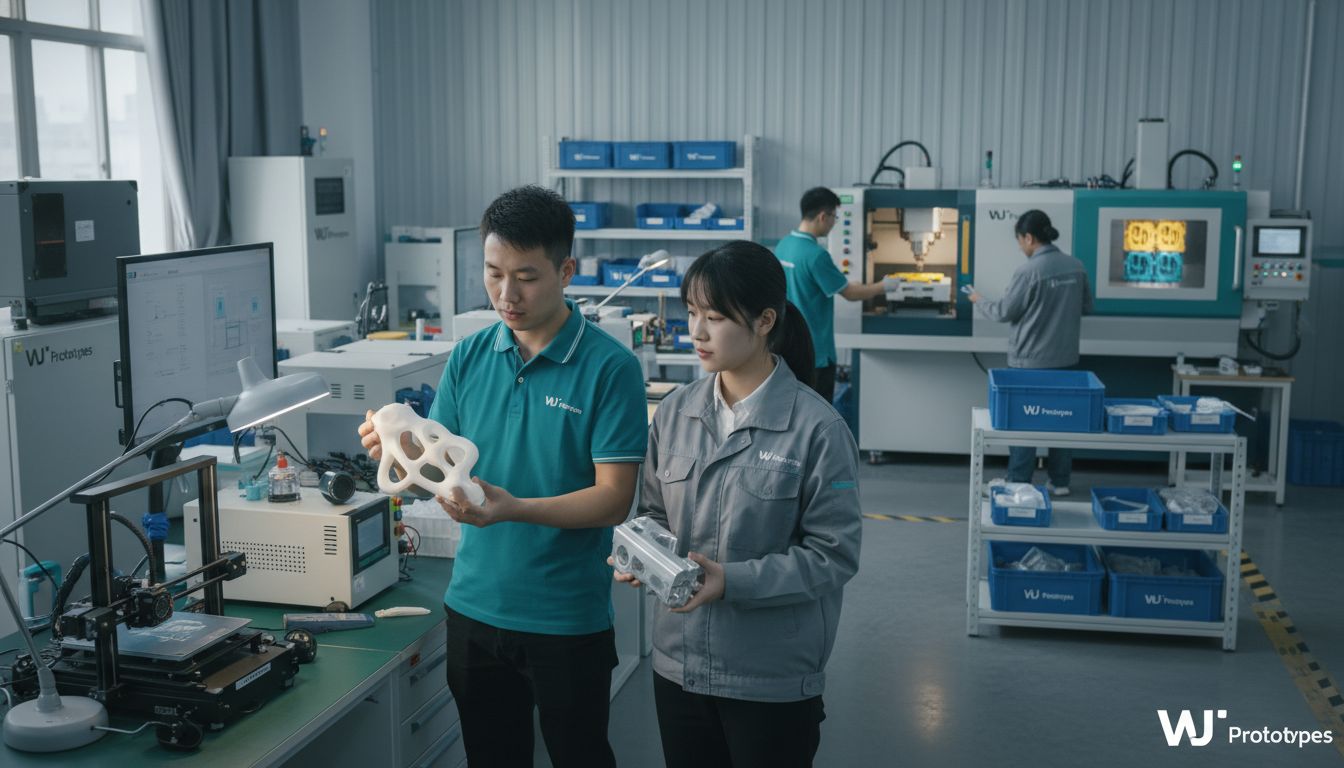
The primary rapid prototyping technologies can be categorised into several key approaches:
For professionals seeking to understand the intricacies of selecting the right prototyping process, our guide on choosing rapid prototyping techniques provides comprehensive insights into matching technological capabilities with specific project requirements.
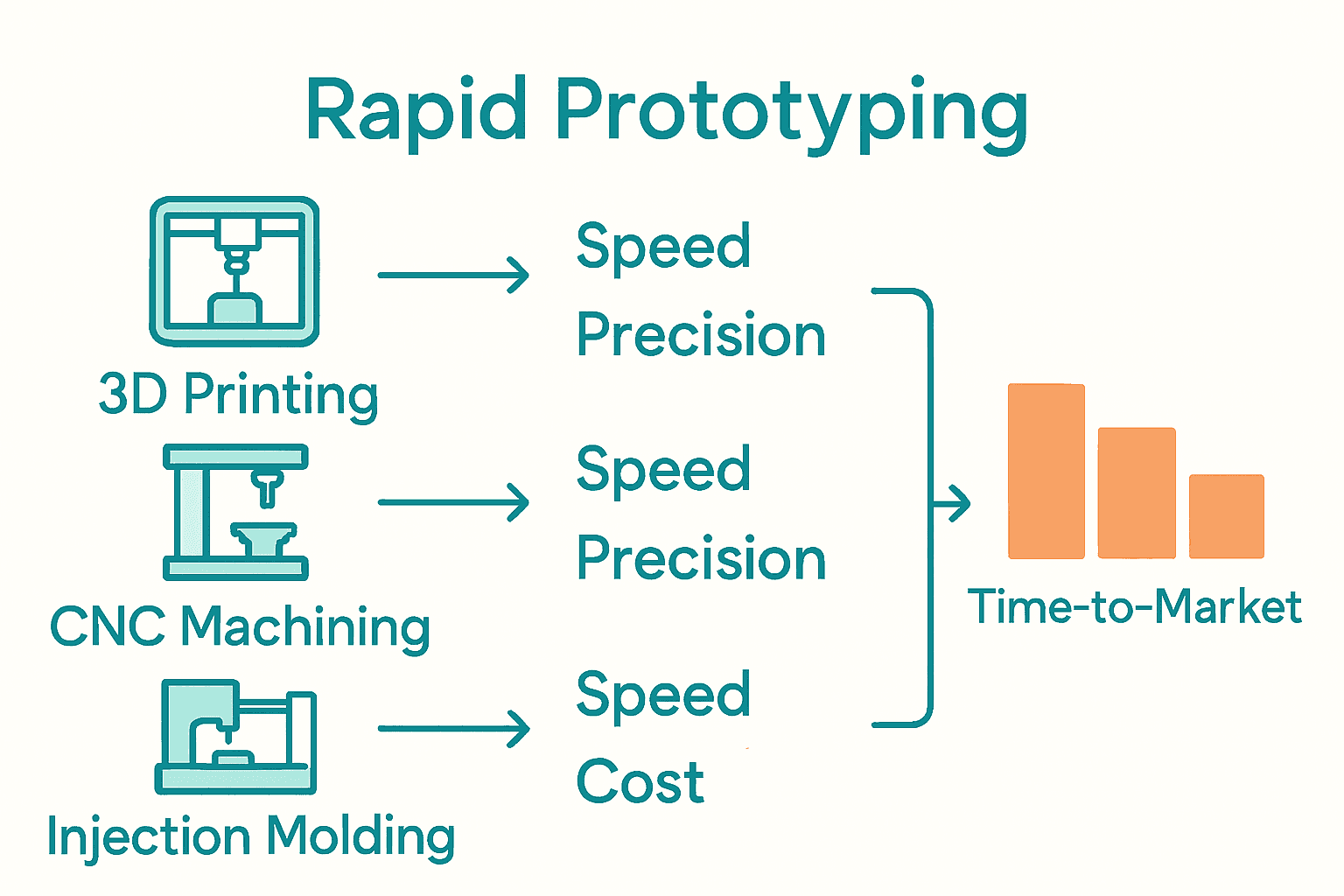
Rapid prototyping fundamentally transforms the product development lifecycle by dramatically reducing time-to-market and enabling unprecedented design flexibility. By allowing engineers and designers to quickly create and test physical models, this approach eliminates multiple traditional barriers that typically slow down innovation and product refinement.
Design Iteration Speed becomes a critical advantage of rapid prototyping. Teams can now generate multiple prototype versions within days or weeks, instead of months. This accelerated process enables more experimental approaches, allowing designers to explore complex geometries, test functional requirements, and validate design concepts with minimal financial risk.
The acceleration of development occurs through several key mechanisms:
For professionals seeking deeper insights into optimising product development processes, our guide on prototyping's role in product development offers comprehensive strategies for leveraging these transformative technologies effectively.
Rapid prototyping has revolutionised product development strategies across diverse industrial sectors, delivering transformative advantages that extend far beyond traditional manufacturing approaches. Each industry leverages this technology uniquely, solving complex design and production challenges with unprecedented precision and efficiency.
In aerospace and automotive industries, rapid prototyping enables engineers to create lightweight, complex geometries that would be impossible or prohibitively expensive using conventional manufacturing methods. Designers can rapidly test aerodynamic components, reduce overall product weight, and validate structural integrity before committing to full-scale production. Similarly, in medical technology, these techniques allow for patient-specific prosthetics, surgical implants, and advanced medical device prototypes that can be customised with remarkable accuracy.
The critical benefits span multiple dimensions across industries:
For professionals seeking comprehensive insights into industry-specific prototyping strategies, our guide on rapid prototyping's role in product development provides detailed exploration of these transformative technologies across different sectors.
Rapid prototyping, while transformative, presents a complex landscape of technological and financial considerations that organisations must carefully navigate. According to CE, the approach involves significant challenges, including the need for specialized equipment, material limitations, and potential high costs associated with certain advanced technologies.
MasterClass further emphasizes that the expense of rapid prototyping varies dramatically, with the choice of method depending on critical factors such as desired precision, material properties, and production volume. These considerations mean that organisations must conduct thorough cost-benefit analyses before implementing specific rapid prototyping strategies.
For professionals seeking strategic guidance on managing these complex considerations, our guide on choosing rapid prototyping techniques offers comprehensive insights into balancing technological capabilities with budgetary constraints.
The article highlights common challenges faced during rapid prototyping such as the need for fast iteration, precision engineering, and managing costs while choosing the right manufacturing technologies. Many professionals struggle to quickly validate designs and accelerate product development without sacrificing quality or facing prohibitive expenses. If you seek to overcome these pain points — from complex geometries to tight deadlines and material constraints — then partnering with an experienced manufacturer is essential.
At WJ Prototypes, we specialise in delivering high-quality, fast, and affordable rapid prototyping services tailored to meet exact industrial demands across aerospace, automotive, medical, and more. Leveraging advanced technologies like SLA, SLS, CNC machining and vacuum casting, our team ensures rapid design validation and smooth transitions from concept to small or medium production runs. Discover how our comprehensive capabilities can help you reduce time-to-market and refine your product design effectively by exploring our rapid prototyping capabilities.
Ready to turn your concepts into precise physical models with confidence and speed Benefit now from expert guidance and state-of-the-art manufacturing by visiting WJ Prototypes. Take the next step in accelerating your product development journey with our user-friendly instant quoting system and dedicated engineering support today.
Rapid prototyping is a method of product development that allows engineers and designers to quickly create physical models from digital designs using advanced technologies such as 3D printing.
Rapid prototyping accelerates the design iteration process, reduces time-to-market, allows for immediate physical validation of designs, and enables quick identification of manufacturing challenges, leading to more effective product development.
Key technologies in rapid prototyping include 3D printing (Additive Manufacturing), CNC Machining (Subtractive Manufacturing), Injection Molding, and Stereolithography, among others, each with its unique advantages for specific applications.
While rapid prototyping can significantly streamline development, it requires careful financial planning due to initial equipment costs, material limitations, and potential scalability issues that can affect the overall production budget.
SERVICES
RESOURCES