



- Room 1807, Unit 9, Building 2, Shangxing Commercial Street, Shangde Road, Shangxing Community, Xinqiao Subdistrict, Bao'an District, Shenzhen City, China
CONTACT US

WhatsApp


Contact Us
Our team is on stand by, waiting toassist you.

Videos
A large collection of educational videos and tutorials.

About Us
Learn about our company, leadership, and mission totransform manufacturing.

Privacy Policy
Applies to all personal information collected through and/or processed in connection.
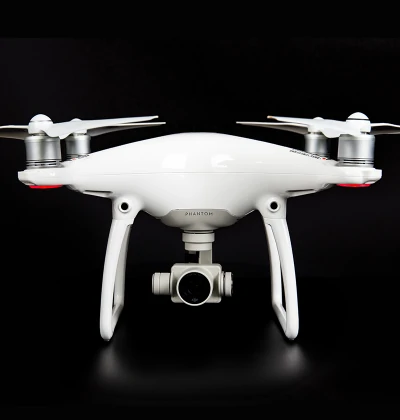

Aerospace & UAV
WJ Prototypes is your 3D manufacturing partner from prototype to large scale production.

Consumer Electronics
New Product Introduction Solutions for Consumer Electronics.

Robotics & Automation
Need some assistance bringing your robotic device or parts from the sketch-board to reality?

Medical Devices
The medical industry needs high quality, dependable and safe parts and products.

Automotive
New Product Introduction Solutions for Automotive

Industrial Machinery
The main purpose of industrial prototyping is to take the product from drawings into the real world.

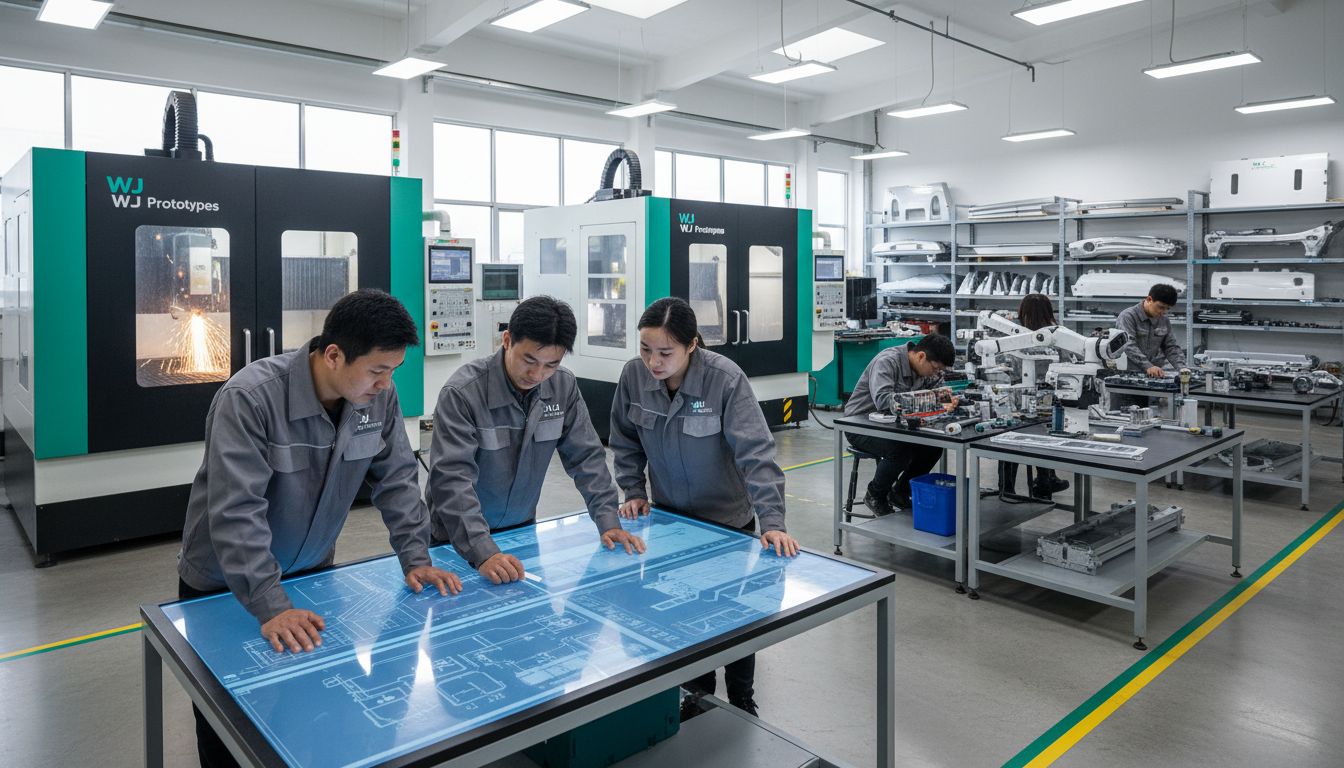
Nearly every industry relies on sheet metal components, yet few realize that over 80 percent of precision manufacturing tasks depend on advanced fabrication techniques. As demand grows for products that combine strength, accuracy, and complex shapes, understanding how flat sheets of metal transform into essential parts becomes crucial. This guide unpacks the core principles of sheet metal fabrication, revealing how modern methods deliver the precision and flexibility needed for engineering challenges across aerospace, automotive, and healthcare fields.
| Point | Details |
|---|---|
| Core Process | Sheet metal fabrication transforms flat metal sheets into complex components through cutting, bending, and shaping techniques. |
| Versatility | This manufacturing method is crucial across industries such as aerospace, automotive, and medical technology due to its adaptability and precision. |
| Material Impact | The performance and cost of fabricated components heavily rely on the selection of appropriate metal types. |
| Manufacturing Efficiency | Operational efficiency and implementation of CAD technologies enhance precision and reduce production costs in sheet metal fabrication. |
Sheet metal fabrication is a sophisticated manufacturing process that transforms flat metal sheets into precise, complex components through strategic cutting, bending, and shaping techniques. This intricate craft combines advanced engineering principles with meticulous craftsmanship to create everything from delicate electronic enclosures to robust industrial machinery parts.
At its core, sheet metal fabrication involves manipulating thin metal sheets typically ranging from 0.5mm to 6mm in thickness. Manufacturers use an array of specialised techniques to transform these flat metal sheets into three-dimensional structures.

The primary methods include:
Engineers and designers leverage sheet metal fabrication services to develop components with exceptional structural integrity and repeatable precision. The process demands deep understanding of material properties, mechanical stress distribution, and manufacturing tolerances. Modern sheet metal fabrication integrates computer-aided design (CAD) and advanced manufacturing technologies to achieve remarkable levels of accuracy and complexity previously impossible with traditional metalworking methods.
The versatility of sheet metal fabrication makes it fundamental across multiple industrial sectors. From aerospace engineering requiring lightweight yet robust components to medical device manufacturing demanding microscopic precision, this manufacturing technique provides solutions that combine strength, durability, and intricate design capabilities. Manufacturers can work with various metal types including aluminium, stainless steel, copper, and specialised alloys, each offering unique mechanical and aesthetic characteristics suited to specific engineering requirements.
Sheet metal fabrication encompasses a diverse range of sophisticated techniques designed to transform raw metal sheets into intricate, functional components. Metal Architecture highlights several key processes that define modern manufacturing capabilities, each offering unique advantages for different engineering requirements.
Cutting represents the foundational stage of sheet metal fabrication, where precision is paramount. As Artizono explains, advanced cutting methods have revolutionised the industry through technologies that enable microscopic accuracy:

Beyond cutting, metal fabrication involves complex forming techniques that transform two-dimensional sheets into three-dimensional structures. These methods include:
Precision in these techniques requires sophisticated understanding of material properties, mechanical stress distribution, and manufacturing tolerances. Modern fabrication integrates computer-aided design (CAD) and advanced manufacturing technologies to achieve remarkable levels of accuracy and complexity.
Understanding these fabrication processes allows engineers and designers to select the most appropriate technique for their specific project requirements. Whether developing lightweight aerospace components or intricate medical devices, sheet metal fabrication offers unparalleled flexibility and precision in modern manufacturing.
Sheet metal fabrication has become an indispensable manufacturing process spanning multiple critical industries, each leveraging its unique capabilities to solve complex engineering challenges. IQS Directory highlights the remarkable versatility of fabricated metal components across diverse sectors, demonstrating how this technology has revolutionised modern manufacturing.
In aerospace and defence industries, sheet metal fabrication plays a pivotal role in creating lightweight, high-strength components that must withstand extreme environmental conditions. Engineers rely on precision techniques to manufacture:
The automotive sector demands components that combine durability, weight efficiency, and complex geometries. Mech Forged emphasises how fabrication techniques enable manufacturers to produce:
Medical device manufacturing requires exceptional precision and biocompatibility. Sheet metal fabrication supports the creation of:
Beyond these sectors, sheet metal fabrication continues to drive innovation in electronics, robotics, renewable energy, and industrial machinery. Its ability to transform flat metal sheets into complex, functional components makes it a cornerstone of modern engineering and design, enabling manufacturers to push the boundaries of what's technically possible.
Sheet metal fabrication represents a delicate balance between technological precision and economic efficiency. IQS Directory emphasises that multiple interconnected factors dramatically influence both the cost and quality of manufactured components, requiring sophisticated strategic planning.
The foundational decision of material selection profoundly impacts overall fabrication outcomes. Different metal types present unique challenges and opportunities:
Artizono highlights that design complexity directly correlates with manufacturing costs. Key factors influencing pricing include:
Manufacturing efficiency plays a crucial role in determining final product economics. Critical operational considerations encompass:
Successful sheet metal fabrication demands a holistic approach that harmonises technical expertise, material science, and strategic economic planning. Engineers must continuously evaluate and optimise each stage of the manufacturing process to deliver high-quality components while maintaining competitive pricing.
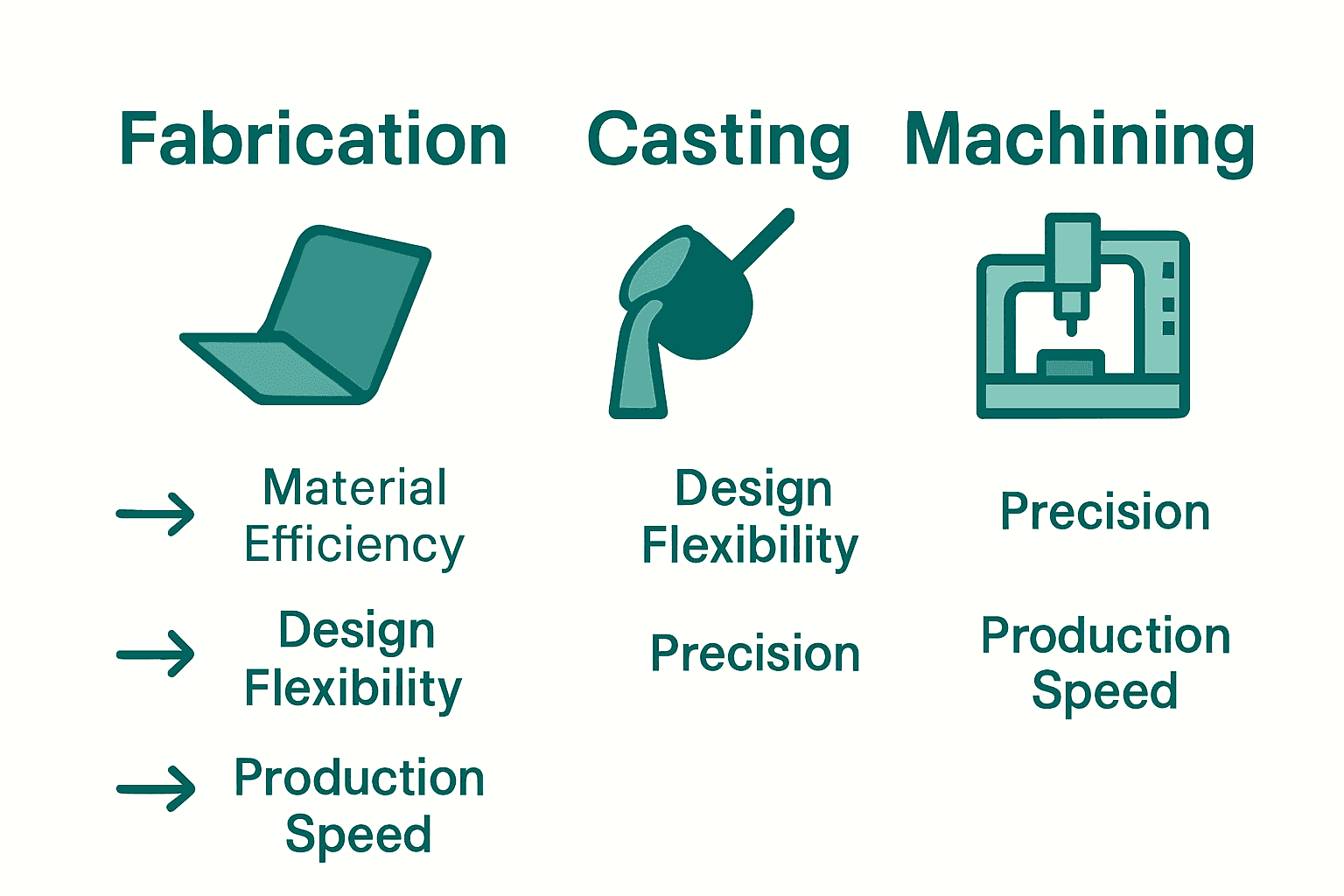
Rapid Prototyping Vs Traditional Prototyping reveals the critical distinctions between sheet metal fabrication and alternative manufacturing approaches. Understanding these nuanced differences enables engineers and designers to select the most appropriate method for specific project requirements.
IQS Directory highlights significant advantages of sheet metal fabrication over traditional casting methods. Key differentiating factors include:
Artizono emphasises the distinctive benefits of sheet metal fabrication when contrasted with traditional machining processes:
Sheet metal fabrication demonstrates remarkable versatility across different manufacturing scenarios. Its unique characteristics make it particularly advantageous in scenarios requiring:
Ultimately, the selection of manufacturing method depends on specific project parameters, including design complexity, material requirements, production volume, and economic constraints. Sheet metal fabrication offers a compelling balance of flexibility, precision, and economic efficiency that often surpasses alternative manufacturing approaches.
The challenges of balancing design complexity, material selection, and cost efficiency in sheet metal fabrication demand a manufacturing partner who truly understands these intricacies. Whether you require precise bending, intricate cutting, or robust welding techniques for aerospace, medical, or automotive components, achieving consistent quality while managing tight tolerances can feel overwhelming. WJ Prototypes specialises in overcoming these hurdles by offering advanced sheet metal fabrication services that combine fast turnaround times with high precision and competitive pricing.
If you want to transform your innovative designs into durable, functional realities without compromising on quality, explore how WJ Prototypes can simplify your manufacturing journey. Benefit from our ISO certified processes and expert engineers ready to support your project from prototyping through to small and medium production runs. Don’t let complex fabrication requirements delay your product launch – contact us today to discover tailored solutions designed to meet your exact specifications and market timelines.
Sheet metal fabrication is a manufacturing process that transforms flat metal sheets into precise components through cutting, bending, shaping, welding, and other techniques. It combines engineering principles with craftsmanship to create a wide variety of products.
The primary techniques in sheet metal fabrication include cutting (laser, plasma, water jet), bending (using press brakes), punching, and welding (TIG, MIG). These techniques enable manufacturers to create complex geometries and high-precision components.
Common materials used in sheet metal fabrication include aluminium, stainless steel, carbon steel, and copper alloys. Each material offers different characteristics like weight, corrosion resistance, and cost, which influence their application in various industries.
Sheet metal fabrication serves multiple industries, including aerospace, automotive, medical, electronics, and renewable energy. Each sector relies on this process to create components with strength, durability, and intricate designs.
SERVICES
RESOURCES