



- Room 1807, Unit 9, Building 2, Shangxing Commercial Street, Shangde Road, Shangxing Community, Xinqiao Subdistrict, Bao'an District, Shenzhen City, China
CONTACT US

WhatsApp


Contact Us
Our team is on stand by, waiting toassist you.

Videos
A large collection of educational videos and tutorials.

About Us
Learn about our company, leadership, and mission totransform manufacturing.

Privacy Policy
Applies to all personal information collected through and/or processed in connection.


Aerospace & UAV
WJ Prototypes is your 3D manufacturing partner from prototype to large scale production.

Consumer Electronics
New Product Introduction Solutions for Consumer Electronics.

Robotics & Automation
Need some assistance bringing your robotic device or parts from the sketch-board to reality?

Medical Devices
The medical industry needs high quality, dependable and safe parts and products.

Automotive
New Product Introduction Solutions for Automotive

Industrial Machinery
The main purpose of industrial prototyping is to take the product from drawings into the real world.
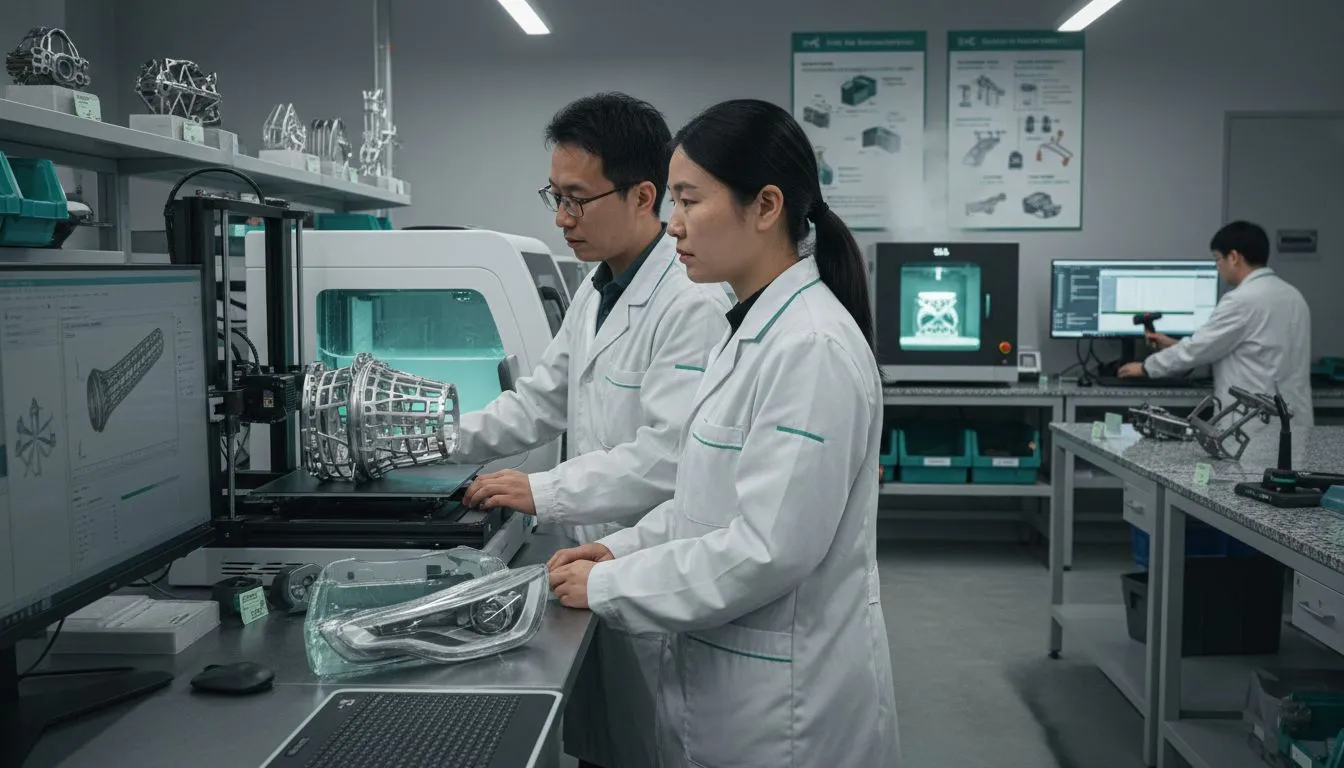
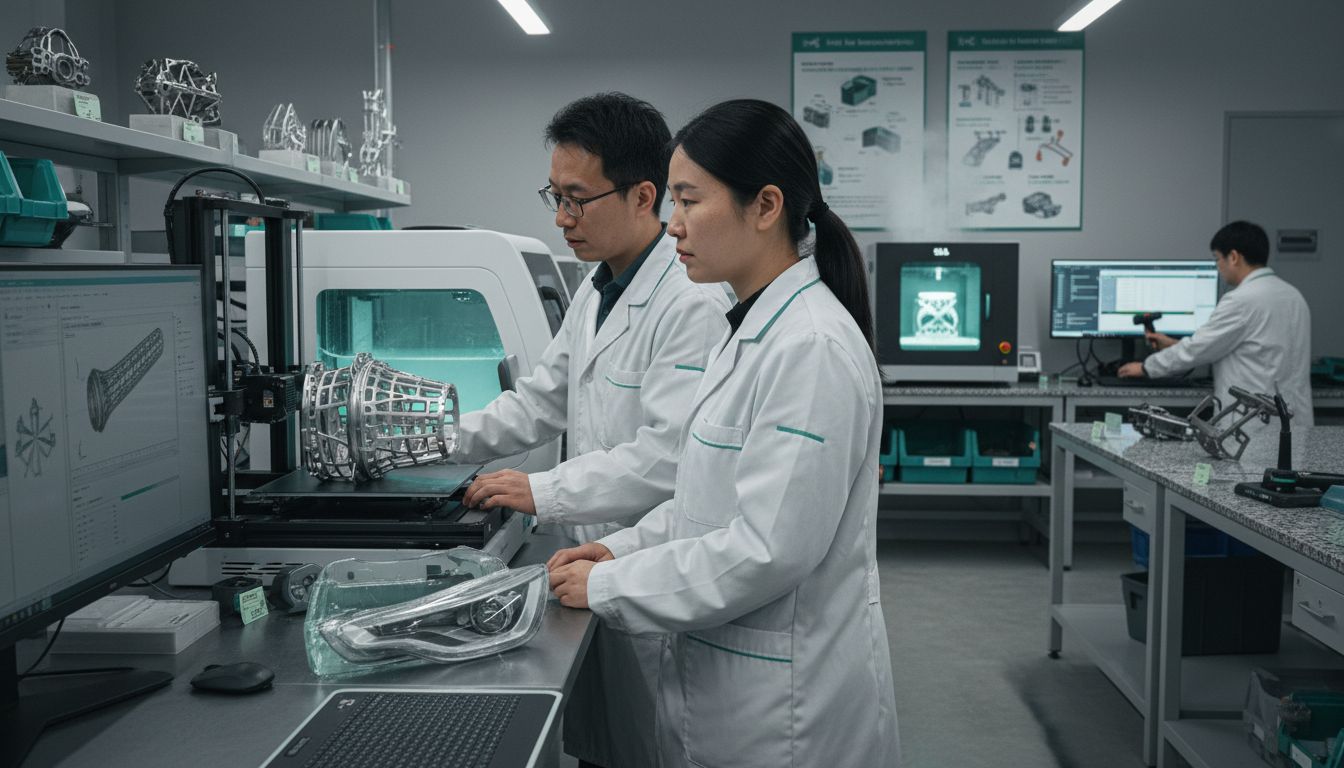
Over 70% of manufacturers are already exploring new ways to produce parts and products using advanced technology. Additive manufacturing stands out by building objects layer by layer, allowing shapes once thought impossible and cutting down on wasted material. With rapid changes reshaping industries, understanding how additive manufacturing works gives you an edge in harnessing its full potential for innovative design, greater efficiency, and smarter production.
| Point | Details |
|---|---|
| Additive Manufacturing Overview | Transformative approach that builds objects layer by layer, offering design complexity and material efficiency. |
| Key Technologies | Technologies like FDM, SLS, and SLA provide unique advantages for production, catering to different project needs. |
| Economic Considerations | While it offers design flexibility and rapid prototyping, initial investment and material limitations can be significant constraints. |
| Comparison with Traditional Methods | Additive manufacturing reduces material waste and tooling costs, enabling complex designs and customization more efficiently than traditional methods. |
Additive manufacturing represents a transformative approach to production that fundamentally reimagines how physical objects are created. Unlike traditional subtractive manufacturing methods that carve or cut material away, additive manufacturing builds components layer by layer, enabling unprecedented design complexity and material efficiency.
At its core, additive manufacturing involves creating three-dimensional objects by systematically depositing materials according to digital design specifications. According to research from Cambridge University, the technology requires specific design heuristics that differentiate it from conventional manufacturing processes. These principles focus on:
Research in biomedical applications, as highlighted by PubMed, demonstrates the technology's potential to create intricate structures with precise material deposition. The fundamental principles involve translating digital 3D models into physical objects through various techniques like extrusion, powder bed fusion, and material jetting. Each method offers unique advantages, allowing engineers and designers to select the most appropriate approach based on specific project requirements.
Learn more about industrial 3D printing in our comprehensive guide to understand how these principles translate into real-world manufacturing solutions.
Additive manufacturing encompasses multiple sophisticated technologies, each offering unique capabilities for transforming digital designs into physical objects. Understanding these technologies becomes crucial for engineers and designers seeking optimal production solutions.
Research from Cambridge University highlights the complexity of function integration across different additive manufacturing approaches. The primary technologies include:
Comparative research from arXiv reveals fascinating insights into micro-scale manufacturing techniques, demonstrating how different methods produce distinct microstructures and mechanical properties. Each technology presents specific advantages: FDM offers affordability, SLS provides complex geometries, SLA delivers exceptional surface finishes, while metal-based techniques enable extraordinary precision.
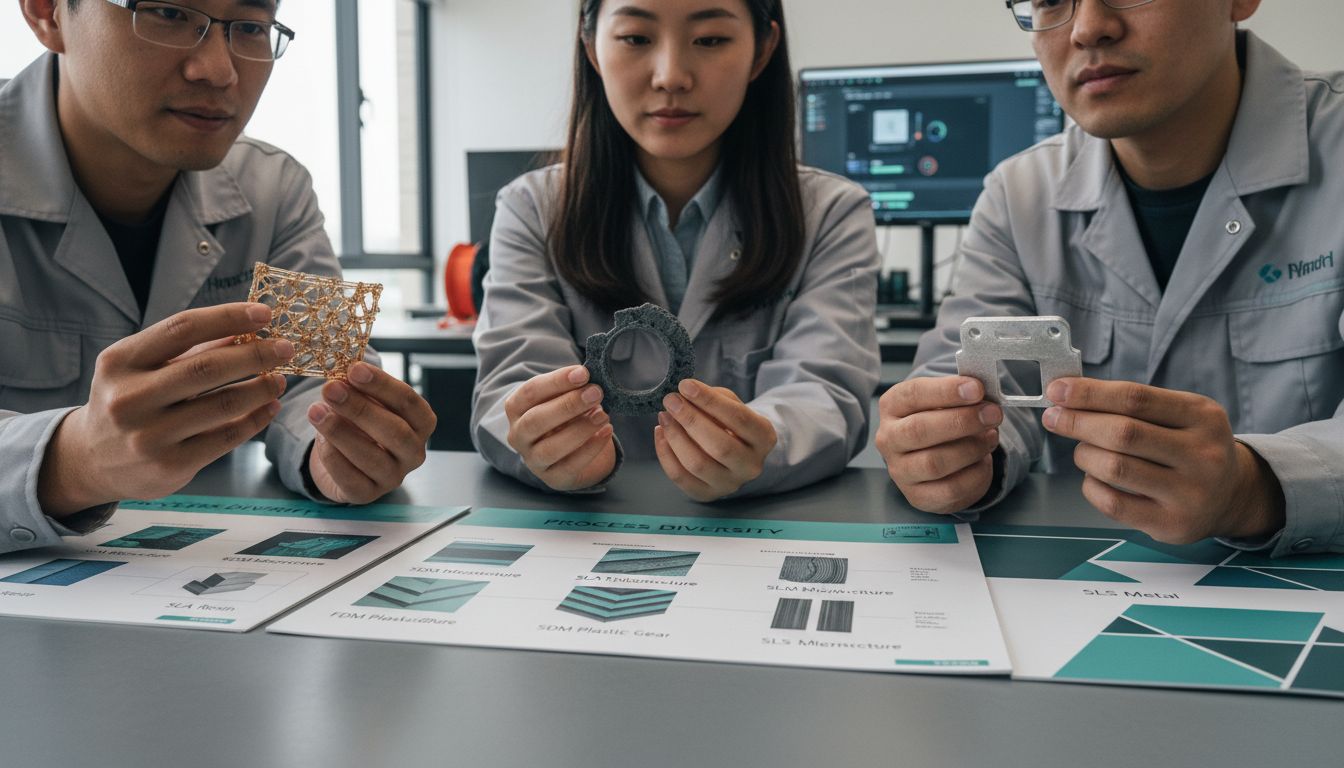
Explore our comprehensive guide on selecting the right rapid prototyping process to understand which technology might best suit your specific engineering requirements.
Additive manufacturing transforms digital designs into physical objects through a sophisticated sequence of precise technological steps. The process begins with a comprehensive digital blueprint, typically created using computer-aided design (CAD) software, which serves as the foundational roadmap for material deposition.
Research from arXiv highlights the intricate mechanisms enabling high-speed desktop-scale extrusion in additive manufacturing. The core process involves several critical stages:
Cutting-edge research from arXiv introduces an innovative digital twin framework, demonstrating how machine learning and Bayesian optimization can enhance real-time process control. This approach allows manufacturers to dynamically monitor and adjust printing parameters, ensuring unprecedented precision and consistency in component production.
Learn more about the advantages and nuances of 3D printing technologies to understand how these sophisticated processes are revolutionising modern manufacturing.
Additive manufacturing has revolutionised industrial production by enabling unprecedented design flexibility and complex geometries across multiple critical sectors. From precision engineering to healthcare innovation, this technology has become a transformative force in modern manufacturing.
According to research from International Journal of Computer Technology and Applications, additive manufacturing demonstrates remarkable versatility across diverse industries, including:
Research from Cambridge University highlights the critical design principles driving industrial adoption, emphasising how additive manufacturing enables engineers to create previously impossible geometries while reducing material waste and production complexity.
Discover the growing global B2B demand for 3D printed parts and understand how this technology is reshaping industrial manufacturing paradigms.
Additive manufacturing represents a complex technological ecosystem with nuanced economic and performance considerations. Engineers and businesses must carefully evaluate the intricate balance between innovative capabilities and practical implementation challenges.
Research from eGARP provides comprehensive insights into the technology's multifaceted landscape, revealing key benefits and constraints:
Benefits:
Limitations:
Further analysis from International Journal of Computer Technology and Applications emphasises that while additive manufacturing offers extraordinary product design potential, manufacturers must strategically assess its appropriateness based on specific project requirements, production volumes, and economic constraints.Explore market insights for precision parts manufacturing to understand how businesses are navigating these complex technological trade-offs.
Additive manufacturing fundamentally challenges traditional manufacturing paradigms by reimagining how complex objects are created. Unlike conventional subtractive methods that remove material through cutting, drilling, or milling, additive manufacturing builds components layer by layer, introducing unprecedented design possibilities.
Research from eGARP reveals critical distinctions between these approaches:
According to the International Journal of Computer Technology and Applications, additive manufacturing transforms manufacturing by producing complex geometries and customised products with remarkable efficiency. The technology eliminates multiple assembly stages, potentially increasing product durability and reducing overall production complexity.
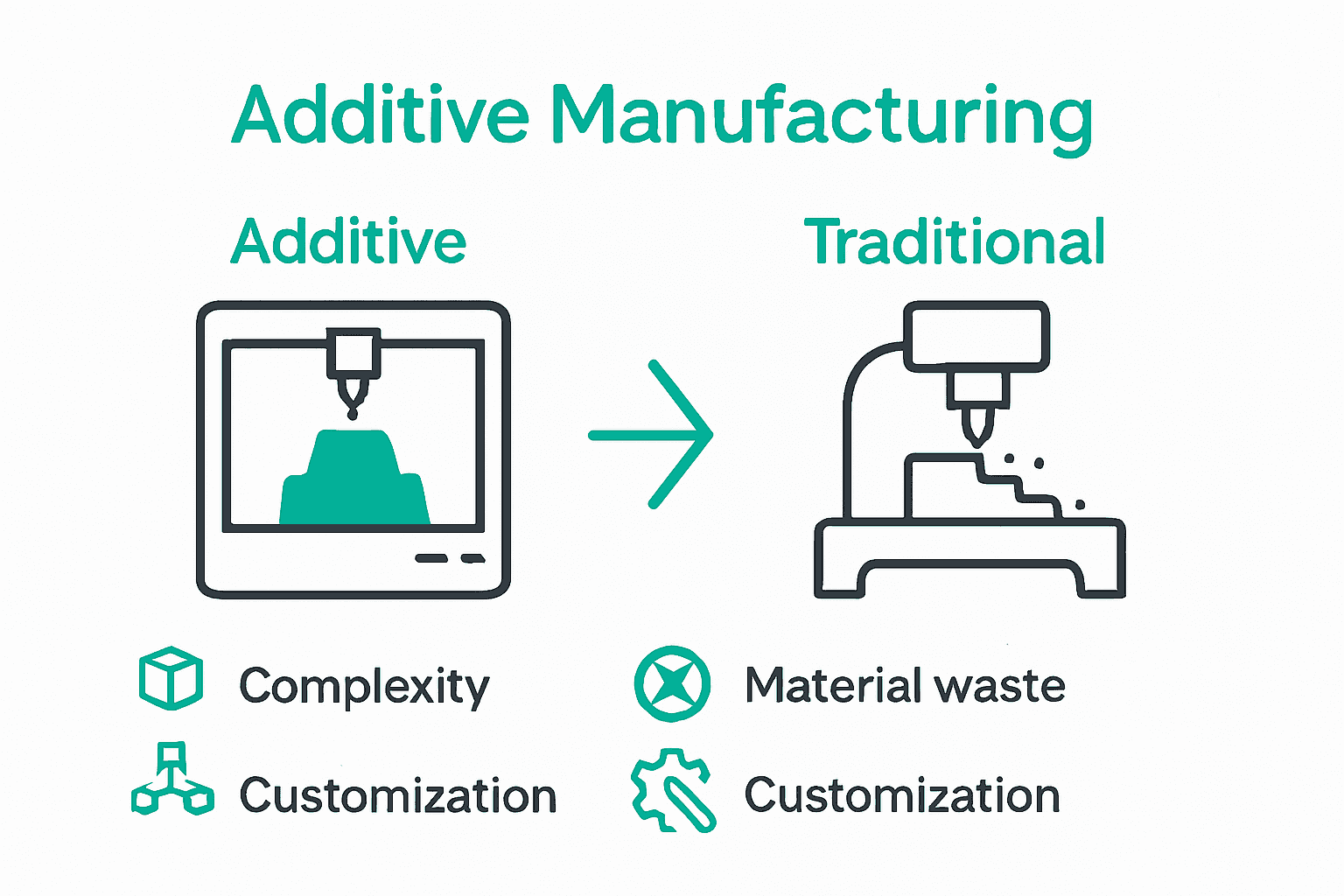
Explore our comprehensive comparison of multi-material printing versus traditional manufacturing methods to understand the nuanced technological trade-offs in modern production techniques.
Navigating the complex landscape of additive manufacturing demands precision, flexibility, and a partner who understands your challenges. This article highlights key goals such as achieving intricate designs, minimising material waste, and accelerating product development. If you are striving to overcome limitations like high initial costs or slower production rates for larger volumes, you need solutions tailored to your exact needs. WJ Prototypes specialises in advanced technologies including SLA, SLS, MJF, and DMLS that empower you to realise complex geometries and rapid prototyping with unmatched efficiency.
Experience how our ISO-certified facilities and expert engineers bring your digital models to life through a seamless process that balances cost, speed, and quality. Whether you require custom prosthetics or precision aerospace components, our comprehensive range of additive manufacturing and traditional fabrication services ensures your project moves quickly from design to market. Discover how our advanced manufacturing solutions can transform your concepts into reality. Ready to elevate your product development process now Explore the benefits and request an instant quote at WJ Prototypes to start creating with confidence.
Additive manufacturing builds components layer by layer from digital designs, focusing on enabling complex geometries, minimizing material waste, reducing production time, and allowing for customization.
Key technologies include Fused Deposition Modeling (FDM), Selective Laser Sintering (SLS), Stereolithography (SLA), Material Jetting, and Binder Jetting, each offering unique capabilities for producing objects from digital designs.
The process typically involves preparing a digital model, selecting materials, constructing the object layer by layer, and performing post-processing to refine the product's finish and properties.
Advantages include design flexibility, reduced material waste, rapid prototyping, and cost-effective customization. Limitations involve high initial equipment costs, slower production rates for mass quantities, and limited material options.
SERVICES
RESOURCES