



- Room 1807, Unit 9, Building 2, Shangxing Commercial Street, Shangde Road, Shangxing Community, Xinqiao Subdistrict, Bao'an District, Shenzhen City, China
CONTACT US

WhatsApp


Contact Us
Our team is on stand by, waiting toassist you.

Videos
A large collection of educational videos and tutorials.

About Us
Learn about our company, leadership, and mission totransform manufacturing.

Privacy Policy
Applies to all personal information collected through and/or processed in connection.

Aerospace & UAV
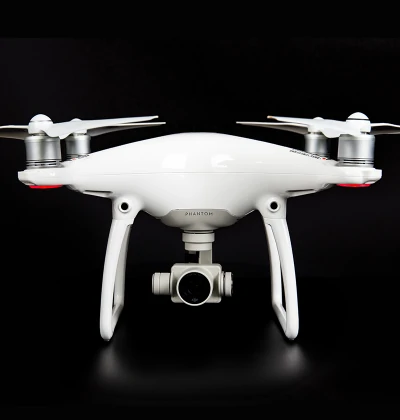
WJ Prototypes is your 3D manufacturing partner from prototype to large scale production.

Consumer Electronics
New Product Introduction Solutions for Consumer Electronics.

Robotics & Automation
Need some assistance bringing your robotic device or parts from the sketch-board to reality?

Medical Devices
The medical industry needs high quality, dependable and safe parts and products.

Automotive
New Product Introduction Solutions for Automotive

Industrial Machinery
The main purpose of industrial prototyping is to take the product from drawings into the real world.
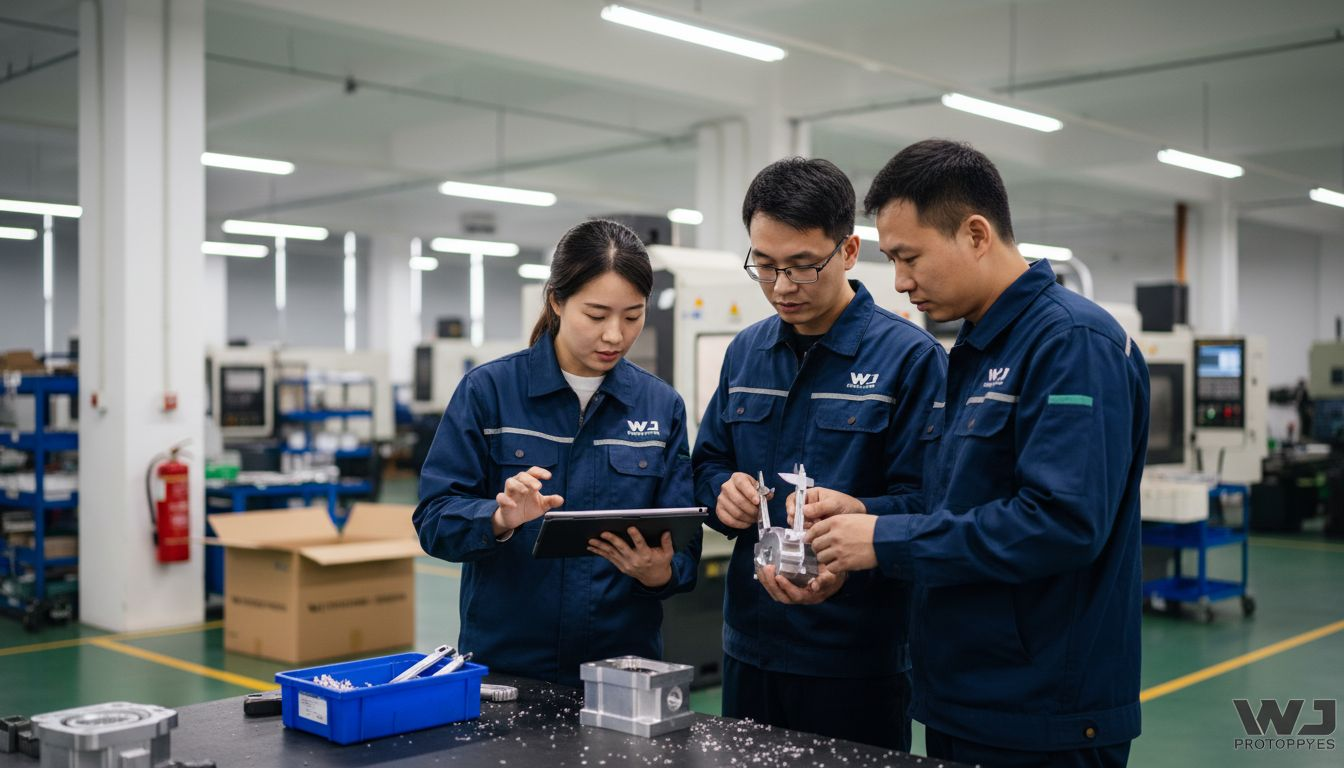
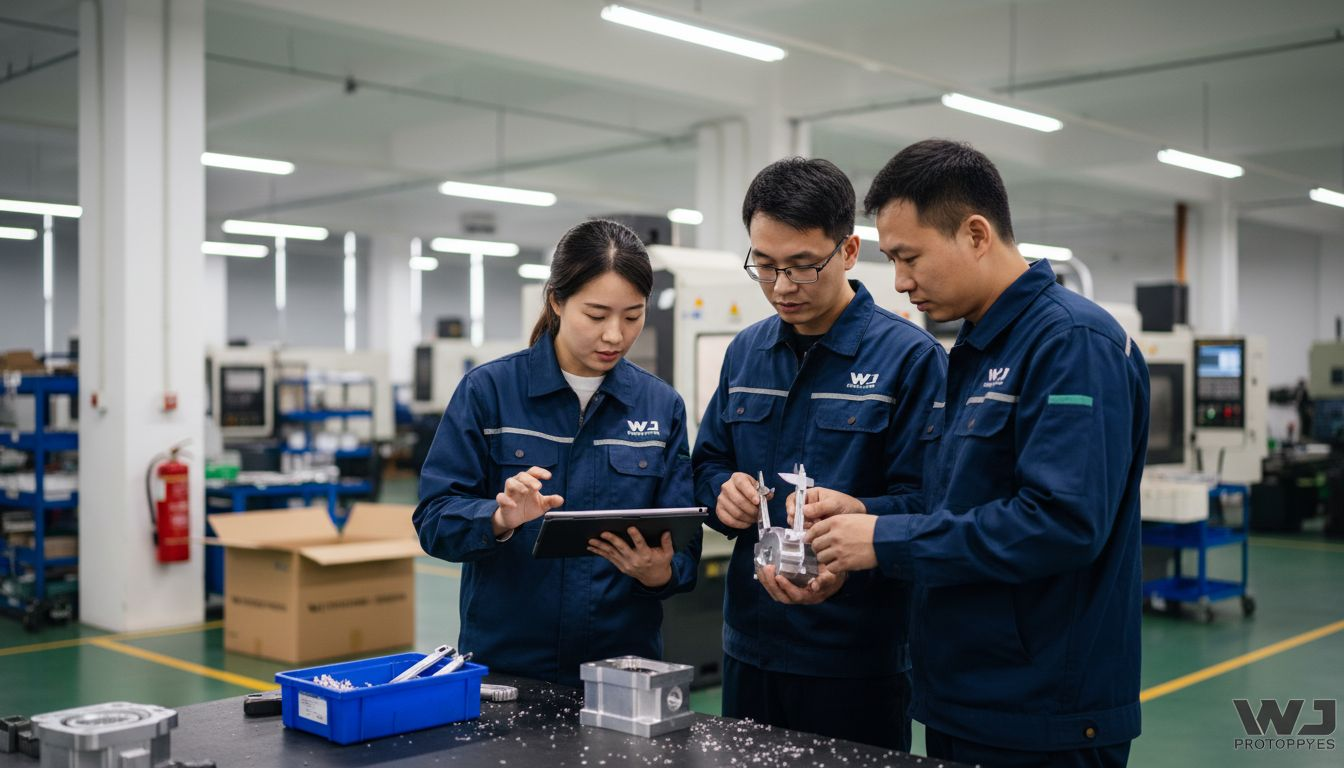
Rapid prototyping slashes aerospace development times by up to 50 percent, allowing R&D teams to turn complex CAD models into precision parts in days instead of weeks. For North American engineers, understanding how Chinese and British manufacturing strategies intersect is crucial when searching for dependable and cost-effective partners. This article explores the essential techniques, material options, and quality assurance practices behind China’s advanced rapid prototyping ecosystem.
| Point | Details |
|---|---|
| Rapid Prototyping in China | China has become a global leader in rapid prototyping, leveraging advanced technologies like 3D printing and CNC machining to enhance manufacturing efficiency. |
| Material Selection Importance | Rigorous material selection is crucial in aerospace prototyping to ensure components meet stringent performance and quality standards. |
| Quality Assurance Practices | Comprehensive quality assurance protocols, including multi-stage inspections, are essential to ensure prototypes meet international aerospace specifications. |
| Common Prototype Errors | Engineers should proactively address design, material, and manufacturing errors to streamline development and prevent costly delays. |
Rapid prototyping represents a transformative manufacturing approach enabling aerospace engineers to accelerate product development cycles through advanced digital fabrication techniques. At its core, rapid prototyping involves creating precise physical models directly from computer-aided design (CAD) data, allowing manufacturers to quickly transform digital concepts into tangible prototypes.
China has emerged as a significant global hub for rapid prototyping, offering sophisticated manufacturing capabilities that streamline product development across aerospace, automotive, and precision engineering sectors. The Chinese manufacturing ecosystem leverages cutting-edge technologies like 3D printing, CNC machining, and advanced materials to deliver high-precision components with exceptional turnaround times.
The fundamental technologies driving rapid prototyping in China include:
These technologies enable aerospace engineers to rapidly iterate designs, test structural integrity, and validate complex geometries without extensive traditional manufacturing investments. By reducing development timelines and material waste, rapid prototyping represents a strategic approach for innovative product engineering.
Pro tip: When selecting a rapid prototyping partner in China, prioritise manufacturers with aerospace certification and comprehensive material expertise to ensure optimal prototype quality and performance.
The core technologies and manufacturing processes in China’s rapid prototyping landscape encompass a sophisticated array of advanced digital fabrication techniques designed to meet the stringent demands of aerospace engineering. These processes integrate multiple manufacturing approaches, transforming complex digital designs into precise physical components with exceptional accuracy and efficiency.
Additive manufacturing plays a critical role in this ecosystem, with sophisticated 3D printing processes that enable intricate component creation. Technologies like Selective Laser Sintering (SLS) and Direct Metal Laser Sintering (DMLS) allow engineers to produce complex geometries that would be impossible through traditional subtractive manufacturing methods. These techniques are particularly valuable in aerospace, where lightweight, high-strength components with intricate internal structures are essential.
Key manufacturing processes in Chinese rapid prototyping include:
These technologies enable unprecedented design flexibility, allowing aerospace engineers to rapidly prototype complex components with minimal material waste and reduced production times. The integration of advanced software, precision machinery, and innovative materials positions Chinese manufacturers at the forefront of global rapid prototyping capabilities.
To clarify how various rapid prototyping technologies impact aerospace applications, the following table compares their major benefits and limitations:
| Technology Type | Main Advantage | Key Limitation |
|---|---|---|
| Additive Manufacturing | Complex geometry capability | Slower for large volumes |
| Subtractive Manufacturing | High-precision metal parts | Limited to simpler shapes |
| Hybrid Approaches | Enhanced design flexibility | Higher process complexity |
Pro tip: When evaluating rapid prototyping technologies, prioritise manufacturers with multi-axis capabilities and comprehensive material expertise to ensure optimal design translation and component performance.
Precision engineering in aerospace rapid prototyping demands extraordinary material selection and rigorous quality standards that push the boundaries of manufacturing capabilities. Chinese manufacturers have developed sophisticated approaches to material science, ensuring components meet the most demanding performance requirements for critical aerospace applications.

In the realm of aerospace manufacturing, material selection becomes paramount, with specialised sheet metal fabrication techniques enabling complex component production. Advanced alloys and composite materials are carefully selected to provide optimal strength-to-weight ratios, corrosion resistance, and thermal stability essential for extreme operating environments.
Key material categories for aerospace rapid prototyping include:
Engineering standards in Chinese rapid prototyping facilities emphasise stringent quality control processes, including non-destructive testing, precise dimensional verification, and comprehensive material characterisation. These processes ensure that every prototype meets or exceeds international aerospace manufacturing requirements, providing engineers with reliably high-performance components.
The table below provides a quick overview of how different material categories align with aerospace requirements:
| Material Category | Typical Aerospace Use | Notable Characteristic |
|---|---|---|
| Metallic Materials | Structural airframe and engine parts | Excellent strength-to-weight ratio |
| Polymer Materials | Interior cabin and insulation panels | Lightweight and corrosion resistant |
| Specialised Composites | Thermal shields, high-stress mounts | Superior heat and wear resistance |
Pro tip: When selecting materials for aerospace prototypes, prioritise manufacturers who provide comprehensive material certifications and can demonstrate extensive testing data across multiple performance metrics.
Rapid prototyping has revolutionised aerospace engineering by enabling unprecedented design flexibility and accelerated product development cycles. The aerospace industry demands exceptional precision, performance, and reliability, making advanced manufacturing techniques critical for developing complex components that push technological boundaries.
Modern aerospace applications leverage comprehensive prototyping processes that transform conceptual designs into functional components. These techniques span multiple critical domains, from structural components to intricate engine parts, allowing engineers to validate designs quickly and reduce overall development timelines.
Key aerospace rapid prototyping applications include:
These applications demonstrate how rapid prototyping transforms aerospace engineering by enabling faster iteration, reduced material waste, and enhanced design complexity. Chinese manufacturers have become pivotal in developing cutting-edge technologies that support increasingly sophisticated aerospace design requirements, bridging advanced computational modelling with physical manufacturing capabilities.
Pro tip: When developing aerospace prototypes, collaborate closely with manufacturers who offer comprehensive design validation and can provide detailed material performance data for your specific application.
In the competitive landscape of aerospace manufacturing, Chinese rapid prototyping services have distinguished themselves through exceptional lead times, strategic cost management, and rigorous quality assurance protocols. The ability to deliver high-precision components rapidly while maintaining competitive pricing has positioned China as a global leader in advanced manufacturing solutions.
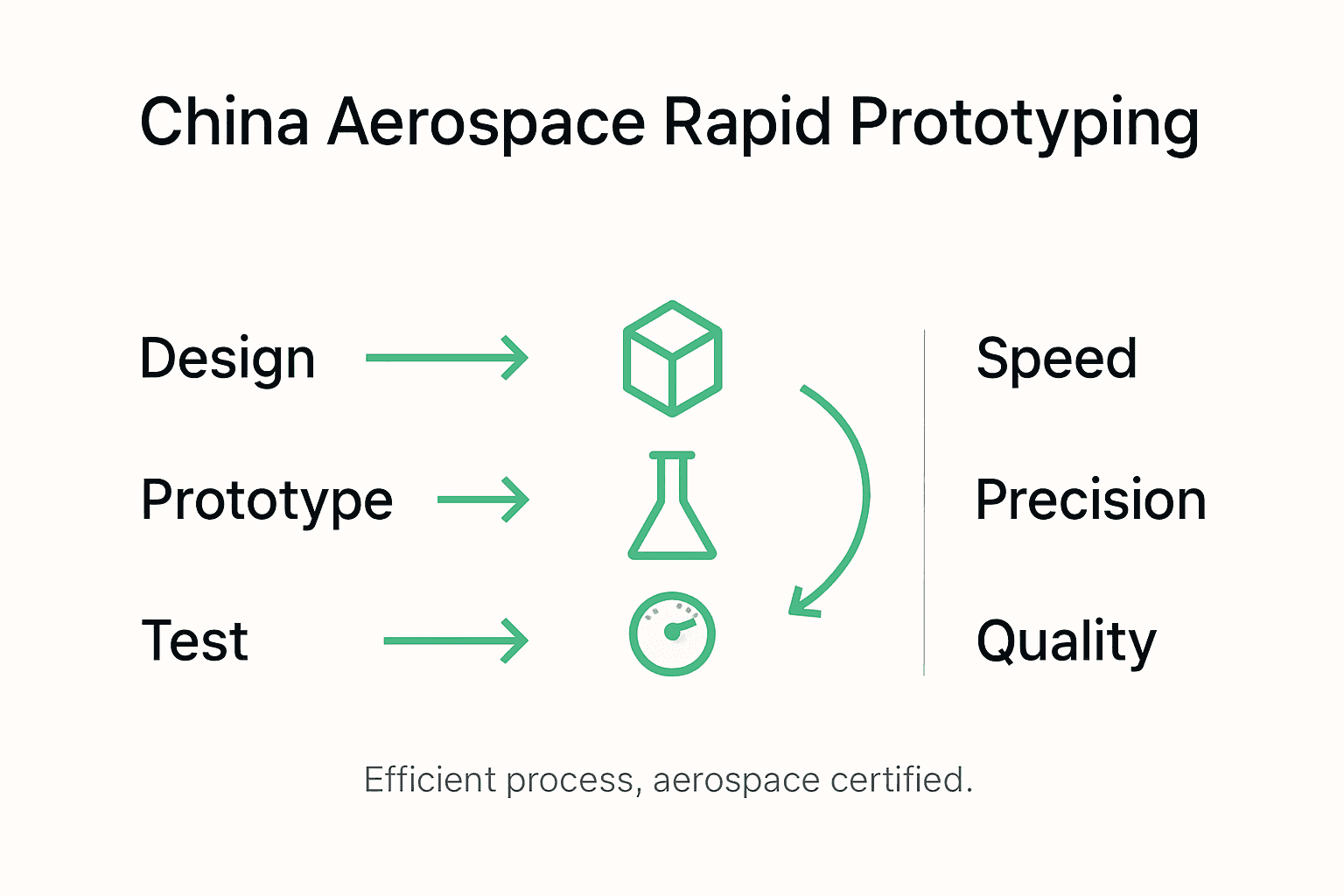
Manufacturers have developed sophisticated strategies to optimise cost-effective prototyping processes that minimise development expenses without compromising technical specifications. This approach involves leveraging advanced manufacturing technologies, streamlined production workflows, and intelligent resource allocation to reduce overall project expenditures while maintaining exceptional quality standards.
Key aspects of lead time and quality management include:
Quality assurance in Chinese rapid prototyping extends beyond traditional inspection methods, incorporating sophisticated testing protocols that validate component performance under simulated aerospace operating conditions. This comprehensive approach ensures that every prototype meets or exceeds international engineering standards, providing clients with reliable, high-performance solutions.
Pro tip: Request detailed quality certification documentation and perform thorough validation testing to confirm that prototyped components meet your precise engineering specifications.
Prototype development in aerospace engineering demands extraordinary precision and strategic planning to mitigate potential design and manufacturing risks. Understanding and anticipating common errors can significantly reduce development timelines, minimise unnecessary expenses, and ensure the creation of high-performance components that meet rigorous industry standards.
Engineers can proactively address prototype development challenges through structured best practices that streamline the design and validation processes. Effective prototype development requires comprehensive communication, iterative design refinement, and meticulous attention to technical specifications and material performance characteristics.
Common prototype development errors include:
Successful prototype development demands a holistic approach that integrates advanced computational modelling, precise manufacturing techniques, and rigorous validation protocols. By implementing comprehensive quality control measures and maintaining clear communication channels, engineers can effectively minimise potential errors and accelerate product development cycles.
Pro tip: Develop a comprehensive prototype validation checklist that explicitly maps design requirements, material specifications, and performance parameters to ensure thorough error prevention.
Navigating the complexities of aerospace rapid prototyping demands precision, speed, and deep material expertise. This article highlights key challenges such as achieving exacting manufacturing standards, managing lead times, and selecting the perfect combination of additive and subtractive technologies. If you are aiming to reduce development timelines while ensuring your prototypes meet stringent aerospace quality benchmarks, partnering with a reliable manufacturer is essential.
At WJ Prototypes, we specialise in delivering fast, cost-effective rapid prototyping solutions in China that align perfectly with aerospace industry demands. Our suite of advanced services includes SLA, SLS, DMLS, CNC machining and sheet metal fabrication, giving you the flexibility to create complex geometries and validated components. With rigorous quality assurance and certification processes, we help you avoid common prototype development errors so you can confidently accelerate your product from design to market.
Discover how our expertise in aerospace materials and precision engineering can transform your prototyping process by visiting our main landing page. Ready to push the boundaries of innovation while reducing costs and lead times? Contact WJ Prototypes today to start your custom rapid prototyping project with trusted aerospace-quality manufacturing in China.
Rapid prototyping in aerospace engineering is a manufacturing approach that uses advanced digital fabrication techniques to quickly create physical models from computer-aided design (CAD) data. This process allows engineers to iterate designs and validate components efficiently.
The main technologies include additive manufacturing (like 3D printing with Selective Laser Sintering and Stereolithography), subtractive manufacturing (such as CNC machining), and hybrid approaches that combine both techniques for enhanced design flexibility and precision.
Materials play a crucial role in aerospace prototypes, as specific properties like strength-to-weight ratio, corrosion resistance, and thermal stability are essential for demanding applications. Using advanced alloys, composites, and polymers ensures that prototypes meet stringent aerospace performance requirements.
Common errors in prototype development include inadequate initial specifications, inappropriate material selection, and insufficient functional testing. Addressing these issues through thorough communication and iterative design processes can help mitigate risks and ensure successful outcomes.
SERVICES
RESOURCES