



- Room 1807, Unit 9, Building 2, Shangxing Commercial Street, Shangde Road, Shangxing Community, Xinqiao Subdistrict, Bao'an District, Shenzhen City, China
CONTACT US

WhatsApp


Contact Us
Our team is on stand by, waiting toassist you.

Videos
A large collection of educational videos and tutorials.

About Us
Learn about our company, leadership, and mission totransform manufacturing.

Privacy Policy
Applies to all personal information collected through and/or processed in connection.


Aerospace & UAV
WJ Prototypes is your 3D manufacturing partner from prototype to large scale production.

Consumer Electronics
New Product Introduction Solutions for Consumer Electronics.

Robotics & Automation
Need some assistance bringing your robotic device or parts from the sketch-board to reality?

Medical Devices
The medical industry needs high quality, dependable and safe parts and products.

Automotive
New Product Introduction Solutions for Automotive

Industrial Machinery
The main purpose of industrial prototyping is to take the product from drawings into the real world.

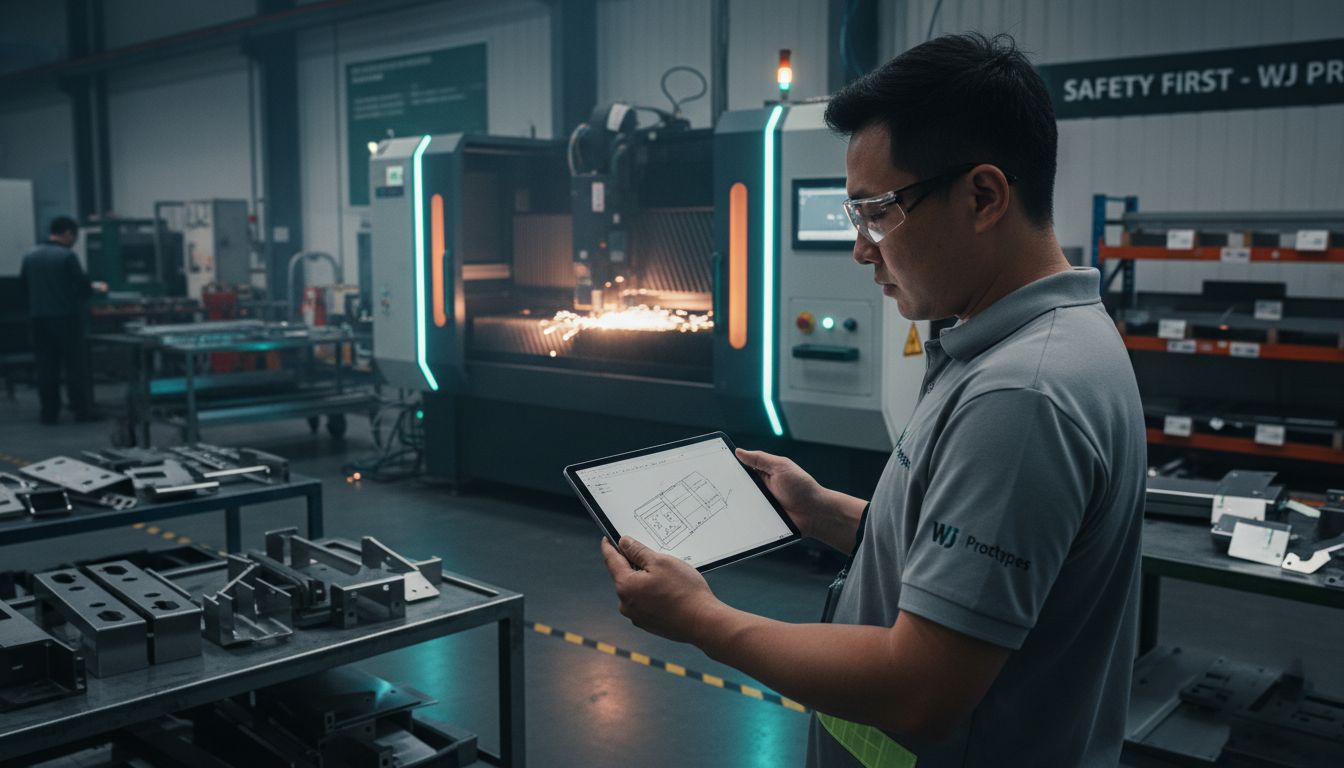
Choosing the right approach in sheet metal fabrication can feel daunting, especially when even a minor mistake can cost time and materials. British manufacturers consistently rank among the global leaders in quality, owed in part to strict attention given at every stage. From defining specifications to selecting materials, each step can influence whether your final product meets exacting industry standards. This guide walks you through the key processes so you gain confidence in producing precise, reliable parts.
| Primary Insight | Detailed Explanation |
|---|---|
| 1. Define precise specifications | Create a detailed blueprint outlining dimensions, tolerances, and features to ensure quality fabrication. |
| 2. Use CAD for designs | Employ computer-aided design software to accurately represent your part and include necessary technical specifications. |
| 3. Test machinery settings | Always perform test cuts on scrap material to confirm machine settings before final production to avoid errors. |
| 4. Select appropriate joining methods | Choose the best joining technique based on material compatibility and intended application for optimal structural integrity. |
| 5. Implement a systematic inspection process | Develop a checklist for thorough inspection focusing on dimensional accuracy and quality standards to ensure final product performance. |
Defining precise part specifications and selecting the right materials are foundational steps in sheet metal fabrication that determine the quality and performance of your final product. According to educational research from Eric.ed.gov, machining courses emphasise the critical process of interpreting specifications through blueprints, sketches, and detailed part descriptions.
To begin defining your part specifications, start by developing a comprehensive blueprint that outlines every critical dimension, tolerance, and geometric feature. Consider factors such as wall thickness, bend radii, hole sizes, and surface finish requirements. Material selection follows closely behind specification development, where you must match the metal to your project's functional demands. As research indicates, successful fabrication involves carefully recognising and identifying appropriate commercial alloys that align with your specific manufacturing requirements Eric.ed.gov.
A pro tip when selecting materials is to consider not just the immediate performance needs, but also long term environmental exposure, potential stress conditions, and budget constraints. Common sheet metal materials like stainless steel, aluminium, and mild steel each offer unique properties that can dramatically impact your part's functionality. Sheet Metal Fabrication Materials can provide additional insights into material selection strategies.
With your specifications defined and materials selected, you are now prepared to move forward to the next critical stage of sheet metal fabrication - design and preliminary prototyping.
Preparing digital designs and creating precise engineering drawings is a critical phase in sheet metal fabrication that transforms conceptual ideas into manufacturable blueprints. According to Docslib.org, this process involves working with various metals and understanding how to measure, mark out, cut, form, and assemble fabricated structures using sheet metal.
To create effective engineering drawings, you will need to use computer aided design (CAD) software that allows for precise two dimensional and three dimensional representation of your part. Focus on accurately depicting critical dimensions, tolerances, material specifications, surface finishes, and geometric features. Pay special attention to details like bend radii, hole sizes, and potential stress points that could impact manufacturing feasibility. The goal is to create a comprehensive technical drawing that provides unambiguous instructions for fabrication.
A crucial pro tip is to ensure your digital design follows industry standard drawing conventions and includes all necessary views technical specifications. How To Design CNC Milled Parts can provide additional guidance on creating technically robust manufacturing drawings. As research from P2infohouse.org suggests, your fabrication documentation should conform to established engineering specifications to guarantee quality and precision.
With your engineering drawings completed, you are now prepared to move forward to the next stage of sheet metal fabrication prototype development and validation.
Setting up machines and precisely cutting sheet metal is a critical stage that determines the accuracy and quality of your fabricated parts. According to research from Eric.ed.gov, successful fabrication begins with carefully selecting materials and identifying precise size specifications for various product forms.
To begin the setup process, first calibrate your cutting machinery such as laser cutters, plasma cutters, or mechanical shears to match the exact specifications from your engineering drawings. Sheet Metal Fabrication China highlights the importance of precision in these initial stages. As outlined in educational research from Docslib.org, you will need to work proficiently with industrial tools and machinery to complete fabrication tasks effectively.
A crucial pro tip is to always perform a test cut on scrap material before cutting your final piece. This allows you to verify machine settings, cutting tolerances, and edge quality without risking your primary sheet metal.
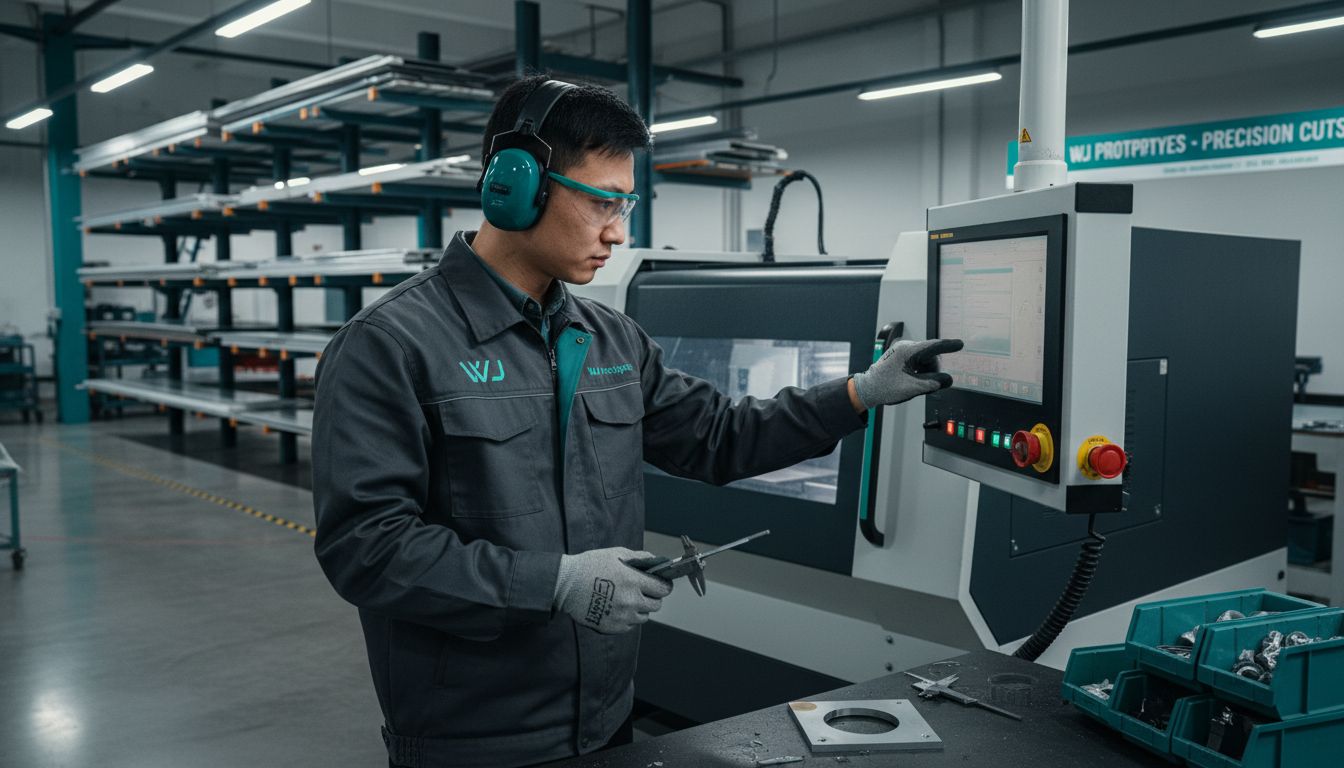
Ensure you wear appropriate safety equipment including protective eyewear, gloves, and hearing protection during the cutting process.
With your sheet metal precisely cut, you are now prepared to move forward to the next stage of bending and forming your fabricated parts.
Forming and bending sheet metal components requires precision, technical skill, and an understanding of material properties to transform flat sheets into complex three dimensional shapes. According to Docslib.org, fabrication involves working with ferrous and non-ferrous metals using a range of industrial tools and machinery to construct intricate structures.
To begin the bending process, select appropriate equipment such as press brakes, roll formers, or box and pan brakes that match your specific part geometry. Design Considerations for Manufacturing emphasises the importance of understanding material limitations and bend radii. Calculate your bend allowance carefully accounting for material thickness, grain direction, and inner radius to prevent cracking or material deformation. Reference specifications from P2infohouse.org which outline rigorous standards for metalwork fabrication and structural integrity.
A crucial pro tip is to always perform test bends on scrap material to validate your press settings and understand how your specific sheet metal will respond to forming. Pay close attention to bend angles, springback characteristics, and potential work hardening effects that could impact your final component geometry. Wear appropriate personal protective equipment and ensure your machinery is properly calibrated before beginning production.
With your components precisely formed and bent, you are now prepared to move forward to the next stage of assembly and final finishing.
Joining sheet metal components requires selecting the most appropriate connection method that ensures structural integrity, strength, and long-term performance. According to research from Eric.ed.gov, successful fabrication involves applying precise principles of material selection during welding, fabrication, and inspection processes.
Choose your joining technique based on material compatibility, part geometry, and intended application. Welding techniques like TIG, MIG, or spot welding work best for metals with similar compositions, while riveting provides flexibility for dissimilar materials. How To Design Living Hinges emphasises the importance of understanding mechanical connections. As outlined in Eric.ed.gov, carefully identify material specifications and requirements to ensure optimal joining performance.
A critical pro tip is to always test your joining method on sample pieces first. Verify mechanical strength, check for potential distortion, and ensure consistent penetration or fastener placement. Wear appropriate safety equipment such as welding masks, gloves, and protective clothing during the joining process. Pay special attention to heat input, joint preparation, and potential metallurgical changes that could compromise structural integrity.
With your components securely joined, you are now prepared to move forward to the final stages of surface finishing and quality inspection.
Inspecting and verifying sheet metal part quality is the critical final stage that ensures your fabricated components meet precise engineering specifications and performance standards. According to research from Eric.ed.gov, successful inspection involves applying systematic principles of material evaluation during fabrication and quality control processes.
Begin your comprehensive inspection by comparing the manufactured part against your original engineering drawings using precision measurement tools such as calipers, micrometers, coordinate measuring machines (CMM), and optical comparators. Each measurement should be meticulously cross referenced with your original design tolerances. 6 Things to Consider While Designing Parts emphasises the importance of understanding critical dimensional parameters. As outlined in Eric.ed.gov, correctly identifying material size specifications and requirements is fundamental to maintaining high quality standards.
A crucial pro tip is to develop a systematic inspection checklist that covers dimensional accuracy, surface finish, material integrity, and functional requirements. Implement statistical process control techniques to track measurement variations and identify potential manufacturing trends. Conduct both visual and quantitative inspections, paying close attention to geometric tolerances, surface defects, and potential stress concentrations that could compromise long term performance.
With your parts thoroughly inspected and validated, you are now prepared to proceed with final surface treatments or packaging for delivery.
The journey through sheet metal fabrication demands accuracy at every stage from defining specifications and selecting materials to cutting, bending, joining, and inspecting parts. If you are seeking to overcome challenges like ensuring exact bend radii, managing material limitations, or maintaining strict dimensional tolerances across prototypes and small production runs, you are not alone. Many engineers and designers strive to transform complex digital drawings into flawless physical components while avoiding costly errors or delays.
At WJ Prototypes, we understand these critical demands and offer professional sheet metal fabrication solutions tailored to your precise needs. Our advanced manufacturing technologies and experienced engineers ensure your parts meet exact specifications with fast turnaround times and excellent cost-effectiveness. Whether you need expert assistance with material selection, digital design translation, or production-quality forming and joining, we provide comprehensive support throughout the entire fabrication process.
Don’t let fabrication challenges slow your project down. Discover how our precision-driven approach can accelerate your journey from concept to market ready parts today. Visit WJ Prototypes to request a quote or learn more about our capabilities. Your next expertly fabricated sheet metal component is just a click away.
The key steps in sheet metal fabrication include defining part specifications, preparing digital designs, setting up machines for cutting, forming and bending components, joining parts, and finally inspecting and verifying part quality.
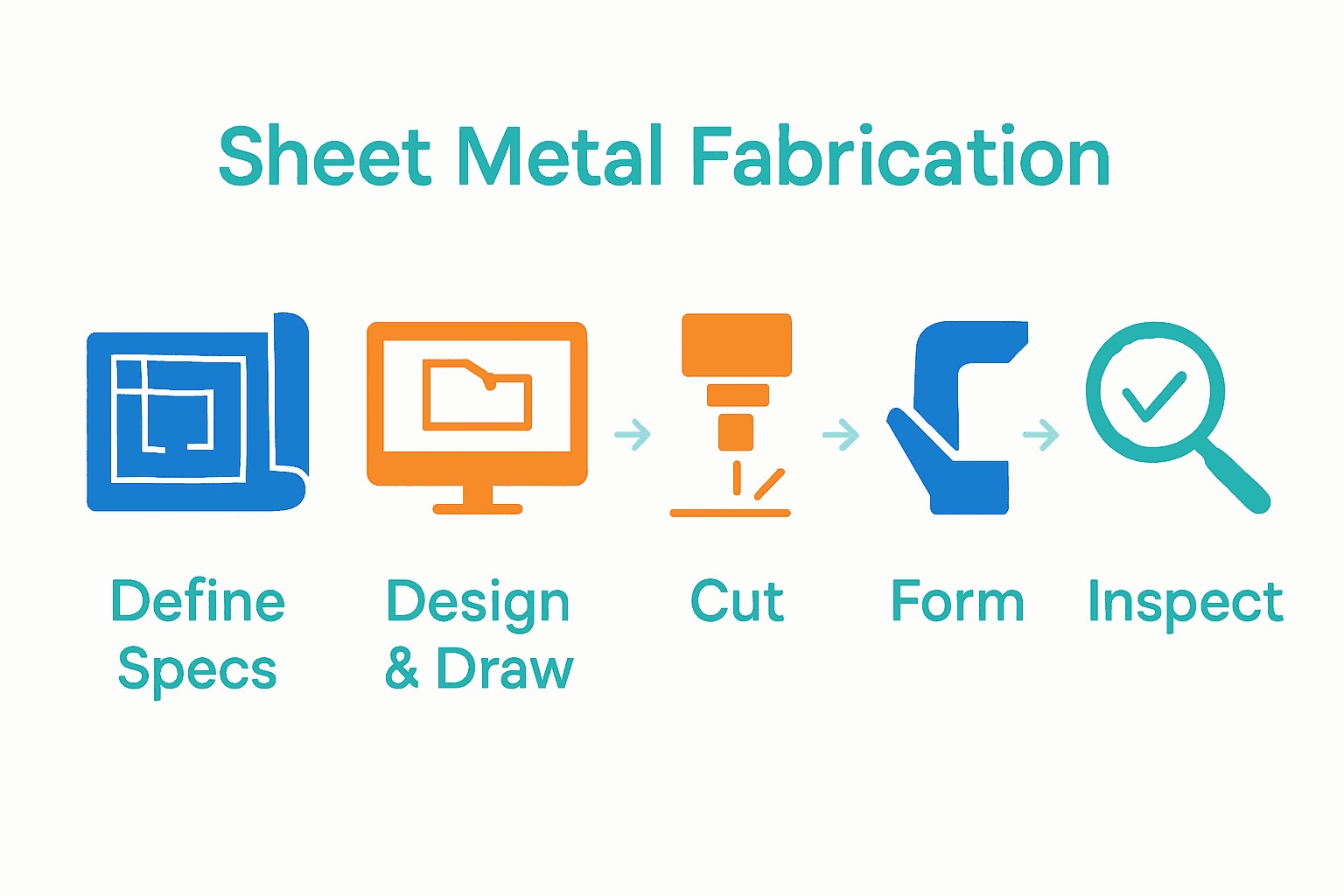
To begin, create a detailed blueprint that outlines dimensions and material requirements to ensure accurate fabrication.
Choosing the right materials involves assessing your project’s functional demands and environmental conditions. Consider factors such as mechanical properties, cost, and long-term exposure to elements. Start by researching common materials like stainless steel or aluminium to determine which best meets your specifications.
Precise engineering drawings are essential as they provide clear guidance for manufacturing, detailing dimensions, tolerances, and surface finishes. To ensure accuracy, use CAD software to develop designs that adhere to industry standards and include all necessary technical specifications.
To ensure cutting accuracy, calibrate your machinery to match your engineering drawings and perform a test cut on scrap material. This practice verifies machine settings and reduces the risk of errors before executing your final cut.
Consider joining methods like welding, riveting, or fastening based on material compatibility and the geometry of parts. To choose the best method, evaluate the strength requirements and test your method on sample pieces to confirm durability and performance.
Conduct a comprehensive inspection by comparing the finished pieces against your engineering drawings using precision measurement tools. Create a systematic checklist covering dimensional accuracy and material integrity to ensure all parts meet essential quality standards.
SERVICES
RESOURCES