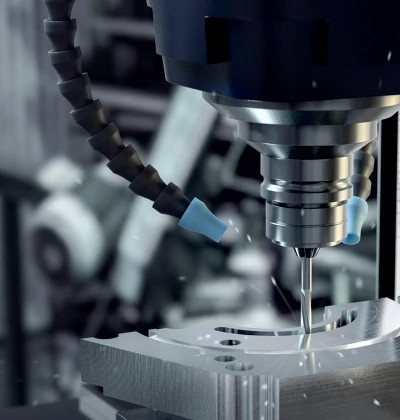


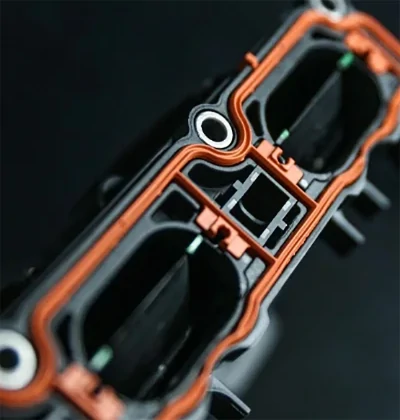


- Room 1807, Unit 9, Building 2, Shangxing Commercial Street, Shangde Road, Shangxing Community, Xinqiao Subdistrict, Bao'an District, Shenzhen City, China
CONTACT US

WhatsApp


Contact Us
Our team is on stand by, waiting toassist you.

Videos
A large collection of educational videos and tutorials.

About Us
Learn about our company, leadership, and mission totransform manufacturing.

Privacy Policy
Applies to all personal information collected through and/or processed in connection.
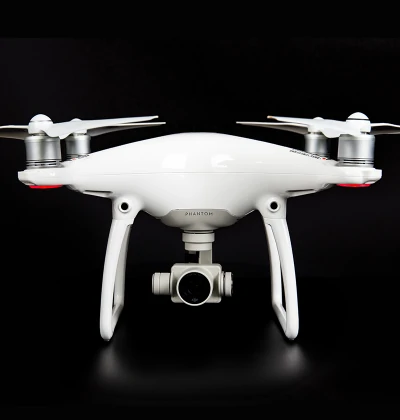

Aerospace & UAV
WJ Prototypes is your 3D manufacturing partner from prototype to large scale production.

Consumer Electronics
New Product Introduction Solutions for Consumer Electronics.

Robotics & Automation
Need some assistance bringing your robotic device or parts from the sketch-board to reality?

Medical Devices
The medical industry needs high quality, dependable and safe parts and products.

Automotive
New Product Introduction Solutions for Automotive

Industrial Machinery
The main purpose of industrial prototyping is to take the product from drawings into the real world.
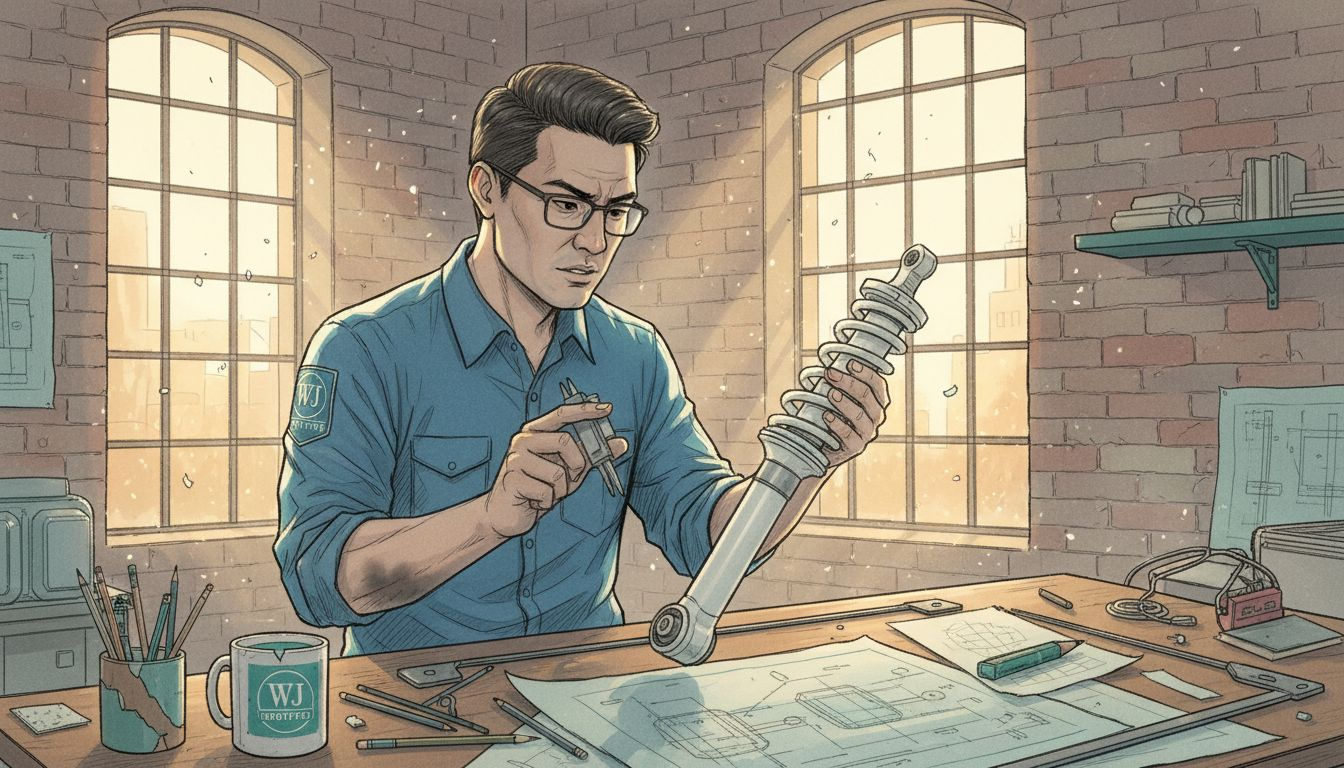

Racing against shrinking development timelines and budget pressures is a familiar challenge for every American automotive engineer or product manager. Achieving rapid validation with minimal waste can make or break a project’s success in North America. Defining automotive prototyping has shifted from guesswork to an integrated, structured process—combining Computer-Aided Design with advanced manufacturing technologies for quicker iteration and superior precision. This article explores how flexible, high-performance prototyping methods help deliver innovative vehicle components, cut costs, and catch errors early in the process.
| Point | Details |
|---|---|
| Modern Prototyping Integration | Automotive prototyping now combines Computer-Aided Design and advanced manufacturing technologies to validate designs quickly and accurately before production. |
| Material Selection Importance | Choosing the right materials for each prototype stage is crucial to ensure that the prototypes behave like production components, preventing costly redesigns later. |
| Strategic Method Selection | Employing a mix of rapid prototyping and traditional methods helps balance speed, precision, and cost, allowing for efficient development cycles. |
| Systematic Approach to Validation | Establishing clear objectives and criteria for each prototype phase enhances design reliability and reduces the risk of manufacturing issues. |
Automotive prototyping has transformed into a precision discipline that sits at the intersection of design innovation and manufacturing reality. Today’s prototyping processes are no longer about building one physical model and hoping it works. Instead, they represent a structured approach to validating design concepts, testing functionality, and ensuring compliance before committing to full production tooling. The shift from traditional methods to modern prototyping reflects an industry-wide recognition that speed, accuracy, and cost efficiency directly impact your ability to bring vehicles to market ahead of competitors.
Modern automotive prototyping integrates Computer-Aided Design (CAD) with advanced manufacturing technologies to enable rapid iterations and design validation. This combination allows engineers to move seamlessly from digital models to physical prototypes that accurately represent final product behaviour. The role of prototyping extends beyond simple visualisation—it functions as a critical bridge between conceptual design and manufacturing feasibility. Research on CAD and additive manufacturing integration demonstrates how contemporary prototyping emphasises rapid design validation, material efficiency, and the creation of customised components with high performance characteristics. Whether you’re developing an engine component, suspension system, or interior assembly, prototyping today provides the validation and testing ground necessary to catch design flaws, verify performance metrics, and confirm manufacturability long before production begins.
What distinguishes prototyping processes in today’s automotive landscape is their integration with regulatory requirements and mechatronic system validation. Modern prototypes serve as critical steps for bridging design and manufacturing whilst simultaneously establishing compliance with emerging regulations that shape advanced automotive systems globally. Your prototypes must now validate not only mechanical function but also electrical integration, software performance, and regulatory adherence. This means contemporary prototyping demands consideration of thermal behaviour, electromagnetic compatibility, material durability under real-world conditions, and integration with onboard diagnostic systems. The processes themselves have expanded to include early-stage validation through multiple iteration cycles, allowing your engineering team to test hypotheses, gather performance data, and refine designs iteratively before committing resources to expensive manufacturing tooling.
The practical reality is that modern automotive prototyping encompasses multiple complementary techniques. Rapid prototyping technologies enable quick turnaround on design validation models, whilst traditional methods like CNC machining and injection moulding produce functional prototypes that closely mirror production specifications. This multi-method approach means your team can select the most appropriate prototyping technology for each specific component or assembly stage, balancing speed, accuracy, cost, and functional requirements. Whether testing aerodynamic properties, validating assembly sequences, verifying dimensional tolerances, or confirming material performance, today’s automotive prototyping processes provide the flexibility and precision necessary to accelerate development cycles whilst reducing the risk of costly manufacturing errors.
Pro tip: When planning your prototyping strategy, choose technologies based on your specific validation needs rather than defaulting to a single method—pairing rapid iteration technologies with high-fidelity functional prototypes at different development stages significantly reduces both development time and overall project costs.
Automotive prototyping today offers multiple technology pathways, each suited to different design validation needs and development stages. Your choice of prototyping method directly impacts project timelines, costs, and the quality of insights you gain before committing to production. The main techniques fall into two broad categories: additive manufacturing approaches that build components layer by layer, and subtractive or formative methods that remove material or shape it into the desired form. Understanding which technology serves your specific validation goals allows you to compress development cycles whilst maintaining the precision and functional accuracy that automotive applications demand.
Additive manufacturing technologies have transformed how you approach rapid prototyping in automotive development. Stereolithography (SLA) uses ultraviolet light to cure liquid resin into solid parts, delivering exceptional surface finish and dimensional accuracy for components like interior trim pieces and sensor housings. Selective laser sintering (SLS) sinters powdered materials into solid parts, enabling more complex geometries and better mechanical properties for functional prototypes. Fused deposition modelling (FDM) offers cost-effective iteration cycles by melting thermoplastic filament, making it ideal for design verification and fit checks when speed matters most. These methods excel at rapid iteration, allowing you to refine designs multiple times before moving to traditional manufacturing. Beyond basic prototyping, 3D printing and 3D scanning integration now enables high-precision component production by combining digital design data with physical scanning and advanced printing, significantly reducing errors and accelerating overall prototyping efforts.

Traditional fabrication methods remain indispensable for creating prototypes that closely mirror production behaviour. CNC machining produces components with tight tolerances from solid blocks of material, essential when you need functional prototypes that must withstand stress testing or validate assembly sequences. Injection moulding creates parts using the same process as production tooling, though with prototype moulds that cost less and deliver faster, giving you confidence that your design will manufacture as intended. Sheet metal fabrication handles brackets, enclosures, and chassis components with excellent accuracy and speed. Main automotive prototyping methods including these techniques are selected based on suitability for different prototype types, production volumes, and design complexities, emphasising their role in accelerating development cycles. Your strategy should pair rapid additive methods for initial concept validation with traditional techniques for functional testing, allowing your team to move from idea to validated design efficiently.
The most effective automotive prototyping strategies combine multiple technologies across project phases. Early design exploration might use FDM for quick iterations, whilst middle-stage validation employs SLS or machining for functional testing, and final prototypes use injection moulding or machining to confirm manufacturing feasibility. This layered approach balances speed, cost, and accuracy throughout your development process. Consider material requirements, functional demands, dimensional tolerances, volume needs, and timeline constraints when selecting technologies. Some components demand production-identical processes immediately, whilst others benefit from rapid iteration before investing in high-fidelity prototypes.
Here’s a concise comparison of key automotive prototyping methods and their ideal use cases:
| Method | Best For | Typical Materials | Notable Benefit |
|---|---|---|---|
| Stereolithography (SLA) | Visual models, sensors | Photopolymer resins | Exceptional surface accuracy |
| Selective Laser Sintering (SLS) | Functional parts, complex geometry | Nylon, composites | Strong mechanical properties |
| Fused Deposition Modelling (FDM) | Early design, fit checks | ABS, PLA, polycarbonate | Fast and cost-effective |
| CNC Machining | Stress tests, precision | Aluminium alloys, steel | High fidelity, tight tolerances |
| Injection Moulding | Production feasibility | Engineering thermoplastics | True-to-production validation |
| Sheet Metal Fabrication | Structural parts, chassis | Steel, aluminium | Quick turnaround for enclosures |
Pro tip: Map your prototyping technology choices to specific validation milestones rather than using a single method throughout your project—using rapid additive manufacturing for design iteration, followed by traditional methods for functional validation, typically cuts overall development time by 30 to 40 percent whilst maintaining design confidence.
Material choice in automotive prototyping determines whether your prototype accurately represents production behaviour or simply validates design concepts. This distinction matters enormously because selecting the wrong material can lead you down development paths that won’t translate to manufacturing reality. Different prototype stages demand different materials. A concept model used to explore form and ergonomics requires vastly different material properties than a functional prototype that must endure stress testing or thermal cycling. Your material selection strategy should align with what you’re actually trying to learn from each prototype iteration, balancing cost, speed, and fidelity to production conditions.
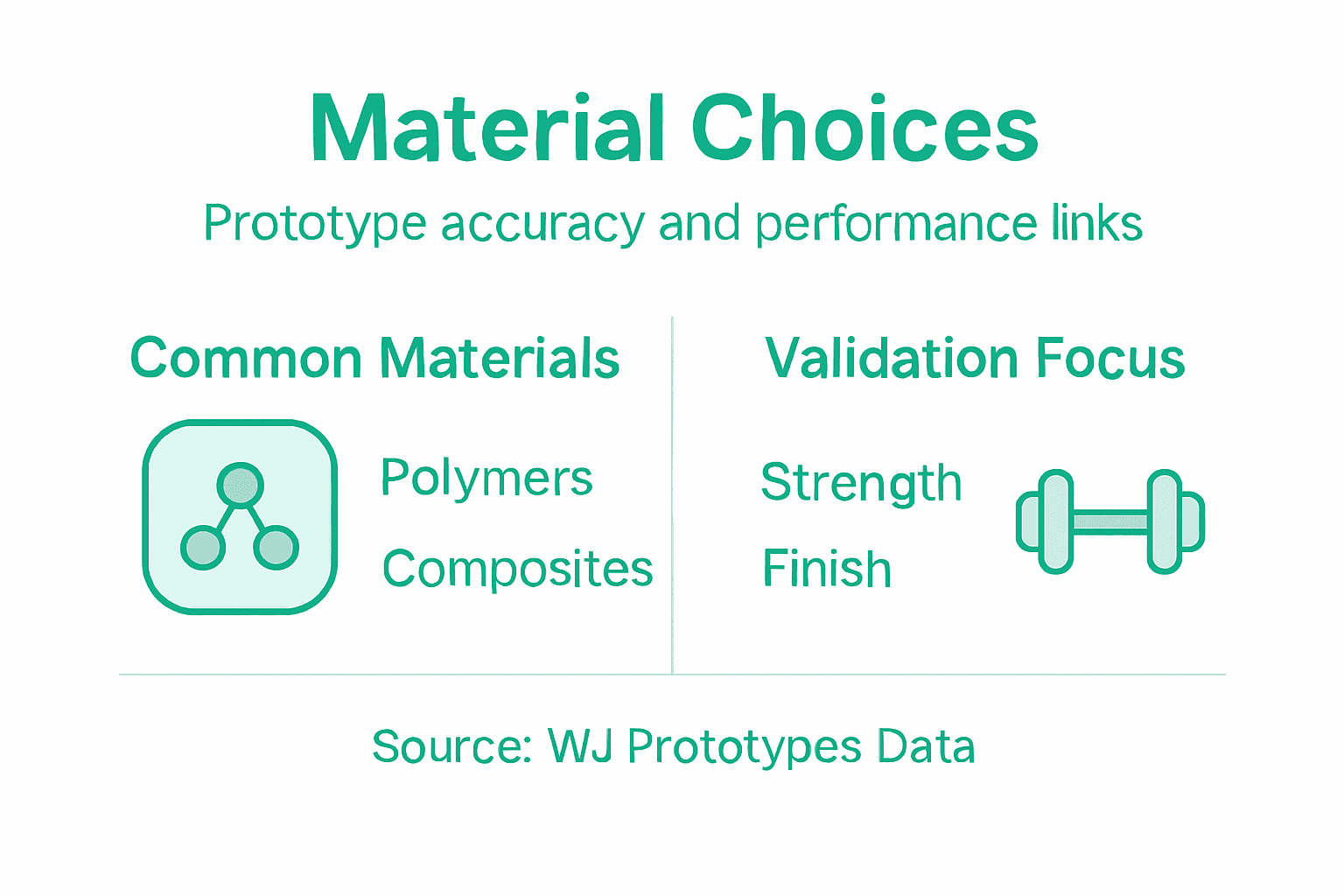
The materials available for prototyping span from commodity polymers to advanced composites and lightweight alloys. Thermoplastic resins like polycarbonate and acrylonitrile butadiene styrene (ABS) offer excellent balance for most automotive applications—they’re strong enough for functional testing, easy to fabricate, and cost-effective for iteration. Nylon and polyurethane materials deliver enhanced durability and wear resistance for moving parts or assemblies that simulate real-world mechanical stress. For engine components or thermal systems, aluminium alloys and titanium provide lightweight solutions with superior heat resistance. Material considerations for automotive prototypes vary significantly by prototype purpose—whether you need conceptual visualisation or functional testing. Additive manufacturing techniques now enable you to use lightweight and performance-optimised materials that closely mimic real-world automotive components, facilitating rapid iteration whilst meeting application-specific requirements such as mechanical strength, thermal stability, and weight optimisation.
Real-world application scenarios show how material selection connects to prototype purpose. When validating interior trim fit and finish, polymer-based rapid prototyping materials work perfectly because appearance and form matter more than structural strength. For suspension components undergoing load testing, you need materials with mechanical properties closer to production metals or composites. Engine bay components require thermally stable materials that won’t degrade under elevated temperatures. Electrical connectors and sensor housings benefit from materials with good dimensional stability and chemical resistance. Seat structures and safety components demand materials that accurately represent how production parts will behave during impact or long-term use. The material must support your specific validation objectives—using a cheap polymer for a component that will ultimately manufacture in composite costs you nothing upfront but everything in confidence when transition to production occurs.
Your material selection process should begin with mapping what you need to validate. Ask yourself whether you’re confirming that the design fits within assembly constraints, testing performance under real operating conditions, validating manufacturing feasibility, or simply exploring ergonomics and aesthetics. Next, identify which production materials your final component will use, then select prototype materials that share similar characteristics. For early iterations where speed and cost matter most, accept lower-fidelity materials. For late-stage validation, invest in prototypes using materials that mirror production specifications. This staged approach prevents costly surprises when your design moves from prototype to manufacturing tooling.
This summary table links prototype material types to their most suitable testing scenarios:
| Material Type | Best Application | Key Validation Focus | Limitation |
|---|---|---|---|
| Thermoplastic resin | Interior fit, form | Visual inspection, ergonomics | Low thermal resistance |
| Nylon, polyurethane | Moving assemblies | Wear, durability testing | Not metallurgically identical |
| Aluminium alloys | Engine bay components | Thermal stability, weight | Higher cost, specialised machines |
| Composites | Safety parts, body panels | Impact resistance, strength | Complex fabrication, longer lead |
Pro tip: Specify material properties (tensile strength, thermal stability, dimensional tolerance) needed for your validation goals rather than selecting materials based on availability alone—matching prototype materials to what you’re actually testing accelerates validation cycles and prevents design rework when production manufacturing begins.
Automotive prototyping exists within a perpetual tension between three competing demands. You need results quickly to meet development timelines. You need accuracy sufficient to validate designs and catch problems before manufacturing. You need to spend money wisely because prototype budgets have limits. These three forces rarely align perfectly, which means your job involves strategic trade-offs rather than optimisation of all three simultaneously. The key is understanding which trade-offs matter for your specific project and which ones cost you nothing if made deliberately rather than by accident.
Speed and cost naturally favour rapid prototyping technologies. Fused deposition modelling produces parts in days rather than weeks, and material costs remain remarkably low. Stereolithography delivers fine detail and smooth surfaces quickly without expensive tooling. Selective laser sintering handles complex geometries that would require difficult machining setups. These methods excel at compressing early-stage development timelines—you iterate designs multiple times, gathering feedback and refining concepts without accumulating significant expenses. The precision trade-off is real but manageable. Early prototypes don’t need production-equivalent accuracy; they need sufficient accuracy to prove the design direction works. Later-stage validation, however, demands precision that approaches manufacturing reality. Balancing speed, precision, and cost through strategic technology selection ensures that rapid prototyping accelerates early design iteration whilst subsequent refinement phases maintain the stringent accuracy necessary for regulatory compliance and functional validation.
Your cost decisions ripple through the entire development cycle. Selecting the cheapest material or fastest method upfront might compromise late-stage validation, forcing expensive rework. Conversely, over-investing in high-precision prototypes early when rough concepts still need exploration wastes budget and delays learning. The strategic approach involves tiered prototyping. Early iterations use rapid, economical methods that sacrifice some precision for speed and low cost. Middle-stage prototypes employ methods that match precision requirements more closely whilst maintaining reasonable timelines. Final prototypes use production-relevant materials and processes even if they cost more, because at this stage you’re validating manufacturability, not exploring concepts. Achieving optimal balance in automotive prototyping requires choosing suitable rapid prototyping technologies that provide sufficient accuracy without prohibitive costs, recognising that faster prototyping shortcuts time-to-market and enables iterative testing, though cost constraints necessitate careful material and method selection to avoid compromising quality or precision necessary for functional validation.
Practical decision-making means mapping your validation needs against technology capabilities and constraints. Ask what precision you genuinely need at each stage. Does a concept model need dimensional accuracy to 0.5 millimetres, or is 2 millimetres sufficient for fit exploration? Does a material property test require production-identical materials, or will prototype-grade equivalents provide the data you need? Can you validate assembly sequences with rapid prototypes, or must you test with parts manufactured using production tooling? These questions guide budget allocation. You’ll often find that spending 30 percent more on a late-stage prototype saves 60 percent of total development cost by preventing late-stage surprises. Simultaneously, refusing to over-invest in early rapid prototypes preserves budget for where it genuinely matters. This disciplined approach compresses timelines, maintains precision where it counts, and respects budget constraints without needless sacrifice in any area.
Pro tip: Define acceptance criteria for each prototype phase before selecting technology or materials—knowing exactly what precision, performance, and cost targets you must hit at each stage eliminates decision paralysis and ensures your budget and schedule work together rather than compete with one another.
Automotive prototyping projects stumble when teams underestimate complexity or treat prototyping as a single event rather than a deliberate process. The most common mistake is skipping thorough scope definition, then discovering halfway through development that nobody agreed on what the prototype should actually validate. Another frequent error involves selecting prototyping methods based on what your team already owns rather than what the project genuinely needs. You might default to 3D printing because you have the equipment in-house, when CNC machining would deliver better functional validation for that particular component. Material selection often goes wrong too. Teams choose prototype materials based purely on cost or availability, then validate designs with parts that don’t behave like production equivalents. When manufacturing begins, the design performs differently than the prototype promised, triggering costly revisions. Testing protocols frequently lack rigour. You build a prototype, observe that it seems to work, then move forward without actually stress-testing critical functions or validating performance under real-world conditions.
Best practice begins with crystal-clear scope definition before any prototyping starts. Document exactly what you need to learn from each prototype iteration. Are you validating that the design fits within spatial constraints? Testing thermal performance? Confirming that components assemble correctly? Verifying that electrical connections function reliably? Different validation objectives demand different prototyping approaches. Next, establish a systematic prototyping framework that incorporates iterative design validation with cross-disciplinary collaboration. Engineers, manufacturing specialists, and quality representatives should all contribute to decisions about prototyping methods and acceptance criteria. Common automotive prototyping pitfalls include underestimating design complexity, using inappropriate materials, and neglecting comprehensive testing. Best practices include clear scope definition, iterative prototype refinement, rigorous testing protocols, and alignment with production goals to enhance prototype reliability and reduce costly redesigns. Early material and process testing proves invaluable. Don’t wait until final prototyping to discover that your chosen material won’t perform as expected or that manufacturing tolerances create assembly problems.
Systematic frameworks that leverage iterative design validation and cross-disciplinary collaboration whilst maintaining flexibility to adapt to iterative findings accelerate innovation in automotive prototyping. This means establishing clear feedback loops where data from one prototype iteration directly informs the next. It means treating failures as learning opportunities rather than setbacks. Document what each prototype teaches you, then explicitly build that knowledge into subsequent iterations. Maintain flexibility in your process. Rigid adherence to original prototyping plans, even when testing reveals unexpected issues, often leads to wasted effort. The best teams adjust their approach based on what prototypes reveal. Quality assurance should begin at the concept stage, not at the final validation phase. Establish acceptance criteria upfront, then measure every prototype against those criteria systematically. This prevents the common trap of building something and hoping it works, then discovering late that it doesn’t meet requirements.
Three specific practices separate successful prototyping from problematic programmes. First, establish a materials compatibility matrix early. Map what materials your production design will use, then identify which prototype materials share similar properties. Test this assumption by comparing material behaviour directly rather than assuming equivalence. Second, build redundancy into testing. A single successful test suggests your design works; multiple independent tests under varying conditions confirm it. Third, involve manufacturing expertise from the start. Have the people who will actually produce your design review prototypes and provide feedback on manufacturability. They catch problems that engineers miss because they think about production constraints daily.
Pro tip: Create a prototype acceptance checklist for each development phase and verify every requirement before moving to the next stage—this simple discipline eliminates surprises and prevents rework by catching problems when they’re still inexpensive to address.
Navigating the complex landscape of automotive prototyping demands not only speed but also precision and material expertise. Whether you are striving to validate intricate mechanical designs, test thermal resilience, or ensure compliance with ever-evolving regulatory standards, choosing the right prototyping partner is essential. Challenges like balancing rapid iteration with high-fidelity functional prototypes and selecting the perfect materials to mirror production realities can stall innovation and inflate costs.
At WJ Prototypes, we understand these pain points intimately. Our comprehensive range of services including advanced additive manufacturing technologies such as SLA, SLS, and DMLS alongside traditional fabrication like CNC machining and injection moulding, empower you to execute every stage of your prototyping process flawlessly. With expert guidance on material selection and a commitment to quality, we help you avoid costly rework and accelerate time to market. Experience the benefits of a trusted ISO-certified partner who delivers precision, speed, and cost-effective solutions tailored to your automotive innovation needs.
Ready to transform your automotive prototyping challenges into competitive advantages Explore how our rapid prototyping solutions can fast-track your project from concept to production. Visit WJ Prototypes today and start your seamless journey toward automotive innovation.
Modern automotive prototyping processes involve a structured approach that integrates Computer-Aided Design (CAD) with advanced manufacturing technologies. This allows for rapid iterations, design validation, and compliance testing before full production begins.
Additive manufacturing technologies, such as Stereolithography (SLA) and Selective Laser Sintering (SLS), enable quick iterations and allow for complex geometries and better mechanical properties in prototypes, significantly enhancing design validation processes.
Material selection is crucial because it determines whether a prototype accurately represents production behaviour or merely validates design concepts. Different stages of prototyping require different materials to ensure the prototypes perform as expected under various testing scenarios.
Balancing speed, precision, and cost involves a tiered approach to prototyping. Early iterations can use rapid, less expensive methods, while final prototypes should employ high-fidelity materials and processes to ensure accuracy and manufacturability without overspending.
SERVICES
RESOURCES