



- Room 1807, Unit 9, Building 2, Shangxing Commercial Street, Shangde Road, Shangxing Community, Xinqiao Subdistrict, Bao'an District, Shenzhen City, China
CONTACT US

WhatsApp


Contact Us
Our team is on stand by, waiting toassist you.

Videos
A large collection of educational videos and tutorials.

About Us
Learn about our company, leadership, and mission totransform manufacturing.

Privacy Policy
Applies to all personal information collected through and/or processed in connection.


Aerospace & UAV
WJ Prototypes is your 3D manufacturing partner from prototype to large scale production.

Consumer Electronics
New Product Introduction Solutions for Consumer Electronics.

Robotics & Automation
Need some assistance bringing your robotic device or parts from the sketch-board to reality?

Medical Devices
The medical industry needs high quality, dependable and safe parts and products.

Automotive
New Product Introduction Solutions for Automotive

Industrial Machinery
The main purpose of industrial prototyping is to take the product from drawings into the real world.

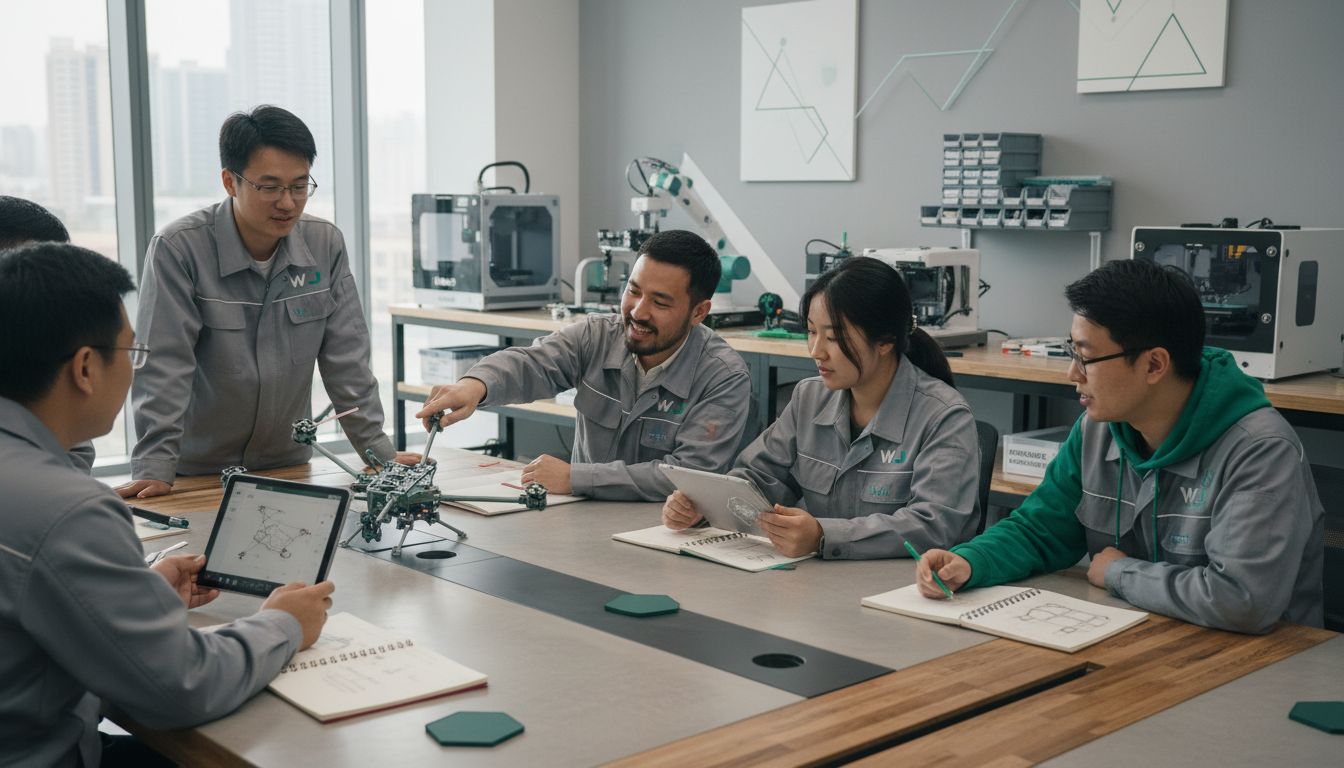
Nearly 85% of new engineering prototypes face setbacks rooted in unclear project goals, especially within manufacturing teams. Navigating the early stages of product development can be challenging when detailed documentation and open communication are missing. This guide sheds light on proven strategies that help streamline the prototyping process, from clear briefing and smart technology choices to quality control, saving both time and resources for teams seeking a smoother development journey.
| Key Point | Explanation |
|---|---|
| 1. Create a Detailed Design Brief | A thorough design brief aligns team expectations and reduces miscommunication, thus saving time and resources during development. |
| 2. Choose Appropriate Prototyping Technology | Selecting the right technology based on specific project parameters can enhance efficiency and minimise redesign efforts. |
| 3. Select Strategic Materials | Material choice should balance performance needs with cost-effectiveness, ensuring durability and manufacturability for prototypes. |
| 4. Utilise 3D Printing for Design Flexibility | 3D printing enables the production of complex geometries and rapid prototypes, reducing costs and time in the design process. |
| 5. Implement Digital Collaboration Tools | Effective digital collaboration enhances communication and efficiency, allowing teams to iterate designs quickly and seamlessly. |
Engineering prototyping success begins with a meticulously crafted design brief that serves as your north star throughout the product development journey. As defined by Wikipedia, a design brief is a critical document developed collaboratively, outlining project deliverables, functional requirements, aesthetic goals, project timelines, and budgetary constraints.
A comprehensive design brief acts like a strategic roadmap, preventing costly miscommunications and reducing unnecessary iterations. By establishing clear expectations upfront, you can save significant time and resources. Imagine a design brief as your project's constitutional document, providing explicit guidelines that align your entire team's understanding and vision.
Key Components of an Effective Design Brief:
To create a robust design brief, engage stakeholders early and encourage transparent, detailed discussions. Ask probing questions that uncover underlying expectations and potential challenges. The more precise your initial documentation, the smoother your prototype development process will become. A well constructed design brief transforms ambiguous concepts into actionable engineering strategies, dramatically reducing wasted effort and accelerating your path from concept to functional prototype.
Selecting the appropriate prototyping technology is a mission critical decision that can dramatically impact your product development trajectory. As Wikipedia explains, modern engineering now encompasses sophisticated Virtual Product Development approaches that enable digital simulation and predictive modelling before physical production.
Understanding the nuanced landscape of prototyping technologies requires careful evaluation of your specific project requirements. Not all technologies are created equal, and matching the right approach to your engineering objectives can save substantial time, resources, and potential redesign efforts.
Key Considerations for Technology Selection:
Modern prototyping methodologies like Rapid Control Prototyping offer powerful simulation capabilities that allow engineers to evaluate control systems and algorithms with unprecedented speed and accuracy. By strategically selecting your prototyping technology, you transform potential limitations into opportunities for innovation, ensuring your design moves efficiently from concept to functional reality.
Material selection is a strategic decision that balances engineering performance with economic constraints. As research from International Journal of Creative Research Thoughts emphasises, material engineering directly influences product durability, functionality, and overall manufacturability.
Engineers must navigate a complex landscape of material properties, considering mechanical strength, thermal resistance, weight, cost, and manufacturing feasibility. This requires a holistic approach that goes beyond simple material specifications and demands a nuanced understanding of how different materials perform under specific operational conditions.
Critical Material Selection Factors:
To optimise your material selection process, leverage CNC machining materials resources that provide comprehensive insights into material characteristics. By systematically evaluating material properties against your project requirements, you transform material selection from a potential bottleneck into a strategic advantage, ensuring your prototype not only functions effectively but also remains economically viable.
Three dimensional printing represents a revolutionary approach to prototype development, enabling engineers to transform intricate digital designs into tangible physical models with unprecedented precision. As research from the International Journal of Creative Research Thoughts highlights, 3D printing allows for rapid creation of complex detailed prototypes with remarkably low cost and minimal turnaround time.
The true power of 3D printing lies in its ability to manufacture geometries that would be impossible or prohibitively expensive using traditional manufacturing techniques. By leveraging layer by layer computer aided design technologies, engineers can produce intricate structures with internal cavities, complex curvatures, and advanced topological designs that challenge conventional manufacturing limitations.
Strategic Advantages of 3D Printing Geometries:
For deeper insights, explore our comprehensive guide on SLS printing which provides advanced techniques for translating complex digital concepts into functional physical prototypes. By mastering 3D printing geometries, you unlock a world of design possibilities that were previously constrained by traditional manufacturing methods.
Digital collaboration represents the heartbeat of modern engineering design, transforming how teams conceptualise, develop, and refine prototypes. As Wikipedia explains, iterative design is a cyclical process of prototyping, testing, analysing, and continuously refining a product through systematic interaction and evolution.
Today's engineers require robust digital platforms that enable seamless communication, real time design modifications, and transparent workflow tracking. These tools transcend traditional geographical limitations, allowing multidisciplinary teams to contribute simultaneously, share insights, and accelerate the prototype development lifecycle.
Key Digital Collaboration Capabilities:
By implementing sophisticated digital collaboration strategies, engineering teams can dramatically reduce communication overhead, minimise design errors, and compress development timelines. The goal is creating an ecosystem where creativity flows unimpeded, allowing engineers to focus on innovation rather than administrative coordination.
Successful engineering prototyping requires strategic foresight into potential manufacturing pathways, anticipating how initial designs might translate into production realities. As Wikipedia explains, Virtual Product Development enables practitioners to digitally simulate performance scenarios, minimising market failure potential and development costs.
Engineers must design with flexibility, creating prototypes that can seamlessly transition between experimental stages and limited production runs. This approach demands a comprehensive understanding of manufacturing constraints, material capabilities, and potential scaling challenges that might emerge during the commercialisation process.
Strategic Scalability Considerations:
By integrating advanced methodologies like the Hyper Space Exploration approach, engineers can systematically explore solution alternatives and identify optimal system configurations. This forward thinking methodology transforms prototyping from a mere experimental phase into a strategic pathway towards efficient, adaptable product development.
Quality control represents the critical final checkpoint in engineering prototyping, transforming theoretical designs into robust, reliable solutions. As Wikipedia explains, engineering verification testing ensures that prototypes perform precisely to established design goals and rigorous specifications.
Comprehensive quality control goes beyond mere technical compliance, encompassing a holistic approach that validates both functional performance and user experience. Engineers must develop systematic processes that scrutinise every aspect of the prototype, from material integrity to operational reliability, ensuring that theoretical design meets practical implementation standards.
Critical Quality Assurance Elements:
By implementing meticulous quality control practices, engineers can transform potential design vulnerabilities into opportunities for continuous improvement, ultimately delivering products that not only meet but exceed technical and regulatory expectations.
Below is a comprehensive table summarising the key strategies and considerations for successful prototyping as discussed in the article.
| Strategy/Aspect | Implementation/Description | Benefits/Outcomes |
|---|---|---|
| Design Brief | Craft a detailed brief including objectives, requirements, and budget constraints through stakeholder collaboration. | Reduces miscommunications and unnecessary iterations, saving time and resources. |
| Prototyping Technology | Select technology based on design complexity, material needs, and testing requirements. | Ensures project efficiency and reduces redesign costs. |
| Material Selection | Choose materials considering performance, cost, and manufacturing compatibility. | Balances functionality with economic viability. |
| 3D Printing | Utilise for creating complex geometries and low-cost prototypes. | Enables design freedom and rapid iterations. |
| Digital Collaboration | Employ cloud-based platforms for real-time design sharing and feedback. | Streamlines communication and reduces development timelines. |
| Scalability Planning | Design prototypes with flexibility for low-volume production and future scaling. | Facilitates transition from prototype to production. |
| Quality Control | Implement thorough testing and validation against specifications. | Ensures reliability and compliance with standards. |
Rapid prototyping from China is most effective when engineers start with well-prepared design data and clear technical requirements. This includes detailed CAD models, defined tolerances, material preferences, and intended part functions. Selecting the right prototyping method—such as CNC machining for high precision, 3D printing for complex geometries, or vacuum casting for small batches—helps balance speed, cost, and accuracy. Working with experienced Chinese manufacturers also allows engineers to receive early design feedback, helping avoid manufacturability issues and reduce iteration cycles.
Another key tip is to plan for quality control and communication early in the process. Engineers should request sample inspections, dimensional reports, and material certifications to ensure prototypes meet specifications. Clear communication, time zone coordination, and agreed timelines help prevent delays and misunderstandings. By combining structured preparation with a reliable prototyping partner in China, engineers can accelerate product development, reduce costs, and achieve high-precision results with confidence.
The journey from a clear design brief to a fully functional prototype demands precision, speed and innovation. This article highlights critical challenges engineers face including selecting the right materials, leveraging advanced 3D printing technologies and ensuring quality control. If you want to overcome these hurdles while saving time and cost our comprehensive prototyping solutions provide exactly that. From SLA and SLS printing to CNC machining and vacuum casting our expert engineers support your project at every stage with cutting-edge technology and scalable options.
Explore how you can streamline iterations through our digital collaboration tools and ensure your designs meet rigorous performance standards by partnering with a proven ISO certified manufacturer. Unlock the full potential of your engineering projects by visiting WJ Prototypes today. Discover detailed service descriptions and request your instant quote now to transform your rapid prototyping challenges into competitive advantages.
A design brief serves as a foundational document that outlines the project's objectives, functional requirements, and budgetary constraints. To ensure effective prototyping, create a detailed design brief involving all stakeholders at the project’s inception.
Selecting the appropriate prototyping technology depends on factors like product complexity, budget, and desired testing levels. Assess your project’s specific needs and align them with available prototyping technologies to enhance efficiency and effectiveness.
Consider mechanical properties, environmental conditions, and manufacturing compatibility when selecting materials for your prototype. Conduct a thorough evaluation of your project requirements to ensure that the chosen materials optimise both function and cost.
3D printing enables the creation of intricate designs that traditional methods cannot achieve. Incorporate 3D printing into your workflow to rapidly produce and iterate on complex components, which can significantly enhance design flexibility and reduce material waste.
Digital collaboration tools streamline communication and design modification processes among team members. Implement these tools to facilitate real-time updates and feedback, ultimately reducing development timelines by approximately 30%.
Ensure quality control by developing rigorous testing protocols that validate performance against specifications. Conduct systematic performance analyses and maintain detailed documentation to exceed industry standards and improve prototype reliability.
SERVICES
RESOURCES