



- Room 1807, Unit 9, Building 2, Shangxing Commercial Street, Shangde Road, Shangxing Community, Xinqiao Subdistrict, Bao'an District, Shenzhen City, China
CONTACT US

WhatsApp


Contact Us
Our team is on stand by, waiting toassist you.

Videos
A large collection of educational videos and tutorials.

About Us
Learn about our company, leadership, and mission totransform manufacturing.

Privacy Policy
Applies to all personal information collected through and/or processed in connection.


Aerospace & UAV
WJ Prototypes is your 3D manufacturing partner from prototype to large scale production.

Consumer Electronics
New Product Introduction Solutions for Consumer Electronics.

Robotics & Automation
Need some assistance bringing your robotic device or parts from the sketch-board to reality?

Medical Devices
The medical industry needs high quality, dependable and safe parts and products.

Automotive
New Product Introduction Solutions for Automotive

Industrial Machinery
The main purpose of industrial prototyping is to take the product from drawings into the real world.
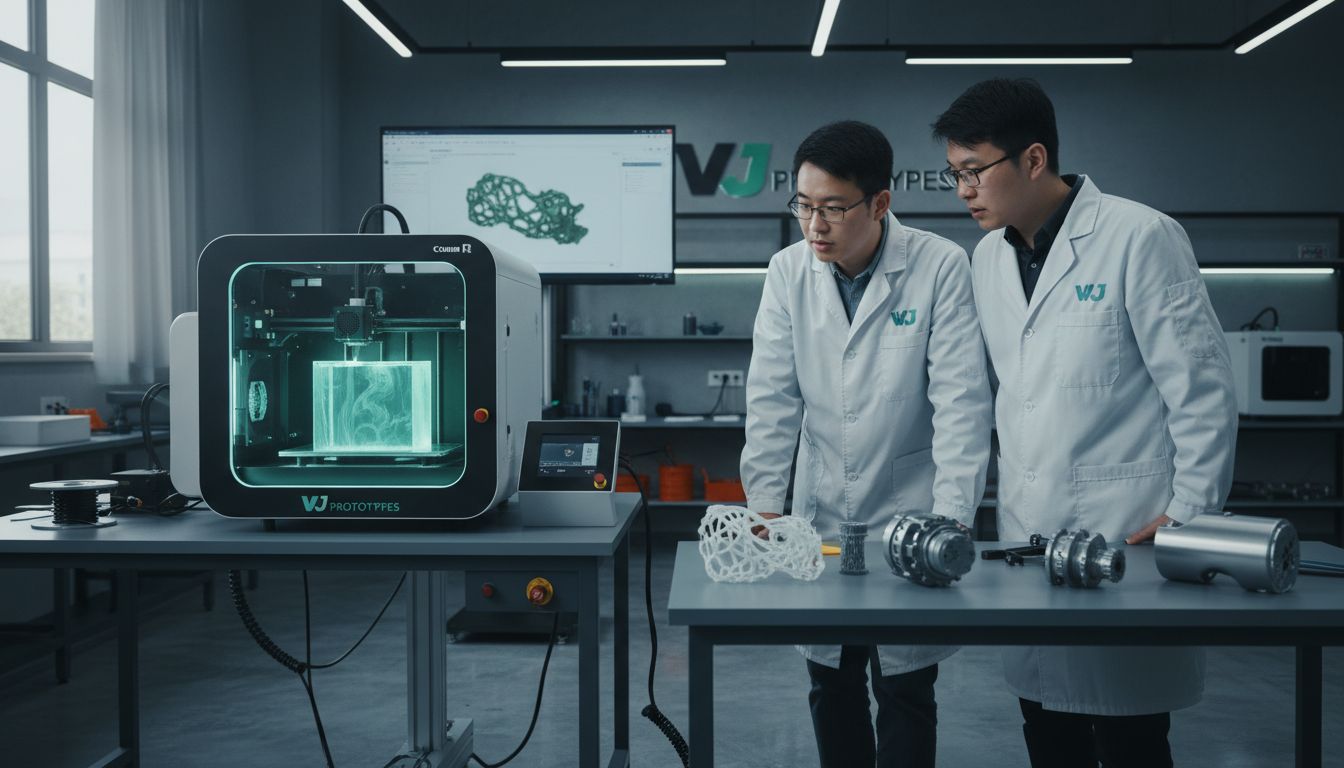

More than 40 percent of british manufacturers are now integrating 3D printing technologies into their workflows, with stereolithography leading the charge for precision and surface quality. As demand grows for intricate prototypes and functional parts, understanding how SLA 3D printing operates has become crucial for both engineers and designers. This guide uncovers the core mechanics, material choices, and industry applications that set SLA apart, equipping you with the knowledge to navigate this advanced manufacturing process.
| Point | Details |
|---|---|
| SLA Technology Overview | Stereolithography (SLA) is an advanced 3D printing technology that uses photopolymerisation to create precise three-dimensional objects from liquid resin. |
| Process Insights | The SLA printing process involves layer-by-layer fabrication, utilising a UV laser to polymerise liquid resin and form intricate geometries with high precision. |
| Material Versatility | SLA employs a variety of photopolymer resins, enabling tailored properties for diverse applications in industries such as automotive, medical, and aerospace. |
| Comparative Advantages | SLA offers exceptional accuracy and smooth surface finishes, but its build speed may be slower compared to other methods like digital light processing (DLP). |
Stereolithography (SLA) represents an advanced additive manufacturing technology that transforms digital designs into precise three-dimensional objects through sophisticated photochemical processes. According to Wikipedia, this innovative technique creates models, prototypes, and production parts by systematically building layers using light-activated chemical reactions that convert liquid monomers into solid polymers.
At its core, SLA 3D printing operates through a meticulous process of photopolymerisation. When exposed to specific wavelengths of light, liquid resin materials undergo molecular transformation, crosslinking and solidifying into intricate geometric shapes. The technology enables engineers and designers to produce complex geometries with exceptional surface quality and dimensional accuracy that traditional manufacturing methods cannot easily achieve. As Alkej Research highlights, SLA is widely utilised across multiple industrial sectors including manufacturing, design, engineering, and precision component production.
The fundamental mechanics of SLA 3D printing involve several critical components:

By leveraging computer-aided design (CAD) models, SLA 3D Printing Service In China allows manufacturers to translate digital blueprints into tangible prototypes with remarkable speed and precision. This technology bridges the gap between conceptual design and physical realisation, offering unprecedented flexibility in product development cycles.
The SLA printing process is a sophisticated additive manufacturing technique that transforms liquid photopolymer resin into precise three-dimensional objects through a meticulously controlled layer-by-layer fabrication method. According to IJRTE Research, the process begins by submerging a build platform into a vat of liquid resin, which is then polymerised using an ultraviolet laser that systematically draws each layer of the pre-programmed design.
Photopolymerisation lies at the heart of SLA technology. As IJSRP Research explains, the ultraviolet laser precisely marks the design onto the liquid polymer surface, causing the photopolymer resins to react and solidify into a structured part. This process involves several critical stages:
The precision of SLA printing is remarkable, with the ability to create intricate geometries and smooth surface finishes that traditional manufacturing methods struggle to achieve.
SLA 3D printing leverages a sophisticated range of photopolymer resins that offer unprecedented versatility in material properties and performance characteristics. According to ScienceDirect Research, these composite polymers enable precise fibre alignment and material property tailoring, transforming traditional material limitations by shifting mechanical behaviour from brittle to increasingly ductile configurations with enhanced strain tolerance.
Photopolymer Resin Classifications encompass multiple specialised categories designed for specific industrial applications:
Emergent research from ArXiv highlights the technological sophistication of SLA, demonstrating the ability to fabricate high-precision microfluidic devices using tunable resins with adaptable elastic modulus. These advanced materials enable complex multi-material microfluidic actuators with enhanced mechanical characteristics that push the boundaries of traditional manufacturing techniques.
3D Printing Materials Guide provides comprehensive insights into the nuanced world of SLA material selection, where engineers can strategically choose resins based on specific performance requirements such as thermal stability, mechanical strength, optical transparency, and chemical resistance. Post-processing techniques like polishing, painting, and specialised surface treatments further expand the functional potential of SLA-printed components across diverse industrial applications.
SLA 3D printing has emerged as a transformative technology with remarkable versatility across numerous industrial sectors. According to Scientific Research, the technology’s applications span an impressively wide range, including machinery manufacturing, aerospace, military, architecture, film and television, home appliances, light industry, medicine, archaeology, cultural art, sculpture, and jewellery production.
Industry-Specific Applications demonstrate the profound impact of SLA technology:
Specifically in the dental domain, MDPI Research highlights how SLA and digital light processing (DLP) technologies are revolutionising implant guide production, significantly impacting fabrication accuracy, production speed, and resin utilisation efficiency. Additive Manufacturing Processes Guide further elaborates on how these advanced manufacturing techniques are enabling unprecedented levels of customisation and precision across complex industrial applications, fundamentally transforming traditional product development and manufacturing paradigms.
SLA 3D printing represents a sophisticated manufacturing technology with nuanced performance characteristics that demand careful consideration. According to MDPI Research, the technology offers exceptional high-precision capabilities and remarkable ability to fabricate intricate geometries, while simultaneously presenting challenges related to mechanical performance variability in laminated polymer composites.
Technological Advantages of SLA include:
Critical research from ArXiv underscores the importance of meticulous process control, highlighting that SLA’s capability to produce synthetic samples with precisely defined microstructures is fundamentally dependent on carefully managed printer settings and sample cure times. Surface Finishing Service provides additional context on how post-processing techniques can further mitigate potential limitations, enabling engineers to optimise the functional performance of SLA-printed components across diverse application domains.
Additive manufacturing encompasses diverse technologies, each with distinct capabilities and performance characteristics that differentiate them in industrial applications. According to MDPI Research, comparative evaluations reveal nuanced differences between technologies like SLA and digital light processing (DLP) that significantly impact fabrication accuracy, production speed, and material utilisation across various manufacturing domains.
Key Comparative Dimensions for 3D printing technologies include:
ArXiv Research emphasises that process parameters critically influence the mechanical properties and quality of printed components across different additive manufacturing techniques. Industrial 3D Printing Guide provides deeper insights into how engineers can strategically select the most appropriate technology based on specific design requirements, understanding that each method presents unique advantages and limitations in transforming digital designs into physical prototypes.

Understanding the complexities of SLA 3D printing reveals the challenges many face in achieving precise, high-quality prototypes and production parts with smooth finishes and complex geometries. If you are seeking to overcome limitations such as mechanical performance variability or demanding tight tolerances with photopolymer resins, you are in the right place. At WJ Prototypes, we specialise in utilising advanced SLA technologies integrated with expert post-processing to deliver exceptional accuracy and surface quality that aligns with your engineering goals.
Experience benefits like:
Take the next step in accelerating your product development by partnering with WJ Prototypes. Discover our full range of additive manufacturing services including SLA, CNC machining, and vacuum casting by exploring our comprehensive service solutions. Do not delay your innovation journey; get a fast, reliable quote today and bring your designs to life with confidence.
SLA 3D printing, or Stereolithography, is an advanced additive manufacturing technique that converts digital designs into three-dimensional objects using photopolymers. It employs a laser to cure liquid resin layer by layer, creating high-precision parts with intricate geometries.
SLA offers several advantages, including exceptional precision with micron-level accuracy, the ability to create complex geometries, and superior surface finishes. Additionally, it supports a wide range of resin materials, making it versatile for various applications.
The SLA printing process begins with the submerged build platform in a vat of liquid resin. A UV laser cures the resin layer by layer according to a pre-programmed design. This method continues to build the object by gradually lowering the platform after each layer is cured.
SLA 3D printing uses various photopolymer resins classified into categories like standard resins for general prototyping, engineering resins for high-performance applications, dental resins for medical uses, castable resins for metalworking, and flexible resins that mimic rubber-like properties.
SERVICES
RESOURCES