



- Room 1807, Unit 9, Building 2, Shangxing Commercial Street, Shangde Road, Shangxing Community, Xinqiao Subdistrict, Bao'an District, Shenzhen City, China
CONTACT US

WhatsApp


Contact Us
Our team is on stand by, waiting toassist you.

Videos
A large collection of educational videos and tutorials.

About Us
Learn about our company, leadership, and mission totransform manufacturing.

Privacy Policy
Applies to all personal information collected through and/or processed in connection.
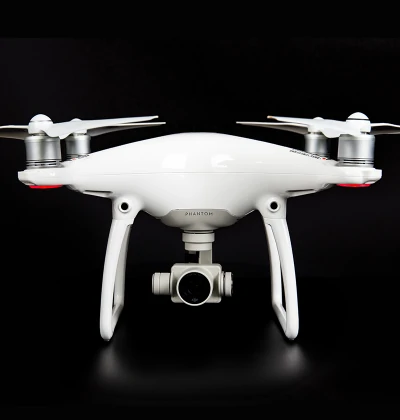

Aerospace & UAV
WJ Prototypes is your 3D manufacturing partner from prototype to large scale production.

Consumer Electronics
New Product Introduction Solutions for Consumer Electronics.

Robotics & Automation
Need some assistance bringing your robotic device or parts from the sketch-board to reality?

Medical Devices
The medical industry needs high quality, dependable and safe parts and products.

Automotive
New Product Introduction Solutions for Automotive

Industrial Machinery
The main purpose of industrial prototyping is to take the product from drawings into the real world.
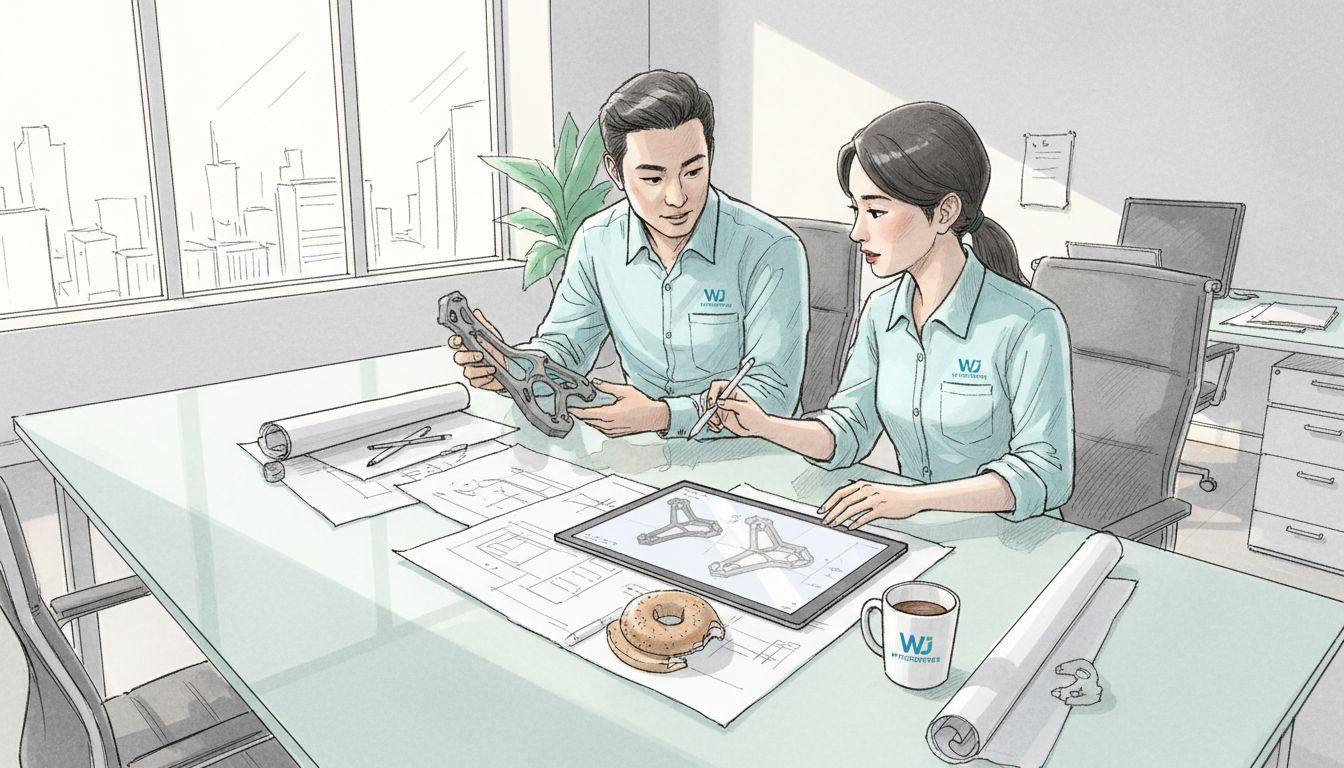
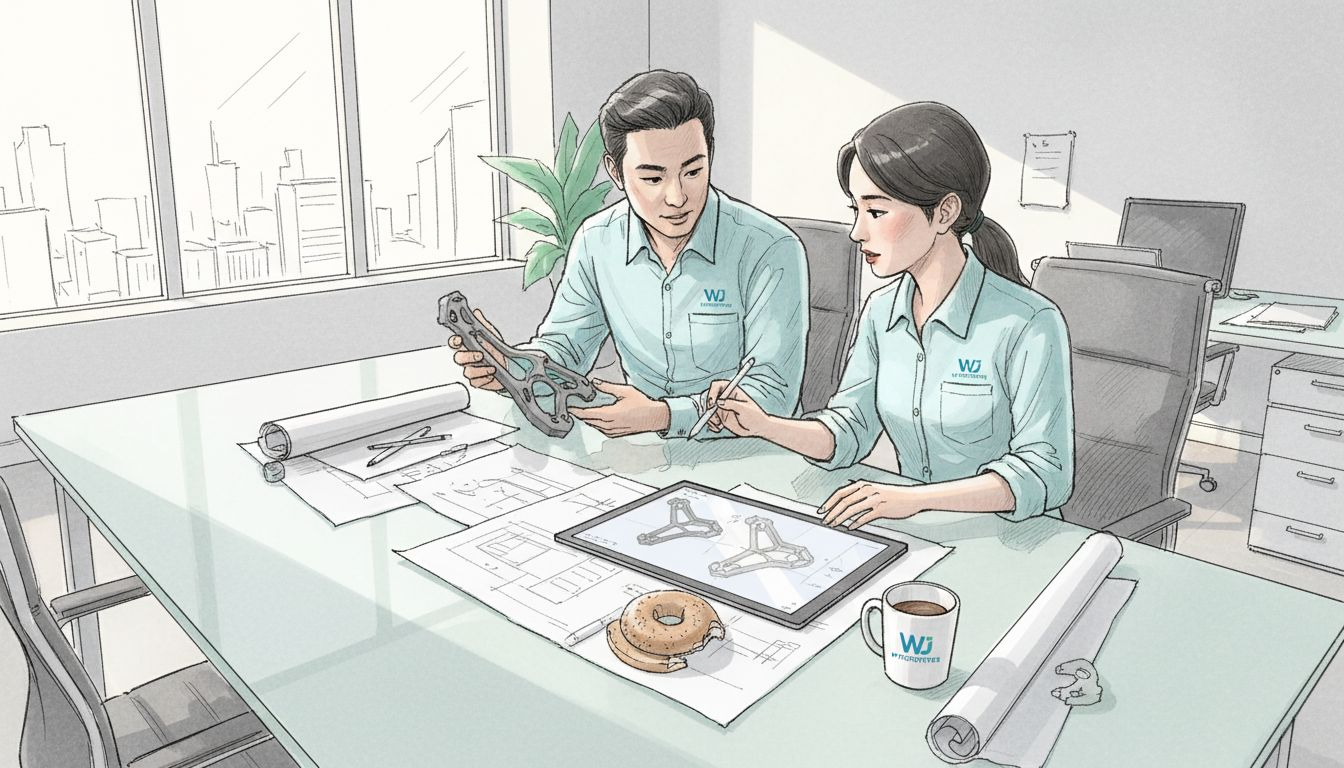
Product development teams in aerospace, automotive, and medical sectors face relentless pressure to innovate faster while meeting strict compliance standards. Rapid prototyping reduces time-to-market by up to 80%, transforming how you validate designs and accelerate product launches. This article explores how prototyping accelerates innovation cycles, cuts costs, improves regulatory outcomes, and delivers competitive advantages in precision-driven industries.
| Point | Details |
|---|---|
| Speed advantage | Prototyping can reduce time-to-market by up to 80% in aerospace, automotive, and medical development. |
| Weight optimization | Additive manufacturing reduces component weight by up to 55%, lowering fuel costs and improving performance. |
| Precision capability | CNC machining achieves tolerances as tight as 50 microns, essential for compliance and functional testing. |
| Physical validation | Physical prototypes remain critical despite digital modeling advances for regulatory and performance validation. |
| Method selection | Choosing the right prototyping approach depends on precision needs, iteration speed, material requirements, and cost constraints. |
Prototyping creates physical models from digital designs to test form, fit, and function before full production. Rapid prototyping uses technologies like additive manufacturing and CNC machining to compress iteration cycles from weeks to days. In aerospace, automotive, and medical sectors, you face unique demands: tolerances measured in microns, materials that must match final production specs, and regulatory validation that requires physical evidence.
Precision engineering in prototyping combines digital design tools with physical fabrication to mitigate risks in highly regulated industries. You cannot rely solely on simulations when patient safety, vehicle crashworthiness, or aircraft structural integrity hang in the balance. Physical prototypes validate assumptions that digital models cannot fully predict, such as material behavior under real-world stress or assembly challenges with complex geometries.
Your development cycles typically involve three prototype types:
Each type serves distinct purposes. Rushing past physical validation invites costly redesigns, failed certifications, and delayed market entry that competitors exploit.
Rapid prototyping reduces development cycles by up to 80% compared to traditional methods, compressing what once took months into weeks. Early detection of design flaws saves you from expensive tooling investments and production runs that yield defective parts. When you discover a fitment issue in a prototype rather than after manufacturing 10,000 units, you avoid recall costs that can bankrupt smaller firms.

Physical prototypes streamline regulatory approvals by providing tangible evidence for compliance testing. Prototyping medical devices accelerates FDA submissions because reviewers can examine actual parts rather than theoretical specifications. In prototyping for the automotive industry, crash test validation requires physical models that digital simulations cannot replace.
Key business advantages include:
You gain measurable cost reductions through iterative testing. China rapid prototyping for quality aerospace parts demonstrates how international partnerships compress budgets while maintaining precision. Each iteration cycle costs a fraction of production tooling, allowing you to test multiple design variants simultaneously and select the optimal configuration based on real performance data.
Additive manufacturing builds parts layer by layer, enabling complex geometries impossible with traditional methods. Additive manufacturing achieves 30-55% weight reduction in aerospace components like air ducts, directly lowering fuel consumption. You can iterate designs rapidly because additive processes require no tooling, cutting setup time from weeks to hours. Materials range from engineering plastics to metal alloys, though post-processing often affects final tolerances.
CNC machining removes material from solid blocks through precise cutting operations. CNC prototyping achieves tolerances of 50 microns, meeting stringent aerospace and medical device specifications where dimensional accuracy affects performance and safety. You gain access to production-grade materials like titanium, stainless steel, and medical-grade polymers that match final product properties. Surface finishes from CNC machining often require minimal post-processing compared to additive methods.
| Technology | Speed | Precision | Materials | Best Use Cases |
|---|---|---|---|---|
| Additive Manufacturing | Fast iterations (hours) | Moderate (±0.1mm typical) | Plastics, some metals | Complex geometries, lightweight structures, early concepts |
| CNC Machining | Moderate (days) | High (±0.05mm) | Metals, plastics, ceramics | Functional testing, tight tolerances, production-like parts |
Material selection in prototyping determines whether your tests accurately predict production performance. Biocompatible materials for medical prototypes must match implant-grade specifications. Aerospace prototypes require materials that withstand temperature extremes and mechanical stress matching flight conditions. Automotive prototypes need materials that survive crash testing and environmental exposure.
Pro Tip: Match your prototyping technology to your development stage. Use additive manufacturing for early design validation when speed matters most, then switch to CNC machining for functional testing that requires production-grade precision and materials. How to choose prototyping services for precision results guides this decision process.
Iterative prototyping cycles validate designs through repeated physical testing despite advances in digital simulation. You build prototypes, test them against requirements, analyze failures, modify designs, and repeat. This cycle accelerates innovation by surfacing problems early when fixes cost less. Physical tests reveal issues that simulations miss: assembly interference, material fatigue under real loads, and manufacturing challenges that affect production viability.
Iterative prototyping in product design follows a structured sequence:
You combine physical prototyping with digital simulations to maximize learning while controlling costs. Run simulations to explore design space broadly, then validate leading candidates with physical prototypes. This hybrid approach catches simulation errors while avoiding expensive physical tests on every design variant.
Pro Tip: Start physical prototyping earlier than feels comfortable. Waiting until designs seem perfect delays problem discovery. Early physical tests expose fundamental issues when you still have schedule flexibility to address them without jeopardizing launch dates.
Regulatory validation in aerospace, automotive, and medical sectors requires physical evidence. Certifying agencies demand test reports from actual prototypes, not simulation outputs. Your iteration cycles must produce documentation showing progressive refinement toward compliance, demonstrating systematic risk mitigation.
Digital prototyping does not eliminate the need for physical models. Simulations model idealized conditions, but real-world manufacturing introduces variations that affect performance. Material properties vary batch to batch. Assembly introduces stresses not captured in CAD. Physical prototypes validate these real-world factors that simulations approximate imperfectly.
Iterative cycles have increased, not decreased, despite technological advances. Regulatory complexity in aerospace, automotive, and medical sectors drives more rigorous testing requirements. You need more prototype iterations to demonstrate compliance across broader test conditions. Shortened cycle times from rapid prototyping enable these additional iterations within compressed overall schedules.
Prototyping impacts final product quality, safety, and compliance, not just early concept validation. Late-stage prototypes undergo full regulatory testing. Performance data from these prototypes feeds directly into technical documentation for certifications. Skipping or rushing prototype phases introduces risks:
You cannot prototype once and move to production. Multiple iterations validate progressive design refinements. Each prototype generation tests specific hypotheses about performance improvements or problem resolutions. Treating prototyping as a one-time gate rather than an iterative process undermines its strategic value.
Cost-cutting by reducing prototype iterations backfires. Money saved on prototypes multiplies into larger losses through production delays, redesign expenses, and market opportunity costs. Adequate prototyping investment prevents downstream problems that cost exponentially more to fix.
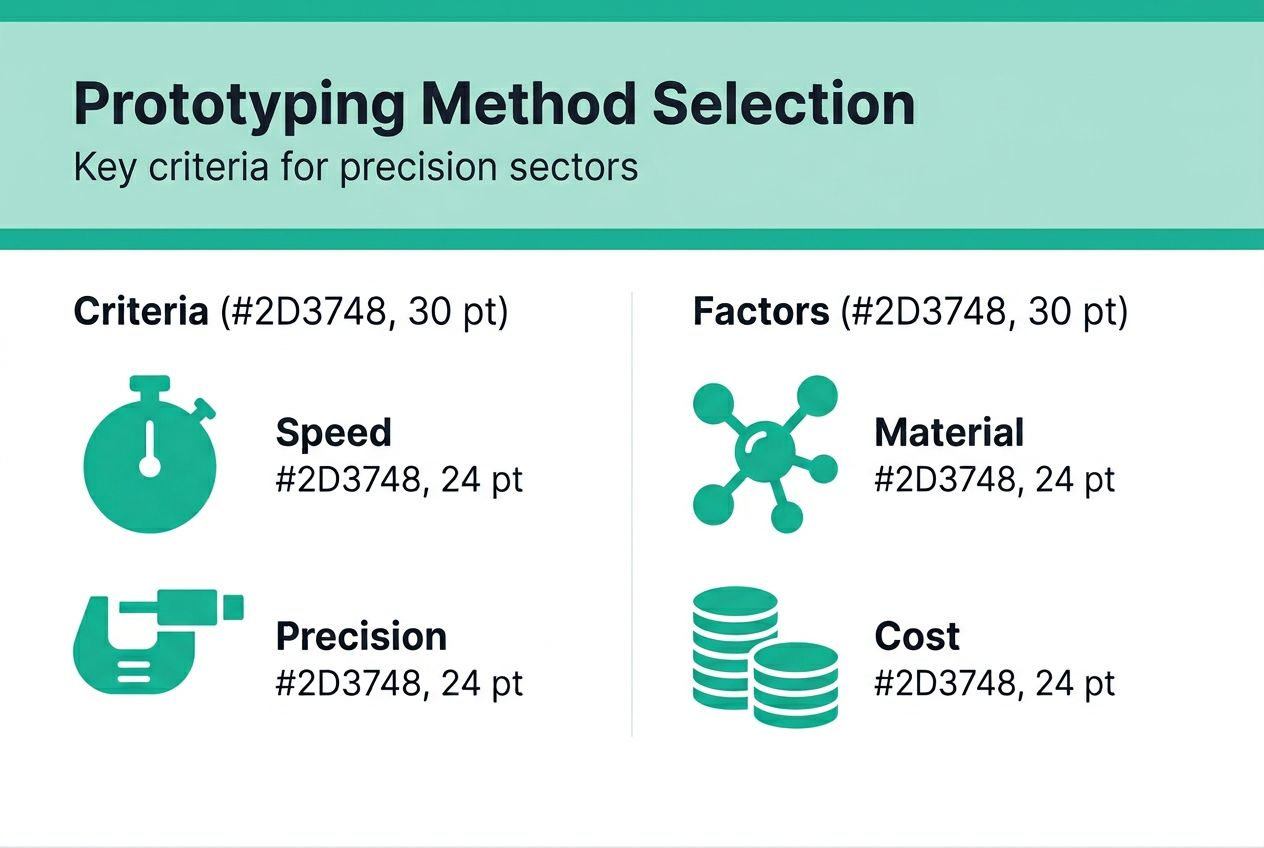
Choosing the right prototyping method requires systematic evaluation of your specific requirements. Key criteria include dimensional precision, iteration speed, material compatibility with final products, cost constraints, and intended use cases. No single technology optimally serves all purposes, so you must match methods to development stage and test objectives.
| Criteria | Additive Manufacturing | CNC Machining |
|---|---|---|
| Dimensional Precision | Moderate: ±0.1-0.2mm typical | High: ±0.05mm achievable |
| Iteration Speed | Fast: hours to days | Moderate: days to week |
| Material Range | Expanding but limited metals | Broad: most metals, plastics, ceramics |
| Cost per Part | Low for complex geometries | Higher setup, lower for simple parts |
| Ideal Use Cases | Concept validation, complex shapes | Functional testing, tight tolerances |
Situational recommendations guide technology selection:
You should integrate multiple methods across your development cycle rather than committing to one technology. Start with fast additive iterations to converge on promising designs. Transition to CNC machining for functional validation using production-equivalent materials. This staged approach balances speed and accuracy while controlling costs.
How to choose prototyping services for precision results provides detailed decision frameworks. Systematically assess your project requirements before selecting methods. Document precision needs, material specifications, test conditions, timeline constraints, and budget limits. Match these requirements against technology capabilities to identify optimal approaches.
Tradeoffs between speed, precision, and cost require conscious prioritization. You cannot simultaneously optimize all three. Clarify which factor matters most for each prototype iteration and select technologies accordingly.
Real-world aerospace applications demonstrate prototyping’s measurable impact. Boeing’s 3D printed air duct reduced weight by over 30%, contributing directly to fuel savings across their fleet. The complex internal geometry required by aerodynamic efficiency would have been impossible to manufacture traditionally. Prototyping validated the design’s structural integrity before committing to production tooling.
Automotive innovation leverages precision prototyping for performance gains. Bugatti’s titanium brake caliper prototyped with CNC machining achieved functional and compliance testing ahead of schedule. The tight tolerances and production-grade material properties from CNC prototypes provided confidence for full-scale manufacturing. Traditional prototyping methods would have delayed development by months.
Medical device development relies on rapid iteration for regulatory success. Medical device rapid prototyping accelerated regulatory approval by providing physical evidence for FDA submissions earlier in development cycles. Multiple prototype iterations validated biocompatibility, mechanical performance, and usability before clinical trials, reducing overall time-to-market.
Key benefits across these case studies include:
You can replicate these outcomes by applying structured prototyping processes. Define clear test objectives for each iteration. Select technologies matching your precision and material requirements. Document results systematically to support regulatory submissions and stakeholder communications.
Prototyping delivers measurable strategic advantages: up to 80% faster time-to-market, significant cost reductions through early problem detection, and streamlined regulatory compliance through physical validation. You gain competitive advantages in aerospace, automotive, and medical sectors by integrating structured prototyping into your innovation workflows.
Implement prototyping effectively through these steps:
Key metrics for measuring prototyping success include development cycle time reduction, number of late-stage design changes prevented, regulatory submission success rates, and overall product development costs. Compare these metrics against baseline performance from projects using traditional development approaches.
Continuous iteration integrating physical and digital prototypes maximizes learning while controlling costs. Run simulations broadly to explore design space, validate leading candidates physically, then iterate based on real-world performance data. This hybrid approach balances speed and accuracy.
Prototyping product design guide and role of prototyping in product development provide additional frameworks for implementation. Essential rapid prototyping best practices for teams offers tactical guidance for establishing efficient workflows.
Your competitive advantage in precision industries depends on how effectively you leverage prototyping to accelerate innovation, reduce risk, and deliver compliant products faster than rivals. Systematic prototyping processes transform product development from sequential gates into rapid iteration cycles that compress timelines while improving outcomes.
Accelerating your aerospace, automotive, or medical product development requires specialized prototyping capabilities that match your precision and compliance requirements. Access comprehensive CNC machining and additive manufacturing services designed specifically for regulated industries demanding tight tolerances and production-grade materials. Explore CNC machining materials offering the biocompatibility, strength, and thermal properties your applications require. Partner with CNC machining China expertise delivering ISO-certified quality with global delivery capabilities. Discover die casting materials for rapid production of functional metal prototypes. Get instant quotes to speed your innovation cycles and reduce time-to-market.
Functional prototypes using production-equivalent materials and manufacturing processes provide the strongest evidence for regulatory submissions. These prototypes must demonstrate biocompatibility, mechanical performance, and durability under real-world conditions. CNC-machined prototypes from medical-grade materials typically meet FDA requirements better than additive prototypes due to tighter tolerances and validated material properties.
Early detection of design flaws through physical testing prevents expensive tooling investments and production runs of defective parts. Prototyping validates structural integrity, weight optimization, and manufacturing feasibility before committing to full-scale production. Each iteration costs a fraction of production tooling, allowing multiple design variants to be tested and optimized before final selection.
3D printing excels at early concept validation but typically cannot match CNC machining’s precision and material properties for final functional testing. Most aerospace, automotive, and medical applications require tolerances and surface finishes achievable only through CNC machining. Hybrid approaches using both technologies across development stages optimize speed and accuracy while controlling costs.
Design complexity, regulatory requirements, performance specifications, and risk tolerance drive iteration counts. More complex designs with tighter tolerances require additional iterations to converge on acceptable solutions. Regulated industries like medical devices demand extensive documentation from multiple prototype generations. Budget constraints and timeline pressures also influence iteration planning, though inadequate prototyping increases downstream costs exponentially.
SERVICES
RESOURCES