



- Room 1807, Unit 9, Building 2, Shangxing Commercial Street, Shangde Road, Shangxing Community, Xinqiao Subdistrict, Bao'an District, Shenzhen City, China
CONTACT US

WhatsApp


Contact Us
Our team is on stand by, waiting toassist you.

Videos
A large collection of educational videos and tutorials.

About Us
Learn about our company, leadership, and mission totransform manufacturing.

Privacy Policy
Applies to all personal information collected through and/or processed in connection.

Aerospace & UAV
WJ Prototypes is your 3D manufacturing partner from prototype to large scale production.

Consumer Electronics
New Product Introduction Solutions for Consumer Electronics.

Robotics & Automation
Need some assistance bringing your robotic device or parts from the sketch-board to reality?

Medical Devices
The medical industry needs high quality, dependable and safe parts and products.

Automotive
New Product Introduction Solutions for Automotive

Industrial Machinery
The main purpose of industrial prototyping is to take the product from drawings into the real world.

TL;DR:
- Choosing the appropriate low-volume manufacturing method is essential to avoid costly errors during product development. CNC machining offers high precision and flexibility, ideal for early prototypes requiring tight tolerances, while 3D printing accelerates rapid iteration at low cost but may differ from final production parts. Low-volume injection molding provides production-ready parts for testing and validation, balancing cost and quality before mass production.
Choosing the wrong manufacturing process for a short run can quietly kill a product launch. You might burn six weeks on tooling that wasn’t needed yet, or skip a validation step that sends defects into the field. For product managers and procurement specialists in aerospace, automotive, and medical, the stakes are high and the window is short. This article breaks down three of the most effective low-volume manufacturing methods, with real-world examples and a direct comparison table to help you match the right process to your exact development stage.
| Point | Details |
|---|---|
| Selection depends on needs | Assess lead time, material, and accuracy to pick the best low-volume method. |
| CNC and 3D printing excel | CNC machining and 3D printing are top choices for prototyping across industries. |
| Injection molding bridges the gap | Low-volume injection molding is ideal for real-material and functional test runs. |
| Compare before you commit | Use a comparison table to match manufacturing methods to your requirements. |
With the need for rapid iteration and cost control in mind, let’s define how to evaluate the best-fit solution before committing budget or time to any single process.
Not every manufacturing method fits every situation. A medical device housing that needs biocompatible materials and tight dimensional tolerances is a fundamentally different challenge from an automotive interior clip that just needs to survive a fit test. The criteria you use to evaluate options should be specific to your product, your timeline, and your downstream production goals.
Here are the most important factors to assess before selecting a process:
Two of the most common pitfalls are underestimating validation needs and miscalculating cost inflection points. Teams often move too quickly from a single 3D-printed prototype to a full injection mold, skipping intermediate functional testing. That jump can cost ten times more in rework than a small bridge run would have. Reviewing prototype design considerations early in your planning cycle helps you build validation checkpoints into the schedule rather than reacting to failures after the fact.
Pro Tip: Map your product development phase to a process. Early concept validation rarely justifies expensive tooling. Save aluminum molds and precision CNC work for functional prototype and bridge production stages.
Now that we have a decision framework, let’s look at specific low-volume manufacturing examples, starting with CNC machining, which remains one of the most flexible and widely trusted options for precision parts.
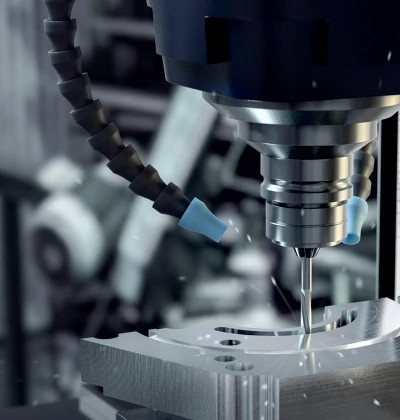
CNC machining uses computer-controlled cutting tools to remove material from a solid block, producing parts with tight tolerances and excellent surface finish. What makes it particularly valuable at low volumes is that it requires no dedicated tooling investment. You pay for machine time and material, not for molds or fixtures that may become obsolete after your design changes.
“CNC machining is ideal for prototyping and producing custom parts with fast turnaround.” This advantage becomes critical when your engineering team is still iterating and you cannot afford a two-week tooling lead time for every revision.
In aerospace, CNC machining is the standard choice for brackets, housings, and structural test components made from aluminum 6061, titanium, or Inconel. In medical device development, it produces stainless steel housings and PEEK components that meet sterile surface requirements. In automotive, prototype suspension brackets and gearbox components regularly come off CNC machines before casting tooling is ever ordered.
Key advantages of CNC machining for low-volume runs:
When you compare CNC vs 3D printing for automotive parts, CNC consistently wins on mechanical performance and material fidelity, though the per-part cost runs higher than additive methods for the same geometry.

Pro Tip: Use CNC machining for parts with tight tolerances or complex internal features that additive methods struggle to replicate accurately. It’s also the right choice when you need production-representative material properties before committing to a casting or molding process.
Alongside CNC machining, 3D printing has become the go-to solution for rapid iteration. Let’s break down exactly why, and where it falls short.
3D printing, or additive manufacturing, builds parts layer by layer directly from a digital file. No cutting, no material waste beyond support structures, and no lead time for tooling. For teams that need to test form, fit, or basic function within 24 to 72 hours, no other process competes on speed at low volumes.
The range of 3D printing technologies available today covers a wide spectrum of applications. SLA (stereolithography) produces smooth, dimensionally accurate models suited for visual presentations and early fit checks. SLS (selective laser sintering) and MJF (Multi Jet Fusion) create functional nylon parts that can withstand real mechanical testing. DMLS (direct metal laser sintering) produces metal parts with near-wrought mechanical properties for high-stress aerospace and medical applications. This means speed up development with 3D printing is not just a marketing claim; it is a process reality.
As one industry benchmark confirms, 3D printing accelerates product development cycles by enabling fast, cost-effective prototype revisions. Teams that run weekly iteration cycles using additive methods routinely cut their overall prototype phase by 40 to 60 percent compared to teams relying solely on subtractive machining.
Key advantages of 3D printing for low-volume prototyping:
The important limitation to acknowledge is that 3D-printed parts, especially polymer-based ones, often differ from injection-molded production parts in surface finish, anisotropic strength, and long-term material behavior. For functional validation of a medical device or an aerospace structural component, you need to understand those differences before drawing conclusions from test results. A bracket that passes fatigue testing in SLS nylon may still require CNC machining or injection molding for final qualification.
When your prototype is validated and you need to verify performance in real production materials, injection molding is where the development process takes a decisive step forward.
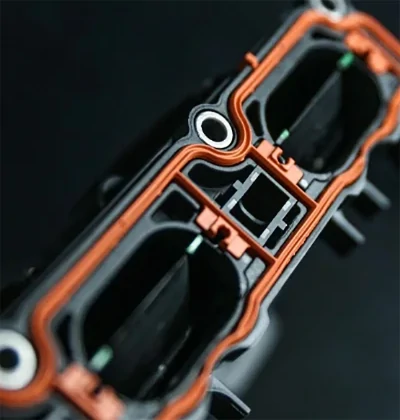
Low-volume injection molding uses aluminum tooling instead of hardened steel molds, which dramatically reduces both cost and lead time. Where a production-grade steel mold might cost $50,000 to $100,000 and take 10 to 16 weeks to build, an aluminum tool for a simple part can be ready in two to three weeks at a fraction of the price. This makes it practical to produce 100 to 1,000 parts for functional testing, regulatory submission samples, and limited market pilots.
As the industry standard confirms, low-volume injection molding is a cost-effective way to produce testing quantities before full mass production investment. This is particularly valuable in medical device development, where regulatory agencies require testing on production-equivalent samples, and in automotive, where crash and durability testing must use the actual production polymer.
Advantages of low-volume injection molding for test runs:
When comparing online vs factory injection molding options, the key distinction is engineering support. Online platforms can deliver fast quotes, but factory partners offer DFM reviews, mold flow analysis, and material expertise that prevent expensive redesigns after the tool is cut.
Pro Tip: Evaluate DFM (Design for Manufacturability) before the mold is built, not after. Wall thickness inconsistencies, draft angles below 1 degree, and undercut features that require side actions are all far cheaper to fix in CAD than in aluminum.
With individual methods outlined, here is how they stack up directly, so you can select based on your specific application requirements.
The table below summarizes the most decision-relevant criteria across all three methods. As any experienced manufacturing partner will confirm, choosing the right method depends on part complexity, material requirements, and intended use, and there is rarely a single correct answer for every project.
| Criteria | CNC Machining | 3D Printing | Low-Volume Injection Molding |
|---|---|---|---|
| Best use case | Precision metal/plastic parts, bridge production | Concept models, fit/form checks, functional tests | Functional testing, regulatory samples, pilots |
| Typical lead time | 3 to 7 days | 1 to 3 days | 2 to 4 weeks |
| Part accuracy | Very high (±0.01mm) | Moderate to high (±0.1 to 0.3mm) | High (production-equivalent) |
| Cost per unit | Moderate to high | Low to moderate | Low at volume (higher per part at minimum runs) |
| Design flexibility | High (file changes only) | Very high (no tooling constraints) | Low after tool is cut |
| Material options | Metals, plastics, composites | Resins, nylons, metals (DMLS) | Any injection-grade polymer or elastomer |
| Ideal volume | 1 to 200 parts | 1 to 50 parts | 100 to 1,000 parts |
To use this table effectively, start with your development stage. If you are still iterating on geometry, 3D printing keeps your options open and your costs low. If you need production-representative material properties for a test report or a regulatory dossier, injection molding is the right choice even if the per-part cost is higher. CNC machining fills the space where you need high mechanical performance and the flexibility to change designs without retooling.
For teams building prototypes for rapid product development, the most effective approach is often sequential: 3D printing to validate geometry, CNC machining to validate performance, and low-volume injection molding to validate the production process itself. Each stage builds confidence and reduces the risk of costly surprises in full-scale manufacturing.
There is a persistent belief in product development that moving faster through prototyping saves money. In practice, the teams we work with most often regret the opposite decision: skipping a process stage to save time and budget, only to discover a critical failure during production validation that forces a complete tool redesign.
The uncomfortable reality is that low-volume manufacturing is not just a cost-saving tool. It is a risk management strategy. Every stage serves a specific validation purpose, and compressing those stages does not eliminate the risk. It relocates it to a more expensive moment in the timeline.
We have seen aerospace programs invest heavily in CNC-machined prototypes for structural validation, then skip low-volume injection molding because the part “looked good” in the 3D model. The aluminum mold got cut, production material ran, and the part warped because nobody had tested the actual resin under production-equivalent thermal conditions. The mold needed modification, adding three weeks and significant cost to a program that was already behind schedule.
The most effective product managers we work with treat each manufacturing stage as a deliberate investment with a specific return. They define what each prototype or test run is supposed to prove, and they do not advance until they have that proof. That discipline is harder to maintain under schedule pressure, but it consistently produces faster final launches because it eliminates late-stage surprises.
One more insight worth sharing: material selection is often underdecided during the prototype phase. Teams default to standard ABS or aluminum because those are easy to source and quick to machine. But if your production part will be a glass-filled nylon or a medical-grade silicone, your prototype-stage testing data may not transfer. Build material decisions into your low-volume manufacturing plan from the beginning, not as an afterthought before full production.
At WJ Prototypes, we work with product managers and procurement specialists across aerospace, automotive, and medical who need more than just a parts vendor. Our team combines CNC machining, 3D printing, and injection molding capabilities under one roof, with ISO-certified quality control and experienced engineers who review your design before the first chip is cut or layer is printed. We offer instant online quoting, DFM analysis, and global delivery so your development schedule stays on track from first prototype through bridge production. If you are evaluating low-volume manufacturing options for your next program, reach out for a no-obligation quote and engineering review.
Low-volume manufacturing enables affordable prototyping and rapid product validation without high upfront costs, which reduces financial risk during the critical early stages of product development.
Aerospace, automotive, and medical sectors rely most heavily on low-volume methods, as confirmed by industry experience in rapid prototyping, where functional testing and pilot runs are mandatory before full production commitment.
3D printing enables faster and cheaper geometry iterations while CNC machining delivers higher accuracy and true material properties. A detailed comparison of CNC vs 3D printing shows that the right choice depends on what the prototype needs to prove.
Low-volume injection molding is practical for quantities of 100 to 1,000 parts using aluminum tooling, making it ideal for functional testing, regulatory submissions, and market pilots before committing to high-volume production tooling.
SERVICES
RESOURCES