




- Room 1807, Unit 9, Building 2, Shangxing Commercial Street, Shangde Road, Shangxing Community, Xinqiao Subdistrict, Bao'an District, Shenzhen City, China
CONTACT US

WhatsApp



Contact Us
Our team is on stand by, waiting toassist you.

Videos
A large collection of educational videos and tutorials.

About Us
Learn about our company, leadership, and mission totransform manufacturing.

Privacy Policy
Applies to all personal information collected through and/or processed in connection.
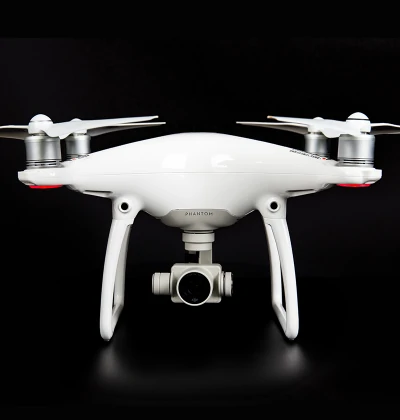

Aerospace & UAV
WJ Prototypes is your 3D manufacturing partner from prototype to large scale production.

Consumer Electronics
New Product Introduction Solutions for Consumer Electronics.

Robotics & Automation
Need some assistance bringing your robotic device or parts from the sketch-board to reality?

Medical Devices
The medical industry needs high quality, dependable and safe parts and products.

Automotive
New Product Introduction Solutions for Automotive

Industrial Machinery
The main purpose of industrial prototyping is to take the product from drawings into the real world.


ESD safe materials are engineered substances that control electrostatic discharge by managing how electrical charge flows through them. Uncontrolled static discharge can destroy a microcontroller with as little as 10 volts, often with no visible sign of damage until the device fails in the field. The governing framework for most electronics manufacturers is ANSI/ESD S20.20, which defines acceptable resistivity ranges, testing protocols, and program requirements for electrostatic discharge protection across production environments.
The core categories you need to know are:
These categories cover everything from conductive plastics and Kapton tape to ESD-safe flooring, gloves, and packaging. Getting the category right for your application is where most engineers make or save significant money.
Surface resistivity, measured in Ohms per square, is the single most useful number when selecting static control solutions. It tells you how fast charge moves across a material’s surface, which determines whether that material protects or endangers your components.
Static-dissipative materials offer the best protection balance for sensitive electronics. They discharge static gradually, avoiding the voltage spikes that conductive materials can produce and the charge buildup that insulators allow.
The table below maps each category to its resistivity range, typical behavior, and primary use case.
| Category | Charge Behavior | Typical Use |
|---|---|---|
| Conductive | Rapid discharge | Shielding layers, ESD bags |
| Static-dissipative (10^6–10^9 Ohms/sq) | Controlled, gradual discharge | Work surfaces, tool handles, trays |
| Anti-static (10^9–10^12 Ohms/sq) | Resists charge generation | Packaging films, garments |
| Insulative (above 10^12 Ohms/sq) | Charge accumulates | Not ESD safe |
Standard unmodified plastics, including ABS, PVC, and polycarbonate, sit above 10^13 Ohms/sq and generate static freely. Any ESD-safe plastic variant requires conductive additives or surface treatments to shift it into a useful resistivity range. Testing per ANSI/ESD S20.20 and ESD S7.1 verifies that a material actually performs within its claimed range under real conditions, not just at the time of manufacture.
The anti-static materials list used in electronics manufacturing spans several distinct families. Choosing correctly depends on your manufacturing method, the sensitivity of your components, and whether the part lives inside or outside an Electrostatic Protected Area (EPA).

Carbon-loaded conductive plastics typically reach surface resistivity in the 10^3–10^5 Ohms/sq range. The most widely specified grades are:
All of these appear opaque black because carbon black or carbon fiber loading absorbs all visible light. If your design requires color, you are working with a different material family.
Kapton (polyimide) tape is the go-to for high-temperature masking and insulation in PCB assembly, but its base polyimide film is actually insulative. ESD-safe Kapton variants incorporate a conductive coating or are laminated with a dissipative layer. Metalized foils, with resistivity in the 10^-1 to 10^2 Ohms/sq range, provide the shielding layer in most ESD bags, where a metalized film creates a Faraday cage around the contents.

Stainless steel has surface resistivity below 10^-3 Ohms/sq. That makes it excellent for shielding enclosures but problematic for direct contact with sensitive devices, because the discharge happens too fast. Metals belong in the outer shielding layer of a laminate package or in equipment chassis, not as the surface touching your ICs.
Wrist straps, gloves, and heel grounders complete the personal grounding circuit. Per ANSI/ESD S20.20, the resistance to ground through a person, footwear, and floor must stay below 1.0 × 10^9 Ohms, and body voltage during a standard walking test must remain under 100 volts.

Pro Tip: When specifying ESD-safe 3D printing filaments for prototyping, verify the filament’s resistivity certificate from the supplier. Nominal “ESD-safe” labeling without a measured resistivity value is not sufficient for compliance with ANSI/ESD S20.20. Wjprototypes can advise on verified ESD-safe 3D printing materials for your specific application.
Material selection is necessary but not sufficient. ESD protection requires a system-level approach that combines compliant materials with grounding, ionization, and environmental controls.
The core elements of a working ESD control program are:
Grounding paths must be continuous. A dissipative tray sitting on an insulative shelf accomplishes nothing because there is no path for charge to travel to ground. Every element in the chain, from the component to the worksurface to the floor to the building ground, needs a verified electrical connection.
Pro Tip: Do not assume that “antistatic” packaging from an office supply vendor meets EPA requirements. Per ANSI/ESD S541, packaging inside an EPA must be low-charging and dissipative or conductive. Outside the EPA, it must also provide discharge shielding. These are different products with different resistivity specifications.
Maintenance matters more than most teams expect. ESD-safe floor finishes wear away with foot traffic. Wrist strap cords develop breaks. Dissipative mats accumulate insulative contamination from oils and cleaning agents. Wjprototypes recommends that any production team handling sensitive electronics test their consumer electronics prototyping environment with a surface resistance meter at least quarterly.
Conductive additives change how a polymer processes, and ignoring that creates expensive surprises in production.
Carbon black loading at levels needed for ESD performance typically reduces impact strength and elongation at break compared to the base resin. It also restricts color to black or very dark gray. Carbon nanotube additives achieve ESD performance at lower loading levels, which preserves more of the base polymer’s mechanical properties and produces a slightly better surface finish. For precision parts where dimensional tolerance and surface quality matter, nanotube-loaded grades are worth the cost premium.
The permanent versus temporary distinction is one of the most misunderstood points in ESD material selection. Permanent ESD compounds have a built-in conductive network that maintains stable resistivity regardless of humidity. Temporary antistatic treatments are surface coatings that migrate to the surface over time, depend on ambient humidity to function, and degrade with handling or cleaning. A part treated with a topical antistat may test fine at 50% relative humidity and fail completely in a dry winter environment.
Here are the key manufacturing considerations when specifying ESD-safe plastics:
For injection-molded ESD parts, the conductive network forms during the molding process, so gate location, fill pattern, and cooling rate all influence final resistivity. A part that tests within spec at the gate location may read out of spec at the far end of a long flow path. Testing finished parts, not just material plaques, is the only way to confirm compliance.
Selecting the right ESD safe materials requires matching surface resistivity to function, then verifying performance at the system level, not just the material level.
| Point | Details |
|---|---|
| Resistivity determines function | Conductive below 10^5 Ohms/sq, static-dissipative 10^6–10^9 Ohms/sq, anti-static 10^9–10^12 Ohms/sq. |
| Static-dissipative is usually the right choice | Controlled discharge in the 10^6–10^9 Ohms/sq range protects sensitive electronics without voltage spikes. |
| Permanent vs. temporary matters | Permanent ESD compounds maintain stable resistivity; antistatic surface treatments degrade with humidity and handling. |
| System design, not material alone | Grounding paths, ionization, and compliant packaging must work together per ANSI/ESD S20.20. |
| Manufacturing method affects final resistivity | Gate location, fill pattern, and process parameters influence the conductive network in finished injection-molded parts. |
ESD-safe garments use static-dissipative synthetic fabrics, typically polyester with conductive carbon or metal fiber woven in, which suppress electrostatic fields from clothing worn underneath. Per ANSI/ESD STM2.1, three garment categories exist based on how well they control the electric field at the sleeve and body.
ESD-safe 3D printing filaments include ABS-ESD7, Antero840CN03 (PEKK with carbon nanotubes), and Nylon 11 Carbon Fiber, all of which achieve surface resistivity in the conductive to static-dissipative range through carbon loading. Standard PLA, PETG, and unmodified ABS are insulative and not ESD safe.
Standard plastic is insulative with surface resistivity above 10^13 Ohms/sq, so it does not conduct ESD through its bulk. However, it accumulates surface charge that can discharge suddenly to a nearby component, which is why unmodified plastic housings are a hazard in electronics manufacturing environments.
Stainless steel is highly conductive with resistivity below 10^-3 Ohms/sq, which means it discharges too fast for direct contact with sensitive devices. It works well as a shielding layer in ESD bags and enclosures, but static-dissipative materials are the correct choice for surfaces that touch components directly.
SERVICES
RESOURCES