



- Room 1807, Unit 9, Building 2, Shangxing Commercial Street, Shangde Road, Shangxing Community, Xinqiao Subdistrict, Bao'an District, Shenzhen City, China
CONTACT US

WhatsApp


Contact Us
Our team is on stand by, waiting toassist you.

Videos
A large collection of educational videos and tutorials.

About Us
Learn about our company, leadership, and mission totransform manufacturing.

Privacy Policy
Applies to all personal information collected through and/or processed in connection.


Aerospace & UAV
WJ Prototypes is your 3D manufacturing partner from prototype to large scale production.

Consumer Electronics
New Product Introduction Solutions for Consumer Electronics.

Robotics & Automation
Need some assistance bringing your robotic device or parts from the sketch-board to reality?

Medical Devices
The medical industry needs high quality, dependable and safe parts and products.

Automotive
New Product Introduction Solutions for Automotive

Industrial Machinery
The main purpose of industrial prototyping is to take the product from drawings into the real world.
TL;DR:
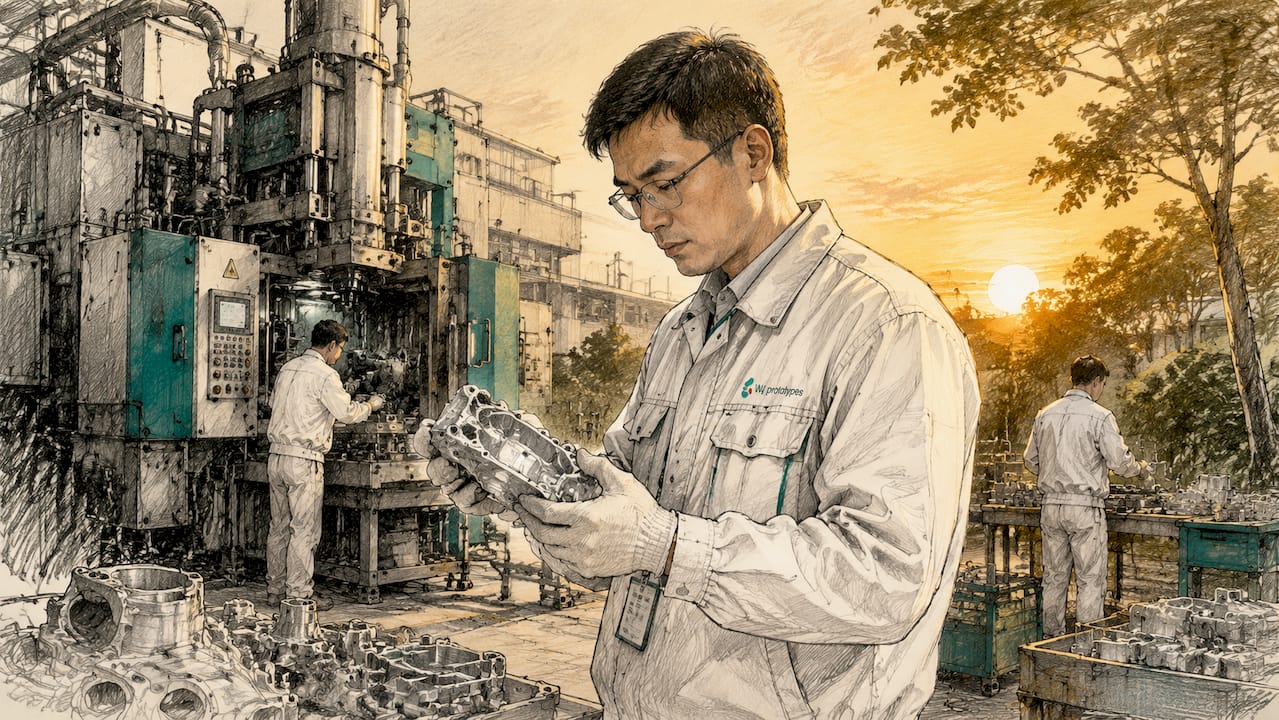
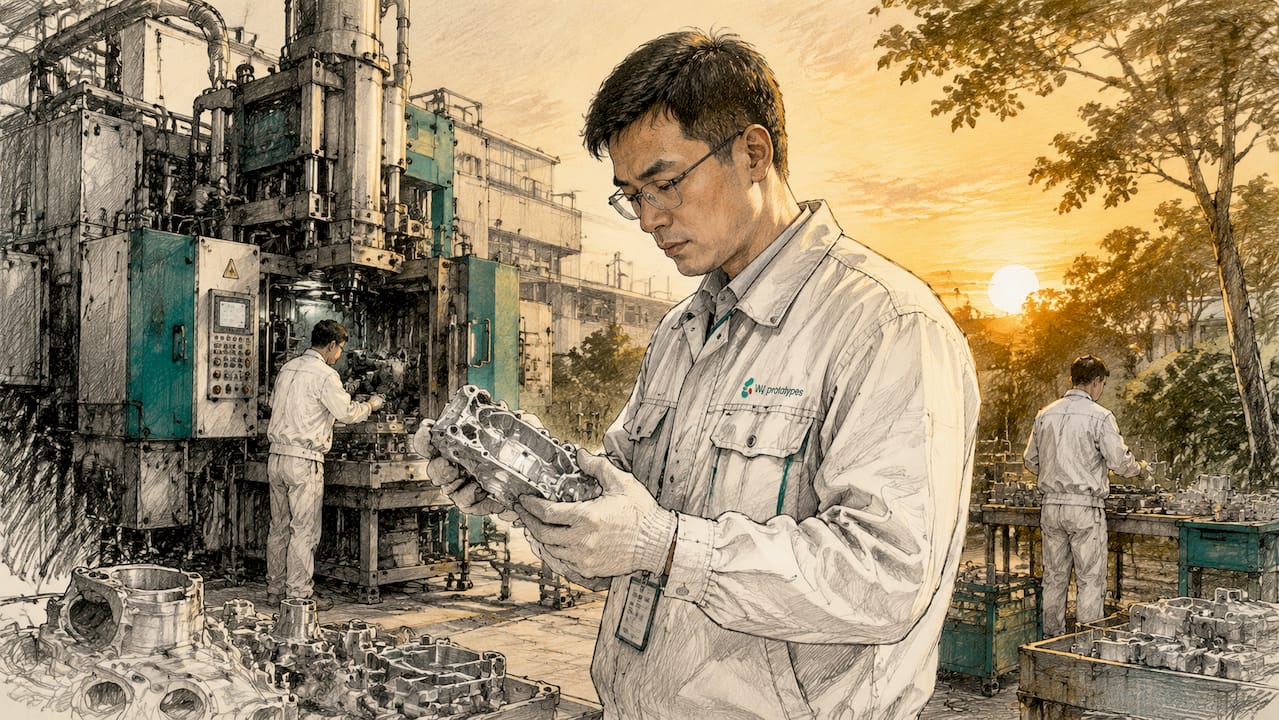
- Die casting is a high-pressure process that forms complex, precise metal parts in large volumes using aluminum, zinc, or magnesium. It is extensively used across automotive, electronics, aerospace, medical, and consumer industries due to its ability to produce detailed and high-quality components quickly and efficiently.
Die casting is defined as a high-pressure metal forming process that forces molten alloys into hardened steel dies to produce dimensionally accurate, complex parts at high volume. Engineers and product designers rely on a structured die casting applications list to match material properties to product requirements across automotive, aerospace, electronics, medical, and consumer sectors. The three dominant materials are aluminum, zinc, and magnesium, each suited to different performance demands. High pressure die casting delivers fine detail, repeatability, and thin-wall capability that few other metal forming processes can match at scale.

Aluminum die casting covers the widest range of industrial uses in the field. Aluminum alloys like A380 are the industry standard for high-volume structural parts because of their strength-to-weight ratio and corrosion resistance. That combination makes aluminum the default choice when engineers need a part that is both light and load-bearing.
The automotive sector consumes the largest share of aluminum die castings. Engine blocks, transmission housings, differential carriers, and suspension brackets all rely on aluminum because weight reduction directly improves fuel economy and, in electric vehicles, extends battery range. Aluminum alloys contribute to weight savings that improve energy efficiency and reduce emissions in automotive and aerospace structures.
Electronics manufacturing is the second major consumer. Aluminum die castings have excellent thermal conductivity, making them the preferred material for heat sinks, LED housings, and battery enclosures. Thermal management is not a secondary concern in modern electronics. It is a primary design constraint, and aluminum addresses it without adding significant mass.
Common aluminum die casting products include:
Pro Tip: When specifying A380 aluminum for thin-wall sections below 2 mm, confirm your supplier’s shot pressure capability before committing to a tool design. Underfill defects in thin walls are almost always a machine parameter issue, not a geometry issue.
Zinc die casting excels where intricate geometry, tight tolerances, and high surface quality matter more than weight. Zinc alloy is 2.3 times heavier than aluminum and is preferred for intricate, small to medium volume parts with high surface quality and thin-wall castability. That density difference is the central trade-off engineers must weigh when selecting between the two materials.
Thin-wall castability in zinc allows for complex shapes with close dimensional accuracy in decorative and functional parts. Zinc alloys create intricate designs useful in hardware and telecommunication connectors. This is why zinc dominates in applications where the part must look finished straight out of the die, with minimal secondary operations.
Typical zinc die casting products span several sectors:
Zinc’s superior surface finish also makes it the preferred base for electroplating and powder coating. Parts that need a chrome or nickel appearance, such as plumbing fixtures and decorative cabinet hardware, almost always start as zinc die castings. The cost per part in medium-volume production stays competitive because zinc tooling life is longer than aluminum tooling under equivalent shot pressures.
Magnesium is the lightest structural metal used in die casting. It weighs roughly 33% less than aluminum and about 75% less than steel, which makes it the first choice when mass reduction is the dominant design requirement. Automotive and aerospace engineers specify magnesium for components where every gram saved has a measurable effect on system performance.
Magnesium die casting applications in industry include:
The trade-off with magnesium is corrosion resistance. Untreated magnesium corrodes faster than aluminum in humid or salt-spray environments. Engineers typically specify a chromate conversion coating or anodizing treatment for any magnesium part exposed to moisture. When corrosion protection is properly engineered into the design, magnesium delivers a strength-to-weight ratio that neither aluminum nor zinc can match for the same wall thickness.
Medical device manufacturing demands dimensional accuracy, biocompatibility, and surface integrity that standard commercial castings cannot always meet. Die casting is widely used in medical equipment manufacturing because stainless steel tooling supports biocompatible alloys and corrosion-resistant materials. Durable, precise parts are critical for surgical instruments and medical device components where failure is not an acceptable outcome.
Common medical and industrial die casting applications include:
Heavy industrial equipment parts benefit from die casting for dimensional accuracy and strength in complex geometries. Precision die casting reduces post-machining costs in machinery parts that require tight tolerances. That cost reduction is significant in high-volume industrial production, where secondary machining can represent 30–50% of total part cost on conventionally cast components.
Pro Tip: For medical enclosures, specify a surface roughness of Ra 1.6 or better in your die casting drawing notes. Most foundries can achieve this directly from the die on aluminum and zinc parts, eliminating a grinding operation and reducing contamination risk.
Consumer products represent one of the broadest categories in any die casting applications list. Consumer products like outdoor lighting, recreational vehicle components, and electrical hardware frequently use die casting for durability and finish. Die casting helps produce aesthetically pleasing, rugged consumer components that maintain performance outdoors.
The table below shows common consumer product categories alongside the typical die casting material used and the primary reason for that material selection.
| Product category | Typical material | Primary reason |
|---|---|---|
| Outdoor lighting fixtures | Aluminum | Thermal conductivity, corrosion resistance |
| Lock bodies and door hardware | Zinc | Surface finish, thin-wall detail |
| Recreational vehicle frames | Aluminum | Strength-to-weight ratio |
| Electrical connectors and plugs | Zinc or brass | Conductivity, dimensional accuracy |
| Decorative cabinet hardware | Zinc | Plating adhesion, fine detail |
| Power tool housings | Magnesium or aluminum | Weight reduction, impact resistance |
Brass die castings are durable and visually appealing, making them ideal for exterior and high-humidity settings such as plumbing fittings and marine hardware. Brass is prized for corrosion resistance and electrical conductivity, which is why it appears in electrical connectors and decorative hardware where both properties matter simultaneously.
Consumer markets also drive demand for die cast mechanical gears, appliance housings, and garden tool components. The finish quality achievable directly from the die reduces painting and plating costs, which is a direct margin advantage for consumer goods manufacturers working at high volumes.
Die casting applications span six major industry sectors, and material selection between aluminum, zinc, and magnesium determines part performance, weight, finish quality, and total production cost.
| Point | Details |
|---|---|
| Aluminum dominates structural uses | A380 aluminum suits automotive, aerospace, and electronics parts requiring strength and thermal management. |
| Zinc leads in surface-critical parts | Zinc’s thin-wall castability and finish quality make it the top choice for hardware, connectors, and decorative components. |
| Magnesium saves the most weight | Magnesium die castings weigh 33% less than aluminum equivalents, ideal for portable devices and vehicle interiors. |
| Medical and industrial parts need tight tolerances | Die casting reduces post-machining costs in precision equipment by producing near-net-shape parts directly from the die. |
| Consumer goods rely on finish quality | Outdoor lighting, locks, and electrical hardware use die casting because the surface finish is production-ready without secondary operations. |
Engineers often frame die casting as a process choice. I think that framing is backwards. The process is largely fixed once you commit to high-pressure die casting. The real decision is material, and most teams underestimate how much that choice locks in downstream costs.
I have seen programs where a team specified aluminum for a small connector housing because aluminum was the company’s default. The part weighed under 50 grams. The weight saving over zinc was negligible. But the surface finish on aluminum required an additional painting step that zinc would have eliminated entirely. The tooling cost was similar. The per-part cost on aluminum ended up higher because of that one secondary operation.
The shift toward electric vehicles is changing the calculus further. EV battery enclosures and motor housings demand aluminum’s thermal conductivity, and that demand is pulling aluminum die casting capacity across the supply chain. Magnesium is gaining ground in vehicle interiors and seat structures as automakers push for range improvements. Zinc is holding its position in connectors and precision hardware where surface quality cannot be compromised.
My practical advice: build a material selection matrix before you finalize your die geometry. Map weight, corrosion environment, surface finish requirement, and production volume against each alloy family. That matrix will tell you the right material faster than any rule of thumb. If you want a deeper look at why die casting suits precision manufacturing, the process advantages become clearer once you see them applied to specific part geometries.
— Yu
Wjprototypes offers custom die casting services covering aluminum, zinc, and magnesium alloys for both prototype and production volumes. The team works with engineers from part design through final delivery, with ISO-certified quality control at every stage. Whether you need a single functional prototype or a medium-volume production run, Wjprototypes provides fast turnaround and competitive pricing from its manufacturing facilities in China. Engineers can also review the full die casting materials catalog to compare alloy properties and request an instant quote for their specific application.
Automotive, aerospace, electronics, medical equipment, and consumer goods are the five largest sectors. Automotive alone accounts for the majority of global aluminum die casting volume.
Aluminum is the most widely used die casting material. Alloys like A380 offer the best balance of strength, weight, corrosion resistance, and thermal conductivity for high-volume structural parts.
Zinc is the better choice when the part is small, requires intricate detail, needs a high-quality surface finish for plating, or is produced at medium volumes where zinc’s longer tool life reduces cost per part.
Die casting produces medical-grade components when the correct alloys and surface treatments are specified. Stainless steel tooling and biocompatible aluminum or zinc alloys meet the corrosion resistance and dimensional accuracy requirements for surgical instruments and device housings.
Die casting produces complex geometries in a single shot at high volume, which reduces per-part cost significantly compared to CNC machining for the same geometry. CNC machining remains the better option for very low volumes or parts requiring tolerances tighter than die casting can achieve directly from the die.
SERVICES
RESOURCES