



- Room 1807, Unit 9, Building 2, Shangxing Commercial Street, Shangde Road, Shangxing Community, Xinqiao Subdistrict, Bao'an District, Shenzhen City, China
CONTACT US

WhatsApp


Contact Us
Our team is on stand by, waiting toassist you.

Videos
A large collection of educational videos and tutorials.

About Us
Learn about our company, leadership, and mission totransform manufacturing.

Privacy Policy
Applies to all personal information collected through and/or processed in connection.
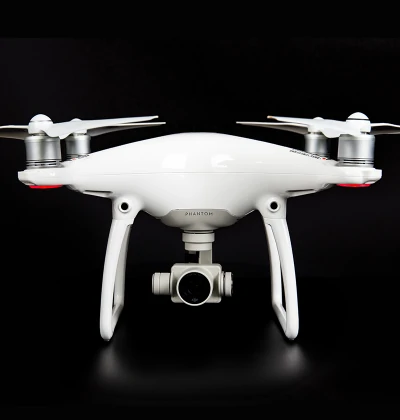

Aerospace & UAV
WJ Prototypes is your 3D manufacturing partner from prototype to large scale production.

Consumer Electronics
New Product Introduction Solutions for Consumer Electronics.

Robotics & Automation
Need some assistance bringing your robotic device or parts from the sketch-board to reality?

Medical Devices
The medical industry needs high quality, dependable and safe parts and products.

Automotive
New Product Introduction Solutions for Automotive

Industrial Machinery
The main purpose of industrial prototyping is to take the product from drawings into the real world.
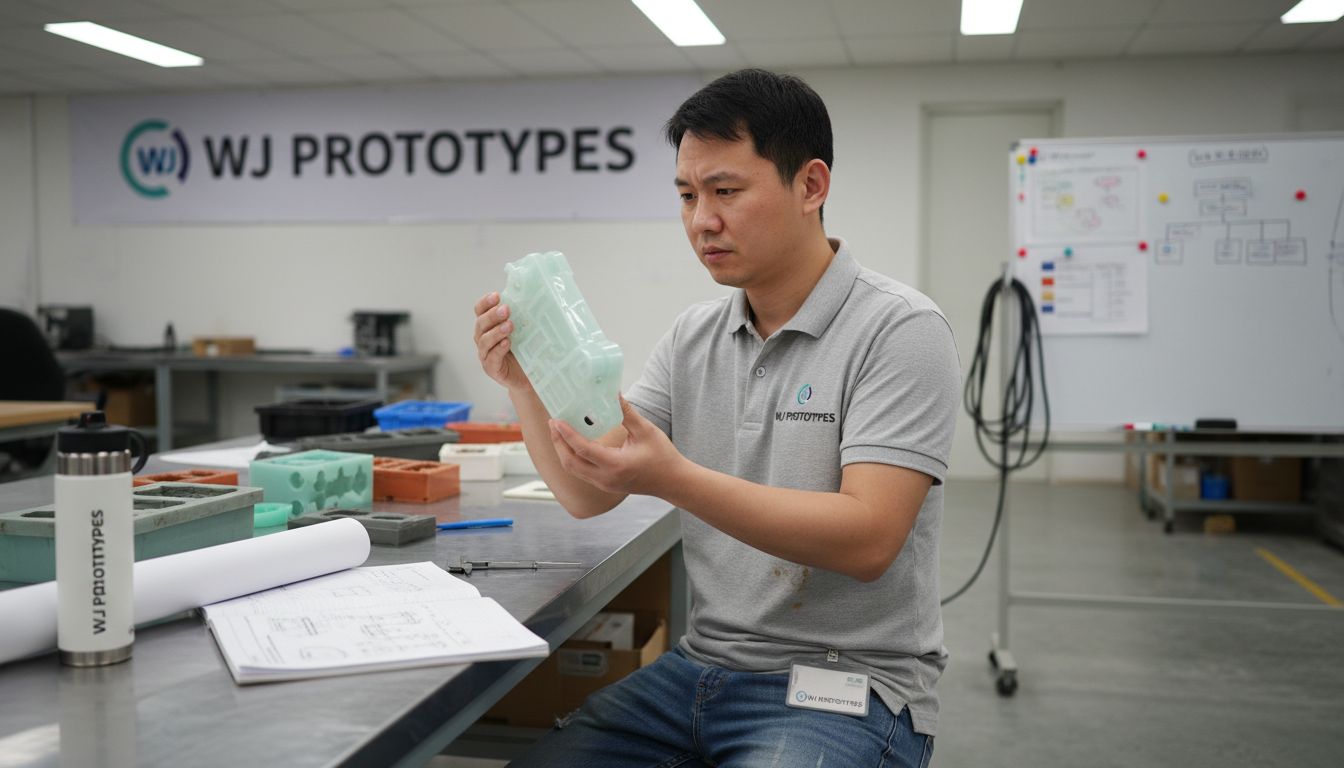

Most advice about rapid prototyping underestimates just how quickly british engineers now move from concept to testable prototype. With vacuum casting, what used to take months can be achieved in days, slashing product development time by over 70 percent for many companies. This matters in fiercely competitive markets where speed and precision decide success. Discover how advanced manufacturing transforms creative ideas into production ready prototypes, giving british businesses a powerful edge.
| Takeaway | Explanation |
|---|---|
| 1. Accelerate Product Development | Vacuum casting allows for rapid transformation of designs into functional prototypes, reducing time from concept to testing significantly. |
| 2. Cost-Effective Low-Volume Manufacturing | This technique offers economical solutions for small production runs without hefty upfront tooling costs, making it financially viable. |
| 3. High Precision with Excellent Finish | Vacuum casting provides tight tolerances and superior surface quality, ensuring intricate designs are faithfully replicated. |
| 4. Material Flexibility for Prototypes | Engineers can choose from a wide variety of materials, simulating production properties with specific performance characteristics. |
| 5. Seamless Transition to Mass Production | It facilitates a smooth move from prototyping to mass production, allowing for market testing and design refinement before significant investment. |
Vacuum casting accelerates product development cycles by enabling engineers and designers to quickly transform conceptual designs into functional prototypes. This advanced manufacturing technique allows teams to rapidly iterate and refine product designs with remarkable speed and precision.
Traditional product development approaches often involve lengthy manufacturing processes that can consume weeks or even months. In contrast, rapid prototyping technologies dramatically compress these timelines, allowing organisations to move from initial concept to testable prototype within days.
Key Speed Advantages:
The core advantage of vacuum casting lies in its ability to produce high fidelity prototypes that closely mimic final production materials. Engineers can test functional characteristics, assess ergonomics, and validate design principles without waiting for expensive tooling or full production runs.
By leveraging vacuum casting, design teams can swiftly evaluate multiple design iterations, make rapid modifications, and ultimately accelerate the entire product development workflow. This approach transforms traditional linear development processes into dynamic, responsive design strategies that keep pace with rapidly evolving market demands.
Practical implementation requires selecting appropriate materials that match your prototype’s specific performance requirements and understanding the nuanced capabilities of vacuum casting techniques. Smart engineers recognise that speed without quality compromises is the ultimate competitive advantage.
Vacuum casting emerges as a strategic manufacturing approach for engineers and designers seeking economical solutions for small production batches. This technique offers an intelligent alternative to traditional high-cost manufacturing methods, enabling organisations to produce prototype and limited edition parts without substantial financial investment.
Manufacturing Economics Explained: Traditional manufacturing processes often require significant upfront tooling expenses, making small production runs prohibitively expensive. Low-volume manufacturing techniques like vacuum casting break this economic barrier by dramatically reducing initial setup costs.
Research indicates that vacuum casting provides remarkable cost efficiency for production volumes between 10 and 30 units. The process utilises silicone moulds that can reproduce approximately 30 high quality parts before requiring replacement, making it substantially more affordable than conventional injection moulding for limited runs.
Key Cost Reduction Strategies:
Engineers can leverage vacuum casting to produce functional prototypes and small production batches with exceptional precision. This approach allows organisations to validate product designs, conduct market testing, and iterate rapidly without committing to extensive manufacturing infrastructure.
By selecting vacuum casting, design teams transform potential financial constraints into strategic opportunities for innovation and market exploration. The technique enables organisations to maintain high product quality while managing production expenses effectively.
Vacuum casting represents a pinnacle of precision manufacturing, offering engineers and designers an exceptional method for producing intricate parts with remarkable surface quality and dimensional accuracy. The technique transforms conceptual designs into tangible prototypes that capture the finest geometric details with unparalleled fidelity.
The core advantage of vacuum casting lies in its unique moulding environment, which ensures precise dimensional tolerances through controlled material flow and minimised air entrapment. By creating a vacuum within the mould, this process guarantees complete material penetration, resulting in smooth finishes and crisp geometric definitions.
Precision Manufacturing Characteristics:
Engineers particularly value vacuum casting for applications demanding high aesthetic and functional precision. The technique excels in producing complex geometries with smooth surfaces that closely mimic final production components. Whether developing medical devices, automotive prototypes, or consumer electronics, vacuum casting delivers consistently superior results.
The vacuum environment ensures that casting materials fill every minute detail of the mould, capturing microscopic surface textures and maintaining geometric integrity. This approach eliminates common manufacturing defects such as air bubbles, porosity, and dimensional inconsistencies, providing a near perfect representation of the original design.
By selecting vacuum casting, design teams can confidently transform complex digital models into physical prototypes that meet the most rigorous engineering standards, bridging the gap between conceptual design and functional reality.
Vacuum casting offers engineers and designers unprecedented material flexibility, transforming prototype development into a realm of limitless possibilities. This manufacturing technique supports an extensive array of polymeric materials that can closely mimic production grade plastics and elastomers.
Engineers can select from multiple material families with distinct performance characteristics, enabling precise simulation of final product properties. Advanced manufacturing materials range from rigid polyurethanes to flexible silicone compounds, each offering unique mechanical and aesthetic attributes.
Material Selection Spectrum:
The ability to choose materials with specific durometers, thermal properties, and mechanical strengths allows design teams to create prototypes that behave almost identically to production components. This versatility means engineers can test functional performance, ergonomics, and visual aesthetics without committing to expensive tooling.
Precision material selection enables organisations to validate design concepts rapidly, reducing development cycles and minimising financial risks associated with traditional manufacturing approaches. By leveraging vacuum casting’s material diversity, engineers can explore multiple design iterations efficiently, transforming conceptual ideas into tangible, testable prototypes with remarkable speed and accuracy.
Vacuum casting represents a breakthrough in manufacturing flexibility, enabling engineers to transform the most intricate design concepts into tangible prototypes with remarkable precision. This technique transcends traditional manufacturing constraints by capturing extraordinarily complex geometries that would challenge conventional production methods.
The fundamental advantage of vacuum casting lies in its unique material delivery system, which enables unprecedented design freedom through precise liquid material injection under controlled vacuum conditions. By eliminating air entrapment and ensuring complete mould cavity filling, engineers can reproduce sophisticated design features with exceptional fidelity.
Design Complexity Capabilities:
Engineers can now design components with previously unimaginable architectural complexity. The vacuum casting process permits the replication of minute details including internal channels, complex curved surfaces, and intricate mechanical interfaces that would be prohibitively difficult or impossible using traditional manufacturing techniques.
Practical applications span multiple industries from medical device prototyping to aerospace component development. By eliminating geometric limitations, design teams can focus on innovation rather than manufacturing constraints, transforming conceptual designs into functional prototypes with unprecedented speed and precision.
Vacuum casting represents a transformative approach to product development, enabling engineers to rapidly test and refine design concepts with unprecedented efficiency. This technique accelerates the iterative design process by providing quick, high fidelity prototypes that allow immediate performance validation.
The strategic advantage of vacuum casting lies in its ability to compress product development timelines through rapid and cost effective prototype generation. Engineers can swiftly produce multiple design iterations, allowing for comprehensive performance testing and design optimisation before committing to final production.
Iteration Efficiency Advantages:
By enabling fast design iterations, vacuum casting transforms traditional linear product development into an agile, responsive process. Design teams can explore multiple conceptual variations, test functional performance, and make informed decisions quickly.
Practical implementation involves creating successive prototype generations with incremental improvements. Each iteration provides valuable insights into mechanical performance, ergonomics, and aesthetic qualities, allowing engineers to progressively optimise their designs with minimal financial and time investments.
The technique proves especially powerful in industries requiring rapid innovation such as medical devices, consumer electronics, and advanced engineering applications. Vacuum casting turns design exploration from a sequential process into a dynamic, collaborative approach that accelerates technological advancement.
Vacuum casting serves as a strategic bridge between prototype development and full scale manufacturing, offering engineers a sophisticated pathway to validate product concepts before significant capital investment. This technique provides organisations with an intelligent mechanism to test market demand and refine design specifications prior to committing to extensive production tooling.
The methodology allows rapid prototyping approaches to seamlessly translate into scalable manufacturing strategies. By generating high fidelity prototypes that closely mimic production components, design teams can confidently assess functional performance, material characteristics, and market readiness.
Mass Production Transition Strategies:
Vacuum casting enables engineers to produce small production batches that serve as critical proof of concept. These initial runs provide valuable insights into manufacturing feasibility, potential design improvements, and market reception without requiring substantial upfront capital expenditure.
Practical implementation involves creating prototype series that progressively approach final production specifications. By systematically refining designs through multiple iterations, organisations can develop robust manufacturing strategies that minimise potential failures and optimise product development workflows.
The technique proves particularly valuable in industries requiring rapid innovation and market responsiveness. Vacuum casting transforms traditional linear product development into an agile, responsive process that supports intelligent commercial decision making.
Below is a comprehensive table summarising the key concepts, advantages, and applications of vacuum casting as discussed throughout the article.
| Topic | Description | Key Considerations |
|---|---|---|
| Rapid Prototyping | Transforms designs into functional prototypes quickly. | Enables rapid iteration and faster market entry. |
| Cost-Effective Production | Economical for small batch production with minimal tooling costs. | Suitable for volumes between 10 and 30 units. |
| High Precision and Finish | Ensures exceptional surface quality and dimensional accuracy. | Excellent for intricate designs with tight tolerances. |
| Material Flexibility | Offers a wide range of polymeric materials. | Simulates production-grade properties. |
| Design Complexity | Captures complex geometries with precision. | Overcomes traditional manufacturing limitations. |
| Efficient Iteration | Allows rapid testing and design refinement. | Supports quick functional validation and reduced financial risk. |
| Transition to Mass Production | Bridges prototype development to large-scale manufacturing. | Tests market demand and refines designs with minimal investment. |
Engineers and designers often face the challenge of accelerating product development while managing costs and maintaining high precision. The key benefits of vacuum casting such as rapid prototyping, cost-effective low-volume production, exceptional surface finish, and design flexibility can transform these challenges into opportunities. However, accessing advanced vacuum casting services that deliver quick turnarounds along with material versatility and tight tolerances is essential to fully leverage this technology.
At WJ Prototypes, we specialise in providing professional vacuum casting solutions that align perfectly with your needs for rapid iteration and functional testing. Our comprehensive manufacturing capabilities not only include vacuum casting but extend to CNC machining and precision injection moulding to support your prototype through to small and medium production runs with exceptional quality and speed. Partner with us to reduce tooling expenses, accelerate your product timelines, and create prototypes that closely mimic production components.
Experience the difference of working with an ISO certified manufacturer that understands the importance of seamless design refinement and efficient mass production transition. Visit WJ Prototypes today to discover how you can bring your complex designs to life faster and smarter than ever before.
Using vacuum casting accelerates product development by enabling rapid prototyping, reducing design iteration time and costs. Engineers can quickly create functional prototypes, allowing for immediate testing and validation of concepts, which can save time and reduce costs by up to 30% compared to traditional methods.
Vacuum casting minimises upfront tooling costs, making it an economical choice for producing small batches of prototypes and limited edition parts. By using silicone moulds that can create several high-quality reproductions, organisations can reduce their costs significantly when producing between 10 and 30 units.
Engineers can achieve tolerances as tight as 0.1 millimetres with vacuum casting, making it suitable for intricate designs that require high dimensional accuracy. This precision allows for smooth surface finishes and exceptional detail in prototypes, enabling designers to create products that closely resemble final production components.
Vacuum casting offers a wide range of material choices that mirror production grade plastics and elastomers, allowing engineers to closely match the desired properties of their prototypes. Selecting the right materials facilitates testing of functional and aesthetic qualities without the need for costly and time-consuming tooling.
Vacuum casting allows for quick production of multiple prototypes, enabling engineers to test and refine designs at an accelerated pace. This iterative process can lead to reduced development cycles, allowing for faster modifications and improvements, often within just a few days.
Vacuum casting serves as an efficient transitional method by producing small batches that test market readiness before committing to extensive production. This approach helps organisations validate product concepts and make necessary design adjustments without significant financial risks, enhancing overall product strategy.
SERVICES
RESOURCES