



- Room 1807, Unit 9, Building 2, Shangxing Commercial Street, Shangde Road, Shangxing Community, Xinqiao Subdistrict, Bao'an District, Shenzhen City, China
CONTACT US

WhatsApp


Contact Us
Our team is on stand by, waiting toassist you.

Videos
A large collection of educational videos and tutorials.

About Us
Learn about our company, leadership, and mission totransform manufacturing.

Privacy Policy
Applies to all personal information collected through and/or processed in connection.


Aerospace & UAV
WJ Prototypes is your 3D manufacturing partner from prototype to large scale production.

Consumer Electronics
New Product Introduction Solutions for Consumer Electronics.

Robotics & Automation
Need some assistance bringing your robotic device or parts from the sketch-board to reality?

Medical Devices
The medical industry needs high quality, dependable and safe parts and products.

Automotive
New Product Introduction Solutions for Automotive

Industrial Machinery
The main purpose of industrial prototyping is to take the product from drawings into the real world.
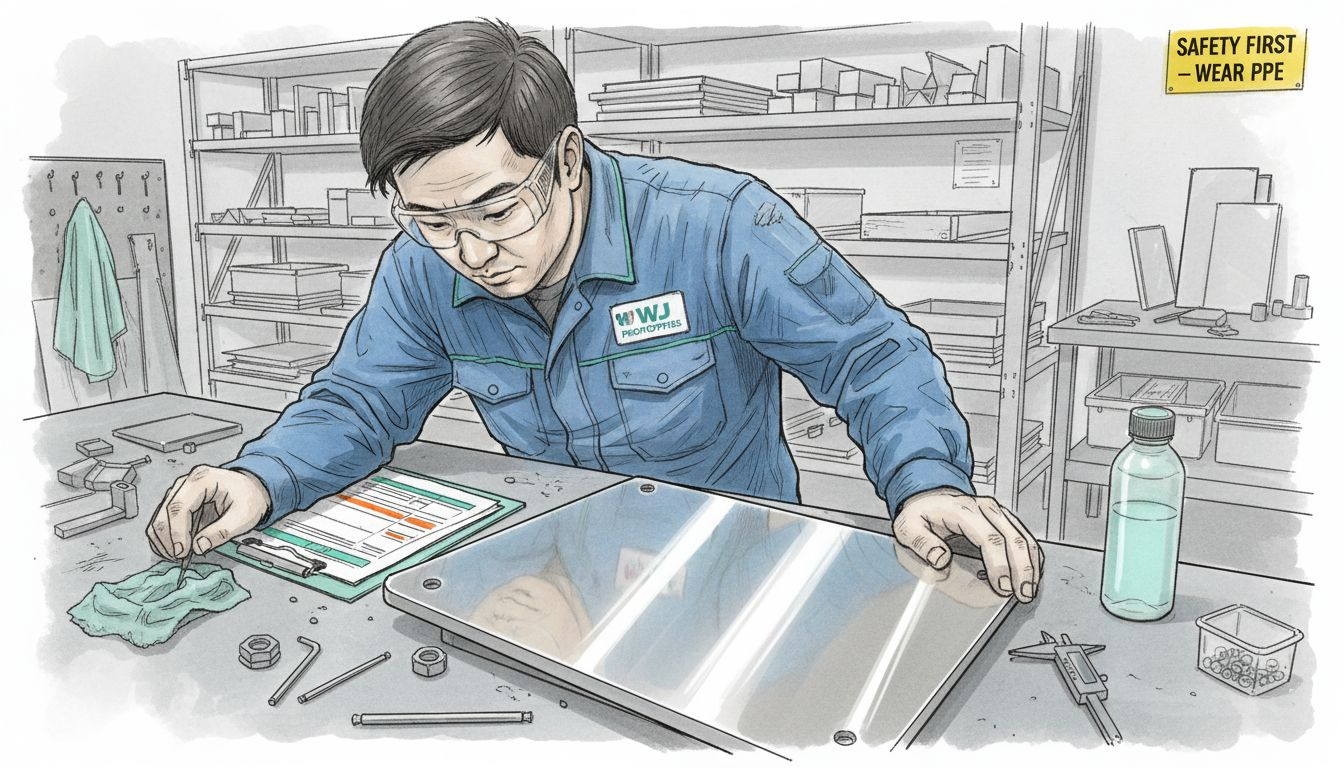

Precision requirements in medical device manufacturing demand more than just technical expertise—they require a deep understanding of processes, materials, and strict compliance standards. For engineers and R&D managers facing tight deadlines and ever-shifting regulations, innovative sheet metal fabrication offers a path to producing intricate components with microscopic tolerances and high reliability. Explore the fundamentals and newest technologies shaping rapid prototyping and faster production cycles in the evolving world of global healthcare manufacturing.
| Point | Details |
|---|---|
| Advanced Technologies Enhance Fabrication | Integrating technologies like AI, robotics, and IoT into medical sheet metal fabrication improves precision, reduces waste, and optimizes processes. |
| Material Selection is Crucial | Choosing the right materials, such as stainless steel and titanium, is fundamental for ensuring device performance and biocompatibility. |
| Regulatory Compliance is Essential | Manufacturers must navigate strict regulations and sustainability challenges to ensure product safety and eco-friendliness. |
| Global Adaptability is Key | Successful global medical firms require rapid prototyping and cost optimization while adhering to international regulatory standards. |
Medical sheet metal fabrication represents a sophisticated manufacturing process critical for producing precision medical devices and components. Sheet metal fabrication techniques enable engineers to transform flat metal sheets into intricate medical equipment with microscopic tolerances and exceptional reliability.
The fundamental processes involved in medical sheet metal fabrication include several core techniques:
These processes require advanced technological capabilities and strict adherence to medical industry standards. Advanced manufacturing techniques like CNC press brakes and laser cutters ensure that medical device components meet exacting specifications for patient safety and performance.
Material Selection Matters. Medical sheet metal fabrication demands careful material considerations, with stainless steel, titanium, and specialized medical-grade alloys being most common. Each material offers unique properties:
Here is a comparison of essential metals used in medical sheet metal fabrication and their most relevant properties:
| Material | Key Advantage | Main Application |
|---|---|---|
| Stainless Steel | Superior corrosion resistance | Surgical instruments and housings |
| Titanium Alloys | Lightweight yet strong | Implants and prosthetics |
| Aluminum Alloys | High versatility | Diagnostic equipment frames |
| Medical Alloys | Custom performance traits | Specialized devices requiring biocompatibility |
Precision Requirements. Medical device manufacturing requires extraordinary precision, often demanding tolerances as tight as ±0.005 inches. Quality control processes including dimensional inspections, surface finish assessments, and material integrity testing are mandatory.
Pro tip: Always validate material biocompatibility and sterilization compatibility before finalizing medical device sheet metal designs.
Medical sheet metal fabrication is experiencing a technological revolution driven by innovative processes and advanced manufacturing techniques. Cutting-edge fabrication technologies are transforming how medical device components are designed, manufactured, and optimized for performance and precision.
Several emerging technologies are reshaping the medical sheet metal fabrication landscape:
Advanced technological innovations are driving significant improvements in medical sheet metal fabrication. These technologies enable manufacturers to achieve:
Technological Convergence. The integration of artificial intelligence, digital simulation, and advanced material sciences is creating unprecedented opportunities in medical device manufacturing. Automated precision tooling and intelligent process control systems are enabling engineers to push the boundaries of what’s possible in medical component design.

Key technological drivers include advanced materials development, sophisticated computational modeling, and real-time process monitoring. These innovations are not just improving manufacturing capabilities but fundamentally reimagining how medical devices are conceived, designed, and produced.
Pro tip: Invest in cross-disciplinary training to stay ahead of emerging technologies in medical sheet metal fabrication.
Medical sheet metal fabrication demands extraordinary levels of precision and material sophistication. Precision requirements in medical manufacturing exceed traditional industrial standards by incorporating microscopic tolerances that ensure patient safety and device reliability.
Key material considerations for medical sheet metal fabrication include:
Advanced fabrication techniques are critical for achieving these stringent requirements. Medical device manufacturers must navigate complex material selection processes that balance performance, regulatory compliance, and manufacturing feasibility.
Material Performance Characteristics for Medical Applications:
Precision Verification is paramount in medical sheet metal fabrication. Dimensional tolerances often range within micrometers, requiring advanced measurement technologies and rigorous quality control protocols. Manufacturers must implement comprehensive inspection processes that verify every micron of component geometry.
Precision in medical device manufacturing is not just a technical requirement—it’s a critical patient safety imperative.
Pro tip: Invest in advanced metrology equipment and continuous staff training to maintain ultra-precise manufacturing standards.
Medical sheet metal fabrication is undergoing a revolutionary transformation through advanced automation and digital technologies. Smart factory technologies are redefining manufacturing processes by integrating artificial intelligence, robotics, and real-time data analytics into medical device production workflows.
Key technological innovations driving smart factory development include:
The evolution of smart factories in medical sheet metal fabrication presents multiple transformative advantages:
Technological Convergence is creating unprecedented opportunities for medical device manufacturers. Advanced sensor networks, machine learning algorithms, and sophisticated data processing systems are enabling unprecedented levels of precision and adaptability in sheet metal fabrication processes.

The following table summarizes how digitalization transforms medical sheet metal fabrication:
| Digital Innovation | Core Role | Measurable Benefit |
|---|---|---|
| Digital Twin Technology | Virtual process modeling | Faster prototyping cycles |
| AI-Driven Quality | Automated defect detection | Reduced production errors |
| IoT Integration | Real-time manufacturing monitoring | Enhanced process transparency |
| Robotic Automation | Precision task execution | Consistent, high-quality outcomes |
Smart factories represent more than technological upgrades—they are fundamental reimaginings of manufacturing capabilities.
Pro tip: Develop cross-functional teams with expertise in both manufacturing technologies and data science to effectively implement smart factory strategies.
Medical sheet metal fabrication confronts increasingly complex sustainability and regulatory landscapes. Regulatory compliance requirements are becoming more stringent, demanding manufacturers integrate environmental consciousness with rigorous quality standards.
Key sustainability and regulatory challenges include:
Medical device manufacturing regulations require manufacturers to navigate multiple complex dimensions:
Regulatory Landscape demands an integrated approach that balances technological innovation, patient safety, and environmental responsibility. Manufacturers must develop sophisticated systems that track every aspect of production, from raw material sourcing to final product verification.
Sustainability in medical manufacturing is not optional—it’s a critical strategic imperative.
Pro tip: Invest in advanced digital tracking systems that simultaneously address regulatory documentation and sustainability metrics.
Medical sheet metal fabrication is becoming a critical strategic differentiator for global healthcare organizations. Global medical device manufacturing demands unprecedented levels of precision, innovation, and adaptability to meet diverse international market requirements.
Key strategic considerations for global medical firms include:
International manufacturing strategies require comprehensive approaches that balance multiple complex factors:
Competitive Landscape demands that medical firms develop sophisticated, adaptable manufacturing capabilities. Success requires continuous technological adaptation, deep understanding of global regulatory environments, and the ability to rapidly integrate emerging fabrication technologies.
Global medical device manufacturing is not about local production—it’s about creating universally acceptable healthcare solutions.
Pro tip: Develop cross-functional teams with expertise in engineering, regulatory compliance, and international market dynamics to effectively navigate global medical manufacturing challenges.
The emerging trends in medical sheet metal fabrication present new challenges such as achieving microscopic tolerances, ensuring biocompatibility, and integrating smart factory automation. Precision, rapid prototyping, and strict regulatory compliance are more critical than ever to deliver safe and innovative medical devices that meet global standards. These demands require a manufacturing partner who understands not only advanced techniques like laser forming and digital twin simulation but also the importance of speed and cost efficiency in product development.
At WJ Prototypes, we specialize in turning these complex requirements into actionable solutions. Our blend of traditional sheet metal fabrication and cutting-edge additive manufacturing enables fast, high-quality prototyping and low-volume production tailored for the medical industry. With comprehensive capabilities including CNC machining and vacuum casting, plus ISO certification and global delivery, we help you stay ahead in a competitive market. Discover how our services can accelerate your innovation pipeline while ensuring compliance and precision here. Ready to overcome fabrication challenges with confidence Use WJ Prototypes as your trusted partner. Contact us today to get instant quotes and start transforming your medical device concepts into reality.
The key processes in medical sheet metal fabrication include cutting, bending, forming, and assembly. These techniques allow engineers to transform flat metal sheets into intricate medical devices with high precision.
Material selection is crucial because it affects the performance, biocompatibility, and longevity of medical devices. Common materials used include stainless steel, titanium, aluminum alloys, and specialized medical-grade alloys, each with unique properties relevant to medical applications.
Emerging technologies such as additive manufacturing, laser forming, and artificial intelligence are revolutionizing medical sheet metal fabrication by enhancing precision, reducing waste, and enabling the production of complex custom components.
Precision requirements in medical device manufacturing are exceptionally strict, often demanding tolerances as tight as ±0.005 inches. Quality control measures, including dimensional inspections and material integrity testing, are critical to ensure patient safety and device reliability.
SERVICES
RESOURCES