



- Room 1807, Unit 9, Building 2, Shangxing Commercial Street, Shangde Road, Shangxing Community, Xinqiao Subdistrict, Bao'an District, Shenzhen City, China
CONTACT US

WhatsApp


Contact Us
Our team is on stand by, waiting toassist you.

Videos
A large collection of educational videos and tutorials.

About Us
Learn about our company, leadership, and mission totransform manufacturing.

Privacy Policy
Applies to all personal information collected through and/or processed in connection.


Aerospace & UAV
WJ Prototypes is your 3D manufacturing partner from prototype to large scale production.

Consumer Electronics
New Product Introduction Solutions for Consumer Electronics.

Robotics & Automation
Need some assistance bringing your robotic device or parts from the sketch-board to reality?

Medical Devices
The medical industry needs high quality, dependable and safe parts and products.

Automotive
New Product Introduction Solutions for Automotive

Industrial Machinery
The main purpose of industrial prototyping is to take the product from drawings into the real world.
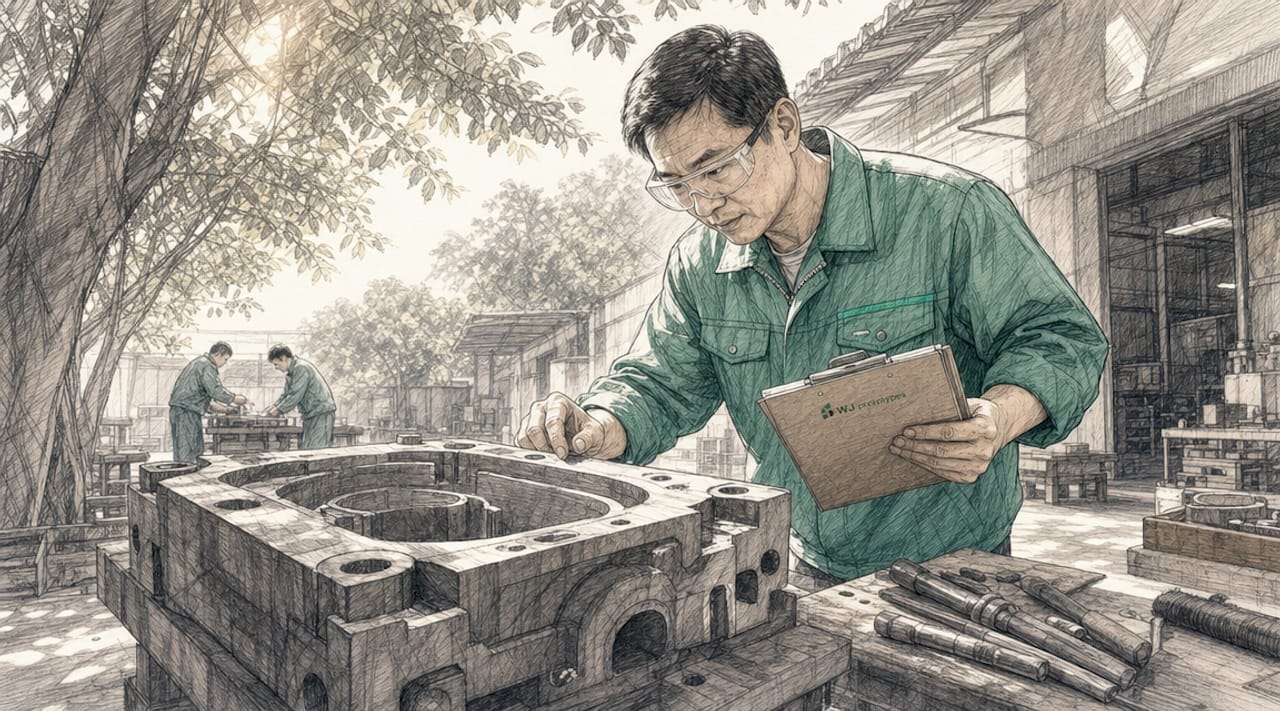
TL;DR:
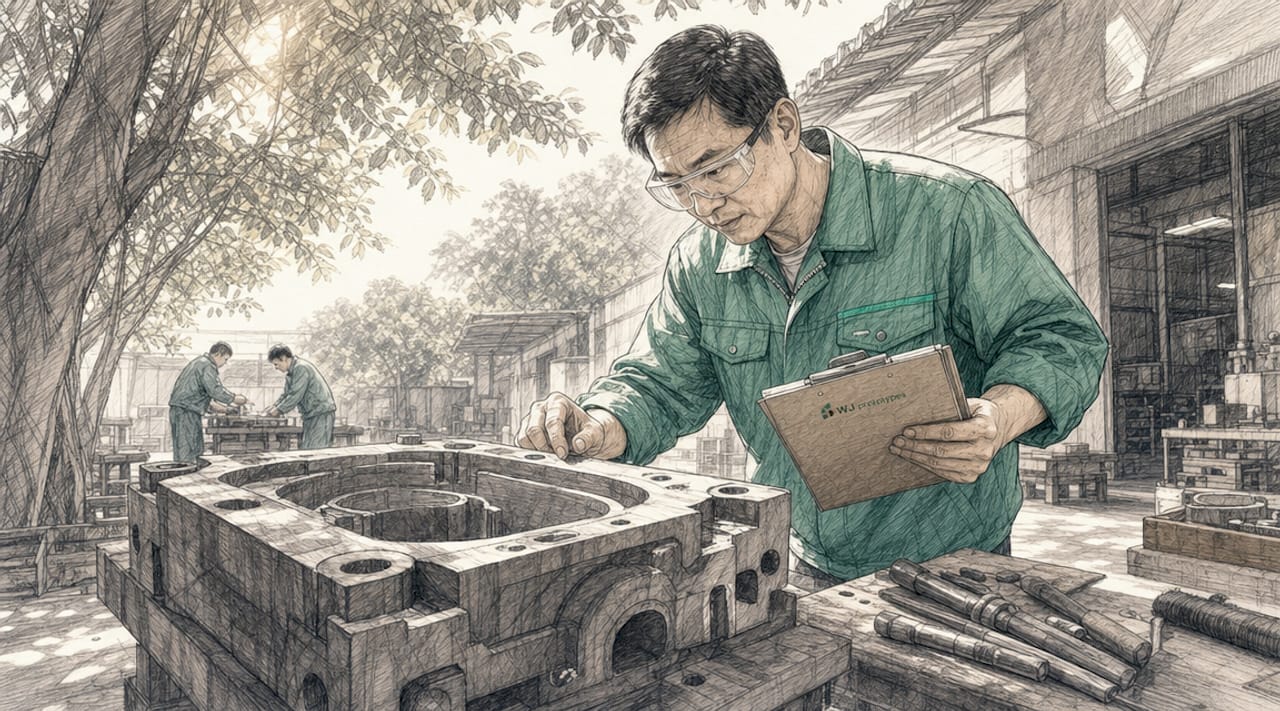
Metal casting involves pouring molten metal into molds to produce shaped parts, with the choice of method impacting cost, accuracy, and production volume. Sand casting dominates by volume due to its low cost and flexibility, while investment casting offers high precision for complex, high-temperature alloys, and die casting excels in high-volume, fast-cycle production. Selecting the appropriate technique depends on balancing volume, geometry, alloy, and design considerations to optimize quality and cost-efficiency.
Metal casting methods are manufacturing processes where molten metal is poured into a mold cavity, solidifies, and is removed as a shaped part. Choosing the wrong method costs you tooling budget, cycle time, and dimensional accuracy before a single part ships. Sand casting accounts for approximately 60% of all metal castings by weight, yet investment casting, die casting, and permanent mold casting each dominate specific application niches. This guide breaks down every major casting technique with the engineering specifics you need to make the right call for your next project.
The six casting processes below cover the vast majority of industrial production. Each differs primarily by mold material, filling method, and target production volume.
Selecting among these types of metal casting requires matching three variables: production volume, geometric complexity, and alloy type. The sections below give you the data to do that.
Sand casting uses a compacted sand mold formed around a pattern, which is then removed to leave a cavity. Molten metal fills the cavity, solidifies, and the sand mold is broken away. The process repeats with a new mold for each pour, making it an expendable-mold technique.
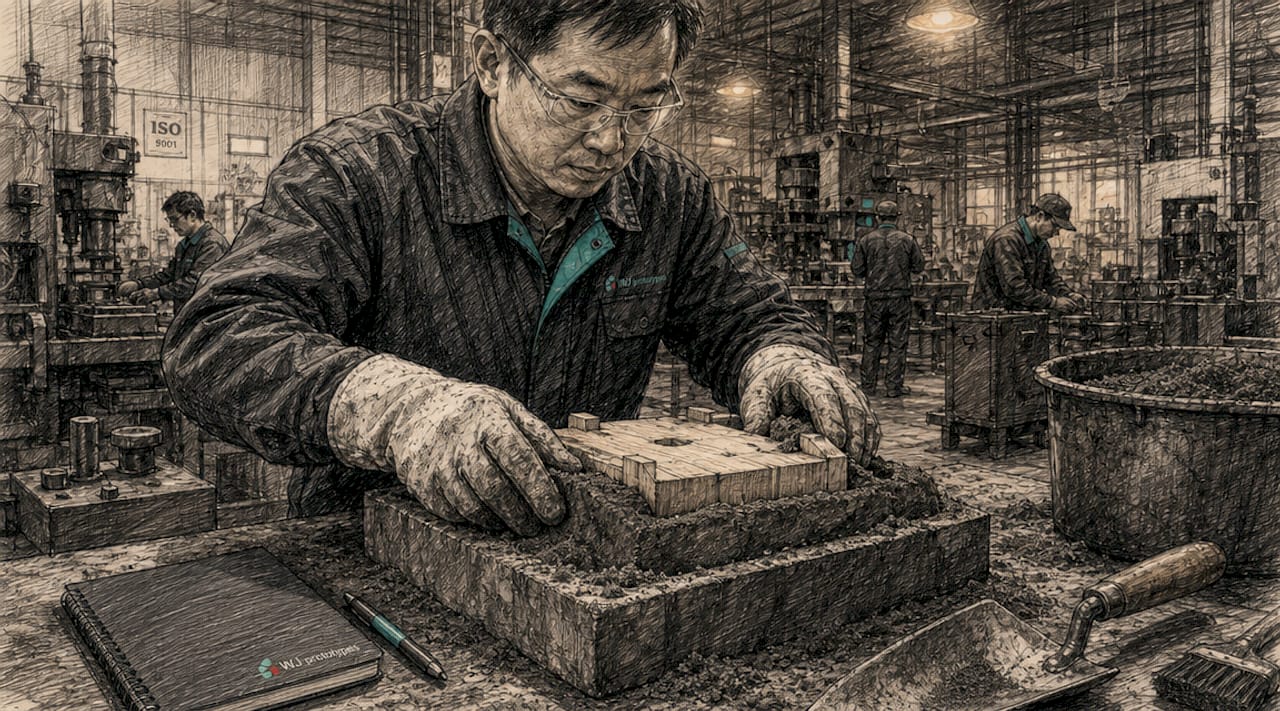
The sand casting advantages that keep it dominant are hard to argue with. Tooling is inexpensive because patterns are typically wood, plastic, or aluminum rather than hardened steel. The process handles virtually any pourable alloy, from gray iron to bronze to stainless steel. Part size is nearly unlimited. Engine blocks, pump housings, and wind turbine hubs are all sand cast because no other process matches the combination of size range and material flexibility at low cost.
The limitations are equally real. Surface finish is typically Ra 12.5 to 25 micrometers, which is rough by precision standards. Dimensional tolerances are wider than investment or die casting, generally ±0.5mm or more depending on part size. Wall thickness below 3mm is difficult to fill reliably.
Pro Tip: When designing for sand casting, add generous fillets at all internal corners. Sharp corners create stress concentrations during solidification and are a leading cause of hot tears in iron and steel castings.
Sand casting applications span automotive cylinder heads, construction equipment frames, and large valve bodies in the oil and gas sector. For prototyping, it remains the fastest path to a functional metal part when tooling lead time and budget are the primary constraints.
The investment casting process, also called lost wax casting, begins with an injection-molded wax replica of the final part. Multiple wax patterns are assembled onto a central sprue to form a tree, then repeatedly dipped in ceramic slurry and stuccoed with refractory sand until a shell 6 to 8mm thick forms. The wax is melted out in an autoclave, leaving a hollow ceramic mold that is fired at high temperature before metal is poured.
The payoff for that complexity is dimensional accuracy that no other expendable-mold process matches. Investment casting achieves tolerances as tight as ±0.1mm, making it the standard process for aerospace turbine blades, orthopedic implants, and precision firearm components. The ceramic shell withstands temperatures up to 1,100°C, which means superalloys like Inconel and Hastelloy that are nearly impossible to machine are routinely investment cast.
Key advantages of the investment casting process:
The trade-offs are cost and cycle time. Wax tooling, ceramic shell preparation, and the multi-step dewaxing and firing sequence make investment casting 3 to 5 times more expensive per part than sand casting at low volumes. It is the right choice when geometry is too complex to machine and tolerances are too tight for sand casting.
Die casting injects molten metal under high pressure into hardened steel dies, producing cycle times of 30 to 90 seconds per shot. That speed makes it the dominant process for mass-produced aluminum, zinc, and magnesium components in automotive, electronics, and consumer products.
| Factor | Die casting | Sand casting |
|---|---|---|
| Tooling cost | High ($10,000 to $100,000+) | Low ($500 to $5,000) |
| Cycle time | 30 to 90 seconds | Hours |
| Dimensional tolerance | ±0.05 to ±0.1mm | ±0.5mm or more |
| Surface finish | Ra 0.8 to 3.2 µm | Ra 12.5 to 25 µm |
| Minimum wall thickness | 0.5mm (zinc), 1.0mm (aluminum) | 3mm typical |
| Best volume range | 10,000 to millions | 1 to 10,000 |
The economics of die casting methods flip at scale. High tooling cost is amortized across large runs, driving per-unit cost below any other metal casting technique for volumes above roughly 10,000 parts. Automotive transmission housings, laptop chassis, and smartphone structural frames are all die cast for this reason.
Die casting is limited to non-ferrous alloys because ferrous metals at casting temperature would erode steel dies too rapidly for economical tool life. Porosity is also a known challenge. Trapped air during high-speed injection creates micro-voids that reduce fatigue strength, which is why structural automotive die castings often undergo hot isostatic pressing (HIP) as a secondary operation.
Pro Tip: Specify vacuum-assisted die casting for structural parts. Evacuating the die cavity before injection reduces porosity by up to 90% and makes the casting heat-treatable, which is critical for high-strength aluminum alloy applications.
Permanent mold casting uses reusable metal molds filled by gravity or low pressure, delivering better dimensional control than sand casting without the high tooling cost of die casting. It is the practical choice for medium-volume aluminum and magnesium parts in the 1,000 to 50,000 range.
The mold is typically cast iron or steel, preheated to 150 to 300°C before each pour to control solidification rate and prevent thermal shock. Because filling is gravity-driven, wall thickness must stay above 3mm to fill reliably, and complex internal geometry requires sand cores inserted into the permanent mold. The result is a surface finish of Ra 3.2 to 6.3 micrometers and tolerances around ±0.25mm, which positions it squarely between sand and die casting on both metrics.
Specialized casting methods each solve a specific problem:
Selecting the right casting process requires matching production volume, dimensional requirements, and alloy type to the process that minimizes total cost per acceptable part.
| Point | Details |
|---|---|
| Sand casting dominates by volume | 60% of castings by weight are sand cast, making it the baseline process for large, low-volume parts. |
| Investment casting leads on precision | Tolerances of ±0.1mm and superalloy compatibility make it the standard for aerospace and medical components. |
| Die casting wins at scale | Cycle times of 30 to 90 seconds and per-unit costs that drop sharply above 10,000 parts favor die casting for mass production. |
| Design details determine success | Shrinkage allowances of 2 to 7% and correct draft angles are non-negotiable for any casting method to produce dimensionally accurate parts. |
| Specialized methods fill specific gaps | Centrifugal, shell, plaster, and vacuum casting each address geometry or quality requirements that the four primary methods cannot meet economically. |
I have reviewed casting failures across automotive, aerospace, and industrial machinery projects, and the pattern is consistent. The part failed not because the alloy was wrong or the design was flawed, but because the casting method was chosen based on familiarity rather than engineering criteria.
Sand casting is the default in many foundries, and that default costs projects money when investment casting would have eliminated three machining operations on a complex aerospace bracket. Conversely, I have seen product teams specify investment casting for a 50,000-unit consumer product housing that should have been die cast from the start. The tooling cost was a fraction of what they spent on ceramic shell processing.
Modern foundries use CAD-driven simulation and robotic pouring to produce castings that outperform machined billet parts in some fatigue applications. That changes the calculus for engineers who still think of casting as a low-precision fallback. Simulation tools like MAGMASOFT and ProCAST let you predict shrinkage porosity, fill patterns, and solidification gradients before cutting a single mold. Use them.
Two design details that I see neglected constantly: shrinkage allowances and draft angles on vertical surfaces. Metals contract 2 to 7% during cooling, and every pattern must compensate for that contraction or the finished part will be undersized. Draft angles on vertical mold faces are equally non-negotiable. Insufficient draft tears the mold surface, shortens tool life, and produces castings with surface defects that no secondary operation can fully correct.
Investment casting is gaining ground in aerospace and medical device manufacturing because additive manufacturing now produces wax-equivalent patterns directly from CAD files, cutting lead time for prototype tooling from weeks to days. Sand casting remains indispensable for large structural components where no other process is economically viable. Neither method is obsolete. Both require engineers who understand their constraints.
— Nas
WJ Prototypes provides die casting, CNC machining, and rapid prototyping services from its ISO-certified facility in China, with global delivery to engineering teams across North America, Europe, and Asia. Whether you need a sand-cast prototype evaluated against a die-cast production design, or a precision-machined component to complement an investment-cast assembly, WJ Prototypes has the process range to support the full development cycle. Explore the die casting material options to match alloy selection to your application requirements, or get a quote for CNC machining services to finish cast parts to final tolerances. The engineering team at WJ Prototypes can advise on process selection, material compatibility, and production volume thresholds before you commit to tooling.
Explore competitive Metal Casting Services with expert support from WJ Prototypes.
Whether you're comparing suppliers or looking to optimize costs, our team can help you evaluate the best option for your project.
👉 Request A Quote now or email us at info@wjprototypes.com to get started.
Sand casting is the most widely used process, accounting for approximately 60% of all metal castings by weight. It handles the broadest range of alloys and part sizes at the lowest tooling cost.
Investment casting uses an expendable ceramic mold formed around a wax pattern, achieving tolerances of ±0.1mm and compatibility with superalloys. Die casting injects metal under high pressure into reusable steel dies, producing faster cycle times suited to high-volume aluminum and zinc parts.
Die casting is primarily used with aluminum, zinc, and magnesium alloys. Ferrous metals are not practical for die casting because their casting temperatures erode steel dies too rapidly for economical tool life.
Permanent mold casting is the better choice for medium-volume production runs of 1,000 to 50,000 parts where better surface finish and tighter tolerances than sand casting are required, but die casting tooling cost is not justified.
Shrinkage allowances and draft angles are the two most critical design factors. Metals shrink 2 to 7% during cooling, so patterns must oversize accordingly, and vertical mold surfaces require draft angles to allow clean part removal without damaging the mold.
Die Casting Materials | Custom Material For Die Casting - Get A Quote
Guide To Vacuum Casting - Master Prototyping for Precision Parts
Why Choose Vacuum Casting: Everything You Need to Know
Vacuum Casting Materials | List Of Material For Vacuum Casting
Explore competitive Metal Casting Services with expert support from WJ Prototypes.
Whether you're comparing suppliers or looking to optimize costs, our team can help you evaluate the best option for your project.
👉 Request A Quote now or email us at info@wjprototypes.com to get started.
SERVICES
RESOURCES