



- Room 1807, Unit 9, Building 2, Shangxing Commercial Street, Shangde Road, Shangxing Community, Xinqiao Subdistrict, Bao'an District, Shenzhen City, China
CONTACT US

WhatsApp


Contact Us
Our team is on stand by, waiting toassist you.

Videos
A large collection of educational videos and tutorials.

About Us
Learn about our company, leadership, and mission totransform manufacturing.

Privacy Policy
Applies to all personal information collected through and/or processed in connection.
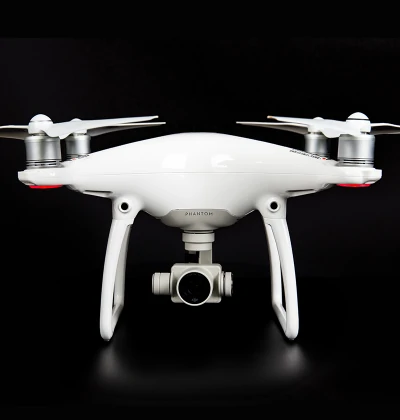

Aerospace & UAV
WJ Prototypes is your 3D manufacturing partner from prototype to large scale production.

Consumer Electronics
New Product Introduction Solutions for Consumer Electronics.

Robotics & Automation
Need some assistance bringing your robotic device or parts from the sketch-board to reality?

Medical Devices
The medical industry needs high quality, dependable and safe parts and products.

Automotive
New Product Introduction Solutions for Automotive

Industrial Machinery
The main purpose of industrial prototyping is to take the product from drawings into the real world.

TL;DR:
- Prototypes in pipeline design validate assumptions, uncover flaws early, and prevent costly field failures through structured validation stages. Using digital and physical prototypes at EVT, DVT, and PVT stages ensures efficient, cost-effective risk management and design refinement. Maintaining team continuity and targeting the simplest effective prototype enhance project outcomes and reduce overall costs.
Prototypes in pipeline design are defined as physical or digital testable models that validate design assumptions, expose structural flaws, and align engineering teams before fabrication begins. The role of prototypes in pipeline design extends far beyond simple mockups. They function as early decision artifacts that prevent costly misalignment between design intent and real-world performance. Whether you are working with BIM-based digital models or CNC-machined physical components, prototypes compress the feedback loop between concept and confirmed design. In pipeline engineering, where a single undetected flaw can cascade into field failures worth millions, that compression is not optional.
Pipeline engineering validation follows three structured gates: EVT (Engineering Validation Testing), DVT (Design Validation Testing), and PVT (Production Validation Testing). Each stage uses prototypes differently, and each targets a distinct category of risk.
EVT prototypes verify that the core architecture works. At this stage, you are not chasing a finished product. You are asking whether the fundamental geometry, material selection, and flow mechanics hold up under controlled conditions. These prototypes are often rough, built from accessible materials, and intentionally incomplete. The goal is to confirm or reject the central design hypothesis before investing in precision tooling.
DVT shifts the focus to reliability. DVT prototypes stress-test the design across the full operating range, including temperature extremes, pressure variability, and manufacturing tolerances. In pipeline applications, this means running prototypes through simulated service conditions that replicate what the installed system will face over its operational life. Failures caught here are expensive to fix but manageable.
PVT prototypes confirm that the manufacturing process itself is stable. At this stage, the design is locked, and the prototype is built using production tooling and processes. Any issues discovered at PVT signal a process problem, not a design problem, and those are harder to resolve quickly.
The cost multiplier effect makes early-stage prototyping non-negotiable. Fixing issues at EVT costs x1. The same fix at DVT costs x10, at PVT x100, and in the field x1000. That single data point reframes prototyping from a cost center to a cost-avoidance strategy.
Pro Tip: Assign a single, written question to each prototype before you build it. If you cannot state what the prototype is testing in one sentence, you are not ready to build it yet.

| Stage | Prototype purpose | Relative fix cost |
|---|---|---|
| EVT | Verify core architecture and design assumptions | x1 |
| DVT | Test reliability across operating range and variability | x10 |
| PVT | Confirm manufacturing process stability | x100 |
| Field | Identify failures after deployment | x1000 |
The importance of prototypes in design comes down to four concrete outcomes: early flaw detection, iterative refinement, clearer stakeholder communication, and measurable cost reduction. In pipeline engineering, each of these translates directly into project schedule and budget performance.
Geometric accuracy is one of the most underappreciated benefits. Scan-to-BIM prototype workflows, which couple sensor data with as-designed BIM priors, reduce modeling time from three to five days down to approximately three hours while improving intersection-over-union accuracy from 48.25% to 74.45%. That is not a marginal improvement. It means design teams spend less time correcting spatial errors and more time validating performance assumptions.

Prototypes also function as communication tools that reduce ambiguity between engineering, procurement, and operations teams. Tangible models generate more specific, more aligned feedback than drawings or specifications alone. When a pipeline designer places a physical or digital prototype in front of a project stakeholder, the conversation shifts from abstract approval to concrete problem-solving. That shift catches hidden risks that written reviews consistently miss.
Iterative prototyping accelerates design refinement in ways that linear review processes cannot match. Each prototype cycle produces a sharper understanding of where the design is strong and where it is fragile. For oil and gas pipeline applications, this iterative loop has proven to reduce downstream design surprises and rework significantly.
The top operational benefits of prototyping in pipeline design workflows include:
Pro Tip: When using BIM-based prototypes, couple your sensor scan data with as-designed BIM priors rather than relying on scan data alone. The coordinate refinement accuracy improves to within 0.007 m, which eliminates most spatial rework.
Choosing the right prototype type is as consequential as choosing the right material. The two primary categories are digital prototypes and physical prototypes, and each serves different validation needs at different stages of the pipeline design process.
Digital prototypes include 3D CAD models, simulation environments, and BIM-based representations. They excel at validating spatial relationships, flow dynamics, and interference detection before any material is cut. Digital prototypes are fast to modify, inexpensive to iterate, and capable of simulating conditions that would be impractical to replicate physically at early stages. Their limitation is that they cannot fully replicate material behavior, surface finish effects, or assembly tolerance stack-ups under real operating conditions.
Physical prototypes, produced through CNC machining, SLA, SLS, or casting processes, provide direct tactile and mechanical validation. They are the right choice when you need to confirm weld joint behavior, pressure seal integrity, or the fit of flanged connections. Physical prototypes built from production-equivalent materials give you data that no simulation can fully substitute.
Fidelity targeting is the principle that governs which type to use and when. Build the simplest prototype that sufficiently addresses the specific risk at each stage. A low-fidelity 3D-printed model is appropriate for confirming spatial clearances in an EVT phase. A high-fidelity CNC-machined component in the target alloy is appropriate for DVT pressure testing. Matching fidelity to the question being asked prevents wasted effort and budget.
| Prototype type | Best use case | Advantages | Limitations |
|---|---|---|---|
| Digital (BIM/CAD) | Spatial validation, interference detection | Fast iteration, low cost | Cannot replicate material behavior |
| Low-fidelity physical | Geometry and fit checks at EVT | Quick to produce, inexpensive | Limited mechanical data |
| High-fidelity physical | Pressure, thermal, and reliability testing at DVT | Real material data, production-equivalent | Higher cost, longer lead time |
| Production-equivalent | PVT process confirmation | Matches final product exactly | Most expensive, least flexible |
The cost and time tradeoff between fidelity levels is real but manageable. Low-fidelity prototypes cost a fraction of high-fidelity versions and are appropriate for the majority of early-stage questions. Reserving high-fidelity builds for DVT and PVT stages keeps the overall prototype budget proportional to the risk being addressed. For industrial prototyping applications, this staged fidelity approach consistently delivers better cost outcomes than building to final specification from the start.
The prototype development process in pipeline engineering produces the best results when it follows a disciplined sequence rather than an ad hoc build-and-test approach. The most common failure mode is building prototypes without a clear question attached to each one. Focused prototype testing treats each build as a targeted conversation with the design, not a general exploration.
Team continuity across prototype phases is a practice that most organizations undervalue. Keeping the same engineering team through EVT, DVT, and PVT preserves institutional knowledge about why specific design decisions were made, what was tested and rejected, and where the residual risks lie. Rotating teams between phases forces rediscovery of lessons already learned, which adds time and cost without adding value.
The following sequence reflects pipeline design best practices for prototype development:
Common pitfalls in pipeline prototype programs include over-engineering early-stage prototypes, skipping DVT under schedule pressure, and failing to document the reasoning behind design changes made between stages. Each of these errors reduces the value of the prototype investment and increases the probability of field failures.
Pro Tip: Integrate testing continuously rather than saving it for formal review gates. Engineers who test incrementally throughout a phase catch issues when they are still cheap to fix, not after the phase has formally closed.
Prototypes in pipeline design reduce project cost and risk by front-loading validation across EVT, DVT, and PVT stages, where fixing issues costs x1 compared to x1000 in the field.
| Point | Details |
|---|---|
| Validation stage alignment | Assign prototypes to EVT, DVT, or PVT based on the specific question each stage must answer. |
| Cost multiplier effect | Fixing design flaws at EVT costs x1; the same fix in the field costs x1000. |
| Fidelity targeting | Build the simplest prototype that addresses the specific risk, not the most complete one possible. |
| Digital and physical integration | Use BIM-based digital prototypes for spatial validation and physical prototypes for mechanical and pressure testing. |
| Team continuity | Keep the same engineering team across all prototype phases to preserve institutional knowledge and accelerate issue resolution. |
I have watched engineering teams spend three months debating a pipeline junction design in review meetings, only to resolve the core question in two days once a physical prototype was on the table. That pattern repeats itself across industries, and it tells you something important about how engineers actually process risk. We are better at responding to what we can see and touch than to what we can read in a specification document.
What surprises most engineers when they first adopt a structured prototype program is how much they learn from the prototypes that fail. A DVT prototype that leaks at 80% of rated pressure is not a failure. It is the most valuable data point in the project. The teams that treat prototype failures as setbacks slow down. The teams that treat them as answers speed up.
The evolution of digital prototyping tools, particularly BIM-based workflows with scan integration, has made early-stage validation faster and cheaper than it was a decade ago. But the discipline of asking one clear question per prototype, maintaining team continuity, and matching fidelity to risk remains the differentiator between prototype programs that pay off and those that produce expensive shelf models. Technology improves the tools. Discipline determines the outcome.
— Yu
When your pipeline design reaches the physical prototype stage, material selection and machining precision determine whether your DVT results are meaningful. Wjprototypes offers CNC machining services built for industrial prototype applications, with fast turnarounds and the dimensional accuracy that pressure and thermal testing demands. The CNC machining materials catalog covers metals and engineering plastics suited to pipeline service conditions, from aluminum and stainless steel to PEEK and Delrin. As an ISO-certified manufacturer with global delivery capacity, Wjprototypes supports pipeline engineers from first EVT builds through PVT confirmation parts. Get an instant quote and move your design forward without the lead time delays that slow most prototype programs down.
Prototypes in pipeline design are testable models that validate design assumptions, detect flaws before fabrication, and align engineering and operations teams at each development stage. They are the primary tool for reducing the cost and risk of late-stage design changes.
Physical prototypes are appropriate when you need to validate mechanical behavior, pressure integrity, or assembly fit under real operating conditions. Digital prototypes handle spatial and interference checks effectively, but they cannot replicate material response under load.
EVT confirms the core architecture works, DVT tests reliability across the full operating range, and PVT validates that the manufacturing process produces consistent results. Each stage uses a different prototype fidelity level matched to the specific validation question.
Fidelity targeting means building the simplest prototype that sufficiently addresses the specific risk at each design stage. Matching prototype complexity to the question being asked prevents wasted effort and keeps prototype budgets proportional to actual project risk.
Fixing a design flaw at the EVT stage costs x1 relative to the same fix made in the field, which costs x1000. Front-loading validation through structured prototyping is the most direct way to reduce total project cost in pipeline development.
SERVICES
RESOURCES