



- Room 1807, Unit 9, Building 2, Shangxing Commercial Street, Shangde Road, Shangxing Community, Xinqiao Subdistrict, Bao'an District, Shenzhen City, China
CONTACT US

WhatsApp


Contact Us
Our team is on stand by, waiting toassist you.

Videos
A large collection of educational videos and tutorials.

About Us
Learn about our company, leadership, and mission totransform manufacturing.

Privacy Policy
Applies to all personal information collected through and/or processed in connection.
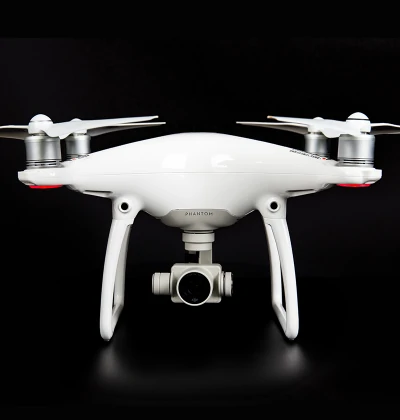

Aerospace & UAV
WJ Prototypes is your 3D manufacturing partner from prototype to large scale production.

Consumer Electronics
New Product Introduction Solutions for Consumer Electronics.

Robotics & Automation
Need some assistance bringing your robotic device or parts from the sketch-board to reality?

Medical Devices
The medical industry needs high quality, dependable and safe parts and products.

Automotive
New Product Introduction Solutions for Automotive

Industrial Machinery
The main purpose of industrial prototyping is to take the product from drawings into the real world.

TL;DR:
- Prototyping is essential for risk reduction, cost savings, and stakeholder alignment before product launch.
- Using the appropriate prototype fidelity at each development stage ensures efficient learning and avoids unnecessary expenses.
- Iterative prototyping based on defined success criteria accelerates development, improves product quality, and reduces costly late-stage revisions.
Most products that fail post-launch don’t fail because of bad ideas. They fail because teams skipped the one step that would have revealed every critical flaw before a single unit shipped. Prototyping is not a nice-to-have or a preliminary formality. It is the foundation of every successful product launch in aerospace, automotive, medical, and industrial manufacturing. This guide explains how prototypes reduce risk, cut costs, improve stakeholder alignment, and accelerate time-to-market. You’ll walk away with a clear framework for matching prototypes to each stage of your launch, avoiding the most common pitfalls, and making smarter resource decisions from day one.
| Point | Details |
|---|---|
| De-risk product launches | Prototyping helps you uncover flaws and validate ideas before scaling up. |
| Match prototype to need | Choose prototype fidelity based on your learning goal and the launch phase. |
| Iterate for success | Use iterative prototyping to reduce errors and accelerate market readiness. |
| Fail fast, learn fast | Quickly testing and revising designs saves money and time. |
Speed feels productive. There’s real pressure in aerospace, automotive, and medical product development to move from concept to market as fast as possible. But speed without validation is just organized risk-taking. The teams that consistently launch successfully aren’t the ones who skip steps. They’re the ones who front-load learning through disciplined prototyping.
Prototyping in product development fundamentally changes the economics of failure. Instead of discovering a critical flaw after tooling is complete or after a regulatory submission, you find it when the cost of correction is still low. In aerospace, a design error found at prototype stage might cost a few thousand dollars to fix. The same error found post-certification can cost millions and set a program back by 12 to 18 months. Medical devices face even steeper consequences: a flawed design that clears initial development but fails during clinical trials can result in regulatory rejection, liability exposure, and complete program cancellation.
Prototyping as risk management works because it forces you to confront assumptions. Every product development team carries hidden assumptions about how users will interact with a design, how materials will behave under load, and how assembly sequences will work in practice. A prototype surfaces those assumptions and tests them against reality.
Here’s what prototypes de-risk across a product launch cycle:
“Prototypes shift the core product question from ‘can we build this?’ to ‘should we build this?’ That shift alone saves enormous engineering resources and capital.”
The guide to prototyping in design shows this clearly across industries. In automotive, OEM suppliers that prototype structural components before committing to die casting tooling report significantly fewer design revisions during production validation. In medical, device companies that prototype surgical instruments with representative materials catch ergonomic problems that CAD reviews consistently miss.
Now that you know why rushing without a prototype can derail launches, let’s look at what types of prototypes serve each stage.
Not every prototype needs to cost $50,000 or take six weeks to build. One of the most common and expensive mistakes in product development is using the wrong prototype type for the learning goal at hand. Using a fully machined functional prototype to test a basic concept is like commissioning a detailed engineering drawing to decide whether a product category is worth pursuing at all.
Key prototyping methodologies span a spectrum from low-fidelity sketches and wireframes for fast concept validation, through mid-fidelity 3D printed models for usability and form testing, to high-fidelity functional prototypes for technical and regulatory validation.

Low-fidelity prototypes include paper sketches, foam mock-ups, basic CAD models, and rough 3D prints. Their purpose is to answer one question fast: does this concept make sense? They’re cheap, quick to produce, and easy to revise. If you’re exploring three competing design directions, build all three as low-fidelity models and kill two of them before spending serious money.
Mid-fidelity prototypes are where form meets function. Think SLA or SLS 3D printed parts, foam models with surface finishing, or sheet metal mock-ups. These are used for testing prototyping in automotive fit and finish, early ergonomics reviews, and stakeholder presentations. They look close to the final product but aren’t meant to survive functional testing.

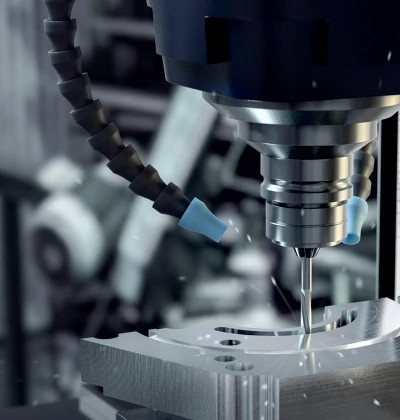
High-fidelity prototypes are engineered to replicate the final product as closely as possible. CNC machined metal components, DMLS printed structural parts, and fully functional assemblies fall into this category. These are used for technical validation, regulatory submission support, and pre-production verification. They cost more but the learning they deliver is irreplaceable.
| Prototype type | Primary use case | Typical cost range | Feedback speed |
|---|---|---|---|
| Low-fidelity (sketch, foam, basic CAD) | Concept validation, idea kill/go decisions | Low | Very fast (days) |
| Mid-fidelity (SLA, SLS, sheet metal) | Usability, aesthetics, stakeholder review | Moderate | Fast (1 to 2 weeks) |
| High-fidelity (CNC, DMLS, functional assembly) | Technical testing, regulatory prep, pre-production | Higher | Moderate (2 to 4 weeks) |
The how to prototype parts breakdown makes the selection process straightforward when you’re honest about what specific question each prototype needs to answer.
Pro Tip: Match your prototype fidelity to your learning goal and current risk level. If you’re still in concept exploration, a CNC-machined prototype is a waste of budget. If you’re preparing for regulatory validation, a foam model won’t give you the mechanical data you need. The goal is efficient learning, not impressive deliverables.
A well-structured rapid prototyping guide will always emphasize this match between fidelity and purpose. Every dollar and every day invested in prototyping should generate a clear, measurable answer to a defined question.
Understanding prototype variety is only half the battle. The next is mastering their iterative use.
Iteration is where the real value of prototyping lives. A single prototype gives you a snapshot. A series of prototypes, each built on the lessons of the last, gives you a map to a successful launch.
The build-test-learn cycle fundamentally reorients product development by killing bad ideas early rather than letting them survive into production. Teams that prototype to learn, rather than prototype to present, consistently outperform on cost, timeline, and launch quality.
Here’s how a disciplined iterative prototyping process works across a product launch:
Reviewing product prototyping best practices shows that teams using structured iteration typically reduce design revisions during production by 30 to 50 percent. That’s not a trivial number. Every late-stage revision in a complex product program carries compounding costs across engineering hours, tooling changes, and schedule delays.
Pro Tip: Before every prototype test, write down in one sentence what “success” means for this specific iteration. If your team can’t agree on that sentence before testing, you won’t agree on what the results mean after testing either.
The economics of early iteration are decisive. A design change caught during the first prototype iteration might cost a few hundred dollars in material and machining time. The same change at production tooling stage can cost 20 to 50 times more, and that’s before accounting for downstream schedule impact. The cost-effective prototyping guide lays out exactly where budget is wasted in conventional linear development versus iterative prototyping.
Beyond cost, iteration compresses time. Teams that avoid early prototyping to “save time” invariably spend far more time managing late-stage surprises. A four-week iterative prototyping sprint before committing to production tooling consistently delivers shorter overall program timelines than rushing to tooling and discovering problems there.
For product launches where prototyping reduces manufacturing costs at every stage, the iterative approach also feeds directly into better signage for product launches and go-to-market readiness, because the final product reflects actual validated decisions rather than compromised ones.
Armed with iterative techniques, decision-making becomes evidence-driven. But how do you pick the right prototype for your launch stage?
Knowing that prototypes exist across a fidelity spectrum is useful. Knowing which prototype to commission right now, given your current launch stage, budget, and risk profile, is where real decision-making happens.
Match fidelity to your learning goal: use low-fidelity prototypes for “should we build this?” questions and high-fidelity for “how exactly should we build this?” questions. Define success metrics before testing to avoid confirmation bias.
The criteria that drive prototype selection at each stage are:
| Launch stage | Fidelity needed | Decision focus | Resource impact |
|---|---|---|---|
| Concept exploration | Low | Should we pursue this direction? | Minimal |
| Design development | Mid | Does the form and function work together? | Moderate |
| Pre-production validation | High | Is this ready for manufacturing? | Significant |
| Regulatory or customer approval | High or functional | Does this meet all requirements? | High |
Before committing to your next prototype build, run through these questions with your team:
The most damaging pattern in industrial prototyping strategies is over-engineering the prototype for the launch stage. Teams in early concept development who commission fully machined CNC prototypes burn budget and time without gaining proportional insight. Conversely, teams in pre-production validation who rely on printed foam models make go/no-go decisions without the mechanical data those decisions actually require.
Common pitfalls when mismatching prototype to phase include: approving a design for tooling based only on visual review, skipping mid-fidelity testing because high-fidelity is “coming soon anyway,” and treating regulatory-grade prototypes as optional if the design “looks right.”
With clarity on matching prototypes to launch stages, what are the key mistakes to avoid and the lessons from the field?
We’ve worked with teams across aerospace, medical, and automotive product programs, and the pattern is consistent: the teams that win at launch are the ones who treat prototyping as a learning discipline, not a production milestone.
The most expensive mistake we see isn’t skipping prototyping entirely. It’s investing in high-fidelity prototypes too early in the development cycle, before the concept is stable enough to justify that cost. Teams do this because a polished prototype feels like progress. But an impressive-looking prototype built on unvalidated assumptions is still a monument to unvalidated assumptions.
The other common failure is skipping structured feedback loops. A prototype that no one tests against defined criteria delivers almost no useful information. Build discipline into your process: define what success looks like before you build, test against real conditions, and document what you learned regardless of whether the result was what you expected.
True innovation in product development isn’t about moving fast in one straight line. It’s about making small, frequent bets, killing the bad ideas quickly, and letting data drive decisions instead of intuition. The teams that streamline product launch consistently are the ones who prototype to learn, not to impress. That discipline compounds across every iteration and delivers launches that hold up in the real world.
With the right prototyping partner, you can turn smart iteration into launch success. WJ Prototypes provides the manufacturing expertise, material range, and production speed that aerospace, automotive, and medical product teams need to prototype efficiently and transition to production without delay. From early-stage vacuum casting prototypes for flexible, production-representative parts, to precision CNC machining services for high-fidelity functional validation, our ISO-certified facility and experienced engineers support every stage of your launch cycle. Request an instant quote and move from design to tested prototype faster than you thought possible.
Prototyping reduces launch risks by validating assumptions, enabling real-world feedback, and detecting design flaws before full production commits budget and tooling.
Low-fidelity prototypes like sketches or basic 3D prints are best for early-stage concepts because they answer concept validation questions quickly and at minimal cost.
Prototyping lets you identify and fix errors before mass production begins, and killing bad ideas early saves engineering resources, tooling investment, and capital that would otherwise be lost to late-stage revisions.
A CNC-machined metal component or DMLS-printed structural part that closely replicates final product geometry and material properties is a standard high-fidelity prototype used for technical and regulatory validation.
Transition to full-scale production when your prototype has met all pre-defined success metrics, passed required functional and regulatory tests, and your team has documented evidence that the design is production-ready.
SERVICES
RESOURCES