



- Room 1807, Unit 9, Building 2, Shangxing Commercial Street, Shangde Road, Shangxing Community, Xinqiao Subdistrict, Bao'an District, Shenzhen City, China
CONTACT US

WhatsApp


Contact Us
Our team is on stand by, waiting toassist you.

Videos
A large collection of educational videos and tutorials.

About Us
Learn about our company, leadership, and mission totransform manufacturing.

Privacy Policy
Applies to all personal information collected through and/or processed in connection.


Aerospace & UAV
WJ Prototypes is your 3D manufacturing partner from prototype to large scale production.

Consumer Electronics
New Product Introduction Solutions for Consumer Electronics.

Robotics & Automation
Need some assistance bringing your robotic device or parts from the sketch-board to reality?

Medical Devices
The medical industry needs high quality, dependable and safe parts and products.

Automotive
New Product Introduction Solutions for Automotive

Industrial Machinery
The main purpose of industrial prototyping is to take the product from drawings into the real world.
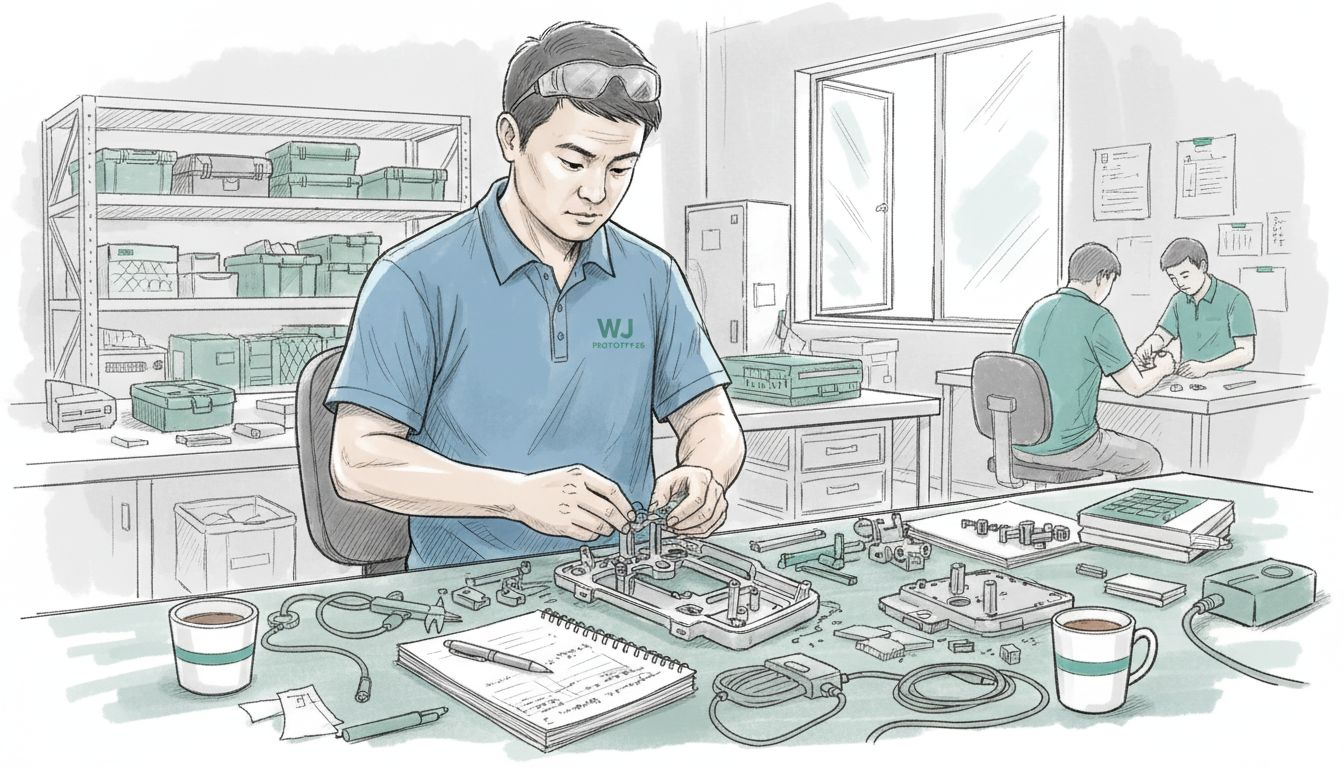
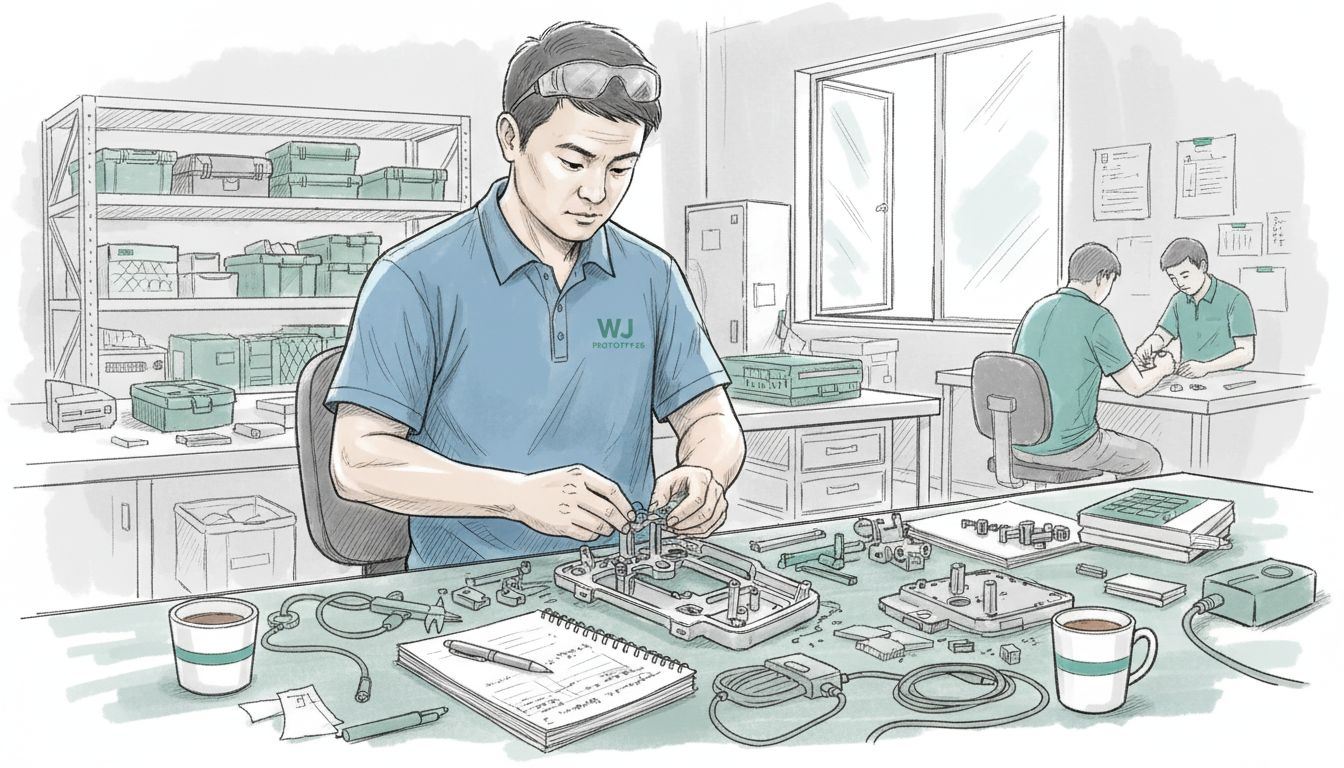
Turning a great concept into a functional prototype can feel overwhelming, especially when every detail matters in industries like Aerospace and Automotive. If you miss critical steps or choose the wrong approach, you risk delays, wasted resources, and designs that fail under real-world testing. Getting it right on the first try is rarely realistic, but there are proven methods for improving your odds with each iteration.
This list breaks down the most practical strategies to make your prototypes meaningful, reliable, and ready for production. You will discover how defining objectives, choosing appropriate materials, and implementing precise quality control can reveal flaws early and shape better final products. Get ready for actionable insights that solve major development headaches and keep your project moving forward with confidence.
| Takeaway | Explanation |
|---|---|
| 1. Define Prototype Objectives Clearly | Set specific goals for prototypes to avoid wasting time and resources on vague improvements. |
| 2. Select Appropriate Materials | Choose materials that accurately reflect the performance and conditions of the final product to ensure valid testing results. |
| 3. Choose the Right Manufacturing Process | Match your manufacturing process to the prototype’s validation goals for efficient and accurate production. |
| 4. Optimize for Iteration | Design prototypes that allow for quick adjustments and learning rather than perfecting a single version. |
| 5. Implement Rigorous Quality Control | Establish systematic quality checks throughout the prototyping process to catch and address defects early. |
Your prototype is only as useful as the specific goals you set for it. Without clear objectives, you’re essentially building in the dark, hoping to stumble upon valuable insights. The reality is that defining clear prototype objectives from the start transforms your prototyping effort from a fishing expedition into a focused engineering problem.
When you work in aerospace and automotive development, time and budget are relentless constraints. You can’t afford to iterate endlessly on unclear questions. Setting clear goals for prototypes such as testing usability, validating specific features, or demonstrating feasibility focuses your team on what actually matters. The difference is measurable: teams with defined objectives gain actionable insights that drive real product decisions, while those without clear goals waste resources chasing vague improvement opportunities.
Why This Matters for Your Development Process
Consider what happens when you skip this step. Your team builds a prototype without a specific validation target. Six weeks later, you’ve created something impressive, but nobody can agree on what it actually proved or disproved. You might learn about aesthetics when you needed to test structural integrity, or validate a feature nobody questioned in the first place.
Clear objectives prevent this wasteful scenario. Prototyping allows early validation of concepts, identifying design flaws and usability issues before full-scale production begins. But this validation only works when you know exactly what you’re validating.
Define Your Core Prototype Purposes
Start by identifying what your prototype absolutely must answer. Consider these essential prototype objectives:
Each objective requires different prototype approaches and testing methods. A prototype designed to validate form and fit differs entirely from one built to demonstrate manufacturing feasibility.
Defining prototype objectives ensures the prototype addresses specific product aspects and answers key questions related to product development, enabling focused and effective iterations.
Translating Objectives Into Development Actions
Once you’ve identified your core objectives, translate them into specific, measurable questions your prototype must answer. Instead of “test the design,” ask “does the pressure drop across the valve stay below 2 bar at 150 liters per minute?” Instead of “check manufacturing,” ask “can CNC machining achieve the required dimensional tolerances without secondary operations?”
Your development team benefits from this specificity in multiple ways:
In aerospace and automotive, scope creep is the silent killer of schedule. A prototype originally intended to validate aerodynamic drag somehow becomes responsible for testing interior acoustics, structural loads, and thermal management. Clear objectives keep your team focused on what matters now.
Real-World Application
Say you’re developing an aerospace fuel system component. Your initial concept features a novel valve design intended to reduce weight while maintaining pressure regulation accuracy. Your prototype objectives might include:
Each objective demands specific prototype fidelity and testing. You might use 3D printed materials for assembly time validation (low cost, fast turnaround) while ordering precision-machined metal components for pressure regulation testing (higher cost, closer to production reality).
Pro tip: Write your prototype objectives as specific, measurable questions your prototype must answer, not vague design goals. Instead of “prove the design works,” ask “does this design reduce weight by 18 percent while maintaining pressure accuracy within specified limits?” This clarity drives faster decisions and prevents scope creep.
Choosing the right material for your prototype is not a minor detail. It’s a critical decision that directly determines whether your prototype accurately represents how your final product will behave. The wrong material choice can invalidate months of testing and push your launch timeline back significantly.
Material selection isn’t about picking the cheapest option or using what’s conveniently available. Your prototype material must reflect the real-world performance demands your product will face. In aerospace and automotive development, a prototype built with the wrong material might pass all your tests beautifully, only to fail catastrophically when manufactured in the production material. That’s a nightmare scenario that costs far more than selecting the correct material from the start.
Why Material Choice Determines Prototype Success
Your prototype serves as a proof of concept and a validation platform. It must answer critical questions about how your design performs under actual operating conditions. Material selection impacts prototype strength, durability, manufacturability, and reliability. Think about what happens when you test a composite bracket using aluminum prototype parts. The stiffness differs, the vibration response changes, the thermal expansion characteristics shift. Your test data becomes misleading because the material behavior doesn’t match what your final product will experience.
The stakes are even higher in industries like aerospace where flight safety depends on material properties. You need prototypes that behave like the production design, not approximations that happen to look similar.
Evaluating Critical Material Factors
When selecting prototype materials, evaluate these key performance characteristics:
This evaluation requires honest assessment of what your prototype needs to prove. A prototype validating aerodynamic drag requires different material priorities than one testing structural loads or thermal management.
Matching Materials to Your Prototype Stage
Consider where you are in your development cycle. Early-stage prototypes proving basic concepts might accept material trade-offs to save cost and time. Mid-stage prototypes validating specific performance characteristics demand material accuracy. Late-stage prototypes before production should use materials as close to production as manufacturing feasibility allows.
You have three primary material categories to evaluate:
Your aerospace and automotive applications often demand metal or composite prototypes because plastic behavior differs too significantly from production reality. A plastic prototype of an engine bracket might look correct and fit properly, but its stiffness, thermal expansion, and resonant frequencies won’t match the aluminum or titanium production part.
Evaluating factors such as mechanical strength, thermal resistance, and cost helps select appropriate plastics, metals, or composites for prototypes that can accurately represent final product behavior.
Real-World Material Selection
Consider an automotive suspension component you’re developing. The production design uses aluminum alloy 6061-T6 for its combination of strength, weight, and machinability. Building your prototype from plastic would be cheaper and faster, but the material’s lower modulus would change the deflection characteristics under load. Your suspension tuning validation would be completely wrong.
Instead, you invest in machining an aluminum prototype that behaves identically to the production part. Your testing now provides accurate data on deflection, stress distribution, and dynamic response. That investment saves you from discovering problems during vehicle durability testing, where rework becomes exponentially more expensive.
Another example: an aerospace fuel system component. The production design uses titanium for its corrosion resistance and high-temperature stability. Prototyping in aluminum to save cost is tempting, but titanium’s different thermal expansion rate means your seal clearances, pressure performance, and thermal cycling behavior would all be incorrect. The prototype must use titanium to provide valid testing results.
Balancing Performance Accuracy with Development Speed
You’re constantly balancing accuracy against schedule and budget. Sometimes you prototype in multiple materials strategically. Your first prototype might use plastic to validate geometry and assembly sequence. Your second prototype uses the production material to validate performance. This staged approach lets you catch design flaws early without the cost of iteration in expensive materials.
WJ Prototypes supports this material flexibility through access to a comprehensive range of options. Whether you need plastic for rapid iteration, aluminum for structural testing, titanium for aerospace validation, or composite materials for advanced applications, selecting the right material at each prototype stage accelerates your path to production while ensuring your test data remains valid.
Pro tip: Match your prototype material to what you’re validating. If testing form and fit, plastic works fine. If validating performance under load or temperature, use the material closest to production, even if it costs more and takes longer. Wasted prototype cost is always less than discovering material incompatibility during production validation.
Selecting the wrong manufacturing process for your prototype can waste weeks and thousands of dollars. Your choice of process directly impacts how quickly you can iterate, how accurately your prototype represents your final design, and whether your testing data will be meaningful. The manufacturing process isn’t just a logistics detail, it’s a strategic decision that shapes your entire development timeline.
Think about what you’re trying to accomplish with your prototype. Are you validating basic geometry and fit? Testing performance under load? Demonstrating manufacturability? Proving thermal behavior? Each objective demands a different manufacturing approach. Picking the right process means your prototype answers your critical questions efficiently. Picking the wrong one means you’re building something that doesn’t validate what matters.
Understanding Your Manufacturing Options
You have two primary categories of manufacturing processes to evaluate: additive methods and traditional subtractive approaches. Each offers distinct advantages depending on your prototype stage and validation requirements.
Additive manufacturing, commonly called 3D printing, builds parts layer by layer from raw material. Traditional manufacturing removes material from a block or sheet to create your final shape. Understanding traditional versus additive manufacturing helps you recognize when each approach delivers value. Additive excels at speed and complex geometry. Traditional manufacturing provides superior accuracy, material properties, and surface finish.
Your decision tree starts with a simple question: what matters most for this prototype? If speed is critical and you’re validating form and fit, additive manufacturing lets you iterate rapidly. If accuracy or performance representation is essential, traditional manufacturing provides the precision your testing demands.
Additive Manufacturing for Speed and Iteration
Additive processes like SLA, SLS, and MJF shine when you need prototypes fast. Consider these scenarios where additive manufacturing accelerates your development:
The trade-off is material properties and surface quality. An SLS plastic prototype won’t behave exactly like a machined aluminum part under load. That’s acceptable when you’re proving geometry. It becomes unacceptable when you’re validating structural performance.
Traditional Manufacturing for Performance Validation
CNC machining, injection molding, and metal casting give you manufacturing processes that closely mirror production capabilities. Choose traditional manufacturing when accuracy and material behavior matter:
The investment is higher and timelines longer, but your test results represent actual product behavior, not approximate simulations.
Strategic Process Selection for Your Development Stage
Your prototyping strategy should evolve as your design matures. Many teams use multiple processes strategically:
Your early-stage prototype uses additive manufacturing to validate basic geometry and assembly sequences quickly. Cost is minimal, speed is maximum, and you catch obvious design flaws before proceeding. This might take one to two weeks.
Your mid-stage prototype transitions to traditional manufacturing processes that match your intended production method more closely. You’re validating performance characteristics now, so accuracy matters. This prototype takes three to four weeks but provides reliable data.
Your late-stage prototype uses production materials and processes as much as feasible. You’re confirming manufacturability and production performance. This prototype might take six to eight weeks but validates that your design works in the real manufacturing environment.
The right manufacturing process depends on what you’re validating at each prototype stage, not on building the fastest or cheapest prototype.
Real-World Process Selection
Consider an aerospace engine component. Your initial prototype uses SLS plastic to validate the overall geometry and assembly interface with surrounding components. In two weeks, you have parts in hand, confirm your geometry works, and identify a clearance issue with an adjacent component. You fix the design and move forward.
Your second prototype uses aluminum CNC machining because you need to validate structural deflection under operating loads. The material properties of aluminum match your intended production material, so testing results accurately predict production behavior. This takes four weeks, but the structural validation data justifies the timeline investment.
Your final prototype uses production material and processes to confirm manufacturability. You’re testing that your design actually works in your selected production environment. This takes six weeks, but you’ve validated every critical aspect before committing to production tooling.
An automotive suspension developer follows a similar pattern. Initial prototypes in plastic confirm geometry and fit. Second-generation prototypes in aluminum validate suspension compliance and ride characteristics. Final prototypes in the production material confirm real-world performance before committing to stamping dies and assembly fixtures.
Matching Process Capabilities to Your Constraints
You’re constantly balancing four competing priorities: speed, accuracy, cost, and material properties. No single process optimizes all four. Your job is recognizing which factors matter most for your current validation objective.
Speed-focused teams often start with additive manufacturing, accepting lower accuracy and material mismatch in exchange for fast iteration. Accuracy-focused teams start with traditional processes, accepting longer timelines because test validity matters more. Cost-conscious teams optimize process selection to minimize waste from iterations and rework.
Most successful teams use a hybrid approach. Understanding how to choose the right rapid prototyping process helps you recognize when to move between manufacturing approaches as your design confidence increases and your validation requirements become more stringent. Early prototypes sacrifice some accuracy for speed. Later prototypes sacrifice speed for accuracy because you’re confident your design direction is correct.
Pro tip: Use additive manufacturing for your first three prototypes when validating geometry and assembly, then transition to traditional manufacturing that matches your production process for performance validation. This combination gives you the speed advantage early when iterations are frequent, plus accuracy advantage later when test validity becomes critical.
Your prototype is not your final answer. It’s a stepping stone in a series of validated improvements. Designing with iteration in mind means building prototypes that teach you something useful, then evolve efficiently based on what you learned. When you ignore iteration reality, you waste time building perfect prototypes that don’t deliver meaningful progress.
Most engineers fall into a trap. They spend weeks perfecting a single prototype, treating it like a near-final product. Then they test it, discover three critical issues, and realize they need to start almost over. The smarter approach is designing lean prototypes specifically structured to answer one or two key questions efficiently, iterate based on results, and progressively increase sophistication as your design confidence grows.
Understanding the Iteration Cycle
Design iteration involves cycles of prototyping, gathering feedback, testing, and refining. Each cycle teaches you something. Your first iteration validates basic geometry. Your second tests performance under load. Your third confirms manufacturability. By structuring your prototypes for specific learning objectives rather than attempting to validate everything at once, you accelerate overall development.
This iterative approach reduces risk dramatically. When you discover a fundamental design flaw in your fourth iteration rather than after committing to production tooling, the cost difference is enormous. Your prototyping strategy determines when and where you find problems.
Design for Modularity and Changeability
Optimizing your design for iteration starts with architecture decisions. Build modularity into your design from the beginning so you can test and refine components independently.
Consider these design strategies that accelerate iteration:
These design decisions cost nothing in early iterations and save enormous time during testing. When you need to change a bracket attachment point, a modular design lets you test a new prototype in two days instead of two weeks.
Balancing Fidelity with Development Speed
Prototype fidelity describes how closely your prototype matches the final product. Low-fidelity prototypes sacrifice accuracy for speed. High-fidelity prototypes sacrifice speed for accuracy. Your iteration strategy should start low and increase fidelity as your design matures.
Your first prototypes are low-fidelity. They validate basic concepts and answer fundamental questions. A plastic 3D printed part might represent geometry without matching material properties or manufacturing precision. You’re answering questions like “Does this geometry fit?” or “Does this mechanism function?” Speed matters more than accuracy because you’re exploring design space.
Your middle prototypes increase fidelity. You’ve validated basic concepts. Now you’re testing performance characteristics more rigorously. These prototypes use materials and manufacturing processes closer to production. They answer questions like “Does structural stiffness meet requirements?” or “How does thermal expansion affect clearances?” Accuracy becomes important because your test results guide final design decisions.
Your final prototypes approach production fidelity. You’re validating that your design works in the actual manufacturing environment with actual production materials and processes. These prototypes answer remaining uncertainty before tooling investment. They’re the most expensive to produce but provide the highest confidence.
Low-fidelity prototypes accelerate early validation while high-fidelity prototypes detail functionality, with iterative cycles delivering both speed and risk reduction throughout development.
Structuring Your Iteration Timeline
Successful product development balances speed against information value. Don’t rush prototyping, but don’t over-perfect either. Here’s a realistic iteration structure for aerospace and automotive development:
Week 1-2: Concept Validation - Low-fidelity prototype proves your basic approach works. This might be a rough 3D printed model or simple mockup. Questions answered: geometry reasonable? Assembly approach viable? Basic function possible?
Week 3-5: Design Refinement - Slightly higher fidelity prototype incorporating feedback from concept validation. Tests specific performance characteristics. Questions answered: does deflection meet targets? Does assembly sequence work? Do tolerances stack correctly?
Week 6-9: Performance Validation - Higher-fidelity prototype using materials closer to production. Rigorous testing under operating conditions. Questions answered: does structural performance meet specifications? How does thermal behavior compare to models? Are there unexpected failure modes?
Week 10-12: Production Readiness - Final prototype using production materials and processes. Validates manufacturability and long-term reliability. Questions answered: can production processes achieve required accuracy? Does production material behave as expected? Are there assembly or quality concerns?
This four-stage approach takes about 12 weeks but validates every critical aspect before committing to production. Rushing through early iterations seems fast but usually means discovering problems later when fixes cost more and take longer.
Real-World Iteration Example
Consider an automotive brake component. Week one produces a plastic 3D printed prototype validating geometry and assembly interfaces. Testing confirms geometry works, but reveals a thermal management concern near the brake pad interface.
Week four produces an aluminum prototype incorporating thermal design improvements. Testing shows thermal management works better, but reveals unexpected stress concentration at a mounting point.
Week eight produces a second aluminum prototype with reinforced mounting area and improved material selection. Structural testing validates load performance. Thermal cycling testing confirms reliability over expected component life.
Week twelve produces the final prototype using the exact production material and manufacturing process. Final validation testing confirms everything works. You’re confident enough to commit to stamping dies and production fixtures.
Without this iterative approach, you might build one impressive prototype and commit to production only to discover thermal issues, stress problems, or material incompatibility after manufacturing begins. The iterative method costs the same amount in prototyping resources but distributes learning throughout development, catching issues while solutions are still affordable.
Avoiding Common Iteration Mistakes
Many teams sabotage their own iteration process by making predictable mistakes. Don’t over-invest in any single prototype. Don’t try to validate too many things simultaneously. Don’t skip testing between iterations because you’re confident in your design. Don’t transition to higher fidelity too quickly, before lower-fidelity prototypes answer fundamental questions.
Why use iterative prototyping in product design becomes clear when you realize that rapid early learning prevents expensive late discoveries. Each iteration should be fast and focused, teaching you something specific before you proceed to more complex validation.
Pro tip: Plan for four prototype cycles rather than expecting one perfect prototype to answer all questions. Allocate your budget and schedule across multiple iterations, starting lean and increasing fidelity as your design matures. This approach discovers problems earlier, reduces overall development risk, and typically reaches production faster than trying to perfect a single prototype.
A prototype that passes visual inspection but fails under load is worthless. Quality control isn’t an afterthought or a checkbox at the end of manufacturing. It’s a systematic process woven throughout prototype development that ensures every part meets specifications and performs as intended. Without rigorous quality control, you’re flying blind, trusting that your prototype works when it might not.
Quality control protects your development timeline and your reputation. When a prototype fails during testing because dimensional tolerances were loose or material properties weren’t verified, you lose weeks to rework. When a prototype passes testing but reveals defects after reaching customers, you damage trust and credibility. Precise quality control procedures catch problems early, when fixes are inexpensive.
Understanding Quality Control in Prototyping
Quality control encompasses setting standards, monitoring materials, in-process checks, and final inspection. This isn’t bureaucratic overhead. It’s systematic validation that your prototype actually meets specifications. Each step in the process serves a purpose: catching defects before they propagate, ensuring material properties match requirements, and confirming that manufacturing processes are producing parts as designed.
Precise quality control minimizes defects and reduces waste during prototyping and manufacturing. When you catch a dimensional error during in-process inspection, you fix it immediately on that part. When you miss it and discover the error during final assembly, you’ve wasted materials and manufacturing time on unusable parts.
Building Your Quality Control Strategy
Effective quality control starts with clear specifications. You can’t inspect for what you haven’t defined. Your quality control process should address these critical areas:
Each checkpoint serves a specific purpose in your quality assurance strategy. Skipping any step increases risk that defective parts reach testing or, worse, customers.
Practical Quality Control Procedures
Quality control in CNC prototyping includes design verification, material inspection, in-process checks, and first article inspections. Your manufacturing partner should employ measurement tools and techniques appropriate to your precision requirements.
Common quality control tools and their applications:
You don’t need all these tools for every prototype. Match your quality control approach to your precision requirements and the criticality of each feature.
Precise quality control procedures ensure prototypes meet specifications and customer expectations while minimizing defects and reducing waste through systematic validation at every stage.
Implementing Quality Control at Each Stage
Quality control isn’t a single inspection event. It’s continuous throughout the prototyping process. Here’s how to structure it effectively.
Material receipt stage - Before manufacturing begins, inspect incoming materials. Verify material certifications match your specifications. Check dimensions and surface condition for damage. Reject materials that don’t meet standards rather than discovering problems after manufacturing.
In-process stage - During manufacturing, measure critical features at logical intervals. If you’re machining a part with tight tolerances, measure before finishing the surface to allow correction before completing the part. If you’re molding plastic parts, check the first part for dimensional accuracy before running the entire production batch.
Final inspection stage - After manufacturing completes, verify that the prototype meets all specifications. This is your last opportunity to catch defects before testing. Measure critical dimensions, verify surface finish, test functionality, and visually inspect for cosmetic defects.
Documentation stage - Document all quality control results. Inspection reports, dimensional measurements, and material certifications become part of your prototype history. If issues emerge later, documentation helps you understand what changed or identify patterns indicating systematic problems.
Real-World Quality Control Impact
Consider an aerospace fuel system component you’re prototyping. Quality control begins when materials arrive. You verify that titanium alloy certificates confirm the specified heat treatment and material properties. During CNC machining, you measure critical seal surfaces after rough machining to catch any geometry errors before finishing operations that would ruin expensive material.
After finishing, you perform comprehensive final inspection. Dimensional measurements using coordinate measuring machines verify that seal diameters and tolerances match specifications. Pressure testing validates that the component holds required pressure without leakage. Surface inspection confirms that no machining defects exist that could cause stress concentration or failure.
Only after passing all quality control procedures does the prototype move to system testing. When problems do emerge during testing, you have comprehensive documentation showing exactly what was manufactured and validated, simplifying troubleshooting.
Without this systematic quality control, you might manufacture a prototype that looks correct, starts testing, and fails under pressure because the seal diameter was 0.002 inches too large. Months of development delay while you manufactured a correction.
Managing Quality Control Costs
Quality control requires investment in inspection time and measurement tools. The key is balancing this cost against the risk and cost of discovering defects too late. For low-criticality features, visual inspection and basic dimensional checks might suffice. For mission-critical features affecting safety or reliability, comprehensive measurement and functional testing is justified.
Ask yourself: what’s the cost of this defect being discovered during testing versus during manufacturing? A defect that causes prototype failure during performance testing might delay your program by weeks and require expensive rework. A defect caught during manufacturing quality control costs only the inspection time and the material for one part.
Pro tip: Define quality control procedures before manufacturing begins, not after. Specify which dimensions require measurement, which materials need certification, and what tolerances are acceptable. Communicate these requirements to your manufacturing partner so they understand your expectations and can implement appropriate quality control checks throughout production.
Your manufacturing partner isn’t just a vendor executing your orders. They’re a critical extension of your engineering team, bringing expertise in processes, materials, and manufacturing constraints that directly impact your prototype success. When you treat them as a true partner rather than a transactional supplier, you unlock innovations and efficiency gains that would be impossible alone.
Many engineers make the mistake of treating prototyping as a one-way transaction. You specify what you want, they build it, you inspect it, and you move on. But the most successful prototyping programs involve continuous dialogue where your manufacturing partner identifies manufacturability concerns early, suggests process improvements, and shares insights from their experience with similar projects. This collaboration compresses development timelines and improves prototype quality.
Why Manufacturing Partnership Matters
Collaborative partnerships among manufacturers, suppliers, and technology providers ignite innovation and improve product quality. Your manufacturing partner understands what’s feasible, what’s difficult, and what’s impossible within their equipment and process capabilities. When you engage them early, they can identify design features that are expensive to manufacture or prone to quality issues, giving you opportunity to optimize before committing to prototyping.
This collaboration drives efficiency and cost savings throughout your development cycle. A manufacturing partner might suggest a simpler approach to a complex feature, saving both cost and time. They might identify material or process alternatives that deliver better results. They understand which tolerances are critical and which can be relaxed without compromising function, helping you balance precision against manufacturing cost.
Building a Strong Manufacturing Partnership
Effective collaboration starts with clear communication and shared understanding of your objectives. Your manufacturing partner needs to understand not just what you’re building, but why you’re building it and what you’re trying to validate.
Key elements of a strong manufacturing partnership include:
These practices transform manufacturing from a transactional activity into a strategic partnership.
Leveraging Manufacturing Expertise
Your manufacturing partner brings specialized knowledge about their processes, equipment capabilities, and material properties. Leverage this expertise throughout your prototyping program.
When specifying materials, ask your manufacturing partner which options they have immediate access to versus which require special sourcing. Material availability directly impacts your prototype delivery timeline. If your preferred material requires 12-week lead time while an alternative delivers in three weeks, that information should influence your material selection early in the design phase.
When designing features requiring tight tolerances, ask your manufacturing partner what tolerances their equipment can achieve consistently and at what cost. Some tolerances require specialized fixturing or secondary operations that dramatically increase manufacturing time and cost. Understanding these trade-offs lets you specify realistic tolerances that your partner can achieve reliably.
When facing manufacturability challenges, bring your manufacturing partner into the problem-solving discussion. They’ve likely encountered similar issues with other clients and can suggest proven solutions. A design feature that seems impossible might be achievable using a process variation or alternative approach your partner has successfully used before.
Managing the Collaborative Relationship
Successful manufacturing partnerships require mutual respect and realistic expectations. Your manufacturing partner has other clients and limited capacity. When you request expedited delivery or significant design changes late in manufacturing, you’re asking them to prioritize your work over others, which has cost and quality implications.
Be realistic about timelines and specifications. If you need a prototype in two weeks, understand that your partner will have less time for quality control and will limit manufacturing flexibility. If you need multiple design iterations with short turnaround between iterations, communicate that upfront so your partner can allocate resources accordingly.
By sharing expertise and resources, organizations drive efficiency, cost savings, and accelerate adoption of advanced manufacturing technologies, creating value for both partners.
Real-World Collaboration Example
Consider an aerospace bracket design where you’ve specified very tight tolerances throughout because your structural analysis suggested tight tolerances are necessary. Your manufacturing partner reviews the design and suggests that the critical features for structural performance are limited to three specific surfaces. The other surfaces can relax tolerances without affecting performance.
Rather than just pushing back on your specifications, they explain the tolerance logic. Manufacturing the tight tolerances on non-critical surfaces significantly increases cost without improving function. By relaxing those tolerances, your partner can deliver the prototype faster and cheaper while maintaining the structural validation you need.
Without this collaboration, you might either commit to unnecessary tight tolerances and high cost, or your partner might manufacture with looser tolerances than you specified, creating quality concerns. The collaborative approach optimizes cost and schedule while maintaining quality and function.
Another example: an automotive component where design changes emerge during early prototyping. Your manufacturing partner, understanding your validation objectives, proactively suggests a process modification that would let you test multiple design variations simultaneously rather than sequentially. This modification costs slightly more per prototype but compresses your overall development timeline significantly because you’re not waiting for one prototype to complete before starting the next.
Selecting the Right Manufacturing Partner
Not all manufacturing partners are equally well-suited to collaborative prototyping. When selecting a partner, evaluate not just their equipment and capabilities but their willingness and ability to engage collaboratively.
Look for partners who ask questions about your project, not just quote your specifications. Partners who understand your business and constraints can provide better suggestions. Verify they have experience with similar projects and materials in your industry. Understanding industrial prototyping capabilities in experienced manufacturing environments helps you recognize partners equipped to handle your complexity level.
Confirm they have adequate quality control and inspection processes. A partner committed to quality collaboration will detail their quality procedures and invite inspection of their processes. They’ll provide documentation showing how they verified specifications and maintained quality throughout manufacturing.
Assess their communication responsiveness. During manufacturing, questions and issues will arise. A partner who responds quickly and keeps you informed prevents surprises at delivery. A partner who goes silent until delivery is complete likely has quality or schedule concerns they’re not communicating.
Pro tip: Establish a regular communication cadence with your manufacturing partner, such as weekly updates during prototyping. Brief calls discussing progress, challenges, and next steps prevent misaligned expectations and allow you to adjust specifications or priorities before manufacturing is complete, rather than discovering issues too late.
Your prototype proved your design works. Now comes the critical next step: translating that successful prototype into reliable, cost-effective production at scale. Many engineers make the mistake of treating prototype design and production design as separate activities. They’re not. Success requires planning for scalability from the prototype phase forward, making design choices that validate production feasibility alongside technical performance.
The transition from prototype to production can make or break your product. A design that works beautifully as a hand-crafted prototype might become prohibitively expensive or unreliable when manufactured at scale. Discovering these issues after tooling investment is catastrophic. Planning for scalable production during prototyping prevents expensive surprises later.
Understanding Design for Manufacturability
Transitioning from prototype to scalable production requires design for manufacturability, early supplier engagement, and extensive testing. Design for manufacturability means optimizing your design specifically for your intended production process and volume. This isn’t about compromising function or quality. It’s about making intelligent design choices that maintain performance while enabling efficient, cost-effective production.
Consider how your design changes as volume increases. A hand-assembled prototype with intricate machining might be feasible for one unit. That same design becomes expensive and problematic when producing thousands of units. Production processes demand designs optimized for automation, consistent quality, and efficiency. Recognizing these requirements during prototyping lets you validate production-realistic designs rather than beautiful prototypes that can’t scale.
Key Considerations for Production Scalability
When optimizing your design for production, evaluate these critical factors that directly impact manufacturability and cost at scale:
Each of these factors influences whether your prototype design can scale to production successfully.
Validating Production Feasibility During Prototyping
Don’t wait until after prototype validation to think about production. During your prototyping program, deliberately validate design choices that impact production scalability.
When you have a successful prototype, intentionally manufacture one or two units using your planned production process. This doesn’t mean full production tooling. It means using production processes at small scale. If your production design uses injection molding, create a simple tool for a few prototypes. If you’ll use stamping in production, prototype using stamped parts rather than machined aluminum.
This production validation prototype reveals manufacturability challenges early. Maybe your wall thickness creates flow problems in injection molding. Maybe your draft angles are too aggressive for stamping. Maybe tolerances that worked in prototype machining prove difficult in production stamping. Discovering these issues while you’re still prototyping costs far less than discovering them after building production tooling.
Also prototype your supply chain. Source production materials from your intended suppliers at production volume. Test whether suppliers can deliver the material properties and tolerances your design requires. Discover if the material you specified isn’t actually available in production quantities or comes with extended lead times. These supply chain realities should influence your design before you commit to production.
Designing for Multiple Production Volumes
Your production volume directly influences which processes and designs make economic sense. A design optimized for ten thousand units per year might be entirely wrong for one hundred thousand units per year.
Low-volume production may use CNC machining, hand assembly, and flexible processes that accommodate design complexity. Mid-volume production typically benefits from simple tooling, assembly fixtures, and semi-automated processes. High-volume production demands dedicated tooling, full automation, and designs optimized for repetitive manufacturing.
Understanding your intended production volume early lets you design appropriately. If you’re targeting one hundred units per year, hand assembly and flexible processes are acceptable. If you’re targeting ten thousand units annually, your design must support efficient automation. These are fundamentally different design approaches requiring different optimization strategies.
Optimizing design for production realities and collaborating with manufacturing partners ensure efficient, cost-effective, and high-quality mass manufacturing outcomes.
Real-World Production Transition Example
Consider an aerospace engine component where prototype development validated a complex internal geometry that required careful hand-machining in the prototype phase. The design functioned perfectly and met all structural requirements.
When planning for production, engineers evaluated manufacturing options. Hand-machining every unit would be prohibitively expensive. Casting was evaluated but metal casting couldn’t achieve the tight internal tolerances without secondary machining. Additive manufacturing could produce the geometry but couldn’t match the material properties and cost requirements.
The solution? Revise the internal geometry slightly to enable more efficient machining paths. The revision required new prototype validation to confirm it still met structural performance. But the revision cut production machining time in half, dramatically reducing production cost without compromising function or performance.
Without this production-focused iteration, the product would have entered production with unsustainable manufacturing cost. The design needed to evolve based on production reality, not just prototype success.
Another example: an automotive component where the prototype design used precision-machined aluminum. During production planning, engineers evaluated stamped steel as a cost-effective alternative. The stamped steel design required different geometry and wall thickness than the machined aluminum, but testing confirmed it delivered equivalent performance at a fraction of the cost.
This transition from prototype material to production material seems simple but required deliberate validation. The prototype validated the performance concept. Production design validation confirmed that the alternative material and process could deliver equivalent performance reliably.
Planning Your Production Timeline
Production scalability doesn’t happen overnight. Plan realistic timelines for design optimization, supplier qualification, tooling development, and production ramp-up. Rushing these steps introduces quality issues and supply chain problems.
After prototype validation completes, allocate time for production design optimization. This might take six to twelve weeks for moderately complex products. During this phase, you’re refining designs based on production realities, qualifying suppliers, and evaluating manufacturing processes.
Tooling development for stamping dies, injection molds, or casting patterns typically requires eight to sixteen weeks depending on complexity. This is where small design changes discovered during production planning make a huge difference. A design change before tooling investment costs engineering time. A design change after tooling investment costs the entire tooling cost plus redesign time.
Production pilot runs validate that your tooling and processes produce parts meeting specifications. Pilot quantities typically range from one hundred to one thousand units depending on product complexity. These pilot units receive comprehensive testing identical to prototype validation, confirming that production manufacturing delivers equivalent quality.
Full production ramp typically extends over two to four weeks as manufacturing volume increases to planned production rate. Quality issues emerging during ramp-up are addressed through process adjustments before reaching full volume.
Engaging Production Partners Early
Your manufacturing partner who built prototypes might not be your production partner. Evaluate what makes sense for production volume. Prototype partners excel at flexibility and rapid iteration. Production partners excel at efficiency and consistency at scale.
Regardless of whether your production partner is the same as your prototype partner, engage them early. Share your production requirements and volume targets. Ask them to evaluate whether your prototype design scales to their production process. Incorporate their recommendations into your production design validation.
A good production partner will identify design features that are difficult at scale and suggest modifications improving manufacturability without compromising function. They’ll help you understand realistic tolerances for production processes and quality consistency achievable at volume. Their insight prevents you from designing in ways that look good in prototype but prove problematic in production.
Pro tip: During prototype validation, deliberately manufacture production validation samples using your intended production process at small scale, even if it costs more than prototype-friendly methods. Discovering production challenges while prototyping costs far less than discovering them after committing to production tooling investment.
Below is a comprehensive table summarizing the essential considerations and strategies discussed for effective prototype development and transitioning to production.
Mastering the 7 Best Practices for Product Prototyping Success means overcoming challenges like defining clear objectives, selecting precise materials, choosing the right manufacturing processes, and ensuring rigorous quality control. These critical factors can be overwhelming and costly without a trusted partner who understands the complexities of aerospace and automotive prototyping. WJ Prototypes offers tailored solutions that address these exact pain points by combining advanced additive manufacturing technologies with traditional fabrication methods to deliver fast, accurate, and cost-effective prototypes that match your development goals.
Whether you need rapid iteration using SLA or MJF, or high-fidelity CNC machining with metals that replicate production performance, WJ Prototypes supports your entire prototyping journey. Benefit from our ISO certified quality assurance, expert engineering guidance, and global delivery network to transform your design into validated, production-ready parts. Start optimizing your prototyping process today by exploring our comprehensive services at WJ Prototypes. Discover how to streamline your development with precision manufacturing by visiting Rapid Prototyping Solutions. Ready to bring your product to market faster with confidence Choose WJ Prototypes and get your instant quote now at WJ Prototypes Instant Quoting.
Defining clear objectives is crucial for product prototypes. Start by identifying specific questions your prototype must answer, such as validating usability or testing specific features.
Choosing the right materials is essential for accurate performance validation. Evaluate the mechanical strength, thermal resistance, and manufacturability of materials to ensure they reflect your product’s real-world requirements.
Selecting the appropriate manufacturing process impacts the quality and efficiency of your prototype. Use additive manufacturing for rapid iterations and traditional manufacturing for more precise performance testing.
Design your prototype with modular components to allow for easy changes and testing. By focusing on one or two key questions at a time, you can gather useful insights and make quicker iterations based on feedback.
Implement a systematic quality control process that includes material verification, in-process checks, and final inspections. Establish clear specifications and perform regular checks to catch errors before they propagate.
SERVICES
RESOURCES