



- Room 1807, Unit 9, Building 2, Shangxing Commercial Street, Shangde Road, Shangxing Community, Xinqiao Subdistrict, Bao'an District, Shenzhen City, China
CONTACT US

WhatsApp


Contact Us
Our team is on stand by, waiting toassist you.

Videos
A large collection of educational videos and tutorials.

About Us
Learn about our company, leadership, and mission totransform manufacturing.

Privacy Policy
Applies to all personal information collected through and/or processed in connection.
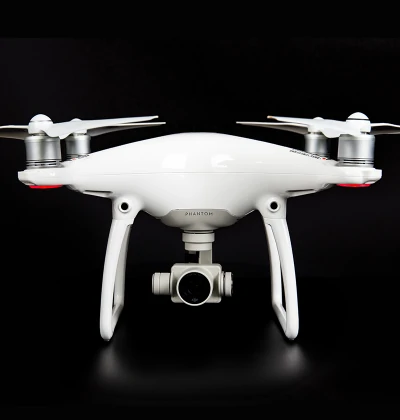

Aerospace & UAV
WJ Prototypes is your 3D manufacturing partner from prototype to large scale production.

Consumer Electronics
New Product Introduction Solutions for Consumer Electronics.

Robotics & Automation
Need some assistance bringing your robotic device or parts from the sketch-board to reality?

Medical Devices
The medical industry needs high quality, dependable and safe parts and products.

Automotive
New Product Introduction Solutions for Automotive

Industrial Machinery
The main purpose of industrial prototyping is to take the product from drawings into the real world.


TL;DR:
- Instant quoting automates real-time cost estimates, enabling faster, more accurate pricing during the design process.
- It reduces quoting cycle times by up to 93% through centralized data and seamless system integration, enhancing prototyping speed and efficiency.
Instant quoting is defined as an automated pricing system that delivers real-time cost estimates the moment an engineer uploads a design or enters part specifications. The benefits of instant quoting extend far beyond speed. Product development teams gain pricing transparency, reduced error rates, and the ability to make material and geometry trade-offs during the design phase rather than days later. Tools like SAP CPQ, platforms built on QSTRAT methodology, and services like Wjprototypes’ online quoting interface demonstrate that quoting automation has moved from a competitive advantage to a baseline expectation in precision manufacturing.
Instant quoting, also referred to as configure-price-quote (CPQ) automation in enterprise contexts, delivers three measurable advantages to product development teams: faster cycle times, higher pricing accuracy, and tighter integration with design workflows. Each of these directly affects how quickly a prototype moves from CAD file to physical part.
The speed gain alone is substantial. Quoting cycles shrink from 3 to 5 days down to 4 to 8 hours with automation centralizing pricing and inventory data. That is a 93% reduction in turnaround time. For a team running weekly design sprints, that difference determines whether pricing feedback arrives before or after the next iteration begins.
Accuracy improves because automated systems pull from live data rather than static spreadsheets. When a sales rep or engineer manually assembles a quote, they reference pricing sheets that may be days or weeks out of date. Automated CPQ systems connect directly to ERP and inventory platforms, so the price reflects current material costs, machine availability, and production capacity at the moment of request.

The third benefit, design workflow integration, is the one most underappreciated by teams new to instant quoting. When pricing updates in real time as you modify wall thickness, switch from aluminum to ABS, or change surface finish, you are no longer treating cost as a post-design variable. You are designing with cost as a live constraint.
Pro Tip: Before deploying any instant quoting tool, map your existing ERP and PLM data sources. Quote speed is only as fast as the slowest data feed behind it.
The mechanism behind faster turnaround is data centralization, not just software speed. Traditional quoting requires a sales or engineering rep to gather pricing from multiple sources: supplier catalogs, internal cost sheets, machine scheduling data, and approval chains. Each handoff adds latency.

Automated quoting removes 85% of the time spent locating pricing and inventory information. That reclaimed time is not trivial. On a complex RFQ with 20 line items, manual data gathering can consume two to three hours before a single price is calculated.
LTIMindtree’s 2025 case study of a global electronics manufacturer shows a 50% faster RFQ response after integrating service CPQ with existing ERP infrastructure. The improvement came not from faster calculation but from eliminating the approval delays that stacked up between departments. Automated systems flag exceptions and route only non-standard requests for human review, while standard configurations proceed without delay.
Approval cycles that previously took up to 24 hours now complete in minutes. This matters most in competitive bidding situations. Companies responding first to RFQs with accurate quotes see win rates improve by up to 50%. Speed is not just an operational metric. It is a revenue driver.
Pro Tip: Integrate your CPQ tool directly with your ERP and MES platforms from day one. Parallel data access is what converts a fast quoting engine into a genuinely fast quoting workflow.
Pricing errors in manufacturing quotes carry real costs. An underquoted job erodes margin. An overquoted job loses the order. Manual quoting introduces both risks because it relies on human judgment applied to data that may not reflect current conditions.
Instant quoting systems address this through live data integration. The key accuracy benefits include:
A CLARITY case study of a global manufacturer shows that AI-powered quoting with SAP CPQ reduced quoting preparation time by 73% and improved quote-to-order conversion rates by 5%. The conversion gain came directly from pricing consistency. Customers received quotes that matched what they were eventually invoiced, which built trust and reduced renegotiation cycles.
The downstream effect on profit margins is significant. When pricing variability is removed, revenue leakage from underquoted jobs decreases. When approval thresholds are enforced automatically, discount creep stops. These are not theoretical gains. They show up in gross margin reports within the first quarter of deployment.
Prototyping is an iterative process. Engineers rarely finalize a design on the first pass. They test geometry, swap materials, adjust tolerances, and evaluate multiple manufacturing processes before committing to production tooling. Each of those decisions has a cost implication.
The advantages of instant quotes during prototyping are most visible when pricing updates live with every design change. Consider a team evaluating whether to prototype a bracket in CNC-machined aluminum or SLS nylon. With a traditional quoting process, that comparison requires two separate RFQs, each taking days to return. With instant quoting, the comparison happens in the same session.
Materials Direct emphasizes that rapid re-quoting during design iteration is the core value proposition of instant online pricing. The ability to see cost implications of design changes in real time transforms pricing from a gate at the end of the design process into a continuous input throughout it.
A practical framework for product teams adopting instant quoting in prototyping workflows:
The fourth step reflects an important nuance. Fictiv’s injection molding quoting distinguishes between instant quotes for qualifying configurations and engineer-reviewed quotes for complex cases. This two-track approach preserves speed for standard jobs while maintaining accuracy for high-complexity parts. Product teams should adopt the same logic rather than expecting instant quoting to handle every scenario without human oversight.
Pro Tip: For complex custom parts with tight tolerances or unusual geometries, treat the instant quote as a budget estimate and request an engineer review before committing to production.
Integration is where most instant quoting deployments succeed or fail. The quoting engine itself is rarely the bottleneck. The bottleneck is data quality and system connectivity.
The critical integration points for product development teams include:
Tightly integrated and standardized quoting processes translate automation gains into measurable improvements in deal velocity, pricing consistency, and customer satisfaction. The word “standardized” carries weight here. Integration without data hygiene produces fast quotes that are consistently wrong.
Data hygiene means maintaining clean, current product catalogs, accurate machine rate cards, and up-to-date material pricing in every connected system. A CPQ tool pulling from a stale ERP database will generate instant quotes that require manual correction, which defeats the purpose entirely.
Lowe’s AI-based quoting tool demonstrates the practical payoff of clean data integration. The tool converts handwritten notes and spreadsheets into quote-ready orders in minutes, saving professional estimators significant time. The speed is possible because the underlying product and pricing data is structured and current. Without that foundation, the AI has nothing reliable to work from.
For product development teams at manufacturing companies, the implementation sequence matters. Connect your highest-volume, most standardized part families first. Prove the system on simple configurations before extending it to complex assemblies. This staged approach builds internal confidence and surfaces data quality issues before they affect high-value quotes.
Instant quoting delivers its greatest value when automation, clean data, and a two-track strategy for simple versus complex jobs work together inside a connected product development workflow.
| Point | Details |
|---|---|
| Speed improvement is measurable | Quoting cycles drop from days to hours, with documented reductions of up to 93% using automation. |
| Accuracy depends on live data | Real-time ERP and inventory connections eliminate the pricing errors that manual quoting introduces. |
| Design iteration benefits directly | Live pricing updates during CAD modifications turn cost into a design input, not a post-design gate. |
| Two-track strategy is required | Instant quotes handle standard configurations; complex parts need engineer review to maintain accuracy. |
| Integration quality determines outcome | CPQ tools connected to ERP, CRM, and MES platforms deliver consistent gains; isolated tools do not. |
I have worked with product development teams across aerospace, medical devices, and industrial machinery. The teams that get the most out of instant quoting are not the ones who deploy it fastest. They are the ones who change how they think about pricing in the design process.
The common mistake I see is treating instant quoting as a faster version of the old process. Teams upload a finalized design, get a price, and move on. That captures maybe 30% of the available value. The real shift happens when engineers start using the quoting tool during design, not after it. When a mechanical engineer can see that switching from 6061 aluminum to 7075 adds 18% to part cost but reduces wall thickness by 40%, that is a design decision made with full information. That kind of smarter prototyping decision is what compresses development timelines.
The other pitfall worth naming directly: over-reliance on instant quoting for jobs that genuinely require engineering judgment. I have seen teams accept instant quotes on parts with complex undercuts, non-standard alloys, or tight GD&T callouts, then encounter cost surprises at production. The two-track model exists for a reason. Use it. Instant quoting is a precision tool, not a universal one.
The trajectory of this technology points toward tighter AI integration with rapid prototyping workflows, where pricing models learn from historical job data to improve estimate accuracy over time. That future is already arriving. The teams building the data infrastructure now will have a meaningful advantage when it does.
— Yu
Wjprototypes offers an online instant quoting interface built for product development teams that need accurate pricing without the wait. Upload your CAD file, select your process from CNC machining, SLA, SLS, MJF, DMLS, sheet metal, or injection molding, and receive a price in minutes. The platform supports a full range of CNC machining materials including aluminum alloys, stainless steel, titanium, and engineering plastics, each with configurable finishes and tolerances. For teams running iterative prototyping cycles, Wjprototypes’ quoting system updates pricing as you adjust specifications, so you can compare options before committing. ISO-certified manufacturing and global delivery make Wjprototypes a reliable partner from first prototype to low-volume production. Get a CNC machining quote today and move your design forward.
Instant quoting is an automated pricing system that generates real-time cost estimates when a designer uploads a CAD file or enters part specifications. It replaces manual quoting processes that typically take days with responses delivered in minutes or hours.
Quoting automation reduces turnaround from 3 to 5 days down to 4 to 8 hours, representing up to a 93% improvement in cycle time. The speed gain comes from centralizing data and eliminating manual approval steps.
Instant quoting works best for standard or qualifying configurations. Complex parts with tight tolerances, unusual geometries, or non-standard materials benefit from a two-track approach where the instant quote provides a budget estimate and an engineer review confirms final pricing.
Instant quoting connects to live ERP and inventory data, so prices reflect current material costs and machine availability rather than static spreadsheets. This eliminates the pricing variability that causes margin erosion and customer disputes in manual quoting.
Effective instant quoting requires connection to ERP for live material and capacity data, CRM for customer history, and ideally PLM or CAD platforms so design files feed directly into the quoting engine without manual re-entry.
SERVICES
RESOURCES