



- Room 1807, Unit 9, Building 2, Shangxing Commercial Street, Shangde Road, Shangxing Community, Xinqiao Subdistrict, Bao'an District, Shenzhen City, China
CONTACT US

WhatsApp


Contact Us
Our team is on stand by, waiting toassist you.

Videos
A large collection of educational videos and tutorials.

About Us
Learn about our company, leadership, and mission totransform manufacturing.

Privacy Policy
Applies to all personal information collected through and/or processed in connection.
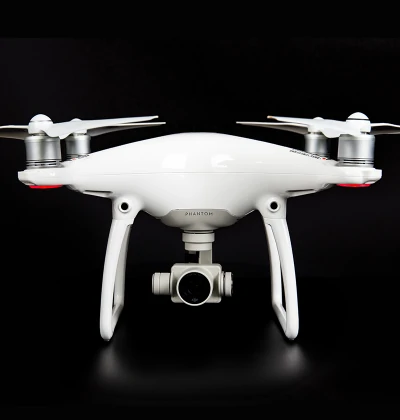

Aerospace & UAV
WJ Prototypes is your 3D manufacturing partner from prototype to large scale production.

Consumer Electronics
New Product Introduction Solutions for Consumer Electronics.

Robotics & Automation
Need some assistance bringing your robotic device or parts from the sketch-board to reality?

Medical Devices
The medical industry needs high quality, dependable and safe parts and products.

Automotive
New Product Introduction Solutions for Automotive

Industrial Machinery
The main purpose of industrial prototyping is to take the product from drawings into the real world.


TL;DR:
- Instant quoting reduces manufacturing price and lead time generation from days to seconds.
- AI-based systems analyze CAD files to automate manufacturability checks and cost calculations.
- Success depends on quality inputs, up-to-date rules, and human review for complex cases.
Most manufacturing managers assume that quoting a new part correctly takes days of back-and-forth emails, spreadsheet calculations, and estimator review. That assumption is costing you deals. Quoting time reduced by up to 95% in real SME deployments, shrinking multi-day cycles down to seconds. This article breaks down exactly how instant quoting systems work, what they can and cannot do, and how your team can use them to win more business without adding headcount.
| Point | Details |
|---|---|
| Lightning-fast quoting | Instant quoting systems cut quoting time from days or weeks to seconds or hours. |
| Value for SMEs | Small manufacturers gain speed, accuracy, and reduced costs with automated quoting. |
| Key limitations | Complex parts or poor CAD input may require human review to ensure quote accuracy. |
| Integration maximizes results | Connecting quoting tools with ERP and CRM systems further improves accuracy and efficiency. |
| Continuous improvement | Regularly updating quoting rules and learning from outcomes sharpens system performance. |
An instant quoting system is a software platform that automates price and lead time generation for manufactured parts, typically within seconds to minutes of receiving a customer’s design file. Instead of routing a request to an estimator who manually checks tolerances, material costs, and machine availability, the system does it automatically.
Traditional quoting has three core problems that hold SMEs back:
Instant quoting systems automate CAD analysis using AI, machine learning, and rule-based algorithms to generate pricing and lead times in seconds to minutes. The platform reads geometry, flags manufacturability issues, and applies your cost rules without human intervention.
Who benefits most? SMEs focused on rapid prototyping and low-volume production gain the most ground. If your shop handles high-mix, low-volume orders and you want a self-service portal that lets customers get prices at midnight without calling your sales team, this technology is built for you. Understanding the benefits of rapid prototyping helps frame why speed in quoting directly connects to speed in product development.
The SPM rapid quoting case study shows how a real contract manufacturer built a data-driven quoting engine that scaled without adding estimators.
Pro Tip: Before evaluating any instant quoting platform, map your five most common part types and their typical tolerances. A system that handles those accurately is worth far more than one with impressive demos on simple geometries.
Understanding the workflow removes the mystery and helps you spot where a system might fall short for your specific needs. Here is how a modern instant quoting platform processes a request from upload to output.
The core steps from CAD upload through cost output are standardized across most platforms, though the sophistication of DFM analysis varies significantly between vendors.
| Factor | Traditional quoting | Instant quoting |
|---|---|---|
| Time to quote | 24 to 72 hours | Seconds to 10 minutes |
| Error rate | High, manual input | Low, rule-based |
| Estimator required | Yes, always | Only for exceptions |
| Customer self-service | Rarely available | Standard feature |
| Scalability | Limited by headcount | Scales automatically |
For teams building out their process knowledge, the rapid prototyping guide covers how process selection affects both cost and turnaround, which directly informs how quoting rules should be configured. You can also review how quoting tools work across different manufacturing environments.
Pro Tip: Always upload STEP files instead of PDFs or drawings for the most accurate automated quote. PDF-based quoting forces the system to interpret 2D projections, which introduces ambiguity and reduces accuracy by a significant margin.
The process improvements are clear, but what does this actually mean for your bottom line and competitive position? The numbers are striking.
Quoting time cut by up to 95%, margins improved, and response time reduced by 60% in documented SME deployments. A German manufacturer using custom AI quote automation slashed their quote-to-cash cycle by 43%. These are not theoretical gains.
Here is what that translates to in practice:
| Metric | Before instant quoting | After instant quoting |
|---|---|---|
| Average quote time | 48 hours | Under 5 minutes |
| Quote-to-cash cycle | Baseline | Reduced by up to 43% |
| Response time | Baseline | Cut by up to 60% |
| Estimator hours per quote | 1 to 3 hours | Near zero for standard parts |

For context on where cost savings compound, reviewing cost-effective prototyping strategies alongside quoting improvements gives a fuller picture. You can also compare process economics in the CNC vs 3D printing costs breakdown, which affects how your quoting rules should be structured. The SME quoting insights data reinforces that speed and accuracy together drive measurable revenue gains.
Instant quoting systems are powerful, but they are not a plug-and-play solution that works perfectly out of the box. Understanding where they struggle saves you from costly surprises.

Advanced platforms connect directly to your ERP and CRM systems, pulling real-time data on material inventory, machine availability, and customer history. This integration is what separates a basic quoting widget from a true dynamic pricing engine. Without it, your quotes may reflect outdated cost assumptions.
However, accuracy drops to ±10 to 15% for complex parts, custom tooling requirements, non-standard tolerances, or exotic materials. Poor CAD quality compounds the problem significantly, and manual review remains necessary for these cases.
Watch for these red flags during implementation:
“The best instant quoting implementations treat automation as the first pass, not the final word. Human engineers reviewing flagged exceptions and continuously refining pricing rules are what separate accurate, profitable quoting from fast but unreliable pricing.”
For teams still deciding which manufacturing process fits their parts, choosing the right rapid prototyping process is a prerequisite to configuring accurate quoting rules. The AI quoting integration resource covers ERP and CRM connectivity in detail for B2B manufacturers.
Most articles on instant quoting focus on the technology. Here is what they consistently skip: the software is only as good as the inputs feeding it.
We have seen teams invest in capable platforms and still produce inaccurate quotes because their CAD standards were inconsistent or their pricing rules were built on outdated cost assumptions. The system did exactly what it was configured to do. The problem was the configuration.
Another reality that rarely gets mentioned: fewer than 25% of rapid quotes generated from PDFs or ambiguous specs are fully accurate on the first pass. STEP files with clean geometry and defined tolerances change that number dramatically.
The manufacturers who get the most from instant quoting treat it as a living system. They review flagged quotes weekly, update rules when material costs shift, and keep an engineer in the loop for anything outside standard parameters. Automation handles volume. Expertise handles complexity.
If you want to see how leading manufacturers in China are applying these principles at scale, the top rapid prototyping China overview shows what best-in-class looks like operationally.
Pro Tip: Schedule a monthly rule audit for your quoting engine. Material prices, labor rates, and machine availability change constantly. A quote engine running on six-month-old data is generating six-month-old prices.
If you are ready to move from slow, manual quoting to instant, accurate pricing for your prototyping and low-volume production needs, WJ Prototypes offers a user-friendly quoting interface built for exactly this workflow. Upload your CAD file and get a fast, reliable quote across services including CNC machining, SLA, SLS, MJF, and vacuum casting, with lead times and pricing generated without the usual back-and-forth. Whether you are developing a new product or scaling a low-volume run for industrial machinery applications, WJ Prototypes combines automation with experienced engineering review to keep your projects moving.
Most systems accept CAD files in STEP, IGES, and SolidWorks formats for automated analysis, with STEP files generally producing the most accurate results.
For highly complex or non-standard specs, accuracy may be ±10 to 15%, and human engineering review is strongly recommended before committing to a price.
Instant quoting can reduce the process from several days to seconds or minutes, with time savings up to 95% documented in real SME deployments.
Yes, these systems are especially effective for HMLV production. Platforms with ERP API and AI DFM capabilities are recommended for the best results in high-mix environments.
ERP and CRM integration ensures real-time data on inventory and materials, which is essential for reducing pricing errors in automated quoting systems.
SERVICES
RESOURCES