



- Room 1807, Unit 9, Building 2, Shangxing Commercial Street, Shangde Road, Shangxing Community, Xinqiao Subdistrict, Bao'an District, Shenzhen City, China
CONTACT US

WhatsApp


Contact Us
Our team is on stand by, waiting toassist you.

Videos
A large collection of educational videos and tutorials.

About Us
Learn about our company, leadership, and mission totransform manufacturing.

Privacy Policy
Applies to all personal information collected through and/or processed in connection.

Aerospace & UAV
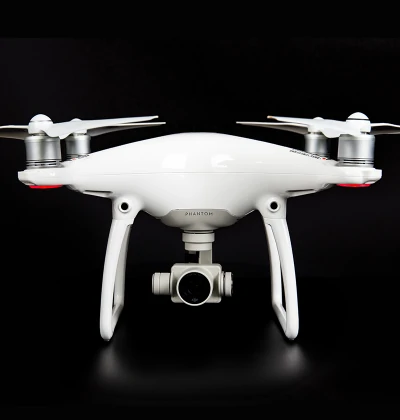
WJ Prototypes is your 3D manufacturing partner from prototype to large scale production.

Consumer Electronics
New Product Introduction Solutions for Consumer Electronics.

Robotics & Automation
Need some assistance bringing your robotic device or parts from the sketch-board to reality?

Medical Devices
The medical industry needs high quality, dependable and safe parts and products.

Automotive
New Product Introduction Solutions for Automotive

Industrial Machinery
The main purpose of industrial prototyping is to take the product from drawings into the real world.

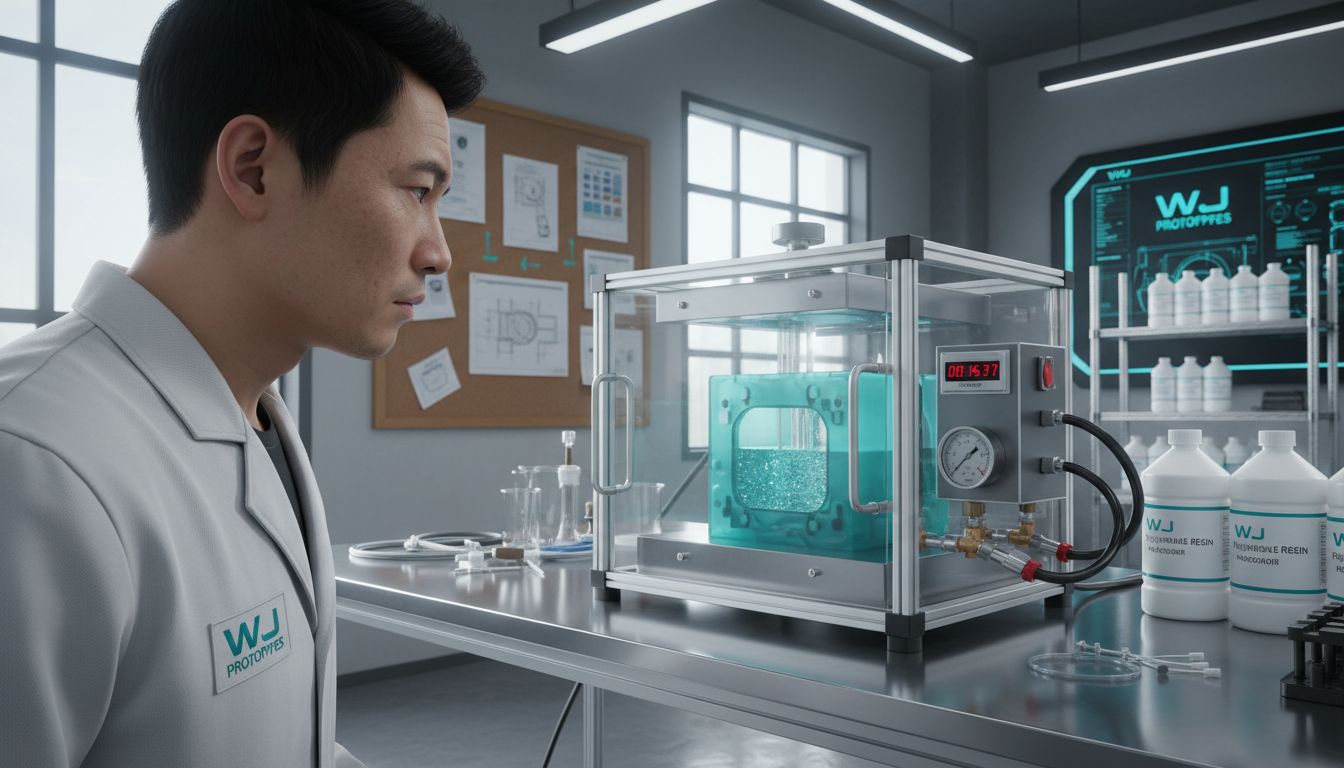
Most engineers searching for fast, reliable part production discover that vacuum casting can achieve tolerances as tight as 0.1mm, easily outpacing common 3D printing methods. This technique delivers impressive detail and quality, yet misconceptions about its uses and limitations often lead to confusion in product development. With demands for higher precision and lower costs shaping manufacturing across the world, understanding what vacuum casting actually offers—and where it fits into your prototyping projects—can save valuable time and resources.
| Point | Details |
|---|---|
| Vacuum Casting Overview | Vacuum casting is an advanced manufacturing technique ideal for low-volume production and prototyping, utilising vacuum principles for precision and detail. |
| Misconceptions | It is often mistakenly viewed as suitable for high-volume production, whereas it excels in small batch runs of 10-50 parts. |
| Material Versatility | A range of polyurethane materials allows for tailored prototypes that simulate production-grade plastics, meeting diverse engineering needs. |
| Cost Efficiency | Vacuum casting offers significant cost advantages for small to medium production volumes compared to traditional methods, making it an optimal choice for rapid prototyping and design validation. |
Vacuum casting is an advanced manufacturing technique that enables precise reproduction of complex parts through a specialised moulding process. Unlike traditional manufacturing methods, this process leverages atmospheric pressure and vacuum principles to create highly detailed prototypes and small production runs.
The technique involves creating a master pattern, typically using 3D printing technologies like stereolithography, which serves as the foundational model for subsequent silicone rubber moulds. Engineers carefully select appropriate urethane materials that can capture intricate geometric details with remarkable fidelity. By drawing liquid material into a mould using vacuum pressure, manufacturers can achieve exceptional surface finishes and dimensional accuracy that other methods struggle to replicate.
One prevalent misconception about vacuum casting is that it represents a universal manufacturing solution suitable for high-volume production. In reality, this method is optimised for low-volume manufacturing and prototyping. The process involves significant initial setup costs and limited mould lifespans, which make it economically impractical for large-scale production runs. Specialist engineers typically recommend vacuum casting for scenarios requiring:
Professional manufacturers understand that vacuum casting represents a nuanced manufacturing approach. While it offers extraordinary precision and material flexibility, it requires specialised knowledge and equipment. Vacuum casting services in China have become increasingly sophisticated, providing global manufacturers with cost-effective solutions for creating intricate prototype components with exceptional quality and repeatability.
Vacuum casting is a sophisticated manufacturing technique that transforms intricate digital designs into precise physical prototypes through a meticulously controlled process. Casting techniques in China have refined this method to deliver exceptional precision and repeatability.
The process begins with creating a highly detailed master pattern, typically generated using advanced 3D printing technologies like stereolithography. This master model serves as the foundational blueprint for subsequent mould fabrication. Engineers carefully craft a high-quality silicone rubber mould around the master pattern, ensuring every microscopic detail is captured with remarkable accuracy. The mould creation involves multiple critical steps:
Once the silicone mould is prepared, the vacuum casting process enters its most critical phase. Liquid resin is carefully poured into the mould cavity under controlled vacuum conditions, which systematically eliminates air bubbles and ensures flawless material distribution. The vacuum environment guarantees exceptional surface finishes and dimensional accuracy, making this technique particularly valuable for industries requiring intricate, high-precision components.
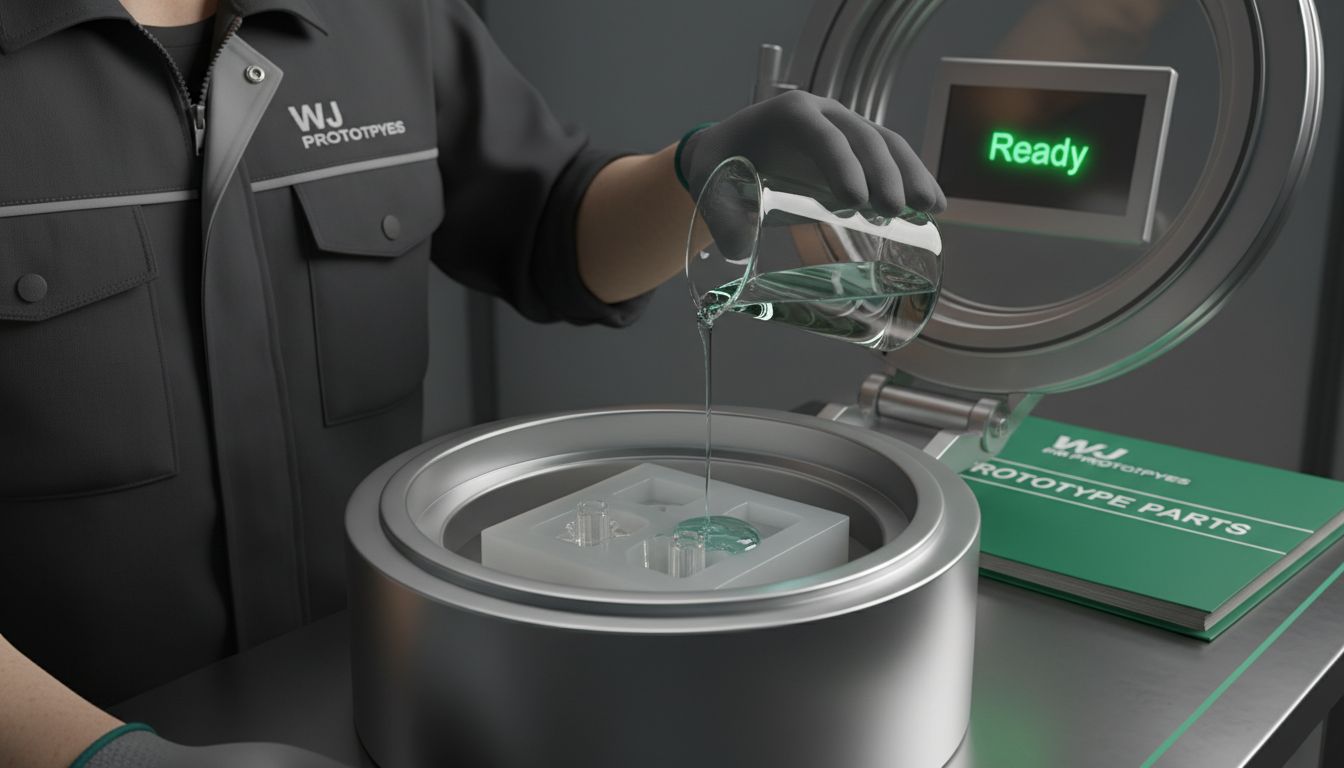
The final stage involves precise resin curing and part extraction. Depending on material selection and specific project requirements, manufacturers can achieve remarkable levels of detail and structural integrity. Professional vacuum casting services excel at reproducing complex geometries with tolerances as tight as 0.1mm, providing engineers and designers with a powerful prototyping and low-volume production solution that bridges the gap between digital design and physical realisation.
Vacuum casting leverages a diverse range of polyurethane materials that offer exceptional versatility for engineering and design applications. Urethane casting materials provide engineers with remarkable flexibility in selecting resins that match specific performance requirements across multiple industries.
The material selection process involves careful consideration of mechanical properties, thermal resistance, and aesthetic characteristics. Typical polyurethane formulations include:
Engineering disciplines with particularly high demand for vacuum casting include medical device manufacturing, automotive prototyping, robotics development, and aerospace component design. These sectors require intricate components with precise dimensional tolerances and complex geometrical configurations that traditional manufacturing methods struggle to reproduce. Manufacturers can select materials mimicking properties of production-grade plastics, enabling realistic functional prototyping before committing to expensive tooling.
Professional vacuum casting services excel at matching material properties to specific application requirements. From soft, flexible components for medical implant prototypes to rigid, high-performance parts for aerospace instrumentation, the technique offers unparalleled design freedom. The ability to rapidly produce small batches with production-like material characteristics makes vacuum casting an invaluable solution for engineers seeking to validate designs, test mechanical interactions, and accelerate product development cycles.
Vacuum casting revolutionises product development by offering engineers an incredibly efficient prototyping methodology. Prototyping techniques for engineers demonstrate how this method dramatically accelerates design validation and product refinement processes.
The technique provides remarkable advantages for product development teams, particularly in reducing time-to-market and minimising initial manufacturing expenses. Manufacturers can create multiple high-fidelity prototype components within 24 hours, enabling rapid design iterations and quick performance assessments. Key benefits include:
Vacuum casting excels in scenarios requiring complex geometrical configurations and precise material simulations. Engineers can produce functional prototypes that closely represent final production components, allowing comprehensive testing and validation before significant financial commitments. The technique enables designers to evaluate mechanical interactions, aesthetic qualities, and structural integrity with unprecedented accuracy.
Professional prototyping services leverage vacuum casting to bridge conceptual design and manufacturing readiness. By providing cost-effective, rapid production of small-batch components with production-like characteristics, this method empowers engineering teams to innovate quickly, reduce development risks, and accelerate product launch timelines with confidence.
Vacuum casting represents a strategic manufacturing approach that balances economic efficiency with precision engineering capabilities. Rapid prototyping methodologies demonstrate the nuanced economic advantages of selecting appropriate manufacturing techniques for different production requirements.
Compared to traditional manufacturing methods, vacuum casting offers significant cost advantages for small to medium production volumes. The economic considerations can be broken down into several critical factors:
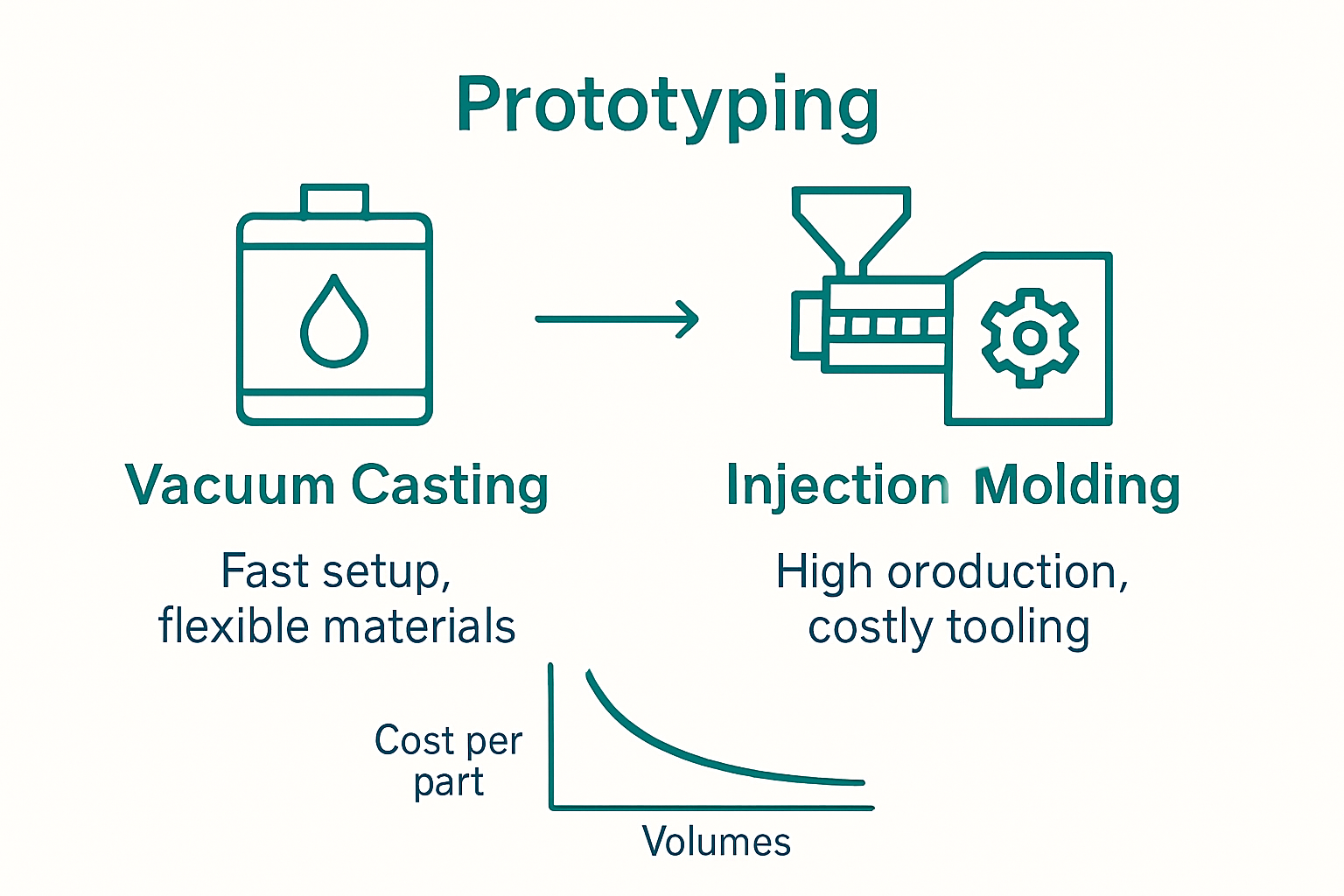
Manufacturers must carefully evaluate the total cost of production across different scenarios. While injection moulding becomes more economical at higher volumes, vacuum casting provides unparalleled flexibility for prototype development and limited production runs. The technique eliminates substantial upfront tooling expenses, allowing engineers to experiment and refine designs without significant financial risk.
Professional engineering teams recognise that vacuum casting bridges the economic gap between 3D printing and traditional mass production techniques. By enabling rapid, cost-effective prototype generation with production-like material properties, this method allows organisations to validate designs, conduct comprehensive testing, and make informed decisions about full-scale manufacturing investments with minimal financial exposure.
If you found value in learning about vacuum casting and its role in producing high-fidelity prototypes and small batch parts with remarkable detail and material flexibility you will appreciate how WJ Prototypes can address your manufacturing challenges. This advanced technique solves key pain points such as reducing time-to-market, lowering initial tooling costs and achieving precise dimensional accuracy in complex geometries—all critical for industries like aerospace, medical devices and robotics. By combining expertise in vacuum casting with a wide range of materials and finishes WJ Prototypes empowers engineers and designers to accelerate product development and confidently validate designs before mass production.
Don’t settle for generic prototyping solutions when you can benefit from a professional vacuum casting service in China that specialises in rapid turnaround and cost-effective production runs. Explore how our comprehensive manufacturing suite which includes urethane casting materials and expert engineering support can transform your prototype accuracy and reduce development risks. Visit WJ Prototypes today to get an instant quote and bring your intricate designs to life with precision and speed.
Vacuum casting is an advanced manufacturing technique used to create precise prototypes and small production runs by utilising a specialised moulding process that captures intricate details using vacuum pressure.
Vacuum casting offers several advantages, including fast turnaround times, low-cost prototype production, high precision, the ability to mimic production-grade material properties, and minimal initial tooling investment, enabling quick iterations in design.
Industries such as medical device manufacturing, automotive prototyping, robotics development, and aerospace component design frequently utilise vacuum casting due to the need for intricate components with precise dimensional tolerances.
The vacuum casting process begins with the creation of a master pattern, typically made with 3D printing. A silicone mould is then crafted around this pattern, and liquid resin is poured into the mould under vacuum conditions to eliminate air bubbles, ensuring excellent surface finishes and dimensional accuracy.
SERVICES
RESOURCES