



- Room 1807, Unit 9, Building 2, Shangxing Commercial Street, Shangde Road, Shangxing Community, Xinqiao Subdistrict, Bao'an District, Shenzhen City, China
CONTACT US

WhatsApp


Contact Us
Our team is on stand by, waiting toassist you.

Videos
A large collection of educational videos and tutorials.

About Us
Learn about our company, leadership, and mission totransform manufacturing.

Privacy Policy
Applies to all personal information collected through and/or processed in connection.
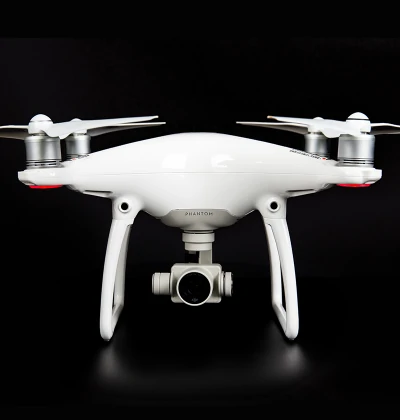

Aerospace & UAV
WJ Prototypes is your 3D manufacturing partner from prototype to large scale production.

Consumer Electronics
New Product Introduction Solutions for Consumer Electronics.

Robotics & Automation
Need some assistance bringing your robotic device or parts from the sketch-board to reality?

Medical Devices
The medical industry needs high quality, dependable and safe parts and products.

Automotive
New Product Introduction Solutions for Automotive

Industrial Machinery
The main purpose of industrial prototyping is to take the product from drawings into the real world.


Yes, you can source high-quality clear SLA parts from China if you lock in resin grade, post-curing parameters, and pre-shipment documentation before the build ever starts. Suppliers that treat these three items as contractual deliverables, not afterthoughts, consistently deliver parts that meet optical and dimensional targets. The next move is simple: run a supplier evaluation checklist and pay for a pilot sample that comes with full process records.
TL;DR:
- Suppliers that treat resin grade, post-curing, and documentation as contractual deliverables consistently produce optical and dimensional quality parts without delays.
- Conduct thorough vetting by requesting resin specifications, detailed post-processing protocols, inspection evidence, and supporting logistics documentation before placing a full order.
- Choosing resin based on application (visual, functional, or medical-grade) involves understanding trade-offs in strength, shrinkage, and clarity, with process optimization, especially post-curing, being critical.
- Cost and lead times depend heavily on print complexity, support removal, manual finishing, and scheduling of pilot runs, with delays most common during post-processing stages.
- Red customs delays stem from improper documentation such as HS codes, material declarations, and incomplete shipping paperwork; early engagement with brokers and detailed pre-shipment info mitigate risks.
Screening suppliers for clear resin work takes more effort than checking a portfolio page. Optical clarity fails in ways opaque parts never show, so the vetting has to go deeper into process control and paperwork.
Run through these checks before sending a full order:
Suppliers that hesitate on any of these, particularly the export compliance and material traceability questions, tend to be the ones that cause delays later.
Pro Tip: Ask for a sample part with matching documentation before committing to the full order. A supplier willing to produce a paid pilot with inspection records is showing you exactly how they will handle production, good or bad.
Not all clear resins behave the same way once they leave the vat. Three categories cover most procurement needs: visual prototype resins built for looks over durability, functional transparent resins engineered for load-bearing or fluid-contact parts, and dental-grade clear resins formulated for biocompatibility and tight tolerances.
The chemistry involves real trade-offs. Higher crosslinking density makes parts stronger, but it also raises shrinkage and increases the risk of yellowing over time. Some resin formulations add fillers to improve mechanical properties, and those additives measurably reduce clarity.
Ask any supplier what post-cure temperature and exposure window they use for your specific resin. A vague answer is a warning sign.
Cost on a clear SLA part rarely comes down to just the resin. Print time matters because clear parts often run slower to protect surface quality. Support placement and removal affect yield, especially on parts with thin walls or fine detail. Post-processing labor, which includes wet sanding through multiple grits and manual polishing, can add more to the invoice than the print itself.
Delays most often show up at the post-processing stage, not the printing stage, since manual polishing does not scale the way automated printing does.
A few commercial levers help control cost and risk:
Clear resin parts face extra scrutiny at customs because classification codes for photopolymer parts vary depending on end use, and inspectors sometimes flag shipments with incomplete material declarations. Customs clearance frequently stalls on missing or incorrect documentation, and that risk is entirely avoidable with upfront planning.
Require these documents before the shipment leaves the factory:
The most common failure points are a mismatched HS code, a missing MSDS, and packaging that was not rated for fragile optical parts. Engaging a broker early, before the shipment departs, catches most of these issues while there is still time to fix them.
Pro Tip: Request draft pre-shipment documents while the parts are still in post-processing, not after they are boxed. That gives your broker time to flag problems before the shipment is already at the port.
Accepting a shipment on trust alone is how disputes start. Build these deliverables into the purchase order itself, not into an informal request after parts arrive.
Set clear rework thresholds during the pilot sign-off. Define what percentage of dimensional deviation or visible haze triggers a remake versus a minor rework, and put a corrective-action timeline in writing before full production starts.
WJ Prototypes runs SLA production alongside the finishing capabilities clear parts actually need, backed by ISO-certified quality processes. Its instant online quoting system means procurement teams get pricing and lead-time estimates without waiting days for a manual quote, and pilot runs are available for teams that want process validation before committing to volume.
During qualification, providers may offer:
To get started, send your CAD files along with target tolerances, surface finish expectations, and clarity requirements. A dedicated project manager can walk the specification through quoting and into a pilot build.
Most sourcing advice on clear SLA parts obsesses over resin brand names, as if picking the right formulation solves everything. It does not. The resin matters less than what happens to it after it comes out of the vat. A supplier running an unremarkable resin with a disciplined, geometry-specific post-curing protocol will consistently outperform one running a premium resin through a generic cure cycle.
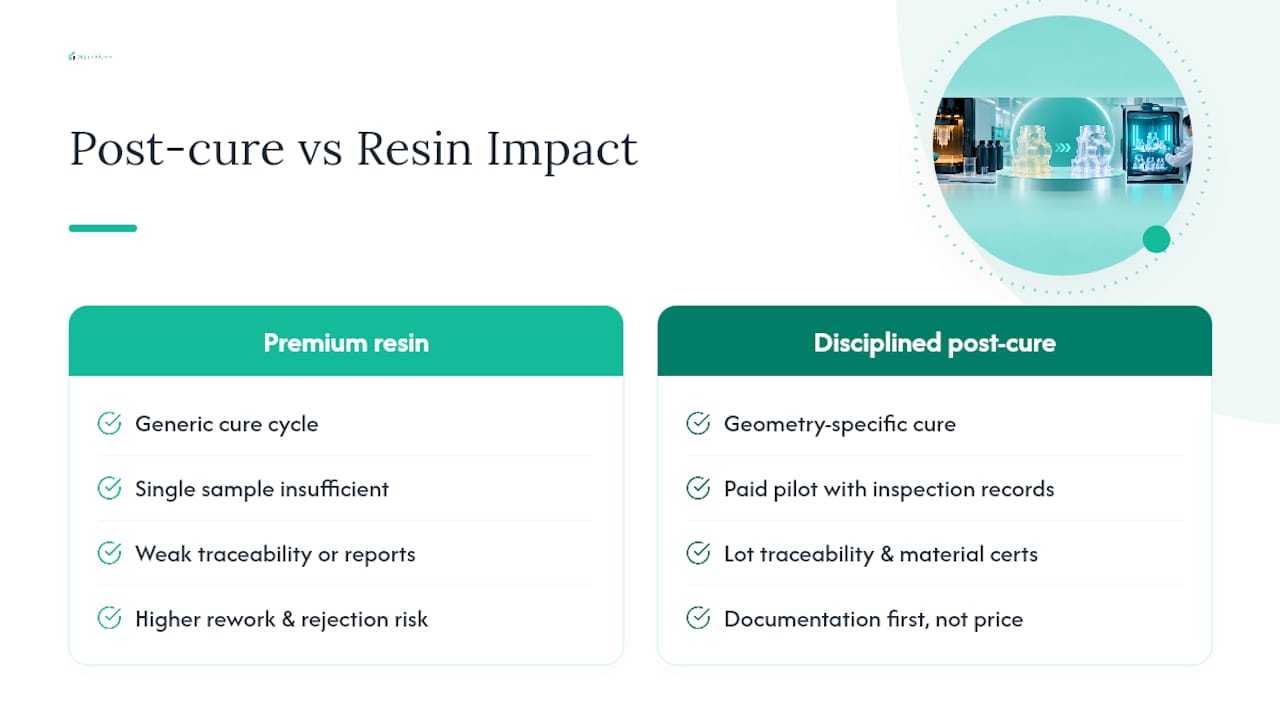
The conventional advice to “ask for a sample” also undersells what a sample should prove. A single clear part on a desk tells you nothing about repeatability. What actually de-risks the relationship is a paid pilot that comes with inspection records, lot traceability, and documented post-cure parameters, the kind of evidence that shows a process rather than a photo.
If procurement teams prioritize one thing first, it should be documentation discipline before cost negotiation. A cheaper quote from a supplier that cannot produce a dimensional report or a material certificate will cost more in rework, customs delays, and rejected shipments than the few dollars saved per part ever justified.
— Nas
WJ Prototypes gives procurement teams a faster path to a validated clear-parts supplier than the usual back-and-forth of emailing quotes and waiting days for answers. Send your CAD file, target surface finish, tolerance requirements, and quantity, and the instant quoting system returns pricing and a realistic timeline without a sales call in between.
What comes back includes a quote broken down by process step, an estimated pilot-run timeline, and a plan for the certificates and inspection reports your team needs before accepting the full order. If your project needs closer coordination across post-curing and export documentation, a dedicated project manager is assigned to walk it through.
Submit your specifications through the SLA 3D printing service page to get a quote started today.
Cost depends heavily on resin choice, part size, support requirements, and how much manual polishing the part needs to reach optical clarity. WJ Prototypes provides project-specific pricing through its instant quote system since costs vary too much by geometry and finish to quote a flat rate.
Yes, though filament-based clear printing (FDM) produces visibly layered, hazier results than SLA resin printing. For parts that need genuine optical transparency, SLA resin systems consistently outperform filament-based clear materials in surface finish and light transmission.
Chinese manufacturers commonly use stereolithography (SLA) for clear parts because it produces the smoothest as-printed surface among mainstream 3D printing methods, which reduces the post-processing needed to reach transparency. Selective Laser Sintering and Fused Deposition Modeling are used for other applications but are not suited to fully clear parts.
Restrictions on 3D printing in the US mostly target specific categories like untraceable firearm components rather than general prototyping or manufacturing. Clear resin parts for industrial, medical, or consumer product applications are not subject to these restrictions and are sourced internationally without special permitting.
Send your CAD file along with target tolerances, required surface finish, quantity, and any clarity or optical performance requirements. Suppliers use this information to recommend suitable resins and post-curing approaches before quoting price and timeline.
SERVICES
RESOURCES