



- Room 1807, Unit 9, Building 2, Shangxing Commercial Street, Shangde Road, Shangxing Community, Xinqiao Subdistrict, Bao'an District, Shenzhen City, China
CONTACT US

WhatsApp


Contact Us
Our team is on stand by, waiting toassist you.

Videos
A large collection of educational videos and tutorials.

About Us
Learn about our company, leadership, and mission totransform manufacturing.

Privacy Policy
Applies to all personal information collected through and/or processed in connection.
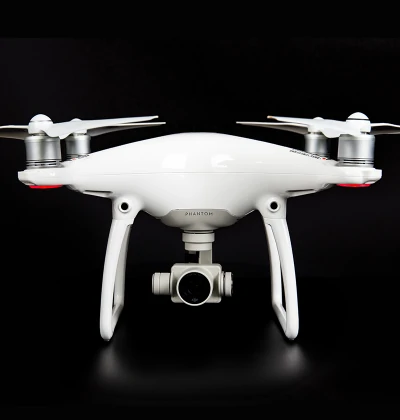

Aerospace & UAV
WJ Prototypes is your 3D manufacturing partner from prototype to large scale production.

Consumer Electronics
New Product Introduction Solutions for Consumer Electronics.

Robotics & Automation
Need some assistance bringing your robotic device or parts from the sketch-board to reality?

Medical Devices
The medical industry needs high quality, dependable and safe parts and products.

Automotive
New Product Introduction Solutions for Automotive

Industrial Machinery
The main purpose of industrial prototyping is to take the product from drawings into the real world.
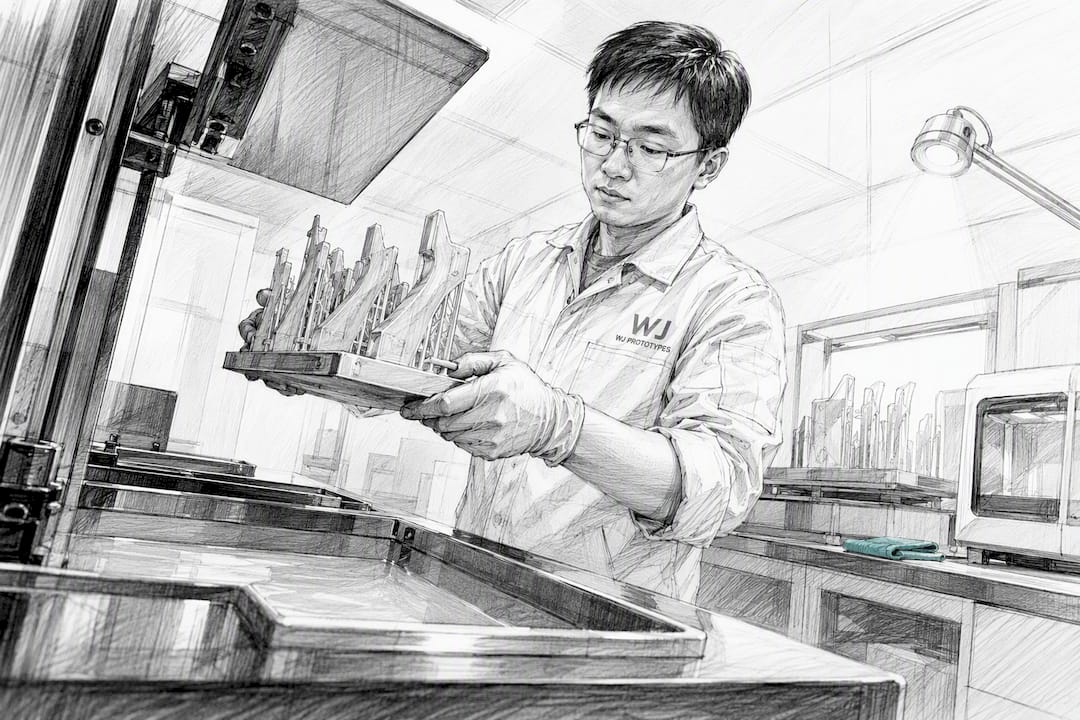
SLA parts sourced from China typically run from a $15 to $30 sample fee for a single small piece up to roughly $50 to $200 per part for small batches, with complex or heavily finished geometries pushing past that. Material grade, order volume, post-processing, and lead time drive most of the swing. WJ Prototypes and similar China-based manufacturers publish instant quoting tools that make it easy to test these variables against your own files before committing.
TL;DR:
- Cost per part decreases significantly with batch sizes of 20 or more due to shared plate utilization and reduced setup costs.
- Suppliers may quote using different models, such as per-volume, per-weight, or hourly machine rates, making comparison difficult without detailed breakdowns.
- Shipping methods and delivery times vary from three days via express to several weeks by sea, influencing project timelines and costs.
- Itemized quotes breaking down resin type, machine time, labor, finishing, and QA are essential to accurately compare supplier offers.
- Chinese SLA suppliers generally offer 30 to 50 percent lower prices for small batches than North American or European providers, especially at higher volumes.
Ask five suppliers for a quote and you will get five different formats. Some quote by resin volume, some by finished part weight, some by machine hour, and a few just hand you a flat per-piece number with everything baked in. Understanding which model you are looking at is the difference between comparing apples to apples and getting quietly outbid by a vendor who left post-processing off the sheet.
Per-mL or per-gram pricing is common for standard and engineering resins, since material cost scales directly with part volume. Per-part pricing shows up more with production runs, where the supplier has already amortized machine time and labor into a single number. Hourly machine-rate pricing appears mostly on custom or one-off jobs where support structures and orientation make volume-based estimating unreliable.
Here is how the math typically breaks down for two example parts:
Suppliers commonly cite SLA material starting around $0.25 per gram for standard resins, though industry pricing guides put liquid resin costs anywhere from $30 to $150 per liter for standard grades and $79 to $400 per liter for professional engineering resins, which explains why two “SLA” quotes for the same geometry can differ by 3x.
Plate utilization matters more than most buyers realize. A part that nests efficiently alongside others on a single build tray shares machine amortization across the whole batch, so per-part cost drops sharply once you move from a single prototype to a batch of 20 or 50, even without a formal volume discount. You can sanity-check a vendor’s material line using a resin print cost calculator that estimates resin, electricity, and consumables per print. Watch for headline sample fees on supplier listings, some published as low as $0.007 to $0.011 per gram with sample fees near $15, which almost never include finishing or shipping.
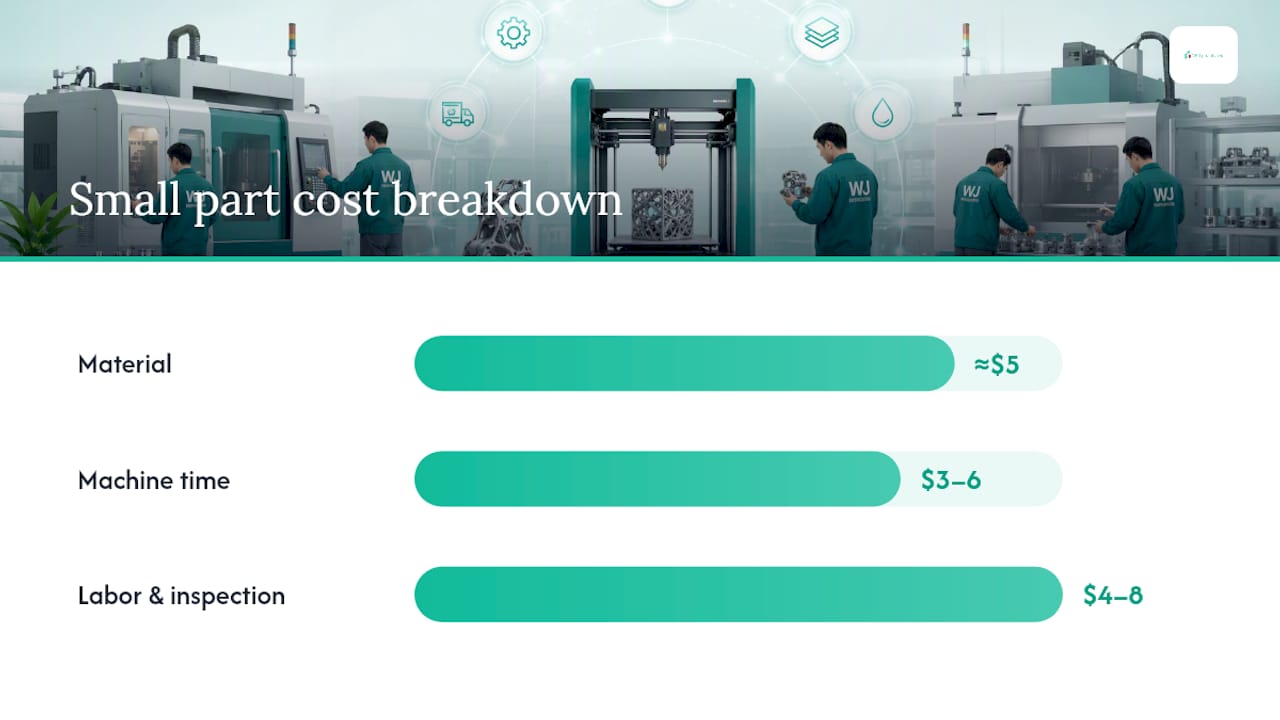
A single unit price hides too much. Break every quote into these components before you compare vendors:
Pro Tip: Ask every vendor to itemize resin, machine time, labor, finishing, and QA as separate lines, even if you ultimately buy at a bundled price. It is the fastest way to spot who is quoting apples to oranges.
Specifying resin family up front, standard, tough, engineering, or castable, removes most of the ambiguity that causes wildly different quotes for what looks like the same part on paper.
Most SLA suppliers in China will print a single sample for a flat fee rather than requiring a full production commitment, and sample fees in the $15 to $30 range are common on public supplier listings. Some vendors waive the fee entirely if you commit to a production order afterward. Minimum order quantities are generally low or nonexistent for SLA specifically, since the process does not require tooling, unlike injection molding or die casting.
Prototype SLA orders typically take a few business days to print and finish once a supplier confirms your file, while small production batches usually take about one to two weeks depending on utilization and finishing complexity, depending on plate utilization and finishing complexity. Post-processing adds real calendar time, painting and conformal coatings alone can tack on 2 to 3 extra days for cure cycles between coats.
Shipping is where buyers most often get surprised:
Build in a few extra days for inbound inspection and possible rework before the parts hit your production line or client deadline.
The single biggest lever you control in this whole process is what you send the supplier. A vague STL file with no notes invites a vague quote back.
Pro Tip: If a vendor won’t itemize the quote when asked, treat that as a signal, not just an inconvenience. Transparent suppliers usually have nothing to hide in their margins.
Marketing pages promise a lot. Before you wire a deposit, ask for documentation that backs the claims:
WJ Prototypes publishes ISO certification and instant online quoting alongside multi-technology capability, a useful benchmark for what documentation a serious supplier should be able to produce on request.
China generally undercuts North American and Western European SLA suppliers on labor and machine-time costs, sometimes by 30 to 50 percent for comparable resin grades and part complexity, largely because labor for support removal and finishing is cheaper and machine fleets run at higher utilization across larger factory floors. Eastern European and Southeast Asian shops (Poland, Vietnam, Malaysia) sit in between: often cheaper than US or EU domestic suppliers but rarely matching China’s per-part pricing at scale.
The trade-off isn’t purely cost. Domestic US or EU suppliers win on turnaround for urgent single prototypes, since there’s no international shipping lag, and on tighter IP control since the part never leaves the country. China-based suppliers win once you move past the single-prototype stage into small batches of 20 units or more, where labor savings and plate-sharing efficiencies compound. If your project is one urgent proof-of-concept, paying a premium locally can still be the faster and safer call. If you are validating a design that will scale into a 100 to 500 unit production run, the math tips toward China fairly quickly, and the advantages of SLA sourced from China become harder to ignore on a spreadsheet.
Per-part cost drops as order quantity climbs, mainly because fixed costs, machine setup, file preparation, quality documentation, spread across more units. A part that costs $60 as a single sample might drop to $35 to $45 at a batch of 50, and further to $20 to $30 at several hundred units, depending on how efficiently it nests on a build plate.
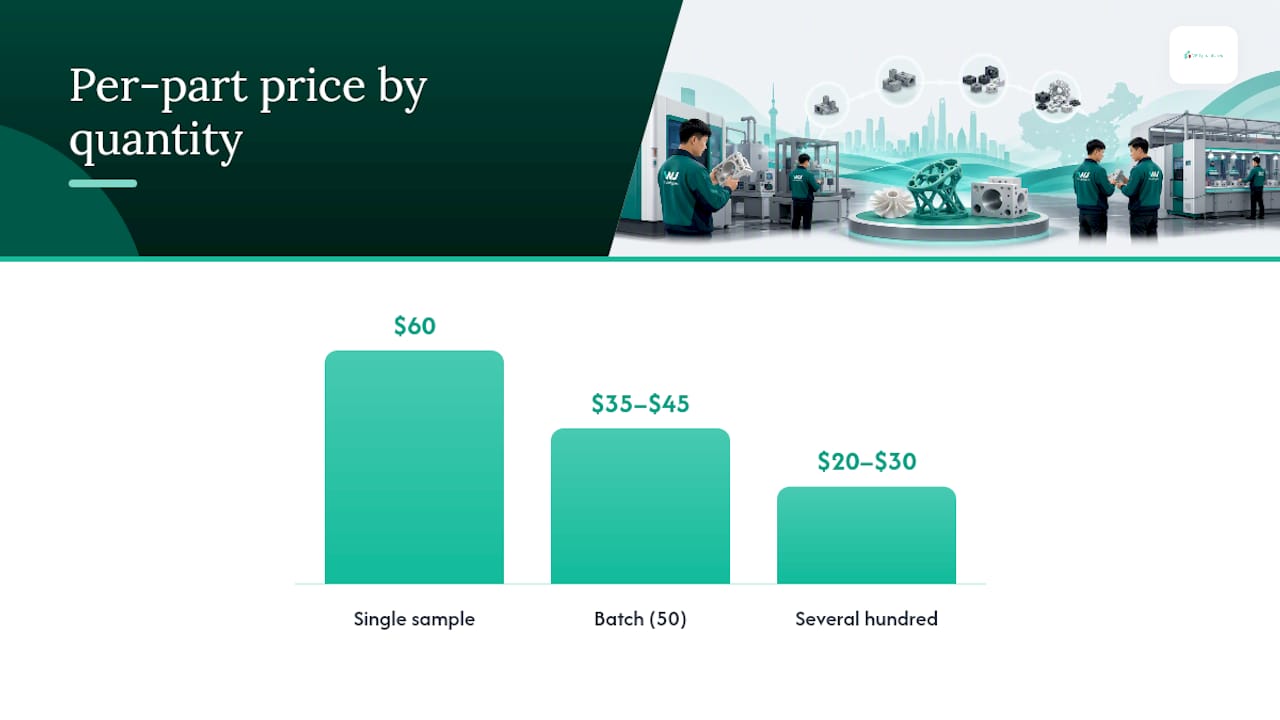
Most suppliers structure this informally rather than publishing a rigid discount table: quote 1 unit, quote 50, quote 200, and compare the curve yourself rather than assuming a fixed percentage discount applies. Plate utilization tends to matter more than raw quantity discounts, a geometry that packs densely benefits more from scale than one that wastes plate space regardless of how many you order. Ask suppliers directly for tiered pricing at your expected volumes rather than accepting a single quoted number and assuming it scales linearly; bulk order pricing patterns often reveal breakpoints at 25, 100, and 500 units where the per-part number steps down noticeably.
The quoted part price from a Chinese supplier is never your full cost. Import duties, customs brokerage fees, and applicable tariffs get added once the shipment clears your country’s border, and these vary by product classification, declared value, and your country’s current trade policy. For US buyers, the applicable Harmonized Tariff Schedule code for the part’s material and function determines the duty rate, and that rate can shift with trade policy changes, so it’s worth confirming the current rate with a customs broker rather than assuming last year’s number still applies.
Freight forwarders and customs brokers typically charge a flat handling fee plus a percentage of declared value, and express carriers like DHL or FedEx often bundle a simplified customs process into their door-to-door service, at a cost premium. Sea freight shipments generally require more manual customs paperwork and take longer to clear, which is worth factoring into your timeline if you are shipping in bulk. Always ask your supplier for a commercial invoice with accurate, itemized declared values. Undervaluing a shipment to reduce duties is not a corner worth cutting, it creates liability on your end if customs authorities flag the discrepancy.
Basic visual inspection and dimensional spot-checks are usually included in a standard SLA quote at no extra charge, since suppliers need to catch obvious defects before shipping anyway. Where costs start appearing separately is more rigorous testing: full dimensional reports with CMM (coordinate measuring machine) data, material certification, or third-party lab testing for mechanical properties.
If your application requires documented traceability, medical device prototypes, aerospace components, anything with regulatory exposure, ask specifically whether inspection reports are included or billed as an add-on. Many suppliers quote a bare per-part price that assumes standard visual QA only, and then charge separately once you request formal documentation. That distinction can add anywhere from a few dollars per part for basic measurement reports to considerably more for full material certification with third-party lab involvement. Get this in writing before production starts, not after you’ve already received parts without the paperwork you needed.
Cost and capacity favor China once you move past a single prototype into small batches, but that comes with a real trade-off in iteration speed and IP control compared to a domestic shop down the street. Projects with fixed, finalized geometry and a production run of 20 units or more typically benefit most. Early-stage designs still changing weekly often do better locally, at least until the design settles. From there, a quote request is the fastest way to see real numbers.
— Nas
Some suppliers run ISO-certified SLA production with instant online quoting tools, so you get a real itemized number back in minutes instead of waiting days for a sales email. That speed matters most right when you’re comparing three or four vendor quotes side by side and need to know quickly which one actually breaks out material, machine time, and finishing the way you asked.
To get a fast, accurate quote, upload your file (STEP for editable geometry, STL for final prints), note your target resin grade, required tolerances, and any surface finish or coating needs, and specify your quantity band. Engineers at some suppliers return quotes itemized by material, printing, post-processing, inspection, and shipping, enabling direct comparison against other vendor numbers. Start with a sample quote request for SLA printing to see how your specific part prices out before committing to a production run.
Cross-check vendor numbers with a resin cost calculator or FDM vs SLA cost comparison tool before accepting a quote at face value.
Sample pieces typically run $15 to $30, while small-batch parts from China commonly fall between $50 and $200 depending on resin grade, size, and finishing requirements.
Professional-grade SLA printers generally range from a few thousand dollars for desktop units to tens of thousands for industrial systems, with material costs adding $30 to $400 per liter depending on resin grade.
Pricing depends entirely on the machine class. Rather than buying equipment, most businesses outsource to suppliers like WJ Prototypes and pay per part through an instant online quote, avoiding capital investment in equipment entirely.
SLS printing generally costs more per part than SLA for equivalent volume, since SLS materials and machine time run higher, though it often wins on mechanical strength for functional parts; WJ Prototypes’ SLS service page provides quote comparisons for buyers weighing both processes.
SERVICES
RESOURCES