



- Room 1807, Unit 9, Building 2, Shangxing Commercial Street, Shangde Road, Shangxing Community, Xinqiao Subdistrict, Bao'an District, Shenzhen City, China
CONTACT US

WhatsApp


Contact Us
Our team is on stand by, waiting toassist you.

Videos
A large collection of educational videos and tutorials.

About Us
Learn about our company, leadership, and mission totransform manufacturing.

Privacy Policy
Applies to all personal information collected through and/or processed in connection.
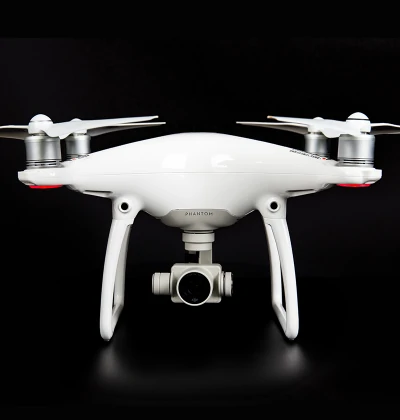

Aerospace & UAV
WJ Prototypes is your 3D manufacturing partner from prototype to large scale production.

Consumer Electronics
New Product Introduction Solutions for Consumer Electronics.

Robotics & Automation
Need some assistance bringing your robotic device or parts from the sketch-board to reality?

Medical Devices
The medical industry needs high quality, dependable and safe parts and products.

Automotive
New Product Introduction Solutions for Automotive

Industrial Machinery
The main purpose of industrial prototyping is to take the product from drawings into the real world.
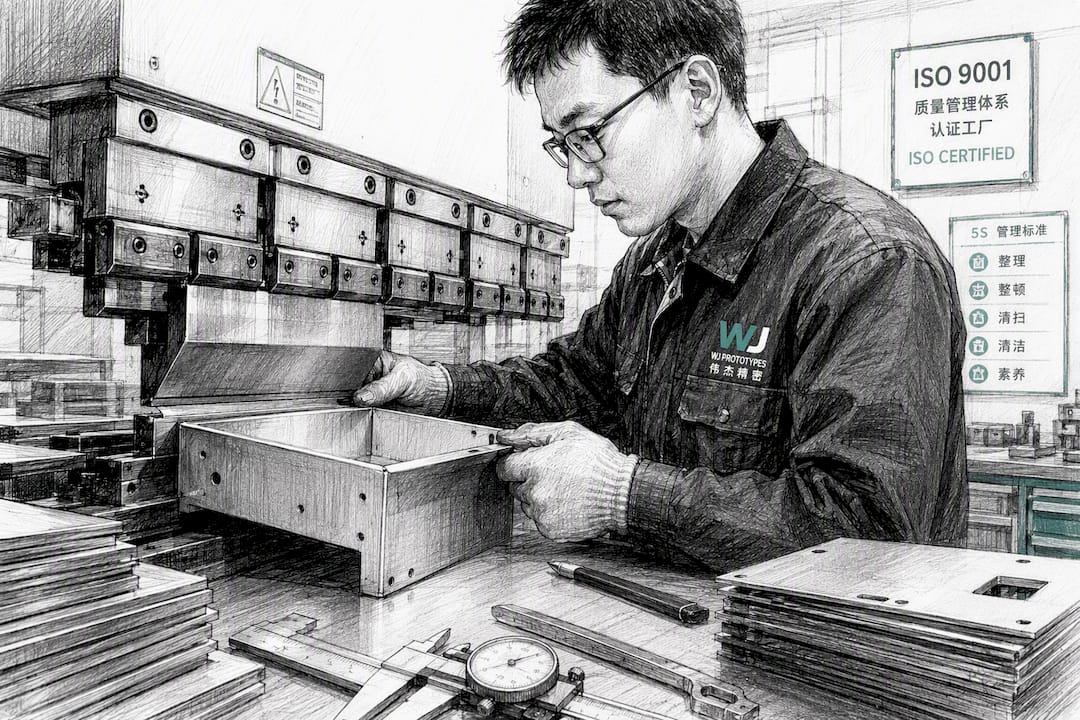

The fastest path to a finished enclosure is a specialty sheet metal fabricator or a turnkey prototyping manufacturer that handles cutting, forming, welding, and finishing under one roof. Look for an ISO certified shop that can quote against NEMA or IP-rated designs, then send them your CAD and a one-page spec sheet today. WJ Prototypes is one direct option built around exactly this prototype-to-low-volume workflow.
Before you contact anyone, get these ready:
Pro Tip: Ask for a DFM review alongside your first quote. A fabricator who flags a bend radius problem before quoting saves you a second round-trip on tooling.
Custom sheet metal enclosures move fastest through fabricators who combine in-house cutting, forming, welding, and finishing with an upfront DFM review.
| Point | Details |
|---|---|
| Send complete files first | Native CAD, flat patterns, BOM, and finish specs cut quote turnaround to 24 to 72 hours. |
| Match capability to spec | Confirm gauge range, bend tolerance, and finish options before sending a full package. |
| Budget realistically | Prototypes ship in days to three weeks; low-volume runs take two to eight weeks with tooling. |
| Specify ratings early | Lock in NEMA or IP requirements before the design freezes to avoid reworking seals and flanges. |
| Consider WJ Prototypes | Offers ISO-certified, in-house sheet metal fabrication from prototype through low-volume production with DFM review included. |
You have two practical routes. The first is a pure sheet metal shop that lives and breathes enclosures: laser cutting, press-brake forming, MIG or TIG welding, hardware insertion, and paint or plating, often with a bias toward defense, telecom, or industrial clients. The second is a broader prototyping manufacturer that fabricates enclosures alongside CNC machining, casting, and finishing, useful when your project needs mixed processes under one purchase order.
The gap between vendors comes down to scope:
Keeping laser cutting, forming, and welding in-house cuts the handoffs between vendors, which is often where schedules quietly slip.
Run every candidate through the same checklist before you commit a purchase order.
Shops that build engineering review into every quote tend to catch fit and cost problems before they become expensive change orders.
Pro Tip: Push for a firm sample cost and a firm sample lead time in the same email as your quote request. Vendors who dodge one of the two usually dodge both once you’re locked in.

Material choice drives weight, cost, and how the enclosure performs in the field. Aluminum (5052 or 6061) is light and naturally corrosion resistant, a common pick for portable or outdoor gear. Mild steel costs less and takes on strength for structural housings, while stainless steel earns its premium in washdown, medical, or marine environments where corrosion resistance matters more than weight.
Finish selection carries its own trade-offs; consider using specialized spray booth protection and finishing environment controls to ensure high-quality enclosure surfaces:
Enclosures destined for telecom, medical, or industrial testing equipment often carry specific NEMA or IP requirements that need to be locked in before the design freezes, since a rated gasket or seal changes the flange geometry. Minimum hole diameters and bend radii also shift with gauge, so a design built around 0.060 inch aluminum won’t always translate cleanly to 0.125 inch steel.
Quoting turnaround typically happens within a few days when your files are complete; missing tolerances or an ambiguous finish callout is what actually stalls a quote past that window. Prototypes generally ship within a short time depending on complexity and finish. Low-volume production runs take longer once tooling, secondary operations, and finishing queues enter the picture.
Cost tracks a handful of variables more than anything else:
Shops built around Quantity 1 through low-volume runs generally price prototypes differently than production, so ask for both numbers even if you only need one right now.
A complete package gets you an accurate number on the first pass instead of three rounds of clarifying emails.
Add assembly drawings, wiring harness interfaces, or test requirements if they apply, and packing instructions if the enclosure ships as a finished unit. Complete CAD and spec files are consistently the single biggest lever for cutting quote turnaround.
Pro Tip: Explicitly ask each vendor to state the processes they assumed in their quote. Two quotes that look identical on price can assume different welding methods or finish thicknesses, and that gap shows up later as a change order.
An ISO certified manufacturing process gives procurement a documented quality system to audit against, rather than a vendor’s word alone. WJ Prototypes runs sheet metal fabrication, CNC machining, and finishing in-house, which keeps a design moving from CAD review to a boxed prototype without three separate purchase orders.
A single-source shop that reviews manufacturability before cutting metal, rather than after a part fails inspection, is the difference between one clean revision and three expensive ones.
Ask any prototype-to-production candidate, WJ Prototypes included, for a sample part or a facility walkthrough before committing volume.
Domestic quick-turn wins when your schedule is tight, your run is small, or your design is IP-sensitive enough that you want fewer hands on the file. Offshore production earns its place once volume climbs and unit cost outweighs speed. The strongest approach I’ve seen: prototype domestically, then evaluate offshore sheet metal fabrication once the design is locked and volume justifies it.
WJ Prototypes fabricates custom sheet metal enclosures with in-house laser cutting, bending, welding, and finishing, backed by ISO-certified process controls and engineers who run DFM review before your design goes to the floor. That means one quote instead of three vendor emails, and one point of contact from prototype to low-volume production.

Send a native CAD file, a flat pattern PDF, material and finish callouts, and your target quantity, and expect an initial response within the standard 24 to 72 hour quoting window. If your enclosure includes machined brackets or fittings alongside the sheet metal shell, review the CNC machining materials options so both processes get quoted together. Submit your files and get a firm quote and DFM feedback before you commit to a production run.
Cost depends on material, complexity, finish, and quantity, with setup costs amortizing across larger runs; get a quote against your actual spec rather than relying on a rough per-unit estimate.

Pricing varies by material and gauge (stainless costs more to process than mild steel or aluminum) and by the number of bends, welds, and secondary operations the part requires.
Shop rates vary widely by region, equipment, and labor involved, so most fabricators quote by the finished part rather than a flat hourly rate. Request a project-based quote for an accurate number.
A NEMA Type 3 enclosure protects against windblown dust, rain, and sleet for outdoor use, though it’s not sealed against submersion like higher-rated NEMA or IP-rated designs.
Yes. WJ Prototypes fabricates enclosures from Quantity 1 through low-volume production runs, using the same in-house laser cutting, forming, welding, and finishing processes for both stages.
SERVICES
RESOURCES