



- Room 1807, Unit 9, Building 2, Shangxing Commercial Street, Shangde Road, Shangxing Community, Xinqiao Subdistrict, Bao'an District, Shenzhen City, China
CONTACT US

WhatsApp


Contact Us
Our team is on stand by, waiting toassist you.

Videos
A large collection of educational videos and tutorials.

About Us
Learn about our company, leadership, and mission totransform manufacturing.

Privacy Policy
Applies to all personal information collected through and/or processed in connection.
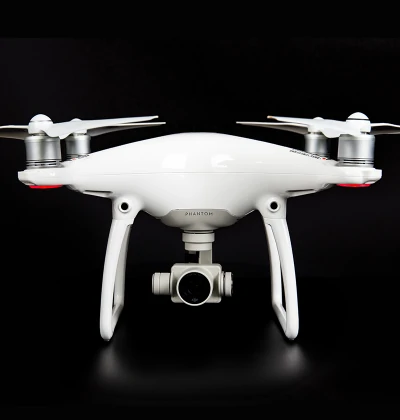

Aerospace & UAV
WJ Prototypes is your 3D manufacturing partner from prototype to large scale production.

Consumer Electronics
New Product Introduction Solutions for Consumer Electronics.

Robotics & Automation
Need some assistance bringing your robotic device or parts from the sketch-board to reality?

Medical Devices
The medical industry needs high quality, dependable and safe parts and products.

Automotive
New Product Introduction Solutions for Automotive

Industrial Machinery
The main purpose of industrial prototyping is to take the product from drawings into the real world.
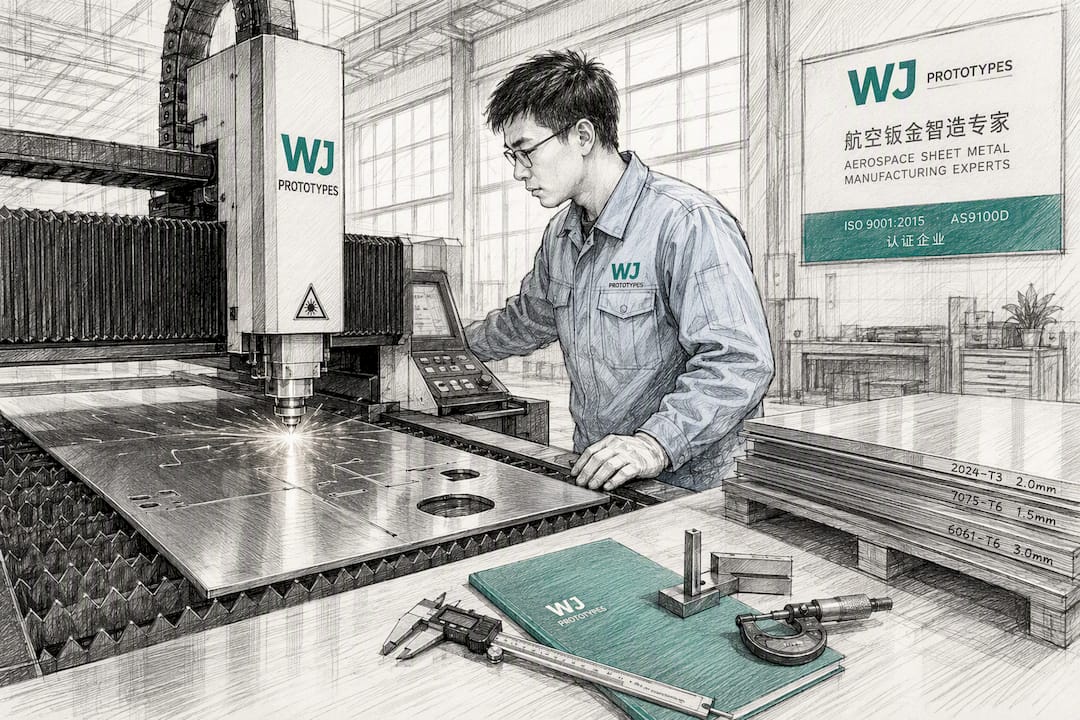

The fastest way to locate qualified aerospace sheet metal fabricators is to search AS9100-registered shops and OEM or prime contractor approved-vendor lists, then contact material distributors who already know which shops handle certified stock. Your first message to any candidate shop should request three things before you discuss price or lead time.
WJ Prototypes offers sheet metal fabrication alongside CNC machining and finishing for aerospace-adjacent programs, and you can request a quote directly through its site if you want a working comparison quote while you build your shortlist.
Verified certification and traceable material documentation, not website claims, are what separate a qualified aerospace sheet metal fabricator from a general job shop.
| Point | Details |
|---|---|
| Request documents first | Ask for AS9100 certificate, traceable MTRs, and an FAI plan before discussing price or lead time. |
| Search vetted channels | Prioritize AS9100 registries, OEM approved-vendor lists, and material distributor referrals over generic directories. |
| Screen before the RFQ | Confirm CMM availability, calibration records, and subcontracting transparency in an initial call. |
| Match materials to specs | Verify AMS/ASTM alloy callouts and heat-treatment or plating certificates against the part drawing. |
| Consider WJ Prototypes | WJ Prototypes combines sheet metal fabrication, CNC machining, and ISO-based quality documentation for prototype-to-production aerospace work. |
A shop’s equipment list tells you what it can physically do. Its certifications tell you whether you can trust the paperwork behind it. Both matter, but procurement teams that skip the second one usually regret it during audits.
Look for shops running laser cutting and CNC punching for blank and hole patterns, press brake forming for bends, and stretch or hydroforming when a part needs a compound curve that a brake press can’t produce. TIG and MIG welding cover joining, while riveting and fastener installation handle mechanical assembly. Secondary machining and final assembly integration matter too. A shop that only cuts and bends sheet, then ships loose parts for someone else to weld and assemble, adds a coordination step you’ll have to manage yourself.
Certifications separate serious aerospace suppliers from general job shops. AS9100/AS9100D is the baseline quality management standard for the industry, and most aerospace fabricator capability pages list it front and center for a reason. NADCAP accreditation matters for specialized processes like heat treating, welding, or non-destructive testing. ITAR registration applies when parts involve defense-related technical data. None of that substitutes for traceability: MTRs, heat/lot documentation, and a documented FAI report are what tie a physical part back to a verifiable material source.

Pro Tip: Ask for a redacted FAI report from a past aerospace program before you place your first order. A shop that can produce one on request has done this before; a shop that stalls hasn’t.
Procurement teams waste weeks searching generic manufacturer directories that mix aerospace suppliers with shops that have never seen an AMS spec. Work through channels in this order instead.
Decide early whether domestic or offshore suppliers belong on your shortlist. Domestic shops usually win on communication speed and ITAR-sensitive work; offshore partners can win on cost and capacity for non-restricted programs. Document that tradeoff instead of defaulting to one or the other.
A phone screen before the formal RFQ saves you from disqualifying a supplier three weeks into a program. Request these documents in the first conversation, not after you’ve already committed engineering time to a quote package.
Ask specific measurement questions, not general ones. Does the shop own a CMM in-house, or does it send parts out for coordinate measurement? How does it control tooling and fixtures across production runs? Can it produce a sample inspection report before you commit to tooling costs?
Subcontracting transparency matters just as much. Ask which operations stay in-house and which get farmed out, then ask how the shop verifies subcontracted work before it ships back. A shop that keeps welding, forming, and finishing under one roof, or manages composite integration through the same engineering team, cuts down coordination risk on complex subassemblies that mate to composite skins.

Pro Tip: Treat vague answers about calibration records as a hard stop, not a yellow flag. A shop that can’t produce current gauge calibration certificates on request will struggle to produce anything else you actually need.
Red flags worth walking away from: MTRs that don’t trace to a specific heat or lot, refusal to share a process flow diagram or FAI plan, and inspection reports that read more like marketing copy than data.
Aluminum dominates aerospace sheet metal work, particularly 2024, 6061, and 7075 series alloys specified under AMS or ASTM callouts. Titanium, especially Ti-6Al-4V, shows up on higher-heat or higher-strength applications. Stainless steel and nickel alloys like Inconel appear on parts near engines or exhaust paths where standard aluminum can’t survive the temperature.
Specialized forming processes exist because aerospace parts routinely combine tight curvature with strength requirements that generic sheet metal shops rarely encounter. Joining methods lean on TIG welding for structural joints and riveting for skin-to-frame assembly, while anodizing and chromate conversion handle corrosion protection and plating covers electrical or wear requirements.
Every one of those steps generates documentation you should ask for by name: heat-treatment records, plating certificates, and MTRs cross-referenced to the specific part lot, not just the raw material order. Suppliers with established mill relationships and traceable material sourcing reduce your program’s risk before a single part gets cut, and that traceability is the paper trail an auditor will ask for later.

WJ Prototypes runs sheet metal fabrication alongside CNC machining, finishing, and multiple additive processes under one ISO-certified operation; this matters if your program needs prototypes and low-volume production from the same source rather than juggling separate vendors for each stage. For aerospace and UAV programs, that means one point of contact instead of three.
Submitting a quote request is straightforward: upload your CAD file, specify material and finish requirements, and note any aerospace-specific documentation you need back. WJ Prototypes provides MTRs, quality certificates, and inspection reports as part of that engagement, so you’re not chasing paperwork after the order ships.
Procurement teams sourcing prototype-to-production runs benefit most from a supplier who can hold the same part through multiple manufacturing methods without a handoff between vendors.
Pro Tip: If your part involves ITAR-restricted technical data, keep that work with a domestic shop regardless of cost. For non-restricted commercial or dual-use aerospace components, a global manufacturing partner can compress both cost and lead time.
Most guides on finding aerospace fabricators lead with capability lists: laser cutting, forming, welding, done. That’s backwards. Capability tells you what a shop can physically produce. Certification and traceability tell you whether you can prove it later when an auditor or a prime contractor asks. Procurement teams that lead with equipment specs and treat AS9100 as a checkbox at the end of the process are the ones who discover traceability gaps after parts are already installed.
The conventional advice also underweights subcontracting transparency. A shop can hold a valid AS9100 certificate and still outsource welding or plating to an uncertified sub without telling you, unless you ask directly and verify it. That single question, asked in the first call, filters out more risk than any equipment tour.
What should come first is documentation, not conversation. Request the FAI plan and MTRs before you invest engineering hours in a formal RFQ package. Everything else, forming method, finish, lead time, is negotiable. Traceability isn’t.
— Nas
WJ Prototypes gives procurement teams a path around the fragmented sourcing process this article just walked through: instead of screening AS9100 registries, chasing OEM vendor lists, and vetting distributor referrals separately, you submit one CAD file and get sheet metal fabrication, CNC machining, and finishing quoted together under a single ISO-certified operation.

That matters most for teams moving from prototype to low-volume production, where switching vendors between stages adds weeks and introduces new qualification work every time. WJ Prototypes keeps the part with one team through that transition and supplies MTRs and inspection documentation alongside the quote, not after you’ve already committed to tooling. If your next step is comparing real numbers against what you’ve sourced elsewhere, request a quote through the sheet metal fabrication materials page and use it as a benchmark against the shops on your shortlist.
Start with AS9100 certification registries and OEM or prime contractor approved-vendor lists, then supplement with material distributor referrals and trade shows like AeroDef. Suppliers such as WJ Prototypes also list aerospace sheet metal capabilities directly on their site with quoting available online.
Yes. Sheet metal forms fuselage skins, brackets, ducting, and structural panels across most aircraft programs, typically in aluminum, titanium, or stainless alloys specified under AMS or ASTM standards.
Demand for AS9100-certified metal fabricators remains strong, with shops that combine certification and fast turnaround being particularly sought after by procurement teams managing tight program schedules.
The aerospace sector’s largest original equipment manufacturers include companies like Boeing, Airbus, Lockheed Martin, and Raytheon Technologies, though the exact ranking shifts depending on revenue, defense contracts, and commercial aircraft deliveries in a given year.
SERVICES
RESOURCES