



- Room 1807, Unit 9, Building 2, Shangxing Commercial Street, Shangde Road, Shangxing Community, Xinqiao Subdistrict, Bao'an District, Shenzhen City, China
CONTACT US

WhatsApp


Contact Us
Our team is on stand by, waiting toassist you.

Videos
A large collection of educational videos and tutorials.

About Us
Learn about our company, leadership, and mission totransform manufacturing.

Privacy Policy
Applies to all personal information collected through and/or processed in connection.
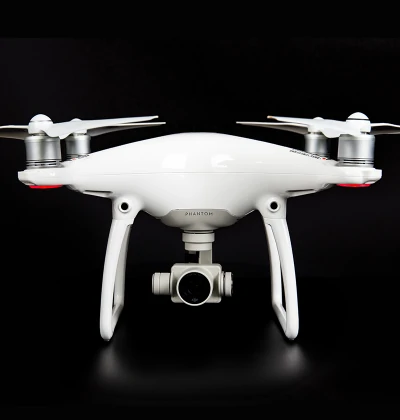

Aerospace & UAV
WJ Prototypes is your 3D manufacturing partner from prototype to large scale production.

Consumer Electronics
New Product Introduction Solutions for Consumer Electronics.

Robotics & Automation
Need some assistance bringing your robotic device or parts from the sketch-board to reality?

Medical Devices
The medical industry needs high quality, dependable and safe parts and products.

Automotive
New Product Introduction Solutions for Automotive

Industrial Machinery
The main purpose of industrial prototyping is to take the product from drawings into the real world.


TL;DR:
- Choosing Chinese manufacturers offers rapid prototyping, dense regional clusters, and a full industrial ecosystem that accelerates product development.
- While costs include tariffs, shipping, and quality control, local sourcing and infrastructure often make Chinese production more efficient and flexible.
If you’re weighing where to manufacture your next product, the question of why choose Chinese manufacturers comes down to far more than labor costs. Most product developers start with the price comparison and stop there. That’s the wrong framework. China’s manufacturing edge in 2026 is built on something harder to replicate than cheap wages: a deep, interconnected industrial ecosystem that compresses timelines, absorbs complexity, and scales with your business from first prototype to full production run.
| Point | Details |
|---|---|
| Cost requires full calculation | Factory price is not final cost; tariffs, shipping, and QC fees determine the real number. |
| Industrial clusters accelerate speed | China’s regional manufacturing hubs enable same-day component sourcing and fast iteration cycles. |
| Prototyping speed is unmatched | Chinese manufacturers deliver complex custom projects in 3 to 5 months versus 6 to 9 months elsewhere. |
| Partnership beats transaction | Brands that treat Chinese suppliers as long-term partners consistently get better quality and pricing. |
| China Plus One needs context | Alternative manufacturing hubs often still depend on Chinese inputs, limiting true supply chain independence. |
The cost conversation about Chinese manufacturing is more layered than most buyers expect. Yes, labor is cheaper. But wages in China’s industrial heartland have risen steadily over the past decade, and the simplistic “cheap labor” narrative no longer holds in high-precision categories. The real financial case rests on material costs, local sourcing depth, and production efficiency.
Here is where the numbers get interesting:
That last point deserves emphasis. Many buyers get surprised at customs. A part quoted at $4 per unit can land at $9 or $10 once tariffs, freight, and insurance are included. Running the math on total landed cost before committing to a factory is not optional. It’s the foundation of any sound sourcing decision.
Pro Tip: Before requesting quotes, build a landed cost spreadsheet that includes FOB factory price, ocean or air freight, import duties, inland delivery, and quality inspection fees. Compare this full number across suppliers and regions, not just the line-item factory price.
The single most underappreciated advantage of manufacturing in China is not cost. It’s proximity. China’s industrial density creates clusters where every supplier in your production chain sits within a short drive of the next.
Shenzhen and the Pearl River Delta concentrate electronics, PCB manufacturing, plastics, and precision metal parts. The Yangtze River Delta around Shanghai anchors automotive components, advanced materials, and high-precision machining. Wenzhou handles fasteners and valve manufacturing. Dongguan dominates furniture hardware and consumer electronics accessories. These are not just concentrations of factories. They are self-reinforcing ecosystems where suppliers compete intensely, skills migrate freely, and improvements spread fast.
Supply chain nodes within a 30-minute drive of each other allow for component sourcing delays that might take a week elsewhere to be resolved the same day. If your prototype needs a revised aluminum bracket, the machinist is five minutes away from the anodizer, who is ten minutes from the packaging supplier. That feedback loop is what makes rapid iteration possible at a pace no other region currently matches.
| Feature | China manufacturing clusters | Alternative hubs |
|---|---|---|
| Supplier proximity | Within 30 minutes in most clusters | Often 2 to 5 days logistics gap |
| Raw material access | Local, same-day | Import dependent |
| Tooling and machining | On-site or nearby | Often offshore from assembly |
| Iteration speed | Days to weeks | Weeks to months |
Pro Tip: When vetting a Chinese factory, ask specifically which tier-one suppliers they work with and where those suppliers are located. A factory inside an established cluster is meaningfully different from an isolated facility that imports its own materials.
Speed is where the advantages of Chinese manufacturing become concrete for product developers. Chinese manufacturers deliver complex custom processing lines in 3 to 5 months versus the 6 to 9 months quoted by European suppliers for comparable projects. For prototypes and first-article samples, the gap is even wider.
Here is how that speed advantage plays out across a typical product development cycle:
Supply chain digitalization in China also reduces customs and logistics bottlenecks, supporting just-in-time delivery to global destinations. For teams working against product launch deadlines, this kind of reliability matters as much as the unit price.
Pro Tip: If you’re comparing Chinese rapid prototyping against domestic options, factor in revision cycle time, not just first-article delivery. The compounding speed advantage over 4 to 6 revision rounds is often more significant than the per-unit cost difference.

The biggest quality failures in Chinese manufacturing share a common root cause. Buyers treat procurement as a price negotiation, not a relationship. They find the lowest-cost factory, place an order with minimal specification detail, and skip pre-shipment inspection to save money. Then they wonder why the finished goods don’t match the sample.
Treating Chinese manufacturing as a long-term partnership changes the dynamic entirely. Factories allocate their best production staff to customers who bring repeat business, communicate clearly, and pay on time. You get better prices on tooling adjustments, priority scheduling during peak seasons, and a factory floor team that flags problems before they become shipments.
Practical steps that consistently improve outcomes:
For precision-engineered components, working with an ISO-certified manufacturer with documented quality control processes is not a premium option. It’s the minimum viable standard.
The China Plus One strategy, where companies diversify manufacturing across Vietnam, India, Mexico, or Indonesia, makes intuitive sense for risk management. But the execution often reveals how difficult it is to replicate what China offers.
Alternative hubs under China Plus One often remain dependent on Chinese raw materials and components, limiting true supply chain independence. A factory in Vietnam assembling consumer electronics is frequently sourcing its PCBs, connectors, and housing materials from Chinese suppliers. The geography changes but the dependency does not.
| Factor | China | Vietnam | Mexico | India |
|---|---|---|---|---|
| Industrial cluster density | Very high | Low to medium | Medium | Medium |
| Raw material self-sufficiency | High | Low | Medium | Medium |
| US tariff exposure | High (145%+) | Rising | Low (USMCA) | Low |
| Prototyping infrastructure | Mature | Limited | Limited | Developing |
| Skilled labor availability | High across industries | Growing but narrow | Moderate | High in software, moderate in manufacturing |
Mexico under USMCA offers significant tariff advantages for US-bound goods. For high-volume, lower-complexity assembly, Mexico is a legitimate alternative. But for precision engineering, complex tooling, and rapid product development, China’s infrastructure depth is not yet replaceable.
China’s sustained industrial scale is also reinforced by domestic demand. China is the world’s largest manufacturer and simultaneously one of its biggest internal consumers. That domestic volume funds continuous investment in production technology and worker skills at a scale no alternative hub currently matches.

The practical recommendation is not to choose between China and alternatives. For most product developers, the most resilient supply chain uses China for precision components, prototyping, and tooling, while using other regions for final assembly or tariff-sensitive distribution.
I’ve spent years watching companies make the same mistake. They walk into a sourcing conversation thinking the goal is to find the lowest price per part. Some of them get what they wanted for one order. Then the quality drifts on the second order, the factory goes quiet during Chinese New Year, and a critical shipment misses a product launch window. The cost savings they optimized for got eaten in expedited air freight and rework.
What I’ve learned is that the companies getting the most out of Chinese manufacturing are the ones who treat it like hiring a key engineering partner, not like buying a commodity. They visit the factory. They send detailed specs. They build a relationship with the production manager, not just the sales rep. They budget for a sourcing agent and use that person as their eyes and ears on the ground.
The quality of Chinese products in precision manufacturing has genuinely improved over the past decade. ISO certification, in-line inspection technology, and international quality expectations have raised the floor. But quality is not automatic. It is the result of clear specification, consistent communication, and accountability on both sides of the relationship.
My view is that the businesses winning with Chinese manufacturing today are not just buying cheaper. They are buying smarter. They understand that China’s interconnected regional clusters drive continuous improvement and labor mobility in a way that no other region has replicated. They factor the full ecosystem into their decision, not just the line on the quote sheet.
— Yu
If you are a product developer or business looking to move from CAD file to physical part quickly and confidently, Wjprototypes delivers exactly that from a facility rooted in China’s manufacturing ecosystem. With ISO-certified processes and experienced engineers covering CNC machining materials from aluminum and stainless steel to engineering plastics, Wjprototypes handles both prototype-grade and production-ready parts with precision.
The team at Wjprototypes works across aerospace, automotive, medical, robotics, and industrial machinery, meaning your tolerance requirements and material specifications are understood before work begins. You get an instant quote through their online platform, fast turnaround on first articles, and global delivery capacity that removes the logistics friction from international sourcing. For teams who need precision parts without the risk of working with an unverified factory, CNC machining services in China through Wjprototypes is a direct path to quality-assured, cost-effective production.
Chinese manufacturers offer a combination of lower tooling costs, dense supplier clusters, and faster prototyping timelines that domestic suppliers in the US or Europe typically cannot match at comparable price points. The advantages compound most at the prototyping and low-volume production stages.
US tariffs on Chinese goods currently exceed 145% in many categories, which can substantially increase total landed cost for US-bound products. Always calculate the full landed cost including duties, freight, and inspection fees before comparing Chinese factory prices to alternatives.
Using a qualified sourcing agent, conducting pre-shipment inspections, providing detailed technical specifications, and placing trial orders before scaling production are the most reliable methods for maintaining quality. Sourcing agents can reduce costs by 5 to 10% while simultaneously reducing defect risk.
China Plus One means diversifying manufacturing across China and one other country to reduce supply chain risk. It is a sound strategy, but most alternative hubs still rely on Chinese raw materials and components, so full independence is rarely achieved. A hybrid approach using China for tooling and precision parts often delivers the best outcome.
For CNC machined or 3D-printed prototypes, Chinese manufacturers typically deliver first articles in 3 to 7 business days. Complex custom production lines are completed in 3 to 5 months, roughly half the timeline quoted by comparable European suppliers.
SERVICES
RESOURCES