



- Room 1807, Unit 9, Building 2, Shangxing Commercial Street, Shangde Road, Shangxing Community, Xinqiao Subdistrict, Bao'an District, Shenzhen City, China
CONTACT US

WhatsApp


Contact Us
Our team is on stand by, waiting toassist you.

Videos
A large collection of educational videos and tutorials.

About Us
Learn about our company, leadership, and mission totransform manufacturing.

Privacy Policy
Applies to all personal information collected through and/or processed in connection.
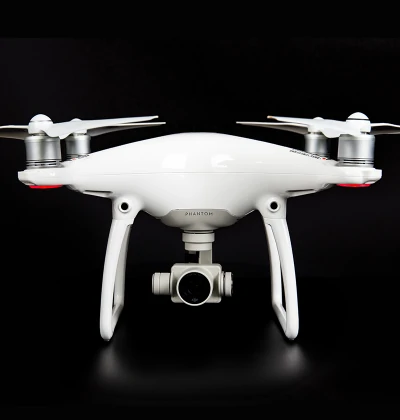

Aerospace & UAV
WJ Prototypes is your 3D manufacturing partner from prototype to large scale production.

Consumer Electronics
New Product Introduction Solutions for Consumer Electronics.

Robotics & Automation
Need some assistance bringing your robotic device or parts from the sketch-board to reality?

Medical Devices
The medical industry needs high quality, dependable and safe parts and products.

Automotive
New Product Introduction Solutions for Automotive

Industrial Machinery
The main purpose of industrial prototyping is to take the product from drawings into the real world.


TL;DR:
The pace of industrial prototyping is accelerating rapidly, with digital thread integration and additive manufacturing leading the way.
Teams that adopt automated post-processing and evaluate emerging trends strategically will gain a significant competitive advantage in 2026.
The pace of change in industrial prototyping has never been faster, and the gap between teams that track it and those that don’t is widening fast. Understanding the key industrial prototyping trends 2026 brought forward gives product designers and engineers a real competitive edge, whether you’re shortening development cycles, qualifying new materials, or deciding when to adopt digital workflows. This guide breaks down the trends that actually moved the needle, with market data, real-world examples, and practical guidance for your 2026 strategy.
1. Digital thread integration connecting design to manufacturing
2. Additive manufacturing and industrial 3D printing dominance
My take on what’s actually driving the future of industrial prototyping
| Point | Details |
|---|---|
| Digital threads close the loop | Connecting design data to manufacturing feedback reduces prototype errors and iteration time significantly. |
| Additive manufacturing dominates | Prototyping accounts for 55% of total 3D printing revenues, with industrial printers driving most of that share. |
| 4D printing is moving from lab to floor | Programmable, shape-shifting prototypes are reaching early industrial applications in aerospace and biomedicine. |
| Post-processing is the real bottleneck | Automating finishing workflows matters more to scaling than raw print speed does. |
| Trend fit depends on your industry | No single prototyping technology works for every application. Use decision criteria, not hype. |
Before committing to any new technology, product teams need a clear set of filters. Chasing the newest tool without a structured evaluation process wastes budget and delays timelines. Here is what actually matters when you assess any industrial prototyping trend 2026 offers:
Speed and workflow efficiency. How much does this technology reduce time from CAD file to physical prototype? Look for quantified benchmarks, not marketing claims.
Material diversity and sustainability. Thermoplastics lead rapid prototyping material adoption, but sustainable and recycled materials are gaining real traction, especially in North America and Europe. Factor in where your industry is heading on sustainability requirements.
Digital integration. Can this technology connect with your existing CAD, simulation, or ERP tools? Integration capability separates a useful tool from an isolated experiment.
Scalability. A prototype process that can’t scale toward low-volume production creates a hard wall in your workflow. Evaluate post-processing requirements alongside the primary process.
Cost relative to production readiness. Calculate total cost per iteration, not just machine or material cost.
Pro Tip: Build a simple scoring matrix for any new prototyping technology. Rate each criterion from 1 to 5, weighted by your project’s priorities. Two hours of structured evaluation beats six months of costly course correction.
The digital thread is one of the most consequential shifts in the industrial prototyping process right now. It refers to a connected data flow that links engineering intent, simulation outputs, manufacturing instructions, and quality feedback into a single, traceable system. The result is a closed loop where every prototype deviation informs the next design revision automatically.
This is not theoretical. Rolls-Royce implemented a comprehensive digital thread using Siemens Xcelerator components including Teamcenter, Opcenter, Insights Hub, Simcenter, and Mendix, combined with an AI-powered production copilot that analyzes quality deviations in real time and initiates corrections. The outcome is faster prototype validation and measurably better quality feedback.
For product designers, the practical implication is significant:
Prototype design changes can be validated against real manufacturing data, not just simulation assumptions.
Defects identified during physical testing can be traced back automatically to specific design parameters.
Teams spend less time manually reconciling data across disconnected systems.
“Digital twin technology now integrates multiple domains, including manufacturing, design, electrical, and automation systems, enabling synchronized virtual prototyping at a level previously unavailable to most engineering teams.”
The learning curve on digital thread implementation is real. But companies that treat it as a system investment rather than a software purchase are seeing returns in prototype cycle time and first-pass quality rates.
Additive manufacturing trends 2026 showed continued, decisive growth. Prototyping drives 55% of total 3D printing and additive manufacturing revenues globally, and industrial printers account for over 77% of market revenue. Those numbers reflect a technology that has moved decisively from novelty to production infrastructure.

The sectors driving this growth tell a consistent story. Automotive, aerospace, and healthcare teams are using industrial 3D printing to produce complex geometries that traditional subtractive methods cannot achieve at equivalent speed or cost. Engineers are qualifying metal and polymer parts that once required weeks of tooling setup, now produced in days.
| Technology | Best use case | Speed advantage | Material range |
|---|---|---|---|
| SLS / MJF | Functional polymer prototypes | High | Broad |
| DMLS | Metal structural parts | Medium | Metal alloys |
| SLA | High-detail visual models | High | Resins |
| FDM | Concept models, jigs | Very high | Thermoplastics |
AI integration is accelerating the trend further. AI-powered 3D printing accelerates prototyping by up to 60% by optimizing generative design, tuning print parameters automatically, and running real-time quality control through computer vision. That means fewer failed prints and less material waste per successful prototype.
Pro Tip: If you are qualifying a new additive process for a production environment, run your first 10 parts through the same post-processing and inspection workflow you plan to use at scale. Most yield surprises appear there, not at the printer.
4D printing takes additive manufacturing one dimension further, adding a time-based response to stimuli such as heat, moisture, light, or mechanical stress. The result is a prototype that changes shape or behavior after fabrication, without additional assembly or actuation.
The enabling technologies are advancing quickly. Multi-material deposition, voxel-level control, high-resolution stereolithography, and AI/IoT-driven real-time monitoring are all maturing together. That convergence is what’s moving 4D printing from academic research toward early industrial application.
Current industrial applications include:
Aerospace structural components designed to change shape under thermal loading, eliminating the need for separate actuator systems.
Biomedical stents and scaffolds that expand on deployment inside the body.
Soft robotics end-effectors that grip complex geometries without external control inputs.
“4D printing’s advancement depends on an integrated engineering ecosystem that treats programmability as a system-level problem spanning materials science, printer capabilities, and IoT monitoring, not just a feature to add.”
The honest constraint here is reproducibility. Programming reliable, repeatable shape changes at production scale is still a research challenge. For your 2026 prototyping strategy, 4D printing is most valuable in early-stage exploration for applications where passive actuation genuinely solves a design problem. Don’t adopt it as a proof-of-concept novelty.
Most engineering teams underestimate post-processing. They optimize print parameters obsessively and then watch their throughput stall in support removal, surface finishing, and inspection. Scalability in additive manufacturing depends more on automated post-processing and workflow integration than on print speed alone.
The 2026 Additive Post-Processing Survey confirms what experienced teams already know. Finishing workflows are a primary bottleneck, and the industry is responding with automation investment.
Here is what automated post-processing delivers in practice:
Consistency. Manual finishing introduces operator-to-operator variability that automated systems eliminate. Parts meet spec reliably across shifts and batches.
Safety. Automated handling of support removal chemicals and abrasive processes reduces operator exposure significantly.
Environmental control. Closed-loop automation makes waste capture and solvent recovery far easier to manage and document.
Throughput. End-to-end workflow automation removes the human pacing constraint that turns a 24-hour printer into a 72-hour delivery cycle.
Pro Tip: Map your post-processing steps before you buy another printer. In most shops, the constraint is finishing capacity, not print capacity. Adding automation to your finishing line will deliver more throughput than adding a second machine.
Understanding each trend independently is useful. Choosing which one to invest in first requires a side-by-side view.
| Trend | Speed gain | Cost to adopt | Scalability | Technical complexity |
|---|---|---|---|---|
| Digital thread integration | High (cycle time) | High | Very high | High |
| Industrial 3D printing | High (iteration) | Medium | High | Medium |
| 4D printing | Variable | Very high | Low (currently) | Very high |
| Post-processing automation | High (throughput) | Medium | High | Medium |
A few principles help when reading this table:
Automotive and aerospace teams with existing PLM infrastructure get the most immediate return from digital thread investment. The data architecture is already partially in place.
Medical device and consumer electronics teams benefit most from advanced additive manufacturing, where iteration speed and geometric complexity directly affect design quality.
Research-stage teams in aerospace, soft robotics, or biomedicine should be actively prototyping with 4D printing now, even if production readiness is 3 to 5 years away.
Any team scaling additive manufacturing from prototype to production should treat post-processing automation as a prerequisite, not an afterthought.
What unifies all four trends is the direction they point: toward tighter integration between digital data and physical output, and toward fewer manual handoffs in the workflow. The teams that win in the future of industrial prototyping will be the ones that treat hardware, software, materials, and finishing as a single system rather than separate decisions.
I’ve seen a lot of technology cycles in this space, and the pattern that stands out in 2026 is not any single technology. It’s the realization among serious engineering teams that prototyping efficiency is a systems problem.
The biggest waste I encounter is not in the print room. It’s in the gap between the prototype result and the design team’s ability to act on it. When quality data doesn’t flow back automatically, engineers are guessing. The digital thread trend matters most because it closes that gap structurally, not just culturally.
On AI in prototyping: the 60% speed improvement figures are real in controlled conditions, but they require clean input data, disciplined parametric design models, and a team willing to trust automated feedback. Most shops aren’t there yet, and trying to shortcut those prerequisites leads to expensive dead ends.
My practical advice: pick one trend from this list that solves your most painful current constraint, implement it properly, and build from there. The teams that try to adopt three trends simultaneously tend to execute all three poorly. The applications of industrial prototyping that actually accelerate product launches share one characteristic. They were implemented with discipline, not enthusiasm.
— Yu
The trends covered in this article are not future projections. They are active capabilities that product teams need access to now. Wjprototypes offers CNC machining materials purpose-selected for prototype applications, with dimensional tolerances and surface finishes matched to engineering requirements. For teams moving from prototype to small-batch production, vacuum casting services deliver urethane parts with production-representative properties at a fraction of tooling cost. Wjprototypes’ ISO-certified manufacturing and experienced engineers support the kind of fast, precise iteration that the 2026 prototyping environment demands. Get an instant quote and see how Wjprototypes fits into your workflow.
The leading trends are digital thread integration, advanced additive manufacturing, 4D printing with programmable materials, and automated post-processing workflows. Each addresses a different phase of the prototype-to-production pipeline.
Prototyping accounts for 55% of total global 3D printing revenues in 2026, with industrial printers generating over 77% of the overall market share, according to Precedence Research.
A digital thread is a connected data system that links design, simulation, manufacturing instructions, and quality feedback into a single traceable flow. Companies like Rolls-Royce use it to close the loop between engineering intent and physical prototype outcomes.
Early industrial applications exist in aerospace and biomedicine, but production-scale reproducibility remains a challenge. Most engineering teams should treat 4D printing as an active R&D investment in 2026, not a production-ready process.
Because throughput bottlenecks in additive manufacturing most often appear in finishing, support removal, and inspection, not at the printer itself. Automating post-processing delivers more consistent output and faster cycle times than upgrading print hardware alone.
SERVICES
RESOURCES