



- Room 1807, Unit 9, Building 2, Shangxing Commercial Street, Shangde Road, Shangxing Community, Xinqiao Subdistrict, Bao'an District, Shenzhen City, China
CONTACT US

WhatsApp


Contact Us
Our team is on stand by, waiting toassist you.

Videos
A large collection of educational videos and tutorials.

About Us
Learn about our company, leadership, and mission totransform manufacturing.

Privacy Policy
Applies to all personal information collected through and/or processed in connection.
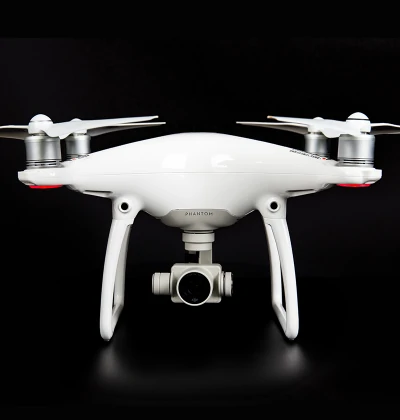

Aerospace & UAV
WJ Prototypes is your 3D manufacturing partner from prototype to large scale production.

Consumer Electronics
New Product Introduction Solutions for Consumer Electronics.

Robotics & Automation
Need some assistance bringing your robotic device or parts from the sketch-board to reality?

Medical Devices
The medical industry needs high quality, dependable and safe parts and products.

Automotive
New Product Introduction Solutions for Automotive

Industrial Machinery
The main purpose of industrial prototyping is to take the product from drawings into the real world.
TL;DR:
Digital twins reduce physical prototypes by over 90% through virtual validation.
Hybrid manufacturing combines additive and subtractive methods for complex, production-ready prototypes.
AI-driven design and simulation accelerate prototyping by generating optimized options and predicting failures.
Digital twins are cutting physical prototype builds by over 90% in robotics, yet many product teams still budget for slow, expensive iteration cycles as if it were 2018. The reality is that hybrid manufacturing, AI-driven simulation, and advanced materials have fundamentally changed what's possible. If you're managing development timelines in aerospace, automotive, medical, or robotics, the gap between teams using these tools and those that aren't is widening fast. This article breaks down the five biggest prototyping innovations shaping 2026, what they mean for your workflow, and how to apply them before your competitors do.
| Point | Details |
|---|---|
| Hybrid manufacturing excels | Combining additive and subtractive methods boosts scalability and surface precision across sectors. |
| Digital twins drive efficiency | Virtual prototyping reduces physical builds and cost, streamlining product validation. |
| AI tools accelerate design | AI-driven generative and simulation platforms cut iteration times from weeks to hours. |
| Sustainable materials on the rise | Bio-compatible and recycled materials are becoming standard in medical and aerospace prototyping. |
| Multi-cycle iteration is essential | Routine 5-10+ design iterations maximize performance, reliability, and compliance. |
Hybrid manufacturing pairs additive manufacturing (AM) with subtractive methods like CNC machining in a single workflow. The core idea is simple: use AM for complex internal geometries that CNC can't reach, then apply CNC finishing for the surface tolerances and dimensional accuracy that AM alone can't reliably deliver. The result is a prototype that's both geometrically sophisticated and production-accurate.
This approach is gaining serious traction. Hybrid manufacturing optimizes scalability in prototyping for aerospace and automotive sectors, where part complexity and regulatory requirements make pure AM or pure CNC insufficient on their own. Industry 5.0 thinking, which emphasizes human-machine collaboration, is accelerating this trend further. Concepts like 6D printing, which adds time and material state as variables, are pushing hybrid workflows into new territory.
Understanding a solid additive manufacturing workflow is the foundation before layering in subtractive steps. Once you know the limits of each process, combining them becomes strategic rather than reactive.
| Factor | Pure AM | Pure CNC | Hybrid |
|---|---|---|---|
| Geometric complexity | High | Low | High |
| Surface finish | Moderate | Excellent | Excellent |
| Setup cost | Low | Moderate | Moderate |
| Scalability | Limited | High | High |
| Best for | Concept models | Precision parts | Production-grade prototypes |
Hybrid methods shine when your prototype needs to pass functional testing, not just look right. For aerospace brackets or automotive housings, you need both internal channel complexity and a surface finish that meets spec.
Key advantages of hybrid prototyping:
Pro Tip: Use hybrid methods when your prototype must pass load or thermal testing. If surface finish and internal geometry both matter, hybrid is almost always faster and cheaper than running two separate processes sequentially. Review your precision prototyping guide to identify which features in your design actually need CNC finishing versus those that AM handles well.
A digital twin is a real-time virtual model of a physical product or process, updated continuously with sensor data and simulation inputs. In prototyping, it means you can validate a design virtually before committing to a single physical build. That's not a minor efficiency gain. That's a workflow transformation.
The adoption numbers make the case clearly. Digital twins reduce physical prototypes by over 90% in robotics, with 39.4% extensive use and 51.7% pilot adoption across the sector. Medical device teams are seeing similar results, using virtual simulation to run biocompatibility and stress scenarios that would take weeks in a lab.
"Digital twins and virtual simulation are not replacing physical prototypes. They are eliminating the ones that were never going to pass anyway."
However, there's a real trade-off. Virtual prototyping cuts costs but increases physical builds for real-condition confirmation. You still need physical parts for final tolerance checks, regulatory submissions, and real-world stress validation. The goal is to arrive at that final physical build with far fewer wasted iterations before it.
Steps to integrate digital twins into your prototyping workflow:
For teams focused on reducing manufacturing costs, digital twins are one of the highest-leverage tools available. Pair them with cost-effective prototyping strategies and you can cut both time and budget without sacrificing validation rigor. The prototyping material impact on simulation accuracy is also worth factoring in early, since material properties directly affect twin fidelity.
AI is doing something that no previous CAD tool could: generating multiple valid design options simultaneously, each optimized for a different constraint set. Generative design algorithms take your load cases, material limits, and manufacturing constraints as inputs, then produce geometries you wouldn't have sketched manually. The best option isn't the one your engineer drew first. It's the one the algorithm found after evaluating thousands of variations.
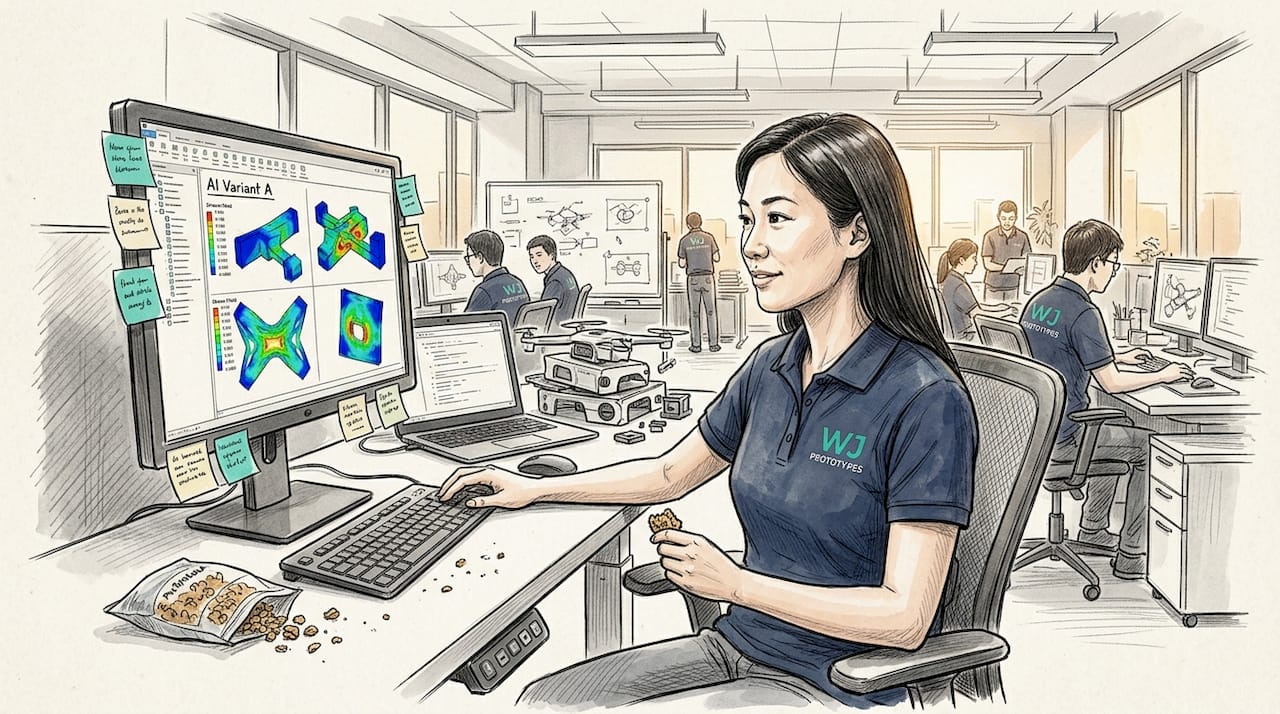 AI-driven simulations and generative design accelerate prototyping by predicting stress points and generating design options, paired with FEA (finite element analysis) and CFD (computational fluid dynamics) for virtual testing. What used to take weeks of manual simulation now runs in hours. For faster prototyping validation, this is the single biggest shift in 2026.
FEA models how a part deforms under load. CFD models how fluids or gases flow through or around it. Together, they give you a complete stress and thermal picture before you cut a single part. For medical implants or aerospace components, that virtual confidence is what justifies moving to physical builds.
Benefits of AI in prototyping:
Pro Tip: When selecting AI and simulation platforms, match the tool to your physics. FEA platforms like Ansys or Abaqus handle structural problems well. CFD tools like OpenFOAM or Simcenter suit thermal and fluid challenges. Don't use a structural solver for a cooling channel problem. The precision engineering breakthroughs happening now are largely driven by teams that pick the right simulation tool for each specific validation need, not the one they already have a license for.
Material choice in 2026 is no longer just about mechanical properties. Regulatory compliance, sustainability targets, and biocompatibility requirements are all shaping which materials make it into aerospace and medical prototypes. The market reflects this shift. The bio-compatible materials market sits at $885M in 2025, with a projected 17.2% CAGR growth rate, driven by demand from medical devices and aerospace structural components.
Recycled thermoplastics and self-healing composites are moving from research labs into production workflows. Self-healing polymers can recover from micro-cracks autonomously, which matters enormously for long-service aerospace parts or implantable medical devices. These aren't experimental curiosities anymore. They're being qualified for real programs.
On the high-performance end, ULTEM 9085 remains the go-to for FAA-certified aerospace parts due to its flame, smoke, and toxicity ratings. Remarkably, ULTEM 9085 with machine learning now predicts FAA part performance within 1% accuracy, meaning teams can validate material behavior virtually before committing to expensive physical certification runs.
Key material considerations for prototype design:
| Material type | Best application | Key benefit | Limitation |
|---|---|---|---|
| Recycled thermoplastics | Medical, consumer | Sustainable, cost-effective | Lower mechanical ceiling |
| ULTEM 9085 | Aerospace, defense | FAA-rated, high temp | High material cost |
| Self-healing composites | Aerospace, implants | Autonomous crack repair | Limited vendor availability |
| Bio-compatible resins | Medical devices | Regulatory compliance | Brittle in thin sections |
Five years ago, two or three prototype iterations was standard. In 2026, designs routinely undergo 5-10+ iterations per design cycle, driven by digital engineering validation tools that make each cycle faster and cheaper. More iterations don't mean more waste. They mean more confidence before you commit to tooling.
CNC machining and 3D printing are both being pushed into high-temperature material territory, serving aerospace and automotive programs that demand thermal stability above 200°C. Cloud-based collaboration platforms and low-code simulation tools are cutting the coordination overhead that used to slow multi-site development teams. A team in Detroit can run the same FDM iteration as a supplier in Shenzhen and compare results in real time.
For FDM specifically, low layer thickness and high extruder temperature maximize mechanical properties and dimensional accuracy. Specifically, 0.1 to 0.2mm layer thickness paired with 220 to 230°C extruder settings delivers the best results for structural prototypes.
Steps for optimizing FDM and CNC iteration cycles:
Pro Tip: Don't treat iteration as failure. Treat it as data collection. Each cycle should answer a specific question about your design. If you can't state what question a given iteration is answering, you're iterating without a plan. Structured iteration, guided by breakthroughs in prototyping methodologies and product design frameworks, consistently outperforms ad hoc builds in both speed and final part quality.
Here's what most prototyping articles won't tell you: the biggest barrier to adopting these innovations isn't technology access. It's the assumption that switching to hybrid or AI-driven workflows will be disruptive. Teams delay because they're waiting for the perfect moment to change their process. That moment doesn't come.
The conventional wisdom says start with the cheapest method and upgrade later. We've seen that approach fail repeatedly in aerospace and medical programs where early material or process choices locked teams into expensive rework. The smarter play is to invest in the right hybrid manufacturing workflow from the first iteration, even if it costs more upfront.
AM lifecycle costs run 39% lower for critical aerospace parts, but high setup and material costs challenge scalability without design for additive manufacturing (DfAM) expertise. That's the nuance most teams miss. The savings are real, but they require intentional process design, not just swapping out equipment. Regulatory complexity in medical and aerospace adds another layer. Virtual validation reduces physical builds, but it doesn't replace the physical evidence regulators require. The teams winning in 2026 are the ones balancing virtual efficiency with disciplined physical validation, not choosing one over the other.
The innovations covered here, from hybrid manufacturing to AI simulation and advanced materials, are already being applied in production programs across aerospace, automotive, medical, and robotics. If your team is ready to move from concept to qualified prototype faster, WJ Prototypes offers the full stack of services to support every stage. Our vacuum casting service delivers production-quality surface finish and material fidelity for low-volume runs, ideal for functional validation before tooling commitment. Explore our full range of custom prototyping solutions to find the right process for your next program, backed by ISO-certified quality and global delivery.
Explore competitive Rapid Prototyping Solutions with expert support from WJ Prototypes.
Whether you're comparing suppliers or looking to optimize costs, our team can help you evaluate the best option for your project.
👉 Request A Quote now or email us at info@wjprototypes.com to get started.
Digital twins enable virtual validation of designs, eliminating builds that would fail physical testing and cutting physical prototypes by over 90% in robotics applications. The cost savings come from running failure analysis virtually before committing to materials and machining time.
Bio-compatible recycled thermoplastics and self-healing composites are the fastest-growing categories, with the bio-compatible materials market at $885M in 2025 and a 17.2% CAGR. ULTEM 9085 remains the standard for FAA-rated aerospace parts.
Low layer thickness of 0.1-0.2mm combined with an extruder temperature of 220-230°C delivers the best dimensional accuracy and mechanical performance for structural aerospace prototypes.
Most programs now run 5-10+ iterations per design, a significant increase from the 1-2 cycles that were standard five years ago, enabled by faster digital validation tools that reduce the cost of each cycle.
Precision Engineering in Prototyping: Driving Breakthroughs
Prototyping for Automotive Industry: Accelerating Innovation
7 Essential Rapid Prototyping Best Practices for Teams
Guide To Cost-Effective Prototyping - Reducing Risks and Expenses
Top 6 Printing Trends: Boost Your Brand Strategy
Explore competitive Rapid Prototyping Solutions with expert support from WJ Prototypes.
Whether you're comparing suppliers or looking to optimize costs, our team can help you evaluate the best option for your project.
👉 Request A Quote now or email us at info@wjprototypes.com to get started.
SERVICES
RESOURCES