



- Room 1807, Unit 9, Building 2, Shangxing Commercial Street, Shangde Road, Shangxing Community, Xinqiao Subdistrict, Bao'an District, Shenzhen City, China
CONTACT US

WhatsApp


Contact Us
Our team is on stand by, waiting toassist you.

Videos
A large collection of educational videos and tutorials.

About Us
Learn about our company, leadership, and mission totransform manufacturing.

Privacy Policy
Applies to all personal information collected through and/or processed in connection.
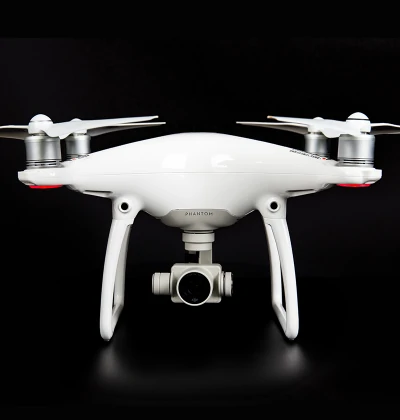

Aerospace & UAV
WJ Prototypes is your 3D manufacturing partner from prototype to large scale production.

Consumer Electronics
New Product Introduction Solutions for Consumer Electronics.

Robotics & Automation
Need some assistance bringing your robotic device or parts from the sketch-board to reality?

Medical Devices
The medical industry needs high quality, dependable and safe parts and products.

Automotive
New Product Introduction Solutions for Automotive

Industrial Machinery
The main purpose of industrial prototyping is to take the product from drawings into the real world.


TL;DR:
Choosing the right prototyping method depends on speed, precision, material, and cost criteria.
Rapid prototyping accelerates product development and reduces costs by enabling early flaw detection.
For SMEs, prototyping's true value lies in learning velocity and risk reduction, not just physical models.
Choosing the wrong prototyping method at the wrong stage of development can cost your team months of rework and thousands in wasted tooling. For product managers in aerospace, automotive, and medical sectors, that pressure is constant. Tight launch windows, strict regulatory requirements, and complex geometries make every decision count. This article walks you through a practical framework for evaluating prototyping options, comparing the major methods head-to-head, and calculating the real return on investment so you can make a confident, defensible case to leadership and get your product to market faster.
| Point | Details |
|---|---|
| Faster market entry | Rapid prototyping can speed up time-to-market by 30-40% for complex products. |
| Cost risk reduction | Early prototyping uncovers flaws and cuts tooling waste, reducing project risk. |
| Choose by criteria | Select your prototyping method using a structured approach to balance speed, cost, and quality. |
| Industry-specific benefits | Aerospace, automotive, and medical sectors gain the most from tailored prototyping techniques. |
With these challenges top-of-mind, let's break down the evaluation process. Selecting the right prototyping method is not a gut-call decision. It requires weighing several competing factors simultaneously, and getting it wrong early compounds into expensive problems downstream.
The four core criteria every product manager should assess are:
No single method wins across all four. That is exactly why structured decision-making matters. The Multi-Criteria Decision Making (MCDM) framework gives you a weighted scoring system to compare methods objectively. You assign importance weights to each criterion based on your project's priorities, score each method against those criteria, and select the highest-scoring option. It removes opinion from the room and replaces it with data.
Time-to-market pressure also shapes method selection in ways that pure technical specs do not capture. When a competitor is six weeks from launch, speed may outweigh surface finish. When a medical device faces FDA scrutiny, precision and material biocompatibility move to the top. Understanding the prototyping process explained in full helps you map each stage to the right tool.
Rapid prototyping (RP) specifically accelerates market entry by 30-40% compared to traditional development cycles, largely because it compresses the feedback loop between design and validation.
Pro Tip: Before committing to a physical prototype, use digital twin simulations to stress-test your design virtually. This catches obvious failure points without spending a dollar on materials, and it sharpens your prototype brief so the first physical build is more informative.
Now that we have a framework for evaluation, it's important to see how rapid prototyping accelerates your development process. The real power of RP is not just speed. It is the structured learning you extract from each iteration.
Here is how a well-run rapid prototyping cycle flows across industrial sectors:
Each stage feeds the next. Skipping one is where projects get into trouble. Streamlining manufacturing with rapid prototyping means treating each build as a structured experiment, not just a physical artifact.
"Detecting flaws early with rapid prototyping saves significant rework costs. The further a defect travels through the development cycle before detection, the more expensive it becomes to fix."
This is not abstract advice. Early flaw detection through prototyping directly reduces tooling scrap and rework hours. For SMEs without the budget buffers of large OEMs, that discipline is what keeps projects solvent. The rapid prototyping guide covers this iterative logic in practical detail.

As rapid prototyping takes your concept through iterations, the choice of method matters. Each major category has a distinct profile of strengths and limitations, and sector-specific requirements often determine which one fits.
| Method | Speed | Precision | Material range | Part strength | Cost per part |
|---|---|---|---|---|---|
| Additive (3D printing) | Fast | Moderate | Wide | Moderate | Low to medium |
| Subtractive (CNC) | Moderate | High | Moderate | High | Medium to high |
| Casting (vacuum/die) | Slow (setup) | Moderate | Moderate | High | Low at volume |
Additive prototyping offers speed and complexity advantages but trades off accuracy and strength compared to subtractive methods, while casting offers batch efficiency but is less suited for early-stage iterations.
Additive manufacturing (SLA, SLS, MJF, DMLS):
Subtractive (CNC machining):
Casting (vacuum casting, die casting):
For faster launches with prototyping, the smart move is often a hybrid sequence: additive for early iterations, CNC for validation builds, and casting for pre-production runs.
To complete the picture, it's crucial to quantify the business impact. Leadership approval for prototyping investment rarely comes from technical arguments alone. You need numbers.
| Scenario | Without prototyping | With prototyping |
|---|---|---|
| Tooling rework cost | $45,000 average | $8,000 average |
| Design iterations before production | 1-2 (costly late changes) | 4-6 (low-cost early changes) |
| Time to production release | 18 months | 11-13 months |
| Defect detection stage | Post-tooling | Pre-tooling |
ROI is realized via avoided tooling scrap and faster market entry. Balancing cost, accuracy, and material constraints is essential for SMEs working with tighter margins than large OEMs.
The main cost-saving drivers are:
Understanding how prototyping reduces costs helps you frame the investment correctly for finance teams. The prototype cost is not a line item expense. It is insurance against far larger downstream failures.
Pro Tip: Implement phase-gate controls at each prototyping stage. Before advancing to the next build, document what you learned, what changed, and why. This discipline maximizes the knowledge extracted per dollar spent and gives leadership a clear audit trail that justifies continued investment.
For a deeper look at the measurable benefits, the precision manufacturing prototyping breakdown covers sector-specific ROI data worth reviewing with your finance team.
With the case for ROI clearly laid out, let's challenge conventional thinking. Most SMEs approach prototyping as a cost center. They look at the per-unit prototype price and compare it to skipping the step entirely. That framing is fundamentally wrong, and it leads to expensive decisions.
The real value of prototyping is not in the physical object. It is in the learning velocity it creates. Every prototype is a structured question answered in physical form. Companies that treat prototyping as a learning multiplier, not a manufacturing step, consistently outpace competitors who treat it as overhead.
Across aerospace, automotive, and medical projects, the pattern is consistent. Teams that run more iterations earlier, even imperfect ones, arrive at production-ready designs faster and with fewer surprises. The companies that wait for a "perfect" prototype before testing are the ones that discover critical flaws after tooling is already cut.
Getting executive buy-in requires reframing the conversation. Stop presenting prototyping as a cost. Present it as a risk reduction mechanism with a quantifiable return, as outlined in the prototyping value explained framework. When leadership sees that one avoided tooling rework event pays for an entire prototyping program, the budget conversation changes entirely.
Ready to accelerate your next project? Here's how to get started with industry experts. At WJ Prototypes, we work with product managers and engineering teams in aerospace, automotive, and medical sectors to match the right prototyping method to each development stage. Whether you need tight-tolerance parts from our CNC prototyping services or production-representative finishes through our vacuum casting solutions, our ISO-certified team delivers fast, cost-controlled results. Get an instant quote online and move your concept from design to validated prototype without the delays that slow most SME product launches down.
Explore competitive Rapid Prototyping Solutions with expert support from WJ Prototypes.
Whether you're comparing suppliers or looking to optimize costs, our team can help you evaluate the best option for your project.
👉 Request A Quote now or email us at info@wjprototypes.com to get started.
MCDM optimizes selection by balancing finish, time, accuracy, and cost, making it the most reliable way for SMEs to identify the right method rather than defaulting to the cheapest option upfront.
By compressing the design-to-test feedback loop, RP accelerates market entry by 30-40%, allowing teams to validate and iterate far faster than traditional sequential development.
Aerospace, automotive, and medical sectors gain the most because complex part geometries and strict performance standards make early flaw detection especially valuable before expensive tooling is committed.
Material limits and skills gaps are the most common barriers, but partnering with an experienced prototyping service provider eliminates both obstacles without requiring in-house expertise.
Industrial Prototyping Process Explained: Speed, Precision, Value
Industrial Prototyping in China | Boost Faster Product Launches
Rapid Prototyping Guide | 5 Important Steps To Prototype Design & Manufacturing
Role of Materials in Prototyping: Impact on Speed and Cost
Industrial Roof Replacement Process: 30% Cost Savings Guide
Explore competitive Rapid Prototyping Solutions with expert support from WJ Prototypes.
Whether you're comparing suppliers or looking to optimize costs, our team can help you evaluate the best option for your project.
👉 Request A Quote now or email us at info@wjprototypes.com to get started.
SERVICES
RESOURCES