



- Room 1807, Unit 9, Building 2, Shangxing Commercial Street, Shangde Road, Shangxing Community, Xinqiao Subdistrict, Bao'an District, Shenzhen City, China
CONTACT US

WhatsApp


Contact Us
Our team is on stand by, waiting toassist you.

Videos
A large collection of educational videos and tutorials.

About Us
Learn about our company, leadership, and mission totransform manufacturing.

Privacy Policy
Applies to all personal information collected through and/or processed in connection.


Aerospace & UAV
WJ Prototypes is your 3D manufacturing partner from prototype to large scale production.

Consumer Electronics
New Product Introduction Solutions for Consumer Electronics.

Robotics & Automation
Need some assistance bringing your robotic device or parts from the sketch-board to reality?

Medical Devices
The medical industry needs high quality, dependable and safe parts and products.

Automotive
New Product Introduction Solutions for Automotive

Industrial Machinery
The main purpose of industrial prototyping is to take the product from drawings into the real world.


TL;DR:
- Low-volume manufacturing reduces initial costs, accelerates time to market, and offers design flexibility for product development. It also minimizes inventory risk, ensures quality through verified suppliers, and is ideal for production up to 10,000 units annually. Transition to high-volume manufacturing becomes advantageous once demand and design stability justify the investment.
Getting your product from prototype to market involves one of the most consequential decisions you’ll make: how many units to produce first. Jump straight to high-volume production and you risk locking capital into inventory that may need redesigning. Stay in prototype limbo and you miss the window to generate real customer feedback. The benefits of low-volume manufacturing sit squarely in that gap, offering a practical middle path that gives product developers speed, flexibility, and cost control without betting the company on a single large production run.
| Point | Details |
|---|---|
| Lower financial risk | Avoid large tooling investments and reduce capital exposure during early product stages. |
| Faster time to market | Advanced technologies can cut lead times from 30+ days to as few as 5 days. |
| Design freedom | Modify parts or create multiple variants without costly retooling between runs. |
| Production-grade quality | First article inspection and verified suppliers deliver parts that meet final specifications. |
| Strategic transition point | Plan to scale past low-volume at roughly 10,000+ units annually to capture cost savings. |
One of the most immediate low-volume manufacturing benefits is what you avoid paying upfront. Injection mold tooling for a single part can run anywhere from $5,000 to $100,000 depending on part complexity and material. For a product that may change shape three times before it ships, that is a brutal investment.
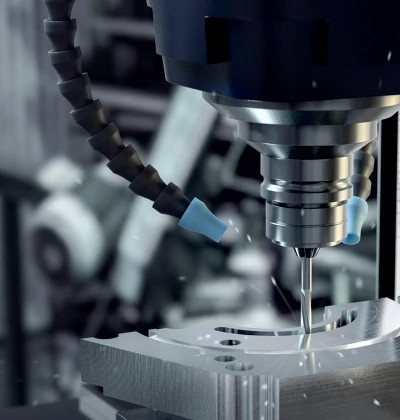
CNC machining dominates low-volume runs precisely because it requires no dedicated steel molds. You change a CAD file, not a physical tool. That flexibility translates directly into lower committed spend during the most uncertain phase of product development.
Beyond tooling, smaller batch sizes keep your inventory carrying costs in check. You are not warehousing 50,000 units while your engineering team debates a feature change. Businesses sourcing from competitive global markets can cut CNC costs by approximately 20% while maintaining quality through ISO 9001 verified suppliers, provided they account for total landed cost including shipping lead times.
Pro Tip: When comparing quotes, always calculate total landed cost, not just the unit price. Sea freight from Asia adds 25 to 40 days of transit time, which affects your cash flow and inventory buffer requirements.
Speed is where the advantages of low-volume production become undeniable for product teams under pressure. Traditional manufacturing pipelines require weeks of setup, tooling lead times, supplier qualification, and scheduling slots in a crowded production queue.

Modern low-volume manufacturing flips that model. AI-driven platforms and multi-laser 3D printing have reduced metal parts production lead times from over 30 days to as few as 5 days, with manufacturing costs dropping roughly 30% in optimized workflows. That is an 83% reduction in lead time, which can mean the difference between launching at a trade show or missing it entirely.
The downstream effect matters just as much. When you can hold physical parts in 5 days instead of 35, your iteration cycle compresses dramatically. You test with real users, gather feedback, make adjustments, and order the next revision without waiting two months. That speed compounds over a product development cycle in ways that spreadsheets rarely capture.
Pro Tip: Pair a digital quoting platform with your CAD workflow so part orders can be placed the same day a design is finalized. The hours saved in back-and-forth communication add up to days across a full development sprint.
Product developers often underestimate how much a design will change between first prototype and production release. Hardware products routinely go through five to twelve design iterations. If each change requires new tooling, your development budget evaporates before you reach customers.
Low-volume manufacturing eliminates that penalty. Additive manufacturing removes fixed setup costs entirely, keeps cost per part relatively flat across small quantities, and supports rapid design changes without any physical retooling. A geometry that was impossible to injection mold, think internal lattice structures or conformal cooling channels, becomes manufacturable overnight.
This flexibility also supports running multiple product variants simultaneously. You can produce three versions of the same housing with different wall thicknesses, test them in parallel, and select a winner without committing to a single design before you have data. For medical device developers or anyone targeting regulatory approval, this ability to iterate quickly without rework penalties is genuinely valuable.
Most product businesses eventually face the challenge of serving different customer segments with slightly different configurations. A manufacturer of industrial sensors might need five variants of the same core product for different temperature ranges. A consumer electronics company might require regional variants with different power connectors.
High-mix, low-volume production solves this by shifting from make-to-stock to make-to-order. You produce only what is needed, when it is needed. The result is a dramatic reduction in excess inventory risk and a corresponding improvement in capital efficiency. No warehouse full of SKUs that stopped selling six months ago.
The make-to-order shift also improves your response to demand signals. If one variant consistently outperforms others, you can redirect capacity immediately rather than waiting for existing inventory to clear. That kind of responsiveness is structurally unavailable to businesses locked into high-volume production commitments.
A common concern about low-volume production is whether parts will actually meet the specifications required for final products. This is a reasonable question, and the honest answer is that it depends entirely on your supplier’s quality systems.
Reputable low-volume manufacturers use first article inspection and in-process verification to maintain production-grade standards despite smaller batch sizes. First article inspection means the first part off a run is measured against every dimension in your drawing before production continues. That catches setup errors before they become batch-wide problems.
For industries like medical devices, aerospace components, or automotive safety systems, this level of documentation and traceability is non-negotiable. Working with ISO-certified suppliers who maintain robust quality records protects you during regulatory audits and gives customers confidence in parts that carry real consequences if they fail.
Building internal production capacity is expensive. You need equipment, floor space, skilled operators, maintenance contracts, and a production management team. For most product companies, that overhead only makes financial sense at sustained high volumes.
Contract manufacturing lets you avoid that infrastructure investment entirely. Contract manufacturers spread overhead across multiple client programs, which means you benefit from production expertise and capacity without paying for idle time when your demand dips. That shared-resource model improves your agility during demand fluctuations without putting your balance sheet at risk.
The practical benefit for a startup or small business is significant. Capital that would have gone toward equipment now stays available for product development, sales, and marketing. You access production capability that took your contract partner years to build, on demand, without a long-term commitment.
One hidden cost driver in manufacturing is scrap. Traditional stamping and subtractive processes can waste 30% to 60% of raw material on complex parts. At scale, that waste gets amortized. At low volumes, it hits your cost per part hard.
Net-shape and near-net-shape processes used in low-volume production drastically reduce scrap compared to traditional methods. Additive manufacturing builds only what the part requires. Vacuum casting and die casting produce near-final geometry with minimal post-processing. These approaches protect your margins on small runs in ways that conventional machining cannot always match.
For companies with sustainability commitments, material efficiency also reduces waste disposal costs and simplifies reporting on environmental impact. That is increasingly relevant for enterprise customers who audit their supply chains.
Understanding the benefits of low-volume manufacturing also means knowing when it stops making financial sense. The crossover point is not a mystery. Continuing with low-volume methods beyond 10,000 to 50,000 units annually means leaving significant cost savings on the table as tooling amortization dramatically reduces unit costs at scale.
Here is a straightforward comparison to help you decide:
| Factor | Low-volume manufacturing | High-volume manufacturing |
|---|---|---|
| Tooling cost | Low or none | High upfront investment |
| Unit cost | Higher per part | Lower per part at scale |
| Design flexibility | High, easy to modify | Low, costly to change |
| Lead time | Days to weeks | Weeks to months for setup |
| Inventory risk | Minimal | Significant |
| Best for | Under 10,000 units/year | Over 10,000 to 50,000 units/year |
| Capital requirement | Low | High |
The decision is not emotional. It is a math problem. Once your product design is stable and demand is predictable, dedicated tooling amortizes quickly and your per-unit cost drops in ways that low-volume manufacturing simply cannot match. The mistake is staying in low-volume production out of comfort rather than necessity.
I’ve worked with enough product teams to say this plainly: most of them fall in love with low-volume manufacturing for the wrong reasons. They like the flexibility. They appreciate the low commitment. And then they stay too long.
In my experience, the real power of low-volume production is that it buys you time to be right, not time to avoid making a decision. I’ve seen companies run 15 design iterations over 18 months, perfecting a product that they never actually scaled. That is not product development. That is engineering as a hobby.
What I’ve found actually works is treating low-volume manufacturing as a defined phase with an exit condition. You decide upfront: once we validate X with real customers and hit Y units per quarter, we commit to tooling. Without that trigger, the flexibility becomes a trap.
The other thing I’d push back on is the assumption that speed only matters for startups. Established companies lose market share every time a more agile competitor iterates faster. Low-volume manufacturing efficiency is a competitive weapon, not just a startup resource. The companies using it best are the ones who understand it is temporary by design.
— Yu
If you are evaluating low-volume manufacturing options, Wjprototypes offers the kind of range that makes it possible to consolidate your supply chain without sacrificing process fit. Their capabilities cover CNC machining, SLA, SLS, MJF, DMLS, vacuum casting, injection molding, die casting, and sheet metal fabrication, all from an ISO-certified facility in China with global delivery.
For product developers exploring CNC machining materials for prototypes and custom parts, Wjprototypes provides instant online quoting with material selection guidance from experienced engineers. Businesses looking to reduce per-part costs through CNC machining in China can get competitive quotes without the quality uncertainty that makes global sourcing feel risky. Wjprototypes verifies all processes against customer specifications and supports first article inspection on request, which makes them a credible partner for regulated industries as well as fast-moving consumer product teams.
Low-volume manufacturing is the production of parts in small quantities, typically ranging from single prototypes to a few thousand units, using flexible processes like CNC machining, additive manufacturing, or vacuum casting that do not require dedicated tooling.
The primary benefits include lower upfront tooling costs, faster lead times, design flexibility for iteration, reduced inventory risk, and the ability to produce multiple product variants without major cost increases.
Continuing low-volume production beyond roughly 10,000 to 50,000 units per year typically means paying more per part than necessary. At that volume, the tooling investment for high-volume production amortizes quickly and drives unit costs down significantly.
Yes. Suppliers with ISO certification and documented quality systems, including first article inspection and in-process verification, can produce low-volume parts that meet medical, aerospace, and automotive regulatory requirements.
Modern platforms combining AI-driven workflows and multi-laser 3D printing have compressed metal parts lead times from over 30 days to as few as 5 days, representing an 83% reduction compared to traditional production timelines.
SERVICES
RESOURCES