



- Room 1807, Unit 9, Building 2, Shangxing Commercial Street, Shangde Road, Shangxing Community, Xinqiao Subdistrict, Bao'an District, Shenzhen City, China
CONTACT US

WhatsApp


Contact Us
Our team is on stand by, waiting toassist you.

Videos
A large collection of educational videos and tutorials.

About Us
Learn about our company, leadership, and mission totransform manufacturing.

Privacy Policy
Applies to all personal information collected through and/or processed in connection.
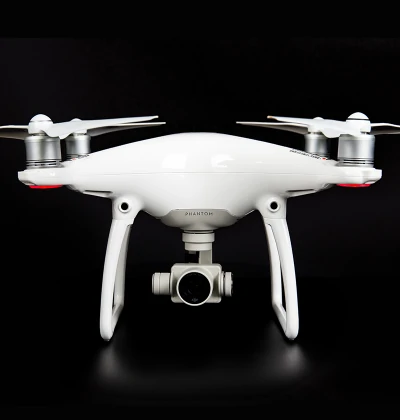

Aerospace & UAV
WJ Prototypes is your 3D manufacturing partner from prototype to large scale production.

Consumer Electronics
New Product Introduction Solutions for Consumer Electronics.

Robotics & Automation
Need some assistance bringing your robotic device or parts from the sketch-board to reality?

Medical Devices
The medical industry needs high quality, dependable and safe parts and products.

Automotive
New Product Introduction Solutions for Automotive

Industrial Machinery
The main purpose of industrial prototyping is to take the product from drawings into the real world.

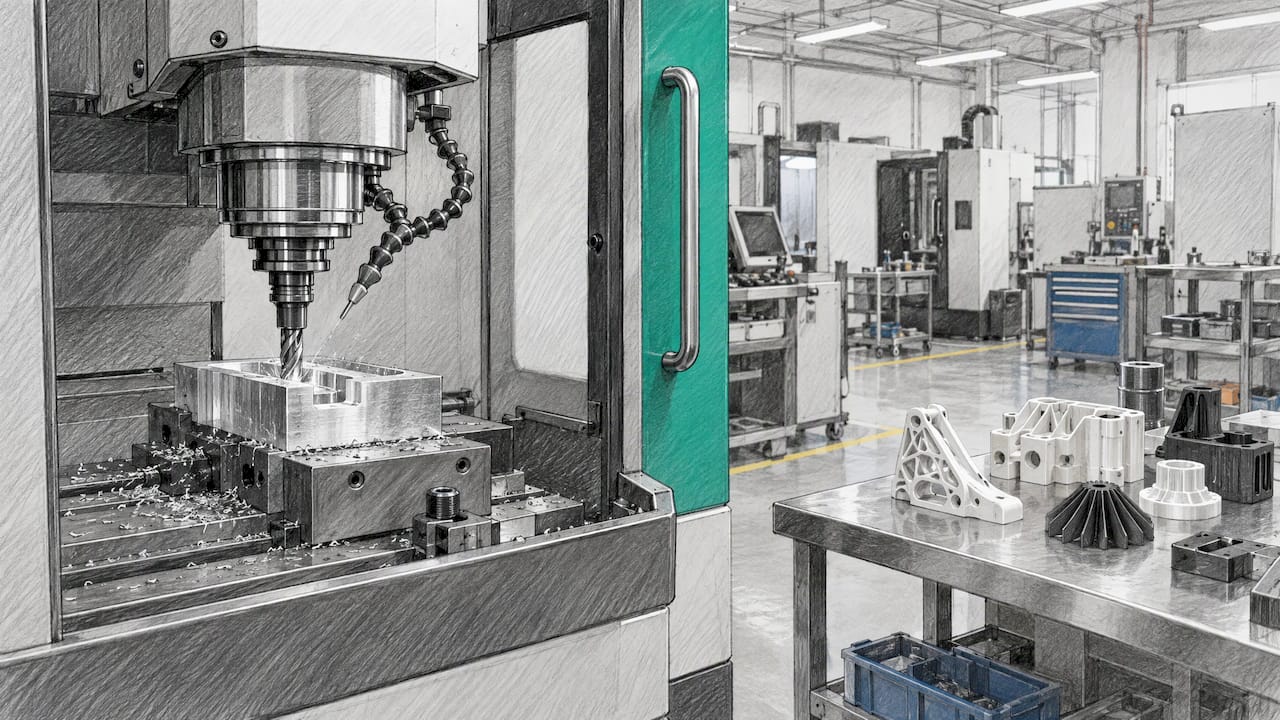
Use 3D printing when you need a part with complex geometry, a quick look at form and fit, or several design variants in days. Use CNC machining when the prototype has to be made from production-grade material, hold tight tolerances, or carry real loads and heat. Most programs need both, in that order. Printing answers early design questions, and machining proves the part that will be tested, certified or shown to customers.
This guide is for engineers, product designers and procurement managers who are ordering prototypes from a Chinese supplier and shipping them to the US. It shows how to decide part by part, what each choice does to your schedule, and what to settle before you request a quote. At WJ Prototypes we make parts both ways, so the advice below is about fitting the process to the question your prototype has to answer.
Engineers often ask which process is faster. The better question is what evidence the prototype has to produce. A prototype that checks whether a bracket clears a wire harness needs the right shape, and almost nothing else. A prototype that goes into a vibration rig needs the right alloy, the right grain behavior and a bore that accepts a bearing without reaming.
A short sort helps:
The same logic applies to the whole development program. The US Government Accountability Office describes iterative cycles of design, validation and production as a practice of leading companies that deliver complex products quickly (GAO-23-106222). Each cycle is only as useful as the question it answers, so pick the process that answers that question at the lowest cost in time.
Additive processes build a part layer by layer, so internal channels, lattices, undercuts and organic shapes cost little extra. Stratasys notes in its engineering comparison that printing can produce geometries that are difficult or impractical to machine (Stratasys, 3D Printing vs. CNC Machining). If your design has a hollow interior, conformal cooling path or merged assembly, printing is the practical route.
When the design is still changing, you want several versions on the bench quickly. Printing needs almost no tooling or fixture planning, so a revised file can go straight back into a build. This is where speed pays off most: the third and fourth iteration of a housing, not the final validation part.
Printing is not one process. The choice inside it matters as much as the choice between printing and machining:
Our 3D printing materials page lists what each technology can use.
A machined part is cut from solid stock, so its properties are close to those of the raw material. Stratasys makes the same point: machined parts behave like the bar or plate they came from, while printed parts can be anisotropic, meaning their strength depends on the direction of the build (Stratasys). For a test that has to predict how the production part will behave, that predictability is the reason to machine.

Machining can work many plastics, metals and composites, while each printing technology covers a smaller class of materials. If your drawing calls for a specific aluminum alloy, stainless grade, PEEK or acetal, machining gets you the real thing. We list available stock on our CNC machining materials page.
Machining generally gives tighter tolerances and smoother surfaces straight off the machine. That matters for anything that mates with another part: bearing bores, sliding surfaces, sealing grooves, threaded holes. The tolerance on the drawing should come from function, not habit. Tolerances tighter than the part needs add machining time and inspection effort without improving the test result. Our design guide for CNC milled parts shows how wall thickness, internal corners and hole depth affect machinability.
If you need ten identical parts for ten test units, or the same part again next month after a small change, a machined program repeats well. The program, fixtures and tool paths exist once the first part is made.
| Factor | 3D printing | CNC machining |
|---|---|---|
| Best for | Complex shapes, early iterations, fit checks | Functional tests, tight tolerances, production-grade material |
| Geometry | Internal channels, lattices and undercuts are practical | Limited by tool access; deep pockets and internal features add cost |
| Material | Narrower list per technology | Wide range of metals, plastics and composites |
| Mechanical behavior | May vary with build direction | Close to the raw stock |
| Surface and tolerance | Needs post-processing for smooth or precise features | Tighter and smoother as machined |
| Setup effort | Low | Higher, shared across the batch |
| Cost at 1 piece | Often lower for complex parts | Often lower for simple, blocky parts |
| Cost as quantity rises | Per-part cost falls slowly | Setup is spread across more parts |
Cost does not follow one rule. A simple block-shaped part can be cheaper to machine even as a single piece, because it needs little programming and removes little material. A complex part that would need five setups and special fixtures can be cheaper to print. For metal, DMLS carries a higher per-part burden from powder, print time and post-processing, so it earns its place where complexity or part consolidation offsets that cost. Our own comparison for automotive buyers goes deeper into this: cost-effectiveness of CNC machining vs 3D printing in automotive parts.
For one or two parts, the decision is about geometry and material. For 10 to 50 parts, the setup cost of machining starts to spread out, and printing remains competitive only if the geometry is complex or the part is small enough to nest many to a build. Past that, you are close to low-volume production, where machining, vacuum casting or injection molding in a prototype tool may be cheaper per part.
A practical way to test this is to quote your design at three quantities, for example 1, 10 and 50, in both processes. The crossover point is specific to your part, and it is the number that should drive your decision. Because we set no minimum order quantity, a single prototype and a small batch go through the same quoting process.
If a part will later be produced in plastic by molding, consider a bridge step. Vacuum casting copies a master pattern into polyurethane parts for small batches, and injection molding takes over when quantities justify tooling.
Both processes can produce parts quickly once the file is approved. What stretches schedules is usually everything around production:
When printing and machining are compared on speed alone, printing usually finishes the raw part first for complex shapes. But a printed part that needs smoothing, reaming and coating to be usable may not beat a machined part that is finished when it comes off the machine. Compare the time to a usable part, not the time to a raw part.
The most efficient programs split the work by stage. SRAM’s development of metal crank arms is a good illustration: the team first used an aluminum prototype to prove the design, then tested 3D-printed titanium crank arms, and finally used die-cast and CNC prototypes for final testing (DEVELOP3D). Each step used the process that fit the question at that point.
A workable version for most product teams:
We describe how engineers combine the two methods in our article on combining CNC and 3D printing for prototyping. Many assemblies also mix processes within one prototype: a machined aluminum chassis, printed internal brackets and a sheet metal cover. Our sheet metal fabrication service covers the last of those.
Speed and quality depend on what you send. Prepare this package before you request a quote:
On quality, ask for a stated inspection approach for the dimensions you marked as critical, and agree on the documents that will ship with the parts. We hold ISO certification, and our engineers review files and flag manufacturability issues before production. That is the point to fix a thin wall or an impossible internal corner, not after the parts arrive.
Most of the wasted prototype cycles we see in requests come from choosing a process before deciding what the part has to prove. A team prints a bearing seat and then wonders why it won’t hold a press fit. Another machines a complex manifold in five setups when a print would have answered the flow question in a fraction of the effort.
Our view is simple. Work with one supplier that runs both 3D printing and CNC machining, so the process recommendation follows your test plan instead of a machine list. Print early, machine for validation, and move to casting or molding when volumes justify it. With no minimum order quantity, instant online quoting and a dedicated project manager on each job, a single prototype and a small batch go through the same route, and you can compare both processes on your own part before you commit.
Nas
If you are deciding between the two, send the same file to be quoted for both. Our CNC machining service and 3D printing service cover SLA, SLS, MJF, FDM and DMLS alongside milling and turning, and the online instant quote lets you upload your design and compare options. A dedicated project manager then confirms the specification with you before production starts. For a view of how providers compare for prototype work, see our overview of CNC machining shops in China for prototype and low-volume runs.
Printing is usually faster for complex shapes because it needs little setup. Machining can be just as fast for simple parts, and it often needs less finishing before the part is usable. Compare the time to a finished, usable part, including shipping, rather than the build time alone.
Yes, when the printed material and orientation match the test conditions. Nylon from SLS or MJF works well for snap fits, housings and light-load parts. For tests that must predict how a production metal or engineering plastic behaves, machined parts are a closer match because their properties are near those of the raw stock.
It depends on the part, not the process. Simple, blocky geometries are often cheaper to machine. Parts with complex internal features are often cheaper to print. Quoting the same file at several quantities shows where the crossover falls for your design.
A 3D file is enough for a shape check. When tolerances, threads or surface finish matter, add a 2D drawing that marks the critical features. This avoids questions that delay production and makes inspection against your requirements possible.
Allow time for production, packing, transit and US customs entry. Goods of Chinese origin are subject to duties and formal entry, so agree on the importer of record and prepare an accurate commercial invoice before the order ships. Check the current duty rules for your part’s tariff classification on official US government pages.
SERVICES
RESOURCES