



- Room 1807, Unit 9, Building 2, Shangxing Commercial Street, Shangde Road, Shangxing Community, Xinqiao Subdistrict, Bao'an District, Shenzhen City, China
CONTACT US

WhatsApp


Contact Us
Our team is on stand by, waiting toassist you.

Videos
A large collection of educational videos and tutorials.

About Us
Learn about our company, leadership, and mission totransform manufacturing.

Privacy Policy
Applies to all personal information collected through and/or processed in connection.
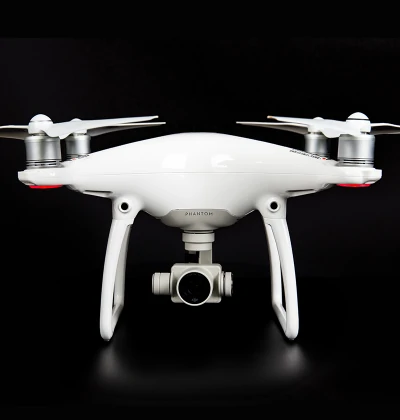

Aerospace & UAV
WJ Prototypes is your 3D manufacturing partner from prototype to large scale production.

Consumer Electronics
New Product Introduction Solutions for Consumer Electronics.

Robotics & Automation
Need some assistance bringing your robotic device or parts from the sketch-board to reality?

Medical Devices
The medical industry needs high quality, dependable and safe parts and products.

Automotive
New Product Introduction Solutions for Automotive

Industrial Machinery
The main purpose of industrial prototyping is to take the product from drawings into the real world.
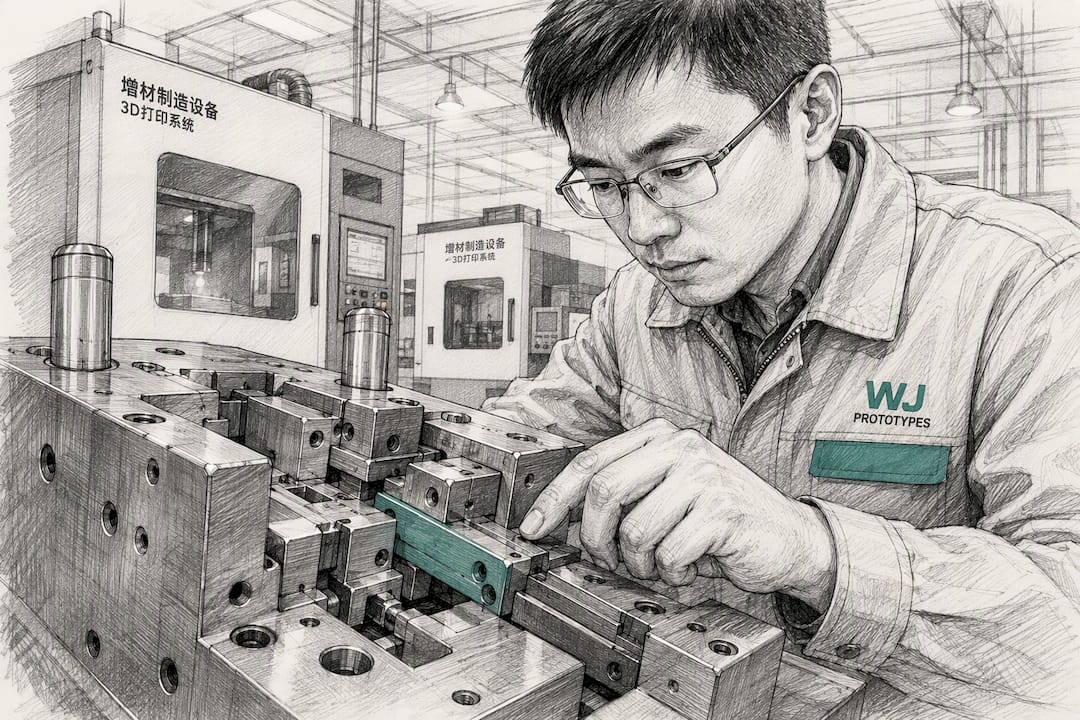

Side actions and undercuts raise tooling cost and, if left unaddressed until after steel gets cut, quietly erode throughput for the life of the program. The main cost channels are predictable: upfront tooling uplift, slower cycle times, added maintenance, and expensive mid-program retrofits.
The numbers to know before you sign a quote:
Pro Tip: Run a DFM review before you request tooling quotes, not after. Every dollar spent modeling undercut strategy at the design stage saves multiples of that in retrofit cost later.
Undercuts and side actions raise tooling cost by 30 to 60 percent and can cut throughput by 40 percent when handled with manual pickouts instead of engineered slides.
| Point | Details |
|---|---|
| Know the volume breakpoint | Under 1,000 parts a year, favor manual pickouts; above 5,000, slides typically pay for themselves. |
| Price the tooling uplift | Budget 30% to 60% more for molds with slides compared to a simple two-plate design. |
| Model cycle time honestly | A 20-second manual pickout can cut hourly output by roughly 40% versus an automated slide. |
| Specify everything in the RFQ | State steel grade, cavity count, shot life, and undercut geometry so quotes are truly comparable. |
| Run DFM before quoting | WJ Prototypes performs DFM review ahead of tooling quotes to flag undercut cost and cycle-time impact early. |
An undercut is any part feature that would trap the part in the mold if the tool just opened in a straight line: a side hole, an internal thread, a snap-fit lip, a boss on an angled wall. Getting that geometry out of the mold requires either a mechanical workaround or a person.
The two common workarounds are side actions (also called slides or lifters) and manual pickouts. A slide is a mechanized block that retracts sideways before the mold opens, freeing the undercut. A manual pickout, or hand load, means an operator physically removes a loose core or insert from the part after each cycle. Both solve the same geometry problem. They cost completely differently.
Slides are not a simple bolt-on. Each one needs its own guide rails, angled pins or hydraulic cylinders, wear plates, and a return mechanism that has to sequence correctly with the rest of the mold every single cycle. More moving parts means more tolerances to hold, more surfaces that wear, and more things that can jam. That is why slides push tooling cost meaningfully higher than an equivalent open-and-shut design, and why annual maintenance on a slide-equipped mold tends to run 3 to 5 percent of the initial tooling cost.
Common geometry triggers you should flag during design review:
None of these are wrong to design. They just need to be priced and planned for, not discovered in the first tooling quote.
China tooling pricing spans a wide range, and undercuts are one of the biggest reasons two quotes for what looks like “the same part” can differ by tens of thousands of dollars. A prototype or bridge tool in aluminum or basic P20 steel typically runs $1,000 to $3,000. A production-grade P20 or H13 mold for low to mid volumes lands closer to $2,500 to $15,000. Add slides, hardened steel, and tight tolerances for a complex part and that number can climb past $20,000, sometimes exceeding $80,000.

Cycle time tells a parallel story. Consider a part with a simple 30-second molding cycle. Add a 20-second manual pickout because the geometry has an undercut nobody engineered around, and the cycle stretches to 50 seconds. That single change drops hourly output from 120 parts to 72, a 40 percent throughput loss on the same machine, same operator, same shift.
Three numbers worth running before you approve any tool:
That last number is the one procurement teams underestimate most. Retrofitting isn’t just the tooling change. It is new samples, a requalification cycle, and lost production days while the mold is off the press.
Volume should drive this decision more than any other single factor. Below roughly 1,000 parts a year, manual pickouts remain the most cost-effective option even with the labor drag, because the upfront savings on tooling outweigh the throughput hit at low quantities. Between 1,000 and 5,000 parts a year, the answer depends on your total cost of ownership: labor rate, shift count, and how long the program is expected to run. Above 5,000 parts annually, slides typically pay for themselves within the first year through cycle-time savings alone.
Volume is not the only filter. If your line needs lights-out or minimally attended operation, slides win regardless of volume, because a hand load requires a person watching the press. Cosmetic parts with visible parting lines near the undercut also favor engineered slides over hand-finished workarounds that introduce inconsistency.
Pro Tip: If your program has an aggressive ramp planned, price the slide tool now even if year-one volume doesn’t justify it. A tool sized for today’s volume and rebuilt for tomorrow’s almost always costs more than one built right the first time.
Red flags that should push you toward higher tooling investment upfront:
Every RFQ you send should force apples-to-apples quotes, and that means specifying steel grade, cavity count, and target shot life explicitly rather than letting the factory guess. Vague specifications are the single biggest reason two Chinese tool shops quote the same part 40 percent apart.
Here is a practical sequence for the RFQ and sample stage:
On the design side, reorienting a feature relative to the parting line, using a removable insert instead of a full slide, or splitting a single complex part into two simpler ones can eliminate an undercut entirely. Reviewing draft angles during early prototyping, as covered in how prototyping workflows influence tooling decisions, often catches these opportunities before a quote is ever requested. For regulated industries wary of full offshore reliance, a hybrid model that tools in China and produces domestically can capture most of the cost advantage with less logistics exposure.
Undercuts don’t just cost money in tooling and cycle time. They introduce failure modes that show up on the quality line months into production. Manual pickouts depend on an operator performing the same motion correctly every cycle, shift after shift. Fatigue, turnover, and training gaps all show up as inconsistent part removal, and inconsistent removal shows up as scratched surfaces, deformed snap-fits, or parts ejected before they’ve fully cooled.

Slides have their own failure profile. A worn guide rail or a return spring losing tension causes flash at the parting line exactly where the slide meets the cavity, and that flash often lands right on a functional feature like a snap-fit or a threaded boss. Left unaddressed, it becomes a rejected part at final inspection, or worse, a field failure in an automotive or medical assembly where that feature has to hold.
For aerospace and medical programs specifically, where documentation and first-pass yield carry real financial weight, this is where an ISO-certified quality process with defined inspection points at T1 and T2 sampling earns its cost. Catching a slide wear pattern at first article inspection costs a few days. Catching it after 10,000 units have shipped costs a recall.
The practical takeaway: any undercut strategy you choose needs an inspection plan attached to it, not just a tooling quote. Reject rates on hand-loaded parts and slide-tooled parts fail differently, and your incoming quality checks should be built around whichever failure mode your chosen approach actually produces.
Most procurement guidance treats tooling cost as a single number to negotiate down. That misses where the real money moves. The tooling quote is the visible cost. The cycle-time penalty and the retrofit risk are the ones that hit the P&L quietly, three or six months into production, after the decision is already locked in.
The conventional advice, “get three quotes and pick the cheapest,” actively works against you here, because a cheap quote on a part with undercuts almost always means the factory assumed manual pickouts without telling you. You find out when throughput comes in 40 percent below your production plan.
What the numbers actually support: model your real annual volume against the 1,000 to 5,000 part crossover before you request a single quote, and put that volume assumption in writing in your RFQ. A slide-equipped tool that costs 40 percent more upfront but doubles your effective throughput is not the more expensive option. It is the cheaper one, once you count labor and missed output over a 12-month run.
The single highest-leverage move is timing, not tooling choice. Run DFM before the quote goes out, not after the first sample fails.
There are ways to manage undercut risk on your own: build a bigger internal DFM team, negotiate harder on quotes, or accept the retrofit risk and budget for it later. All three cost you either headcount or margin. WJ Prototypes gives you a faster route to the same outcome by putting DFM review in front of the tooling decision, not after it.

WJ Prototypes runs a DFM review on every incoming project, flagging undercuts and side-action requirements before a quote gets finalized, so you see the real tooling cost and cycle-time impact upfront instead of discovering it at T1 sampling. As an ISO-certified manufacturer, WJ Prototypes backs that review with documented QA policies, staged sampling, and instant online quoting across CNC machining, injection molding, and low-volume production runs for aerospace, automotive, and medical programs. If your part’s geometry might work better without a molded undercut at all, the CNC machining materials page is worth checking alongside your molding quote. Submit your design for a DFM review before you commit to tooling, and get a clear breakdown of where undercuts are adding cost, and where they aren’t.
Molds with slides or side actions typically cost 30% to 60% more than an equivalent mold with no undercuts, depending on the number of slides and their complexity.
The general crossover sits between 1,000 and 5,000 parts a year; below that range, manual pickouts are usually more cost-effective, and above it, slides typically pay back through cycle-time savings.
Yes, but retrofitting mid-program is expensive. One documented conversion added about $8,500 to a program’s cost, on top of requalification time and lost production days.
Specify steel grade, cavity count, target shot life, and every undercut feature explicitly, and require T1 and T2 sample stages before final tool acceptance. A DFM review before quoting catches most cost surprises before they reach a purchase order.
Often yes. China base tooling can run 30% to 60% cheaper than Western equivalents even with slides included, though landed costs like shipping and inspection typically bring net savings down to 35% to 50%.
SERVICES
RESOURCES