



- Room 1807, Unit 9, Building 2, Shangxing Commercial Street, Shangde Road, Shangxing Community, Xinqiao Subdistrict, Bao'an District, Shenzhen City, China
CONTACT US

WhatsApp


Contact Us
Our team is on stand by, waiting toassist you.

Videos
A large collection of educational videos and tutorials.

About Us
Learn about our company, leadership, and mission totransform manufacturing.

Privacy Policy
Applies to all personal information collected through and/or processed in connection.
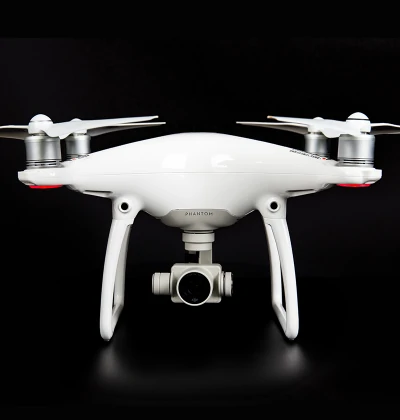

Aerospace & UAV
WJ Prototypes is your 3D manufacturing partner from prototype to large scale production.

Consumer Electronics
New Product Introduction Solutions for Consumer Electronics.

Robotics & Automation
Need some assistance bringing your robotic device or parts from the sketch-board to reality?

Medical Devices
The medical industry needs high quality, dependable and safe parts and products.

Automotive
New Product Introduction Solutions for Automotive

Industrial Machinery
The main purpose of industrial prototyping is to take the product from drawings into the real world.

TL;DR:
- WJ Prototypes offers CNC machining with integrated engineering feedback, ISO certification, and global delivery in the US. The extent of design assistance varies, from auto-DFM to detailed engineer reviews, depending on provider type and part complexity. Choosing the right partner involves assessing their review process, deliverables, certification, and ability to deliver suitable documentation, especially for regulated industries.
For engineers who need more than a machine shop that just cuts what you send them, WJ Prototypes is a strong starting point. It combines CNC machining with integrated engineering feedback, ISO-certified quality assurance, and global delivery to US customers. That said, the right provider depends on your project: a quick functional prototype has different requirements than a tight-tolerance aerospace bracket heading into low-volume production.
“Design assistance included” means different things depending on who you ask. At minimum, it covers auto-DFM flags on your uploaded CAD file. At the serious end, it means a named engineer reviewing your tolerance stack, suggesting material substitutions, and returning annotated drawings before a single chip is cut. The table below maps the three main provider categories against the dimensions that matter most for procurement decisions.

| Provider type | Design assistance depth | Quote speed | Typical prototype lead time |
|---|---|---|---|
| China-based contract manufacturer (e.g., WJ Prototypes) | DFM review + engineer feedback + CAD edits | Instant quote + engineer follow-up | several business days |
| Online instant-quote marketplace | Auto-DFM; escalation to engineer for complex jobs | Instant (automated) | several business days |
| Domestic US contract shop | Dedicated engineer, deep application knowledge | Days to weeks | a few weeks |
A few things to look for immediately: ISO certification (confirms documented quality processes), 5-axis milling and turning capability (signals the shop can handle complex geometry), and a clear statement of who performs the DFM review. If a provider cannot answer that last question, the “design assistance” is probably just a software flag.

The shortlist below covers the provider types engineers most commonly evaluate. Each handles design assistance differently, and the right fit depends on part complexity, volume, and how much engineering dialogue you need before committing to a run.

| Dimension | WJ Prototypes (recommended) | Online instant-quote platforms | Domestic US contract shops | China-based contract manufacturers |
|---|---|---|---|---|
| Design assistance | DFM review + engineer feedback + CAD edits | Auto-DFM; engineer escalation for complex files | Dedicated engineer, deep application knowledge | Varies; ranges from auto-DFM to full engineering review |
| Quote speed | Instant online quote + engineer follow-up | Instant (automated) | Days to weeks | Instant to days |
| Prototype lead time | varies, often up to several weeks | several business days | a few weeks | several business days |
| MOQ | typically single-piece minimum | 1 piece | Varies (often 1–5) | 1 piece |
| Materials range | Metals + engineering plastics | Broad (metals + plastics) | Broad, specialty alloys available | Broad |
| Core CNC capabilities | 2–5-axis milling, turning, EDM, grinding | 3–5-axis milling, turning | Full range including EDM | 3–5-axis milling, turning |
| Quality / certifications | ISO certified | Varies by network shop | AS9100, ISO, ITAR available | Varies |
| Pricing model | Per-part, transparent quoting | Per-part, instant | Per-hour or per-part | Per-part |
| US availability | Global delivery to US | US-based or global | US-based | Global delivery to US |
WJ Prototypes serves US customers from its China-based manufacturing facility, combining CNC machining services with instant online quoting and ISO-certified quality assurance. Engineers get DFM feedback and engineering review alongside the quote, not as a separate paid engagement. The value proposition is strongest for product developers who need prototype-to-production continuity without switching suppliers.
Services like Xometry and Fictiv use automated DFM to flag issues on upload and route complex jobs to engineers for a deeper manufacturability review. The speed is hard to beat for straightforward geometries. Where they fall short is on parts that require genuine back-and-forth: the engineering escalation pathway exists, but it is not always the default, and it may add cost or time.
These shops offer the deepest engineering dialogue. A named engineer reviews your drawing, knows your application, and can walk you through fixturing and process choices. The trade-off is lead time and price. For regulated industries (aerospace, medical), a domestic shop with AS9100 or ITAR registration may be a compliance requirement, not just a preference.
Beyond WJ Prototypes, a range of China-based shops offer CNC fabrication with design assistance. Quality and engineering depth vary considerably. Some platforms use a networked on-demand model sourcing parts from vetted global shops and can achieve prototype lead times as fast as 5 business days, with materials and capabilities ranging from simple milling to EDM and grinding.
A provider worth working with should be able to hand you at least one of the following before production begins:
Pro Tip: Ask for a sample DFM output from a previous job before you commit. A provider confident in their engineering review will share a redacted example without hesitation. One that deflects is telling you something.
The gap between “we offer DFM” and “we have an engineer who will review your part and return actionable feedback” is enormous. Here is how to close it during procurement.
Auto-DFM handles the obvious: minimum feature sizes, standard tolerances, common materials. For a functional prototype in 6061 aluminum with ±0.005 in tolerances, an automated check is usually sufficient. Complex tolerance stacks and high-risk parts require human-reviewed manufacturability analysis, particularly when you are stacking multiple tight features or working in a regulated industry. The rule of thumb: if a manufacturing error would require a full redesign cycle or create a safety issue, require a named engineer in the loop.
Pro Tip: Place a small paid sample order or a single-part DFM trial before committing to a production run. The quality of the feedback you get on a $200 prototype tells you exactly what to expect on a $20,000 order.
Design assistance in CNC machining and engineering support spans a range of concrete deliverables. Understanding what each one means helps you write a better RFQ and hold suppliers accountable.
A DFM recommendation is only useful if the shop can actually execute the suggested process. The capabilities that matter most:
Practical tolerances achievable with modern CNC milling run to ±0.001 in on precision features in aluminum; tighter than that typically requires grinding or EDM as a secondary operation. When you are specifying features near that threshold, include explicit machine process preferences and ask suppliers to confirm the machine make/model and inspection method.
The materials supported for CNC machining span aluminum alloys (6061, 7075, 2024), stainless steels (303, 304, 316L, 17-4 PH), tool steels, Inconel, titanium, bronze, and engineering plastics (Delrin, PEEK, nylon, polycarbonate). Each material class introduces specific DFM considerations:
Some platforms let you submit custom material requests for engineering review when a standard stock material is not listed, which is useful for specialty alloys or customer-supplied material jobs.
Cost and lead time are where design assistance either pays for itself or becomes a source of friction. Here is what drives both.
The distinction between per-part and per-hour engineering cost models matters. Most online platforms bundle a basic DFM check into the quote price. A dedicated contract shop may charge $75–$150 per engineering hour for anything beyond a standard review. Clarify this scope before you submit files.
Each DFM revision cycle adds time. A single round of engineering feedback and drawing revision typically adds several business days. If you anticipate multiple revision cycles, build that into your schedule.
Providers that combine CNC machining with genuine engineering review deliver the most value when you specify what level of design assistance you need in the RFQ and hold suppliers to documented deliverables.
| Point | Details |
|---|---|
| Design assistance depth varies widely | Specify whether you need auto-DFM, annotated CAD, or a named engineer review in every RFQ. |
| Validate before committing | A small paid sample order or DFM trial reveals the real quality of engineering feedback before a production run. |
| Tolerances drive cost and process | Features tighter than ±0.001 in typically require grinding or EDM as a secondary operation. |
| Regulated industries need documentation | For aerospace and medical parts, require CMM reports, FAI, and ISO/traceability documentation from the start. |
| WJ Prototypes for integrated CNC + DFM | WJ Prototypes combines instant quoting, ISO-certified QA, and engineering feedback for US customers across prototype and production runs. |
Most engineers I talk to have been burned at least once by a supplier who checked the “DFM included” box and delivered a generic auto-flag report that said nothing useful. The part came back with a thin-wall warning on a feature that was intentionally thin. No suggestion, no alternative, just a flag. That is not design assistance. That is liability coverage for the supplier.
The level of engineering involvement worth paying for depends on where you are in the development cycle. Early-stage prototypes benefit most from a real engineer in the loop: someone who can look at your geometry and say “this undercut will require EDM and add three days, but if you add a 0.5 mm radius here, we can mill it in one setup.” That kind of feedback compresses your iteration cycle. For a mature design heading into production, auto-DFM is usually sufficient because the geometry is already proven.
What most articles miss is the workflow integration question. Getting good DFM feedback is only half the problem. The other half is what you do with it. Build a version-controlled feedback loop: when a supplier returns annotated CAD or a manufacturability report, log it against the drawing revision, update your pre-approved material and tolerance list, and carry those lessons into the next design. Over time, your designs become easier and cheaper to manufacture because you have internalized the supplier’s feedback.
For aerospace and UAV applications or any regulated sector, the documentation requirement is non-negotiable. Require supplier-supplied inspection reports, first article inspection, CMM reports, and explicit ISO traceability documentation as part of the RFQ. A supplier who pushes back on that requirement is not set up for regulated work, regardless of what their website says.
The practical baseline: for any part where a manufacturing defect would trigger a redesign cycle or a safety review, require a named engineer, a written DFM report, and inspection documentation. For everything else, auto-DFM plus a responsive quoting team is usually enough.
If you need CNC machining with design feedback and do not want to manage a separate engineering consultant alongside a machine shop, WJ Prototypes handles both. The instant online quoting system accepts your CAD file, returns pricing fast, and routes complex jobs to engineers for DFM review before production begins. ISO-certified quality assurance and experience across aerospace, automotive, medical, and electronics mean the engineering feedback is grounded in real production constraints, not just software flags.

To get a useful quote, prepare: your native CAD file (STEP or IGES preferred), a 2D drawing with critical tolerances and GD&T callouts, material and surface finish requirements, target quantity, and any inspection requirements (FAI, CMM, material certs). In the RFQ notes, ask explicitly for DFM suggestions and costed redesign options if applicable. WJ Prototypes engineers review submissions and return feedback alongside the quote. Browse the CNC machining materials guide to confirm material availability before submitting, then get your quote directly on the site.
Per-part cost for a single prototype typically ranges from a few hundred to several thousand dollars depending on material, complexity, tolerances, and finishing. Per-part cost drops significantly at volumes of 10–25 pieces and above.
Dedicated contract shops often charge $75–$150 per engineering hour for design review beyond a standard DFM check. Machine time rates vary by equipment type and region; online platforms typically bundle machine cost into per-part pricing rather than quoting an hourly rate.
For US customers who need integrated DFM feedback, instant quoting, and ISO-certified quality across prototype and production volumes, WJ Prototypes is a strong option. Online platforms like Xometry work well for straightforward geometries where auto-DFM is sufficient.
Auto-DFM and instant quoting handle routine geometry checks well, but complex tolerance stacks, regulated-industry documentation, and parts requiring genuine engineering judgment still require human machinists and engineers. AI accelerates the quoting process; it does not replace the machinist or the design engineer on high-stakes parts.
SERVICES
RESOURCES