



- Room 1807, Unit 9, Building 2, Shangxing Commercial Street, Shangde Road, Shangxing Community, Xinqiao Subdistrict, Bao'an District, Shenzhen City, China
CONTACT US

WhatsApp


Contact Us
Our team is on stand by, waiting toassist you.

Videos
A large collection of educational videos and tutorials.

About Us
Learn about our company, leadership, and mission totransform manufacturing.

Privacy Policy
Applies to all personal information collected through and/or processed in connection.
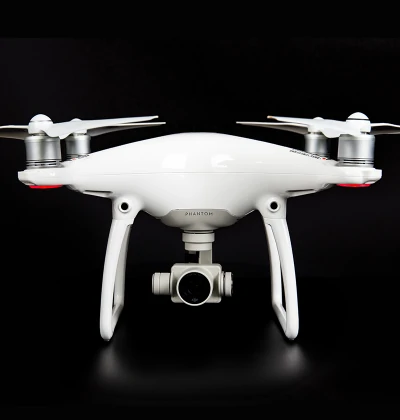

Aerospace & UAV
WJ Prototypes is your 3D manufacturing partner from prototype to large scale production.

Consumer Electronics
New Product Introduction Solutions for Consumer Electronics.

Robotics & Automation
Need some assistance bringing your robotic device or parts from the sketch-board to reality?

Medical Devices
The medical industry needs high quality, dependable and safe parts and products.

Automotive
New Product Introduction Solutions for Automotive

Industrial Machinery
The main purpose of industrial prototyping is to take the product from drawings into the real world.


TL;DR:
- Effective prototype order management requires complete documentation, multi-stage quality gates, and integrated tracking systems to prevent costly errors. Adhering to a structured process with locked tech packs, BOMs, and golden samples ensures reliable and timely product launches. Centralized communication and automated ERP integration are essential for overseeing complex prototype workflows across hardware, apparel, electronics, and software teams.
Prototype order management is the structured process of controlling documentation, approvals, supplier communication, and quality gates from initial design through production-ready samples. Product managers and engineers who skip this structure pay for it in revision cycles, missed launch dates, and parts that fail first-article inspection. Tools like ERP systems, Alibaba Trade Assurance, and gates-based workflows exist precisely to prevent those failures. This guide covers the full process, from locking your tech pack to handling exceptions in your order portal, with specific methods that work across hardware, apparel, electronics, and software product teams.
Before you place a single prototype order, your documentation must be complete. Incomplete specs are the leading cause of revision loops. A supplier cannot build to a standard that does not exist on paper.
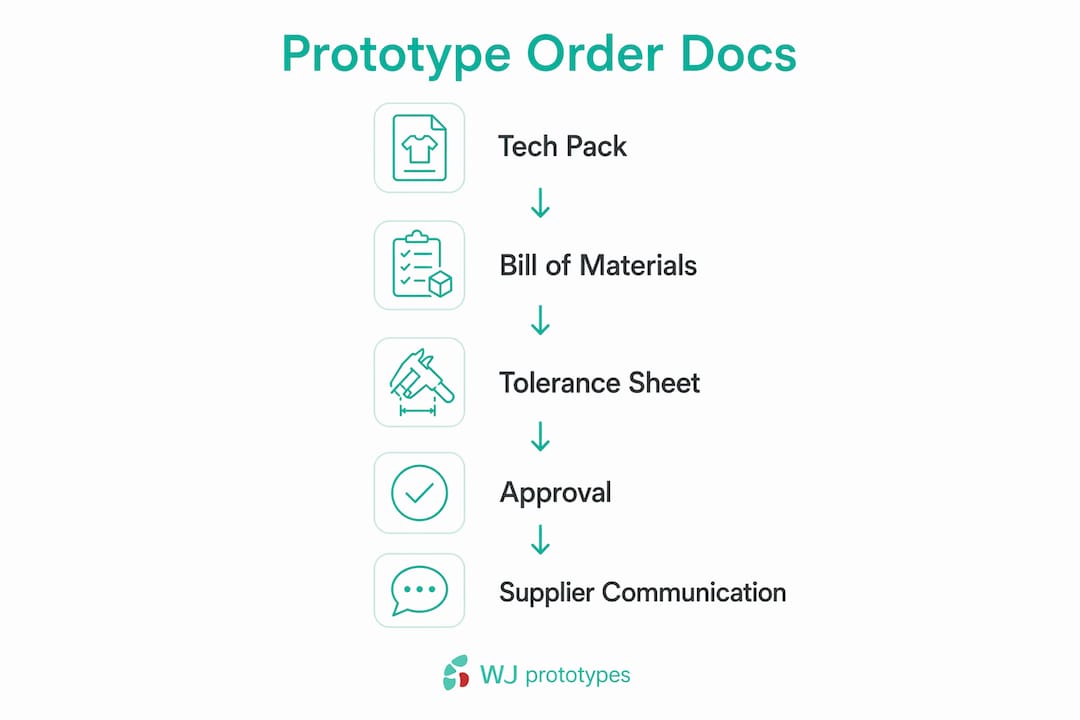
The three documents every prototype order needs are a tech pack, a bill of materials (BOM), and a tolerance sheet with quality standards. The tech pack defines geometry, materials, finishes, and assembly intent. The BOM lists every part by manufacturer part number (MPN), not just description. The tolerance sheet tells the supplier what pass and fail look like before they start cutting.
Standardizing part identity in your BOM is not optional. Manual ordering errors from wrong MPNs or missed packing notes cause build stalls that delay entire programs. Integrating your BOM with an ERP system automates PO creation and eliminates the transcription errors that come from copy-paste workflows.
For payment and communication, escrow-style mechanisms protect both sides. Alibaba Trade Assurance covers payments up to $100,000 with 30 days of post-delivery protection. That coverage only applies when all communication and spec documentation stays inside the platform’s message center. Moving conversations to email or WeChat voids the protection.
Pro Tip: Create a pre-order checklist that requires sign-off on BOM version, tolerance sheet revision number, and supplier confirmation before any PO is released. This single habit eliminates the most common source of prototype rework.
| Document | Purpose | Owner |
|---|---|---|
| Tech Pack | Defines geometry, materials, and finish specs | Design/Engineering |
| BOM with MPNs | Lists exact parts to prevent substitution errors | Engineering/Procurement |
| Tolerance Sheet | Sets pass/fail criteria for quality inspection | Quality/Engineering |
| Supplier Confirmation | Confirms supplier has reviewed and accepted specs | Procurement |
A gates workflow is a series of formal checkpoints where a prototype order cannot advance until specific criteria are met. Professional development programs use three primary gates: Gate 1 is tech pack lock, Gate 2 is fit approval, and Gate 3 is pre-production (PP) sample approval, which authorizes mass cutting. Total development typically runs 30–60 days plus shipping time.
Each gate answers a different risk question. Gate 1 confirms the design is complete enough to build. Gate 2 confirms the physical sample matches dimensional and functional requirements. Gate 3 is the point of no return. Approving a PP sample means you accept that production will replicate it exactly.
Here is how to run each stage:
Pro Tip: Factories use different names for the same sample stages. PPS, GPT, and TOP all refer to pre-production samples in different supply chains. Define your terminology explicitly in every contract and PO to prevent confusion.
Multi-stage sampling sequences that include concept, material, fit, pre-production, and golden samples create a minimum 90-day runway. Teams that skip stages to save time consistently encounter the expensive mistakes that the skipped stage was designed to prevent.
Prototype order tracking fails most often because information lives in too many places. An engineer has specs in email, the supplier has a different version in a chat app, and the ERP has a third version from the original PO. The fix is a single source of truth for every order status and communication thread.

Inconsistent lead-time messaging across product pages, order confirmations, and shipping updates creates support spikes and refund risk. The same principle applies to internal prototype tracking. When your product page, order confirmation, and shipping notification show different dates, your team loses confidence in the data and starts managing by phone calls instead of systems.
Key practices for reliable prototype order tracking:
Pro Tip: Test your order workflow against at least five exception scenarios before going live: partial shipment, pricing discrepancy, wrong MPN received, delayed supplier confirmation, and quality rejection. Systems that only work under ideal conditions fail at the worst possible time.
Software prototype management uses the same gating logic as physical prototyping, but the evaluation criteria shift from dimensional tolerances to business and technical feasibility. The EA Toolkit Prototype-Ops model defines four explicit outcomes for every prototype submission: graduate, iterate, shelve, or kill. Every prototype gets one of these decisions at each review cycle.
The submission requirements for a software prototype order are:
Cross-functional review panels score each submission against weighted criteria. Engineering resource allocation follows the scoring. This prevents the common failure mode where the loudest voice in the room gets the most engineering time regardless of actual priority.
The biggest failure in software prototype pipelines is organizational, not technical. Lacking explicit graduation paths and structured submissions causes wasted engineering time and stagnant prototype pipelines. A portfolio management approach, where all active prototypes are visible and ranked, forces the prioritization decisions that informal processes avoid. For teams building physical products alongside software, the prototyping process checklist at Wjprototypes covers both dimensions in a single workflow.
Most prototype order failures are predictable. They come from the same four sources: incomplete documentation, reference drift, ERP mapping errors, and over-committed pre-order quantities.
“Each prototype stage answers a distinct risk question. Skipping a stage does not eliminate the risk. It defers it to a point where fixing it costs ten times more.” — Prototype-to-Fulfillment Playbook
Here is where teams consistently go wrong and how to fix each problem:
For teams managing prototype quality control across multiple suppliers, the discipline of documented approvals is what separates teams that scale from teams that restart every production run from scratch.
Effective prototype order management requires locked documentation, multi-stage quality gates, and integrated tracking systems working together from the first PO to final inspection.
| Point | Details |
|---|---|
| Lock documentation before ordering | Complete tech packs, BOMs with MPNs, and tolerance sheets before releasing any PO. |
| Use a three-gate approval workflow | Tech pack lock, fit approval, and PP sample approval prevent costly late-stage revisions. |
| Centralize all communication | Keep supplier messages and approvals inside one platform to protect against disputes. |
| Automate ERP and PO integration | Field-level mapping and exception testing reduce validation failures by up to 50%. |
| Buffer pre-order quantities conservatively | Calculate ship dates from supplier PO arrival plus buffer days to avoid overselling. |
I have reviewed prototype workflows across aerospace, consumer electronics, and medical device programs. The technical problems are almost never the real problem. The real problem is that teams treat prototype ordering as an informal process until something goes wrong, and then they scramble to build structure after the damage is done.
The teams that manage prototype orders well share one habit: they treat every prototype order as a contract, not a request. That means written specs, documented approvals, and a golden sample that lives in a controlled location. When a supplier delivers something wrong, the question is never “what did we agree on?” because the answer is already on paper.
Speed is the constant pressure in prototyping. Every product manager I have worked with wants to compress the timeline. The counterintuitive truth is that disciplined gating is faster over the full development cycle. A team that runs all five sample stages in 90 days ships a production-ready product. A team that skips to Gate 3 in 30 days often spends the next 60 days fixing the problems that Gates 1 and 2 were designed to catch.
The organizational challenge is getting cross-functional buy-in on the gates. Engineering wants to move fast. Procurement wants to save money on samples. Quality wants more inspection time. The product manager’s job is to hold the gates, not negotiate them away under schedule pressure. That discipline is what separates programs that launch on time from programs that don’t.
— Yu
Wjprototypes offers rapid prototyping and manufacturing services across SLA, SLS, MJF, DMLS, CNC machining, sheet metal fabrication, vacuum casting, injection molding, and die casting. For product managers and engineers who need a manufacturing partner that fits into a structured gates workflow, Wjprototypes provides instant quoting, detailed quality assurance documentation, and ISO-certified production with global delivery. Every order comes with engineering support to catch spec issues before production begins, not after. If your team is building the next prototype iteration and needs a partner that treats your order as a contract, Wjprototypes is built for exactly that workflow.
Prototype order management is the process of controlling documentation, approvals, supplier communication, and quality gates from initial design through production-ready samples. It includes tech pack creation, BOM validation, multi-stage sample approvals, and ERP-integrated order tracking.
Most professional programs use three to five stages: concept, fit, pre-production, and golden sample. Skipping stages defers risk to later points where corrections cost significantly more.
A golden sample is a locked physical reference standard that defines acceptable production quality. It resolves supplier disputes and prevents quality drift across production batches.
Map every field-level entity between your ERP and order portal before go-live, and test against real exception scenarios including partial shipments and pricing discrepancies. Pilot testing with power users reduces post-launch issues by up to 50%.
A prototype validates design intent and function. A pre-production sample replicates production conditions and authorizes mass manufacturing. Factories use different terms for the same stages, so define both explicitly in every contract.
SERVICES
RESOURCES