



- Room 1807, Unit 9, Building 2, Shangxing Commercial Street, Shangde Road, Shangxing Community, Xinqiao Subdistrict, Bao'an District, Shenzhen City, China
CONTACT US

WhatsApp


Contact Us
Our team is on stand by, waiting toassist you.

Videos
A large collection of educational videos and tutorials.

About Us
Learn about our company, leadership, and mission totransform manufacturing.

Privacy Policy
Applies to all personal information collected through and/or processed in connection.


Aerospace & UAV
WJ Prototypes is your 3D manufacturing partner from prototype to large scale production.

Consumer Electronics
New Product Introduction Solutions for Consumer Electronics.

Robotics & Automation
Need some assistance bringing your robotic device or parts from the sketch-board to reality?

Medical Devices
The medical industry needs high quality, dependable and safe parts and products.

Automotive
New Product Introduction Solutions for Automotive

Industrial Machinery
The main purpose of industrial prototyping is to take the product from drawings into the real world.


TL;DR:
- Getting prototype quality right involves matching fidelity to the specific decision you need to inform, rather than striving for perfection or impressiveness.
- Teams should start with the minimum feature set, avoid scope creep, and select fabrication methods suited to their testing goals to ensure reliable, meaningful feedback.
Getting prototype quality right is genuinely hard. Build too rough, and your test participants react to the flaws instead of the concept. Build too polished, and you’ve spent a week perfecting something you might scrap tomorrow. The tips for prototype quality that actually move teams forward aren’t about perfection. They’re about matching what you build to what you need to learn. This article walks you through the criteria, methods, and testing strategies that experienced product engineers use to get reliable feedback without wasting fabrication time or budget.
| Point | Details |
|---|---|
| Match fidelity to decisions | Build only what you need to answer your current design question, nothing more. |
| Define metrics before building | Set clear success criteria before fabricating so your test data stays meaningful. |
| Recruit real users | Internal testers and stakeholders skew feedback; always test with your actual target population. |
| Use a prototype quality checklist | Consistent protocols across iterations preserve data comparability and speed up learning cycles. |
| Choose fabrication methods strategically | CNC machining, vacuum casting, and 3D printing each serve different validation goals at different stages. |
The best framework for evaluating prototype quality is what researchers call the Goldilocks principle: your prototype needs to be real enough to generate honest reactions, but fake enough that you haven’t burned resources on something disposable. That balance is not static. It shifts depending on what decision you’re trying to make this week.
Fidelity exists on a spectrum. Low fidelity covers paper sketches, rough foam models, and hand-drawn wireframes. Medium fidelity includes click-through digital mockups and basic 3D-printed shells. High fidelity means interactive prototypes with real visuals, actual materials, and functional components. Each level costs more to produce and yields a different type of feedback.
Context realism is an underrated quality dimension. Including the entry context in your prototype test, meaning the discovery path a real user would take before interacting with your product, produces dramatically more honest reactions than dropping someone cold into a mid-flow scenario. This applies equally to physical hardware and digital products.
Pro Tip: Before choosing your prototype’s fidelity level, write down the single decision this prototype needs to inform. That one sentence will tell you exactly how much to build.
One of the most practical tips for improving prototype quality is resisting the urge to add features. Your prototype is a hypothesis, not a product demo. IDEO’s “build to think, not to show” principle exists precisely because teams that over-polish early versions stop getting candid feedback. Participants respond to the polish instead of the concept.

Define your core user flow, the single path that tests your riskiest assumption, and build only that. Placeholder content is acceptable as long as it maintains enough coherence to keep participants immersed in the scenario. A wireframe with Lorem Ipsum text sitting next to a fully rendered hero image will break that immersion. Consistency matters more than completeness.
Time-boxing your build phase is one of the most underused tactics in prototyping success. Give yourself a hard deadline, whether it’s four hours or two days, and let that constraint force prioritization. Scope creep in prototyping is expensive not just in fabrication time but in the delayed learning it causes.
Different fabrication methods serve different validation goals, and mixing them up is one of the most common prototype mistakes teams make. Here’s a practical breakdown:
Investing in high fidelity too early locks teams into concepts before they’ve earned that commitment. Match your fabrication technology to your test purpose, and you’ll iterate faster with more reliable data.
This step is skipped more often than any other, and it consistently degrades prototype quality at the testing stage. Before fabrication begins, write down what a successful test looks like in specific, measurable terms. Quantitative success metrics like a task completion rate above 90% or a user confidence score above 8 out of 10 give your test data real teeth.
Without pre-defined metrics, teams default to gut feel after testing sessions, which introduces confirmation bias. You end up interpreting ambiguous results in favor of whichever concept the team is most attached to. That’s how products get built on bad assumptions.
Write your hypothesis in falsifiable form: “We believe users can complete checkout in under two minutes without assistance.” Then build the minimum prototype required to test that specific claim. This approach, sometimes called writing the decision first and then choosing the minimum fidelity, is one of the clearest design guidelines for prototypes that experienced teams consistently apply.
Testing strategy is where prototype quality either compounds or collapses. A well-built prototype tested with the wrong participants using a weak script produces worthless data. Here are the core principles:
Pro Tip: Record all sessions, even remote ones. Watching a participant hesitate for six seconds at a button is something no note-taker captures reliably in the moment.
Understanding the tradeoffs between methods is central to evaluating prototype effectiveness. This table gives you a direct comparison:
| Method | Fidelity | Speed | Cost | Best for |
|---|---|---|---|---|
| Paper/sketch | Low | Very fast | Minimal | Concept validation, early flows |
| Digital wireframe | Low to medium | Fast | Low | Navigation and interaction logic |
| Interactive mockup | Medium to high | Moderate | Moderate | Usability testing, stakeholder review |
| SLA/SLS 3D printing | Medium to high | Fast | Low to moderate | Form, fit, ergonomics |
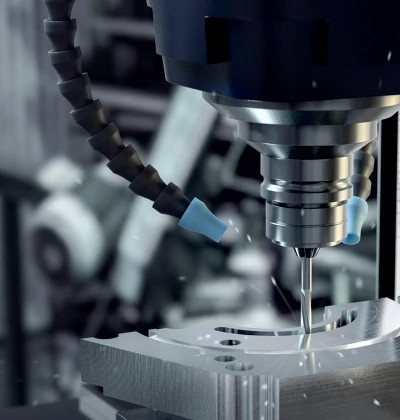
| CNC machining | High | Moderate | Moderate to high | Structural, functional, tolerance testing |
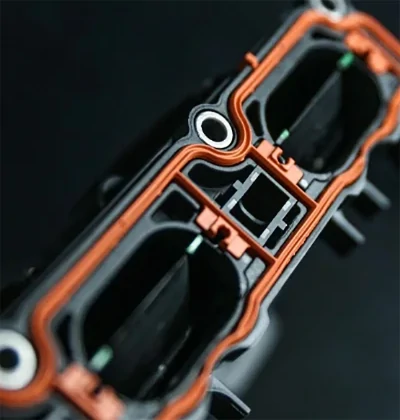
| Vacuum casting | High | Moderate | Moderate | Pre-production appearance and feel |
The key insight from this comparison: lo-fi prototypes generate honest feedback on flows while hi-fi prototypes test interaction feel and final usability. Neither is universally better. Each serves a phase. Teams that default to high fidelity for every test waste budget and slow iteration cycles significantly.
For hardware, the calculus shifts toward engineering validity. Rapid prototyping surfaces manufacturing challenges early through dimensional verification, material assessments, and stress tests. These are not polish concerns. They are foundational quality gates that determine whether a design is manufacturable at all.
Not every team has the same constraints, and improving prototype quality looks different depending on your development stage and product type. Here’s how to calibrate:
Consistency across iterations is also non-negotiable. Fragmented testing protocols make it impossible to compare results between prototype versions. Maintain a stable test script, consistent success criteria, and a documented quality control process across every cycle. Your prototype process checklist is not overhead. It’s the mechanism that makes your iteration data actually comparable.
Pro Tip: Treat your prototype as a disposable hypothesis. The moment your team starts protecting a prototype from criticism to preserve the work invested in it, your learning loop has already broken down.
Most prototype quality failures don’t announce themselves. They accumulate quietly and show up as bad product decisions weeks later. These are the patterns worth watching:
A working prototype quality checklist catches most of these before they become expensive. Build the habit of reviewing it before every fabrication decision, not just at project kickoff.
I’ve reviewed a lot of prototyping processes across product teams, and the pattern I keep seeing is not poor craftsmanship. It’s misaligned intent. Teams build impressive prototypes when they should be building informative ones.
The prototype attachment problem is real and underestimated. When a team spends three days on a beautifully rendered interactive prototype, they stop treating it as a disposable hypothesis. They start defending it in test debrief sessions instead of interrogating it. That shift is subtle, but it’s where prototype quality as a learning tool collapses.
My experience with hardware prototypes has reinforced something the software world handles better: the distinction between aesthetic quality and engineering validity. A machined aluminum part that fails a tolerance check is not a quality prototype, regardless of how good it looks. Hardware prototypes are judged on engineering validity, and that standard needs to be explicit from the start.
The minimal checklist I’d recommend to any team: one written hypothesis, one defined success metric, a fidelity choice that matches the decision not the audience, and a stable test protocol that doesn’t change between iterations. That’s it. Everything else is detail.
— Yu
When your prototype demands precision you can’t achieve in-house, working with a specialist manufacturer removes the variables that corrupt test data. Wjprototypes offers CNC machining services with tight tolerances across aluminum, steel, and engineering plastics, giving hardware teams functional prototypes that hold up to genuine stress testing. For pre-production appearance models and small-batch user trials, their vacuum casting services replicate injection-molded quality without the tooling commitment.
Wjprototypes is ISO certified, ships globally, and provides instant online quoting so you can plan iterations without waiting on procurement cycles. Whether you’re validating form, fit, or function, their engineering team can match fabrication technology to your specific test purpose. Explore their CNC machining materials to find the right specification for your next prototype cycle.
Match your prototype’s fidelity to the specific decision it needs to inform, not to the audience you’re presenting to. Writing your hypothesis before choosing fidelity keeps every build focused and prevents wasted effort.
Use 5 to 8 participants for qualitative testing to surface behavioral patterns, and up to 30 for quantitative data. Sessions should run 30 to 60 minutes to avoid fatigue-driven errors that skew results.
Use 3D printing for rapid form and fit checks at low cost. Choose CNC machining when you need production-equivalent material properties, tight dimensional tolerances, or structural performance data to make a go or no-go manufacturing decision.
A prototype quality checklist documents your hypothesis, success metrics, fidelity rationale, and test protocol before fabrication begins. Keeping this consistent across iterations makes your data comparable and prevents scope creep from degrading test validity.
Poor participant recruitment is the most common cause. Testing with internal team members or stakeholders instead of real users systematically overestimates usability and generates feedback that doesn’t reflect how your actual customers will behave.
SERVICES
RESOURCES